The World’s First 360-Degree Drone Is Here So You Won’t Miss a Thing
The drone market has long been a playground for innovation, pushing the boundaries of aerial photography and videography. Yet, every so often, a product emerges that genuinely seeks to redefine what’s possible. Enter the Antigravity A1, heralded as the world’s first 360-degree drone, promising to capture every angle simultaneously, ensuring users "won’t miss a thing." This ambitious claim positions the A1 as a potential game-changer, offering an immersive, spherical view from the sky that traditional drones, even those with advanced gimbals, simply cannot match. However, as with many pioneering technologies, the journey from groundbreaking concept to user-friendly reality is often fraught with practical challenges, and the A1, despite its unique allure, is no exception, facing critical hurdles in control, convenience, and cost.
The allure of 360-degree capture from a drone is undeniably powerful. Imagine flying over a breathtaking landscape, not just capturing a framed shot, but the entire panorama – the majestic mountains behind, the winding river below, and the expansive sky above, all simultaneously recorded in a seamless sphere. This capability opens up a new realm of possibilities for content creators, adventurers, and even professional applications. For travel vloggers, it means fully immersive destination experiences; for real estate agents, comprehensive virtual tours of properties and their surroundings; for event organizers, dynamic, all-encompassing aerial views of festivals or concerts. Beyond mere aesthetics, the ability to record everything allows for unprecedented flexibility in post-production, where the user can "re-frame" shots, choose different perspectives, or create interactive VR experiences long after the drone has landed. This "not missing a thing" promise taps into a fundamental desire to fully encapsulate moments, offering a level of detail and immersion previously unattainable in consumer-grade aerial platforms. The technical feat of integrating multiple cameras and stitching their feeds in real-time or near real-time, while maintaining stability and flight performance, is a testament to Antigravity’s engineering prowess.
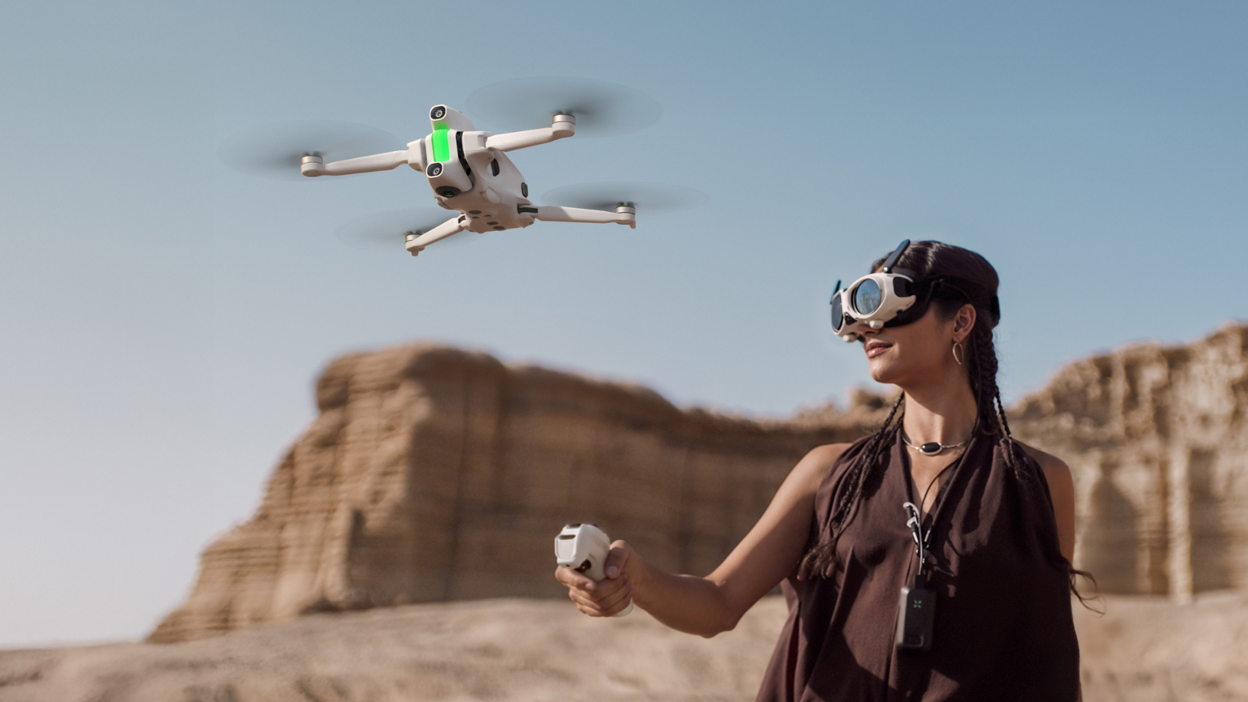
However, the reviewer’s primary contention with the Antigravity A1 quickly brings this high-flying ambition back to earth: the mandatory control method. The A1 forces users into an FPV (First Person View) experience, requiring them to don a pair of specialized goggles to pilot the drone. While FPV flying offers an incredibly immersive sensation, putting the pilot directly into the cockpit, as it were, it introduces a significant layer of complexity and inconvenience for casual users. The reviewer highlights several pain points: the necessity of bringing a friend to act as a spotter for safety and often regulatory compliance (as FPV flying without a spotter is restricted or illegal in many regions), the cumbersome ritual of removing personal glasses before fitting the goggles, and the additional burden of yet another piece of equipment – the goggles themselves – requiring their own separate battery. This accumulation of steps and accessories transforms what should be an immediate and convenient activity into an overly time-consuming and complicated setup. The experience is further hampered by "sluggish controls," which directly impact the precision, responsiveness, and overall enjoyment of flight. In a market where competitors like the DJI Mini 5 Pro have perfected the art of "pull out of a bag, fly for five minutes, and pack away without any fuss," the A1’s demanding pre-flight routine stands in stark contrast. The image accompanying the review, showing a person smiling while wearing the A1’s goggles, might convey a sense of fun, but the underlying text reveals the practical realities beneath the surface excitement.
The frustration with the mandated FPV control method naturally leads to a strong preference for alternative solutions. The reviewer explicitly states a desire for a standard twin-stick controller, a control paradigm that has become the industry standard for consumer and prosumer drones. Such a controller, ideally equipped with either its own built-in screen or the ability to dock a smartphone, offers a far more intuitive and widely accepted method of piloting. This conventional setup allows for a more traditional line-of-sight (LOS) flying experience, where the pilot can maintain visual contact with the drone, enhancing safety and reducing the need for a spotter in many scenarios. It also eliminates the need for separate goggles, their batteries, and the associated setup time. The ergonomics of twin-stick controllers are familiar to anyone who has played video games, making the learning curve significantly shallower. This widely adopted interface allows for precise maneuvers and a comfortable grip, crucial for extended flight sessions. The hope for a "second-gen version of the A1" to come with multiple control options isn’t just a wish; it reflects a deep understanding of market expectations and user preferences. Offering flexibility in control would drastically broaden the A1’s appeal, moving it from a niche, somewhat cumbersome device to a more versatile and accessible tool for aerial capture.
Beyond the control method, the Antigravity A1 also faces an uphill battle regarding its price point. With standard bundles starting at $1,599/£1,219, the A1 positions itself firmly in the premium segment of the drone market. This cost is nearly on par with, or even exceeds, highly regarded professional-grade packages such as the DJI Air 3S Fly More combo, which includes a sophisticated touchscreen controller. The comparison with DJI is particularly illuminating. DJI has long set the benchmark for drone technology, offering a compelling blend of features, reliability, and user experience. The Air 3S, for instance, is lauded for its two pro-quality cameras, delivering exceptional image quality in a multitude of conditions, alongside "excellent, easy-to-master flight controls." While the A1’s unique selling proposition of 360-degree video is acknowledged, the Air 3S provides a robust and refined solution for traditional aerial videography that is hard to beat. The high price of the A1 can likely be attributed to the "amount of gear in the setup," including the specialized 360-degree camera system, the advanced processing required for spherical capture, and the dedicated FPV goggles and their associated technology. For many consumers, the question becomes one of value: is the groundbreaking 360-degree capability worth the significant investment when it comes bundled with a less-than-ideal user experience and a price tag comparable to a more polished, albeit traditional, professional drone?
In conclusion, the Antigravity A1 represents an intriguing and innovative leap forward in aerial imaging. Its ability to capture a complete 360-degree view from the sky is a genuine technological breakthrough, promising unparalleled immersion and creative freedom. This potential for "not missing a thing" could redefine how we document and share aerial perspectives. However, the current iteration of the A1 is hampered by several critical practical shortcomings. The forced reliance on an FPV goggle control method, with its inherent demands for a spotter, inconvenient setup (especially for glasses wearers), separate battery requirements, and sluggish controls, creates an overly complicated and time-consuming user experience. This stands in stark contrast to the effortless immediacy offered by leading competitors. Furthermore, its premium price tag, rivaling established professional drones like the DJI Air 3S which offer a more refined and user-friendly experience (albeit without 360-degree capture), makes it a difficult recommendation for the average consumer or even many professionals.
For Antigravity to truly become a "genuine DJI contender" and unlock the full potential of its 360-degree drone technology, significant refinements are necessary. The company must strive to bring down the price point, making the cutting-edge technology more accessible. Crucially, streamlining the control setup or, even better, offering alternative and more conventional flight methods, such as a standard twin-stick controller with a built-in screen or smartphone integration, would dramatically enhance its appeal and usability. While the A1 is undoubtedly a fascinating and innovative product, pushing the boundaries of what drones can achieve, its current state is "a little too fussy and expensive to feel like a must-buy." It stands as a testament to pioneering vision, but also as a clear indicator that even the most revolutionary ideas need robust execution and user-centric design to truly soar in the competitive drone market. The future of 360-degree aerial capture is bright, and Antigravity has lit the spark, but the path to widespread adoption will require a smoother, more accessible flight.