Gear News of the Week: Google Drops Another Android Update, and the Sony A7 V Is Here
The tech world never stands still, and this week has been a whirlwind of significant announcements from industry giants and innovative niche players alike. From Google’s relentless push to refine its Android ecosystem to Sony’s latest professional-grade camera, Samsung’s audacious foldable phone vision, Kobo’s user-centric e-reader accessory, and Amazon’s smarter Alexa, there’s plenty to unpack for enthusiasts and consumers.
Google continues its rapid innovation cycle for Android, barely a few months after the substantial Android 16 update rolled out in June, bringing a host of new features to its ubiquitous operating system. Now, the tech giant has unveiled another comprehensive package of enhancements, focusing on deeper customization, more robust parental controls, and intelligent notification management. This latest feature drop underscores Google’s commitment to delivering a continuously evolving and user-centric mobile experience, catering to both aesthetic preferences and practical daily needs.
A key highlight of this update is the expanded customization options. Users can now dive deeper into personalizing their device’s appearance, with the ability to create custom icon shapes that break free from standard circles or squares. This allows for a truly unique look that aligns with individual style preferences. Complementing this, cohesive theming options enable users to apply a unified visual language across their entire device interface, ensuring a harmonious and polished aesthetic. Perhaps one of the most anticipated features in this category is the ability to extend dark mode to applications that do not natively support it. This enhancement addresses a long-standing user request, ensuring a consistent and eye-friendly viewing experience across all apps, particularly beneficial in low-light environments and for conserving battery on AMOLED screens. These customization tools reflect a growing trend in mobile OS development, where users demand more control over their digital environment, moving beyond mere wallpaper changes to a more profound personalization of their device’s look and feel.
Beyond aesthetics, Google is bolstering its family-focused features with an overhaul of parental controls. Recognizing the increasing importance of digital well-being for younger users, these enhanced controls offer parents unprecedented granularity in managing their children’s device usage. Directly from their own devices, parents can now precisely manage screen time limits, set specific downtime periods to encourage healthy sleep habits, monitor and restrict app usage, and even implement a system of rewards to incentivize positive digital behavior. This integrated approach aims to create a safer and more balanced digital experience for children, empowering parents with the tools to guide their kids through the complexities of the online world without constant physical intervention. The emphasis on direct management on the child’s device streamlines the process, making it more immediate and effective.
Notifications, often a source of digital fatigue, are also getting a significant upgrade with AI-powered intelligence. The new smart notifications feature introduces AI-powered summaries, providing a concise "TL;DR" (Too Long; Didn’t Read) for lengthy messages or bustling group chats. This ingenious solution helps users quickly grasp the essence of communications without having to wade through extensive text, saving time and reducing information overload. Furthermore, related notifications are now intelligently grouped together, decluttering the notification shade and making it easier to manage incoming alerts. Low-priority notifications, such as promotional messages or less urgent updates, are now automatically silenced, ensuring that only the most critical information demands immediate attention. This smart filtering mechanism is a testament to Google’s ongoing efforts to leverage AI for a more streamlined and less distracting user experience, moving towards a world where technology intelligently serves us rather than overwhelms us.
Accessibility, a cornerstone of Google’s development philosophy, also sees a raft of thoughtful additions. Expressive Captions, a feature designed to enhance understanding for the hearing impaired, now include relevant emotion tags. This crucial update helps convey the full context and nuance of spoken content, making conversations and media more comprehensible. Initially rolling out in English-speaking YouTube videos, these enriched captions will soon be available across the wider Android ecosystem, fostering greater inclusivity. For mouse users, configurable AutoClick reduces physical strain by automating clicks after a set duration, a significant ergonomic improvement. The Pixel camera app’s Guided Frame feature becomes even more descriptive, providing richer audio cues about what’s in the camera’s view, assisting users with visual impairments in composing better shots. Voice Access, a powerful hands-free control tool, can now be launched directly with a voice command to Gemini, Google’s advanced AI assistant, offering a more intuitive activation method. Fast Pair for hearing aids is also expanding its reach, now supporting Demant devices with Starkey support slated for early 2026, simplifying the connection process for these essential devices. Lastly, better voice dictation with TalkBack is on the horizon, promising more accurate and natural speech-to-text capabilities for users who rely on screen readers. While these cutting-edge features will debut on Pixel devices, Google has confirmed they will progressively roll out to third-party Android devices over time, ensuring broader access to these impactful improvements.
Google is also demonstrating its commitment to users on older versions of Android, providing valuable features that aren’t exclusive to the latest Android 16 release. These include the playful Emoji Kitchen stickers, allowing users to combine emojis for unique expressions, and the ability to discreetly leave and report group chats within Google Messages, enhancing user control and safety. Circle to Search, a powerful visual search tool, now includes an option to check for scams, adding an extra layer of security to online interactions. Chrome users will appreciate the introduction of pinned tabs, a feature long enjoyed on desktop browsers, bringing enhanced productivity to mobile browsing. However, for many, the standout new feature is Call Reason, which enables users to flag their outgoing calls to any saved contact as "urgent." This simple yet effective addition provides crucial context to the recipient, potentially improving call answer rates for time-sensitive matters. These diverse updates, spanning from fun personalization to critical safety and productivity tools, illustrate Google’s holistic approach to improving the Android experience for a vast and varied user base.
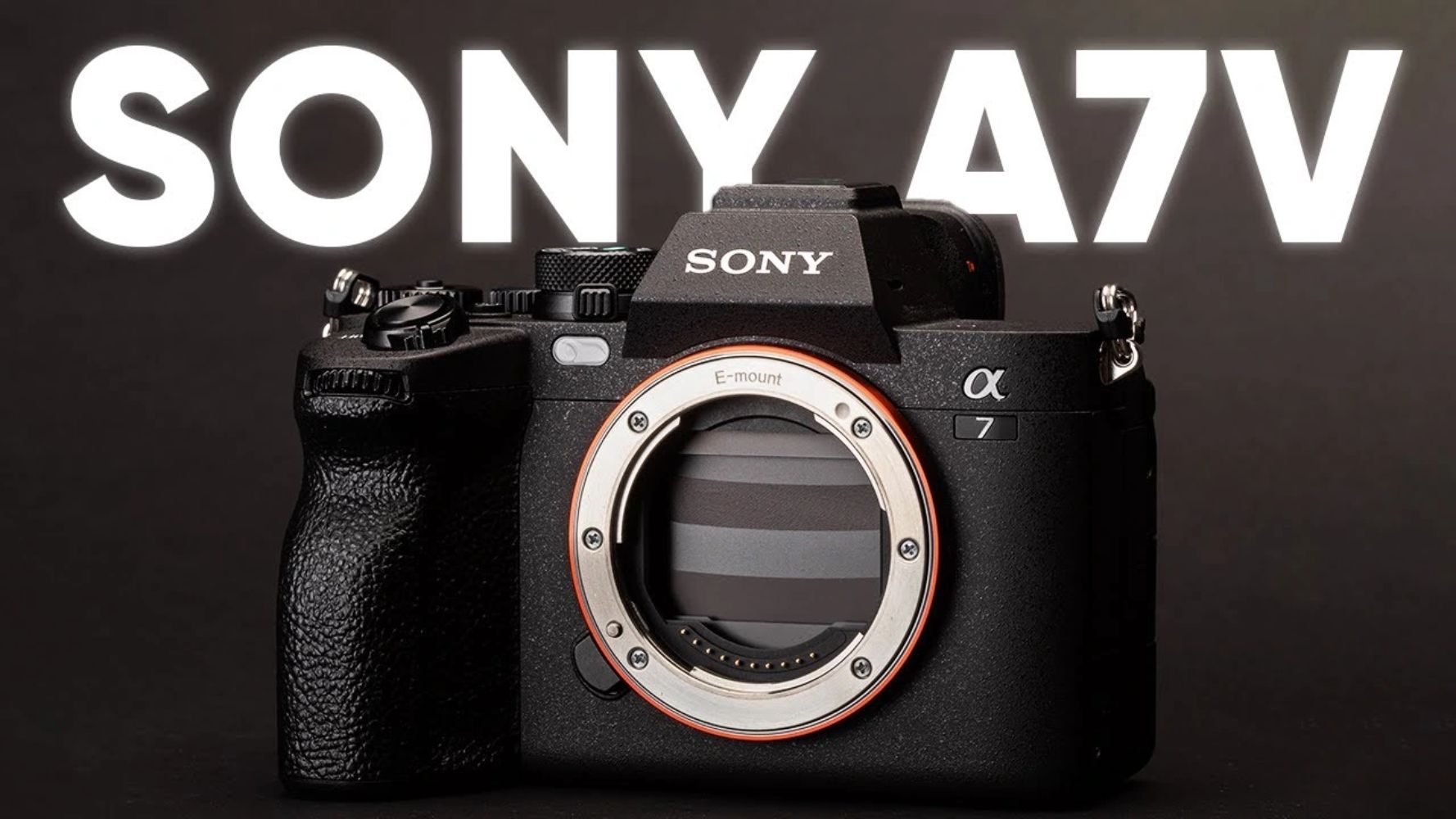
Shifting gears from software to hardware, the photography world has been abuzz with the official arrival of the Sony A7 V, the highly anticipated successor in Sony’s acclaimed Alpha 7 series of prosumer full-frame mirrorless cameras. Building on a legacy of innovation that has solidified Sony’s position in the professional and enthusiast photography market, the Mark 5 version of the A7 brings a host of significant upgrades designed to push the boundaries of image quality, speed, and user experience.
At the heart of the A7 V is a brand-new 33-megapixel partially stacked CMOS sensor. This resolution strikes an excellent balance, offering ample detail for large prints and cropping flexibility, while maintaining manageable file sizes. The "partially stacked" design is a crucial technological advancement, indicating faster readout speeds compared to traditional back-illuminated sensors, which translates to reduced rolling shutter effects and improved performance in burst shooting. Complementing this advanced sensor is the powerful BIONZ XR2 processor, a second-generation iteration of Sony’s renowned image processing engine. What truly sets the XR2 apart in the A7 V is the integration of an AI processing unit directly into the processor. This dedicated AI unit is a game-changer, significantly enhancing the camera’s ability to recognize and track subjects with unprecedented accuracy and speed, moving beyond simple facial recognition to truly intelligent subject detection.
Core to the A7 V’s appeal are its dramatically improved core features. The In-Body Image Stabilization (IBIS) system has been refined to an impressive 7.5 stops. This means photographers can handhold the camera at significantly slower shutter speeds without introducing blur, opening up new possibilities for low-light photography and ensuring sharper images in challenging conditions. The camera boasts a remarkable 16 stops of dynamic range, allowing it to capture an incredible amount of detail in both the brightest highlights and darkest shadows of a scene, providing immense flexibility for post-processing. For action and wildlife photographers, the A7 V offers blistering 30-frames-per-second continuous shooting with full autofocus and auto-exposure tracking, ensuring no critical moment is missed. Sony’s industry-leading AI subject and eye detection autofocus system is further refined, capable of locking onto and tracking human, animal, and bird eyes and bodies with uncanny precision, making it easier than ever to achieve critically sharp focus even with fast-moving subjects.
While the A7 series traditionally caters more to still photographers, the A7 V introduces compelling video improvements. It offers 7K oversampled 4K/60-fps full-frame recording, meaning the camera captures more data than needed for 4K and downsamples it, resulting in exceptionally sharp and detailed 4K footage. For cinematographers requiring high frame rates for dramatic slow-motion effects, 4K/120 fps is available in Super 35-mm mode, which applies an APS-C crop to the sensor. However, it’s worth noting that the highly sought-after open gate recording feature, which utilizes the full sensor area for video, remains reserved for Sony’s high-end flagship models like the A1, indicating a clear product segmentation strategy.
Initial tests of the A7 V have been overwhelmingly positive, particularly highlighting the autofocus system as an outstanding feature. Many reviewers have praised it as the most accurate system they’ve encountered in a camera at this price point, consistently delivering tack-sharp results across various shooting scenarios. The camera’s low-light capabilities, bolstered by the 7.5-stop IBIS, are equally impressive, allowing for clean images even in challenging lighting conditions without resorting to excessively high ISOs. Priced at $2,899, the Sony A7 V positions itself as a compelling option for serious enthusiasts and working professionals looking for a versatile full-frame camera that excels in both stills and video, without reaching the premium tier of Sony’s A1 or A9 series. It is slated for availability at the end of December, with preorders already open at major retailers like Adorama and B&H Photo, signaling its imminent arrival to eager photographers worldwide.
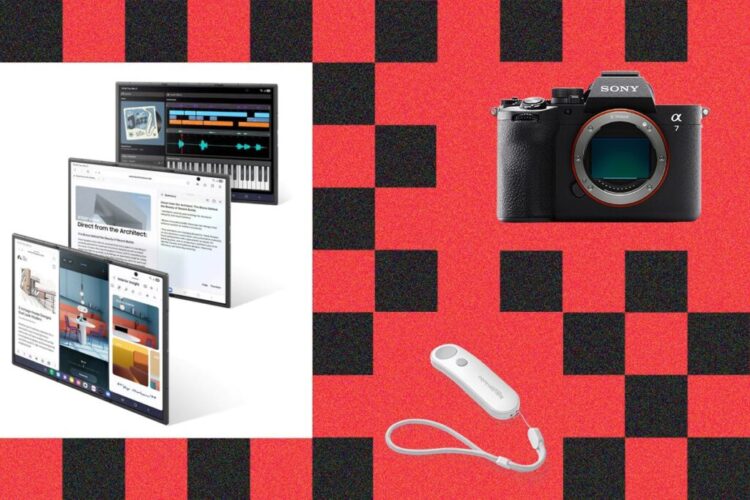
Samsung, a pioneer in the foldable phone space, is once again pushing the boundaries of mobile design with the impending release of its Galaxy Z TriFold in the US. While current foldable phones typically feature a single fold, transforming a standard phone into a 7- or 8-inch tablet, Samsung’s audacious new device takes a monumental leap with two distinct folds. This innovative design allows the device to transition from a relatively thick, yet still pocketable, smartphone into an expansive 10-inch tablet. When fully unfurled, the tablet is remarkably slim at just 3.9mm thick, excluding the camera module, showcasing Samsung’s incredible engineering prowess in display technology and hinge mechanics.
As expected from a flagship Samsung device, the Galaxy Z TriFold is a veritable specs beast. It is powered by the bespoke Snapdragon 8 Elite Mobile Platform for Galaxy, a customized version of Qualcomm’s top-tier processor optimized for Samsung’s unique hardware, promising unparalleled performance for demanding applications, gaming, and extensive multitasking. Photography enthusiasts will be thrilled by the inclusion of a colossal 200-megapixel camera, capable of capturing extraordinary detail and leveraging advanced pixel-binning technology for impressive low-light performance. Powering this massive display and high-end components is a substantial 5,600-mAh three-cell battery, the largest Samsung has ever integrated into a folding phone, aiming to provide ample endurance for its expansive screen. The device also supports 45W fast charging, ensuring quick top-ups, and comes equipped with a generous 16 GB of RAM, facilitating seamless multitasking with multiple applications running simultaneously. Storage options are equally robust, with configurations available in 512 GB or 1 TB, catering to users with vast media libraries and extensive app collections.
However, the true star of the show is undeniably that mammoth 10-inch AMOLED screen. Boasting a sharp resolution of 2160 x 1584 pixels, it promises vibrant colors, deep blacks, and exceptional clarity, making it ideal for consuming multimedia content and detailed productivity tasks. With a peak brightness of 1,600 nits, the display ensures excellent visibility even in bright outdoor conditions. Furthermore, it supports a 120-Hz adaptive refresh rate, providing incredibly smooth scrolling and fluid animations while intelligently adjusting the refresh rate to conserve battery life.
Samsung has been teasing a trifold design throughout the year, building anticipation for this groundbreaking device. Its launch in the US marks a significant milestone, as it will be the first such design to land stateside, following the Huawei Mate XT which, despite generating considerable buzz at events like MWC, never made it to the American market. The appeal of a 10-inch screen in your pocket is undeniable, offering an immersive experience for watching movies, browsing the web, or multitasking with up to three applications displayed side-by-side, effectively blurring the lines between a phone and a compact tablet.
However, this innovative form factor comes with its own set of trade-offs. When closed, the Galaxy Z TriFold is notably thick at 12.9 mm (discounting the camera module) and quite heavy at 309 grams, making it a substantial presence in a pocket or hand. The anticipated price tag is also likely to be a significant barrier for many consumers, with industry speculation placing it around the $3,000 mark. Despite these considerations, the Galaxy Z TriFold represents a bold leap forward in foldable technology, showcasing Samsung’s vision for the future of mobile devices. It is expected to arrive in the US market in the first quarter of 2026, giving consumers ample time to ponder whether the benefits of an expansive, pocketable screen outweigh the compromises in portability and cost.
For avid readers, Kobo has introduced a thoughtful accessory that promises to enhance the e-reading experience: the Kobo Remote page-turner. Page-turning remotes have long been a popular, albeit typically third-party, accessory for e-readers, offering a convenient way to navigate through books without needing to physically touch the device. This is particularly appealing for "power readers" who often use stands or mounts to hold their e-readers, allowing them to read hands-free. Beyond convenience, such remotes also serve as an excellent ergonomic and accessibility option for individuals with limited mobility or those who prefer a more relaxed reading posture.
Until now, the market for these handy gadgets has been dominated by generic third-party manufacturers, with varying degrees of compatibility and reliability. Kobo’s decision to launch its own official Kobo Remote, just in time for the holiday season, is a significant move. This first-party accessory is specifically built to connect seamlessly with any Kobo e-reader that boasts Bluetooth capabilities, promising a more integrated and reliable user experience than generic alternatives. Kobo also pledges a "long battery life" for its remote, a crucial factor for a device meant to offer uninterrupted reading pleasure, addressing a common pain point with cheaper third-party options that often require frequent charging.
The Kobo Remote is positioned as a perfect gift for anyone who owns a compatible Kobo e-reader, offering a simple upgrade that significantly improves comfort and ease of use. This strategic launch by Kobo naturally raises a pertinent question for the broader e-reader market: Where is Amazon’s equivalent for Kindle? As the dominant player in the e-reader space, Amazon has yet to offer an official page-turning remote for its highly popular Kindle devices. Kobo’s proactive step here could give it a competitive edge in user experience and accessory ecosystem. It certainly sets a precedent, and it will be interesting to see if other popular e-reader manufacturers, including Amazon, follow suit in the coming year to offer official, integrated solutions for remote page-turning, recognizing the clear user demand for such a feature.
Finally, Amazon is upping its game in the smart home and entertainment sector with new capabilities for its next-generation voice assistant, Alexa+. The overarching promise of the new generation of voice assistants is enhanced conversationality, moving beyond rigid commands to more natural and intuitive interactions. Amazon is delivering on this promise by adding an innovative "jump-to-scene" feature specifically for Fire TV devices, significantly improving the way users interact with their entertainment.
This new trick allows users to ask Alexa+ for a specific scene within a show or movie, and the assistant will intelligently locate and immediately play the entertainment from that precise point. The power of this feature lies in its ability to understand natural language and context. For instance, users can now say things like, "Alexa, play the scene in Mamma Mia where Sophie sings ‘Honey, Honey’," or "Alexa, go to the card scene in Love Actually," and Alexa+ will be able to pinpoint and jump to those memorable moments. This capability bypasses the tedious process of fast-forwarding or rewinding, making content consumption more fluid and enjoyable.
Amazon guarantees that this jump-to-scene functionality will work with thousands of movies available on Prime Video, highlighting the extensive AI-driven content indexing and understanding required to implement such a feature at scale. Compatibility for this advanced feature extends to specific Fire TV devices that are equipped with Alexa+ compatibility, including the second generations of the Fire TV Stick 4K Max and Fire TV Stick 4K, the third-generation Fire TV Cube, and a selection of other Fire TV models. This suggests that the advanced AI processing required for conversational scene search might necessitate newer hardware iterations.
The introduction of "jump-to-scene" positions Alexa+ as a formidable contender in the evolving landscape of AI-powered entertainment control. It demonstrates Amazon’s commitment to integrating sophisticated AI into its Fire TV ecosystem, offering users a level of convenience that was previously unimaginable. This feature not only streamlines the viewing experience but also showcases the practical application of conversational AI in everyday scenarios, setting a new benchmark for how we interact with our digital media libraries. As voice assistants become more nuanced and context-aware, features like this underscore the exciting future of hands-free interaction with our technology.