The Best Printers for Home and Office: Brother, HP, and More
Before making any purchase, a fundamental decision revolves around choosing between ink and laser printing technology. While I will delve into the specifics of various models and brands shortly, the most critical initial consideration is your primary paper type and intended usage, as this often presents a limitation rather than a benefit. Laser printers operate by using heat in the toner bonding process. This means that if your regular printing involves heat-sensitive materials such as windowed envelopes, certain types of labels, or specialized photo paper, you will almost certainly need to opt for an inkjet printer. Alternatively, you would have to switch to thermally safe alternatives for your paper stock, which can become prohibitively expensive and inconvenient if you print frequently or in large volumes. Understanding this crucial distinction upfront can save considerable frustration and expense down the line, steering you towards the most appropriate technology for your needs, whether it’s a versatile HP, a robust Brother, or another leading brand.
Inkjet printers represent the most common type of printer found in home environments, and their operation, while seemingly straightforward, involves a fascinating process. Contrary to simple deposition, inkjet print heads actually work by heating tiny reservoirs of ink until they rapidly boil. This rapid boiling creates a bubble of vapor that forces a minuscule droplet of ink through a series of microscopic nozzles onto the paper. This precise ejection process allows for incredibly detailed and vibrant color reproduction, making them a popular choice for everything from school projects to high-quality photo prints. The accuracy and ability to mix colors on the fly are key advantages of this technology.
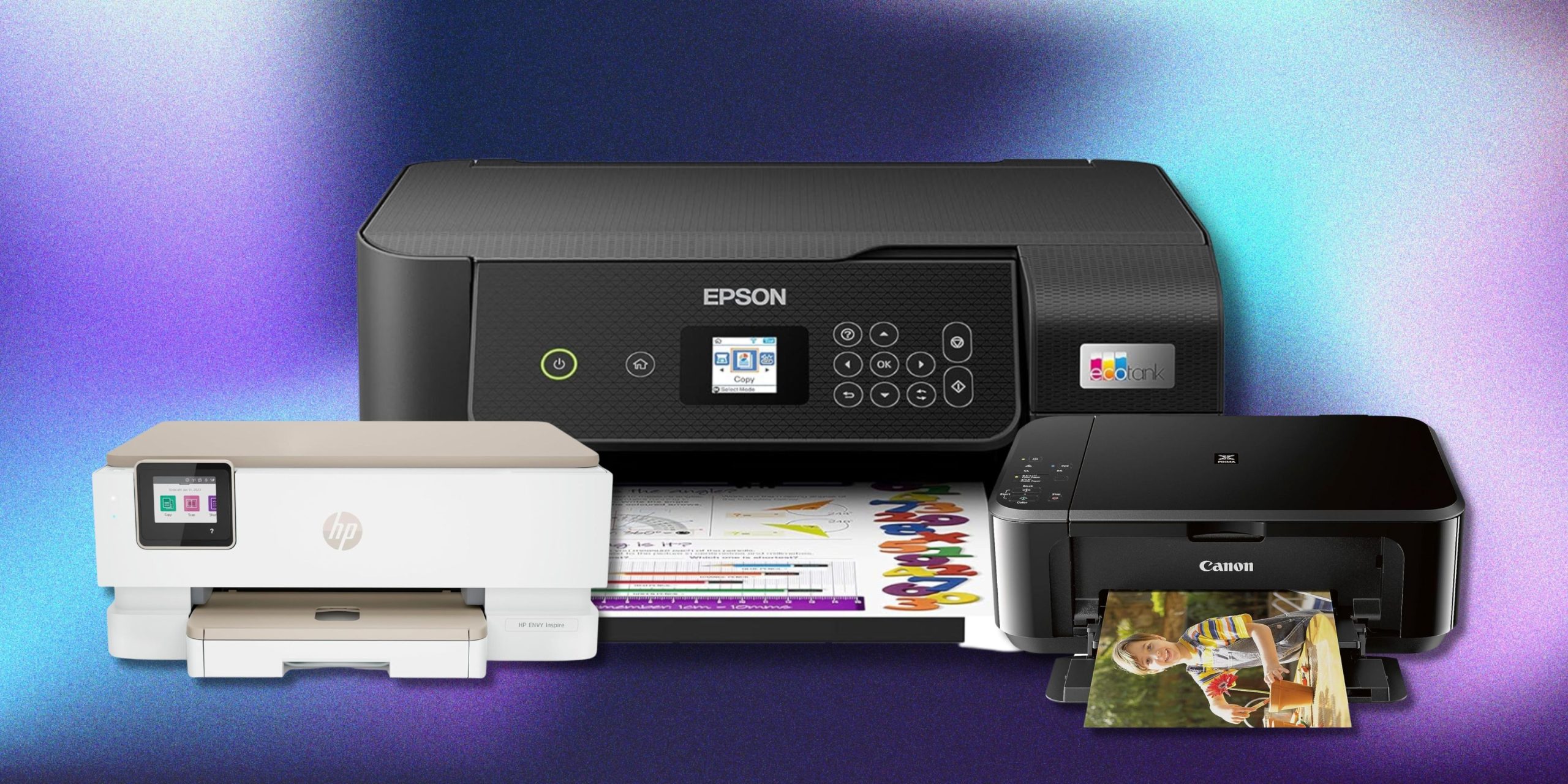
Modern inkjet printers primarily come in two distinct configurations: those utilizing prefilled, disposable cartridges and those equipped with built-in, refillable ink tanks. The latter, often championed by brands like Epson with its EcoTank series, Canon with MegaTank, Brother with INKvestment Tank, and HP with Smart Tank, is rapidly gaining market dominance. This shift is driven by compelling advantages, including significantly better long-term pricing, enhanced convenience due to less frequent ink purchases, and a massive reduction in plastic waste. If you are considering purchasing a new printer in 2025 or beyond, opting for an ink tank system over traditional cartridges is almost always the more economical and environmentally friendly choice, assuming a laser printer doesn’t better suit your specific high-volume text needs. While ink tank printers might require a little more initial effort to set up and maintain, as you must periodically top off the tanks with bottled ink, and they ideally should remain in one stable place on a flat surface to prevent potential leaks or spills, these minor inconveniences are far outweighed by the benefits. It’s difficult to imagine many scenarios where a home or small office printer would be constantly moving and tilting, so this placement consideration is rarely a practical impediment for most users. Furthermore, the higher page yield per fill drastically reduces the frequency of intervention compared to traditional cartridges.
While inkjets offer impressive color and photo capabilities, laser printers operate on an entirely different, equally impressive principle. You might have found the inkjet’s "boiling ink" mechanism intriguing, but laser printers employ a process that involves blasting a drum with an electrostatic charge, which then attracts microscopic particles of dried plastic pigment, known as toner. This toner is then transferred to the paper and subsequently fused onto the surface using intense heat and pressure. This heat-based fusion is what gives laser prints their characteristic crispness and durability. Laser printers tend to have a higher upfront purchase cost compared to their inkjet counterparts, but their long-term cost per page is almost invariably much lower. Where a typical $20 inkjet cartridge might yield approximately 200 pages, a $60 toner cartridge for a laser printer could easily print 2,000 pages or more, representing a tenfold increase in efficiency. Beyond cost, laser printers are generally significantly faster than inkjet printers, particularly for black-and-white text documents, making them ideal for high-volume environments. Another significant advantage is that you don’t have to worry about toner drying out, a common frustration with ink cartridges that are used infrequently. As an added, albeit minor, bonus, the pages emerge from a laser printer wonderfully warm to the touch, a small but satisfying tactile experience that adds a certain quality to the printout.
Beyond the dominant inkjet and laser technologies, another specialized category exists: thermal printers. These are commonly encountered in specific applications such as printing receipts at retail points of sale, generating shipping labels, or producing tickets. Unlike ink or laser printers that use consumables like liquid ink or toner, thermal printers do not require any external ink or toner. Instead, they operate by applying heat in precise patterns directly onto special heat-sensitive paper. This chemical reaction on the paper surface allows for the printing of text and images, typically in low resolution and almost always in a single color (usually black). For users who frequently print shipping labels, barcodes, or simple stickers at home or for a small business, investing in a thermal label printer can lead to substantial savings in both time and ongoing ink/toner costs. Brands like Dymo and Zebra are well-known in this segment. However, their utility is highly specialized; thermal printers have significant limitations in terms of versatility, being unsuitable for general document printing, photographs, or color output. The specialized thermal paper can also be more expensive than standard paper, and the prints themselves may fade over time when exposed to heat or light.
From a personal preference standpoint, laser printers are my go-to choice, provided your specific paper type requirements and initial budget can accommodate them. Their speed, crisp text quality, and incredibly low cost per page for high-volume printing make them an outstanding investment for productivity. However, it’s important to acknowledge that for the vast majority of home users, especially those needing color prints, photos, or occasional documents, a modern ink tank printer will deliver an exceptionally satisfying experience, balancing upfront cost with excellent long-term value and versatility.
When considering a printer purchase, several other factors come into play, regardless of the core technology chosen. Connectivity options are crucial: most modern printers offer Wi-Fi for wireless printing from computers and mobile devices, Ethernet for wired network connections in offices, and traditional USB for direct computer hookup. Mobile printing solutions like Apple AirPrint, Mopria, and proprietary manufacturer apps (e.g., HP Smart, Brother iPrint&Scan) have made printing from smartphones and tablets incredibly convenient. Multifunctionality is another key aspect. Many printers are "all-in-one" or "multifunction printers (MFPs)," incorporating scanning, copying, and sometimes even faxing capabilities alongside printing. Features like an Automatic Document Feeder (ADF) are invaluable for scanning or copying multi-page documents, while duplex printing (automatic two-sided printing) saves paper and time. Print quality, measured in Dots Per Inch (DPI), indicates the sharpness and detail of prints, with higher DPI being more critical for photos than for text. Print speed, expressed in Pages Per Minute (PPM), is a vital metric for high-volume users.
Finally, a word on brands. Brother is renowned for its robust and reliable laser printers, often favored in office settings for their workhorse capabilities and excellent cost-per-page. HP offers an incredibly diverse range, from budget-friendly inkjets to powerful office laserjets, often pushing innovation in user experience and connectivity. Canon excels in photo printing with its PIXMA series and offers competitive ink tank systems. Epson is a pioneer in the ink tank revolution with its EcoTank line, known for superb photo quality and ultra-low running costs. Lexmark and Xerox cater more to large business and enterprise solutions with high-volume, professional-grade printers. Understanding the strengths of each brand can help narrow down your choices. Ultimately, the best printer for you is one that perfectly aligns with your printing volume, the types of documents you produce, your budget, and your specific feature requirements, ensuring a reliable and cost-effective printing solution for years to come.