10 Best Portable Power Stations (2025): Power Capacity, Portability, Camping, and More
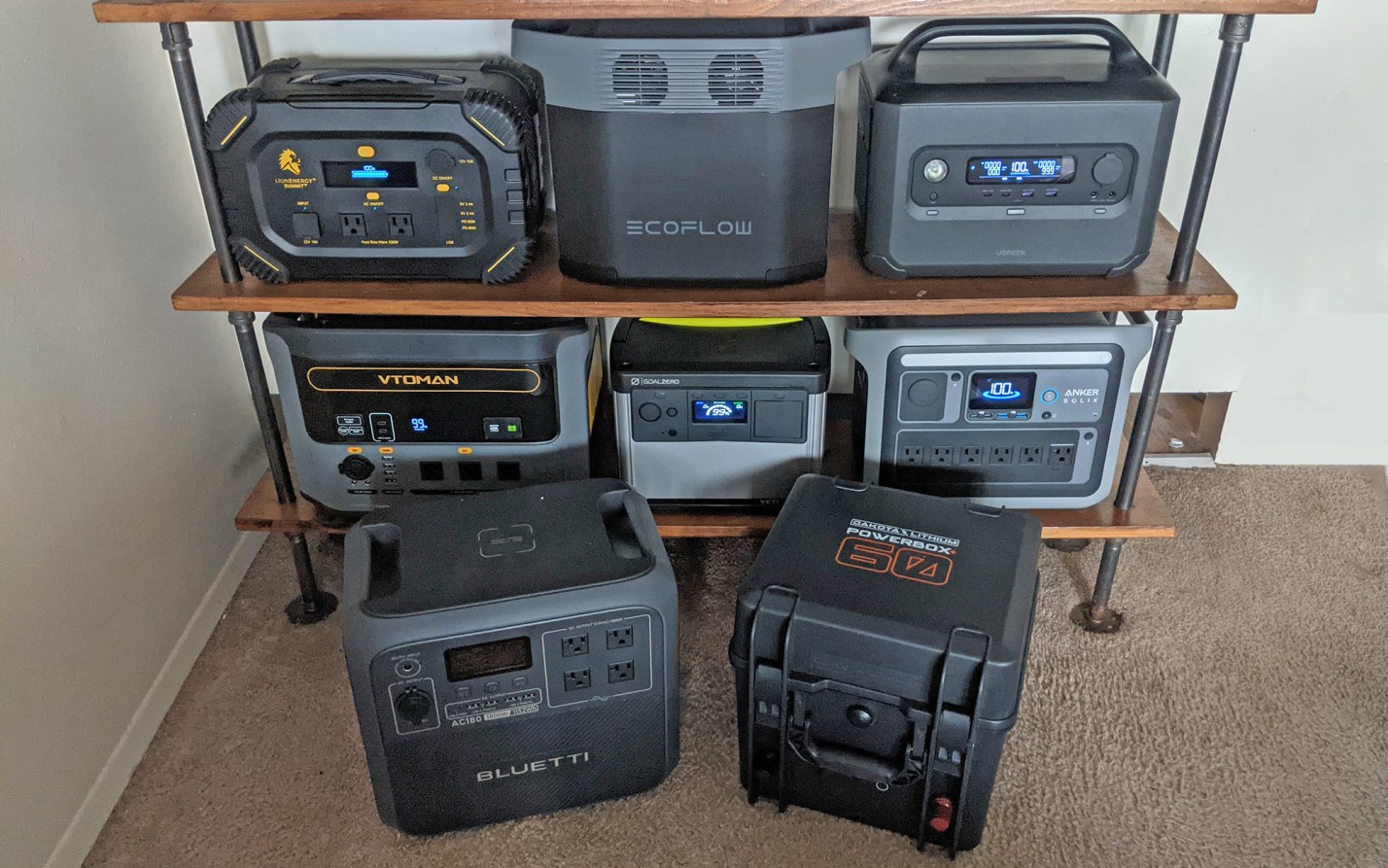
Beyond our top recommendations for 2025, the portable power station market offers a vast array of options, each with unique strengths and weaknesses. Our comprehensive testing extends to numerous models that, while not making our primary "best of" list, still present compelling features or cater to specific user needs. This section delves into these other noteworthy power stations, highlighting their performance, design considerations, and the reasons they might be a fit for certain applications, or why they ultimately fell short of a full recommendation. Understanding these alternatives is crucial for consumers seeking the perfect balance of power, portability, and value for their individual adventures or emergency preparedness.
Ampace Andes 600 Pro for $449:
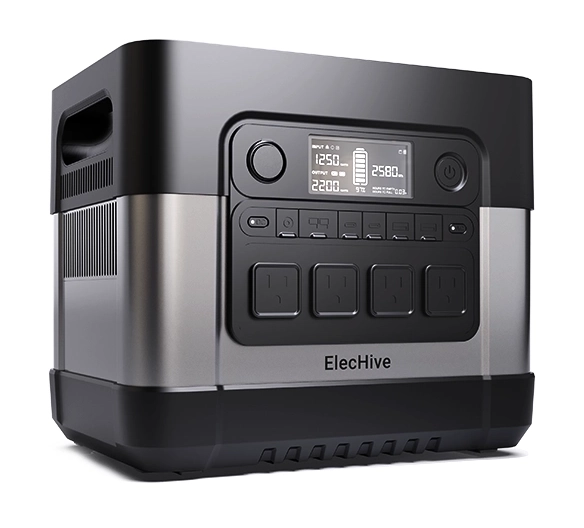
The Ampace Andes 600 Pro emerges as a strong contender for those prioritizing extreme portability and quick charging for lighter use. Weighing in at a modest 19 pounds, its compact form factor is complemented by a conveniently integrated easy-carry handle on top, making it exceptionally travel-friendly. This unit packs 584 watt-hours (Wh) of power, sufficient for charging a range of small gadgets and powering essential camping lights or a portable fan during short excursions. One of its standout features is the rapid charging capability, allowing it to reach a full charge in an impressive one hour, which is a significant advantage when time is of the essence. Furthermore, it boasts a remarkably quiet "sleep mode" operation at just 30 dB, ensuring minimal disturbance in serene environments.
In terms of power output, the Andes 600 Pro can consistently deliver 600 watts, with a surge capacity of 1,800 watts, providing enough headroom for many common electronic devices. Connectivity is robust, featuring a diverse array of ports: two AC outlets, two USB-C ports, two USB-A ports, two DC 5521 ports, and a car port. This versatility ensures compatibility with a wide range of devices, from smartphones and laptops to small appliances. Enhancing its user experience, the power station can be controlled via a remote app, allowing users to adjust settings, monitor power consumption, and even change the function of the integrated light bar or the colored light on top. In our tests, the Ampace Andes 600 Pro performed reliably for its intended purpose. However, its exclusion from our top list stems primarily from the fact that models like the EcoFlow River 2 Pro (a benchmark in its category, though not detailed here) often offer greater power capacity at a more competitive price point, making them a more cost-effective choice for a broader range of users. Nonetheless, for specific scenarios demanding ultra-portability and rapid charging for minimal power needs, the Andes 600 Pro remains a viable option.
EcoFlow Delta 3 Plus for $699:
EcoFlow continues to impress with its design philosophy, and the Delta 3 Plus is no exception, sporting a stylish and compact aesthetic with its screen and all ports thoughtfully arranged at one end for ease of access. This power station offers a substantial 1,024 watt-hours of capacity, making it suitable for powering more demanding appliances and for extended periods. It can consistently provide 1,800 watts of power, with an impressive surge mode peaking at 2,600 watts, enabling it to handle sudden power draws from various tools or appliances. The Delta 3 Plus also excels in charging speed, capable of reaching a full charge in approximately one hour when connected to a wall outlet.
Connectivity is a major strong suit, featuring six AC outlets, one car port, two USB-A ports, two USB-C ports, and two DC5521 ports, providing extensive options for simultaneous charging and powering multiple devices. For those needing even greater endurance, the Delta 3 Plus offers modularity, allowing users to expand its capacity with EcoFlow’s impressively compact and stackable add-on battery, priced at $599. The "Plus" version further distinguishes itself with two solar ports, facilitating faster solar charging capabilities, and it can function as an Uninterruptible Power Supply (UPS) with an excellent 10-millisecond response time, crucial for protecting sensitive electronics during power outages.
Despite these impressive specifications and capabilities, the EcoFlow Delta 3 Plus narrowly missed a full recommendation due to one significant drawback: its fan noise. During testing, the fan exhibited a tendency to activate frequently, even when only charging a single phone, and continued to operate at around 55 decibels even after the unit was fully charged and unplugged. This noise level escalated further when charging the Delta 3 Plus from a wall outlet, becoming a noticeable disturbance. While there is a quiet charging mode available, it significantly reduces the charging rate to 200 watts, extending the full charge time to over five hours, which negates one of the unit’s primary advantages. This persistent fan noise raises concerns about user comfort, particularly in quiet environments, and also subtly hints at potential thermal management challenges, though no explicit overheating issues were observed. Aside from the fan noise, the overall performance, design, and the functionality of its remote control app were commendable.
Acer 600W Portable Power Station for £499:
The Acer 600W Portable Power Station makes a strong case for true portability, making it an ideal companion for lightweight camping trips or as a dedicated power source for small, essential gadgets. Equipped with a LiFePO4 battery, it provides 512 watt-hours of capacity through a total of nine ports: two AC outlets, two USB-A ports, two USB-C ports, two DC5521 ports, and a car port. This comprehensive port selection ensures that users can charge various devices, from smartphones and tablets to cameras and portable lights. Its size is perfectly suited for a campsite where space and weight are critical considerations.
With a maximum output of 600 watts, this power station is well-suited for powering lighting solutions and charging portable electronics. However, users should be mindful of its limitations; it is not designed for powering high-demand appliances such as electric kettles, hair dryers, or large power tools. Charging the Acer unit from a standard wall outlet is relatively swift, taking approximately two hours for a full charge. The power station features a clear and concise LCD display that provides essential information at a glance, including the remaining battery percentage, an estimated run time based on current usage rates, and real-time wattage input and output.
Our tests confirmed the Acer 600W Portable Power Station’s reliable performance for its intended applications. Its main limitations, however, are its market availability—it appears to be primarily available in the UK—and its price point. At £499, it is somewhat expensive given its 512 Wh capacity when compared to other options available in wider markets that offer greater power for similar or even lower costs. For UK consumers seeking a genuinely portable and reliable power source for small devices and lighting on outdoor adventures, it remains a solid, albeit somewhat premium, choice.
Bluetti AC200L for $1,599:
The Bluetti AC200L, while a robust and capable portable power station, finds itself in a peculiar position, having recently been succeeded by the Bluetti Elite 200 V2 (which is presumably a top recommendation in our main list). Despite being an older model, the AC200L still offers a compelling feature set for users requiring significant power. It boasts a slightly lower capacity than its successor but remains a powerful unit for various applications, from home backup to off-grid living.
One of the key advantages of the AC200L is its expandability. Users can significantly boost its power reserves up to an impressive 8,192 watt-hours by integrating Bluetti’s add-on batteries, transforming it into a formidable energy hub. In terms of design and overall performance, the AC200L shares many similarities with the newer Elite 200 V2, indicating a consistent standard of quality and engineering from Bluetti. However, its current market positioning sees it as heavier and pricier than the Elite 200 V2, which naturally makes the newer model a more attractive proposition for most buyers. If found at a significantly reduced price, the AC200L could still represent excellent value, particularly for those who prioritize expandability and a proven track record. For the average consumer, however, the Elite 200 V2 generally edges it out, offering a better balance of price, weight, and up-to-date specifications.
Dabbsson DBS1000 Pro Portable Power Station for $569:
The Dabbsson DBS1000 Pro presents itself as a highly capable portable power station, boasting a 1024-watt-hour capacity powered by a durable LiFePO4 battery. This combination ensures both substantial energy storage and a long cycle life. The unit offers a versatile array of charging and powering options, particularly in its US model, which includes four AC outlets, three USB-A ports, three USB-C ports, a car socket, and two DC5521 barrel ports. This extensive port selection caters to a wide variety of modern electronics and small appliances.
One of the Dabbsson DBS1000 Pro’s impressive features is its rapid charging capability; it can reach 80 percent charge in under an hour when plugged into a wall outlet, though this speed often comes with an increase in fan noise. Beyond wall charging, it also supports solar panels and carports for flexible recharging options in diverse environments. For smart control, the unit can connect via Wi-Fi and be managed through a dedicated app. However, its intuitive display provides all necessary information—including input/output wattage, battery percentage, and estimated run time—without needing the app. A customizable light bar underneath adds a touch of personalization.
Performance-wise, the Dabbsson DBS1000 Pro shines with an impressive 2,000-watt output, further enhanced by boost and surge modes that can briefly elevate the output to 3,000 and 4,000 watts, respectively, to handle demanding loads. In our tests, it performed well and can function as an Emergency Power Supply (EPS) with a quick 15-millisecond delay, ensuring continuous power for critical devices. While a solid alternative to our top picks, it doesn’t quite stand out due to a couple of notable issues. The fan, while contributing to efficient cooling during fast charging or high loads, comes on frequently and can be quite annoying, impacting the user experience in quiet settings. Additionally, we encountered an intermittent issue where one of the USB ports occasionally failed to charge a phone, suggesting a potential minor reliability concern. For users needing more capacity, the DBS1000 Pro can be paired with the DBS2000B battery expansion, boosting its total capacity to 3,072 watt-hours and increasing the output to 2,400 watts. Dabbsson also offers a reassuring 5-year warranty with registration, underscoring their confidence in the product’s longevity.
Bluetti AC180 for $499:
The Bluetti AC180 represents a more compact and mid-range offering from Bluetti, serving as a solid alternative for users who don’t require the substantial power output of larger units. This power station features a LiFePO4 battery, known for its longevity and safety, providing a respectable 1,152-watt-hour capacity. It delivers a maximum continuous output of 1,800 watts, with a surge capability of up to 2,700 watts for brief periods, allowing it to power a variety of small to medium-sized appliances.
The US model of the AC180 is well-equipped with connectivity options, including four AC outlets, a powerful 100W USB-C port, and four USB-A ports (each at 15W). A convenient wireless charging spot on top, delivering up to 15 watts, adds to its versatility for modern devices. Like many of its peers, the AC180 can be fully charged from a wall outlet in just an hour, and it includes cables for both solar and car charging, offering flexible recharging solutions. It also supports UPS functionality with a 20-millisecond switching time, providing peace of mind during unexpected power interruptions. This power station is particularly well-suited for powering small gadgets, maintaining essential lighting, or running appliances like a TV or a mini-fridge during camping trips or minor outages.
During heavy loads, the fan noise reached around 45 decibels, which is generally tolerable for most environments, though not entirely silent. However, the AC180 has a couple of drawbacks that prevented it from climbing higher in our recommendations. Its weight of 35 pounds feels relatively heavy for its 1,152 Wh capacity when compared to some competitors offering similar power in lighter packages. Furthermore, while it has a good array of ports, the inclusion of more high-power USB-C ports would enhance its appeal, given the increasing prevalence of USB-C powered devices. Despite these minor criticisms, the Bluetti AC180 remains a reliable and efficient power station for its intended use cases.
Zendure SuperBase Pro 2000 for $2,099:
The Zendure SuperBase Pro 2000 is an impressive, high-capacity portable power station designed for users with significant power demands, whether for extended camping trips, professional fieldwork, or robust home backup. With a colossal 2,096-watt-hour capacity, it stands ready to power a wide range of devices and appliances. Its extensive array of outlets ensures maximum utility: six AC outlets, one car port, three DC5521 ports, and four USB-C ports, providing ample connectivity for virtually any gadget. The unit delivers a maximum continuous output of 2,000 watts, with a surge capability of 3,000 watts, allowing it to handle power-hungry tools and electronics.
Despite its substantial capacity, Zendure has made commendable efforts to enhance its portability. Weighing 47 pounds, it’s certainly not light, but the inclusion of two sturdy wheels, a comfortable carry handle, and a separate telescopic handle transforms it into a surprisingly manageable unit, akin to rolling luggage. The accompanying Zendure app is slick and user-friendly, offering comprehensive control and monitoring capabilities. The SuperBase Pro 2000 can also serve as an uninterruptible power supply (UPS), adding a layer of protection for sensitive electronics. In our tests, it performed exceptionally well, delivering consistent power and meeting its advertised specifications.
However, the SuperBase Pro 2000’s primary drawbacks revolve around its battery chemistry and persistent fan noise. The unit utilizes a Li-NMC (Lithium Nickel Manganese Cobalt) battery. While Li-NMC batteries offer a greater energy density, allowing for more power in a similarly sized package compared to LiFePO4 (as evidenced by the SuperBase Pro 1500, which uses LiFePO4 and has a lower 1440 Wh capacity), they generally have a shorter cycle life and are less stable at high temperatures than their LiFePO4 counterparts. This raises concerns about the long-term longevity and durability of the unit. The standard warranty is 2 years, though it can be extended by an additional year upon registration with Zendure, which is a welcome option. Another point of contention is the fans, which were almost constantly active during operation, generating a noticeable hum that could be disruptive in quiet environments. While the SuperBase Pro 2000 is a powerful and feature-rich device, these considerations regarding battery type longevity and fan noise prevented it from securing a top recommendation, pushing it into the category of a strong alternative for users who prioritize raw capacity and specific portability features despite these caveats.
In conclusion, while the portable power stations detailed above offer a range of impressive features, from rapid charging and extensive port selections to robust power outputs and smart app controls, each also presents specific compromises. Whether it’s the persistent fan noise of the EcoFlow Delta 3 Plus, the weight-to-capacity ratio of the Bluetti AC180, or the battery chemistry concerns of the Zendure SuperBase Pro 2000, these factors are crucial in determining their suitability for different users. Our comprehensive "Top 10" list likely features models that strike a more harmonious balance across these critical metrics, but for those with unique requirements or specific budget considerations, these "other" tested units provide valuable insights into the broader portable power landscape of 2025. Ultimately, the best choice depends on carefully matching a power station’s capabilities and limitations to your exact power capacity needs, portability demands, and expected usage scenarios, whether for camping adventures, emergency preparedness, or off-grid living.