
Apple’s App Course Runs $20,000 a Student. Is It Really Worth It?
The Apple Developer Academy in Detroit, a program costing an estimated $20,000 per student, stands as a prominent example of corporate-backed initiatives aimed at bridging the tech divide. Launched two years ago as a cornerstone of Apple’s $200 million Racial Equity and Justice Initiative—a direct response to the Black Lives Matter protests—the academy sought to cultivate opportunities for people of color in Detroit, a city grappling with significant economic disparities. Yet, as the program matures, a thorough examination reveals a complex landscape of successes, challenges, and unanswered questions regarding its true efficacy and long-term impact.
Lizmary Fernandez, a 25-year-old who paused her aspirations of becoming an immigration attorney to enroll, embodies some of these complexities. While the academy offered tuition-free instruction in iPhone app development, Fernandez quickly found the provided cost-of-living stipend insufficient. “A lot of us got on food stamps,” she recounts, detailing how she relied on waitressing shifts and government aid to supplement her income. More critically, she felt the coursework did not adequately prepare her for a coding career. “I didn’t have the experience or portfolio,” Fernandez states, now a flight attendant preparing for law school, having left coding behind. Her journey highlights a crucial tension: while the academy aims to empower, the leap from classroom learning to a competitive tech job market remains formidable for many.
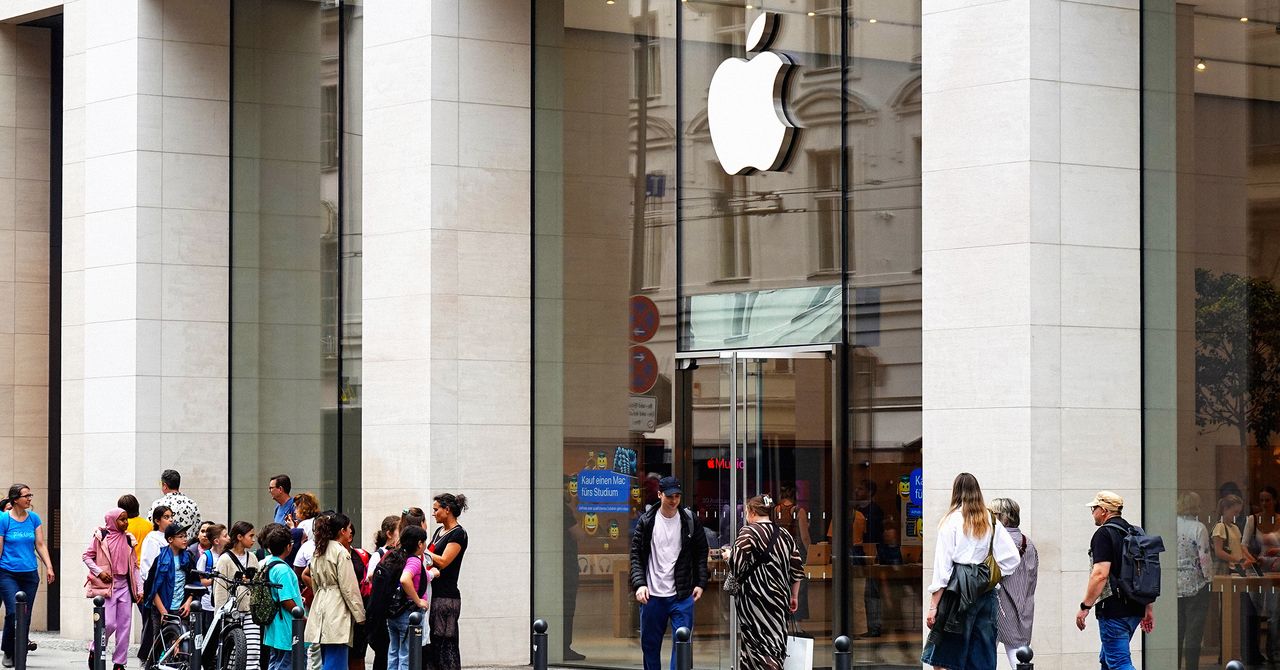
Since its inception in 2021, the Detroit academy has welcomed over 1,700 students, a diverse cohort encompassing various racial backgrounds, tech proficiencies, and financial circumstances. Approximately 600 students, including Fernandez, have completed the intensive 10-month, half-day program hosted at Michigan State University (MSU), a key co-sponsor. WIRED’s in-depth investigation, based on contracts, budgets, and interviews with officials and graduates, provides the first comprehensive look at the nearly $30 million invested over four years. This substantial sum, almost 30 percent of which originates from Michigan taxpayers and regular university students, places the Apple academy under scrutiny, particularly as tech giants increasingly channel billions into AI-related job training nationwide. The academy, therefore, offers invaluable lessons on the inherent challenges of fostering upward mobility within diverse communities.
Measuring Success: A Dual Narrative
For some graduates, the academy has been genuinely transformative. Seven individuals interviewed by WIRED reported positive experiences, praising the mentorship opportunities and the program’s emphasis on developing inclusive apps. Fernandez herself acknowledges the sincerity of Apple speakers, noting, “Their heart was in the right place.” Min Thu Khine’s story is particularly inspiring; he credits the program with changing his life, now mentoring coding students and working at an Apple Store Genius Bar, with a clear ambition to become a software engineer at Apple. Dayan Abdulla, 22, who entered with "zero coding experience," graduated last June and is now working in quality assurance at a software startup while pursuing computer science at Henry Ford College, describing his trajectory as "good." Even Joey Brinker, a 20-year-old concurrently enrolled at the University of Michigan–Dearborn, credits the academy with improving his university grades.
Academic researchers also offer commendation. Quinn Burke, who studies tech education, suggests the academy’s fully subsidized, in-person instruction surpasses the quality of many coding boot camps that proliferated over the last decade, often leaving students burdened with debt and limited skills. The academy’s open enrollment policy, welcoming individuals from 18-year-olds to a 70-year-old grandfather developing a photo app for his grandchild, fosters a unique, multi-generational learning environment. While this inclusivity enriches the classroom, it also complicates the standardization of instruction and the measurement of success across such varied starting points and aspirations.
The financial commitment is substantial, with an estimated $20,000 spent per student—nearly double what state and local governments typically budget for community colleges. This figure includes providing students with iPhones and MacBooks. Despite this generous allocation, the cost-of-living stipend remained a point of contention for some, like Fernandez, who juggled waitressing and food aid. Gordon Shukwit, a senior director at Apple overseeing the Detroit academy and 17 other international Apple academies, acknowledges student aid as a continuous focus. MSU, however, declined to comment on the cost-per-student estimates or comparisons to community college spending, asserting that the academy provides an unparalleled experience.
Officially, the academy boasts a 70 percent graduation rate, which Sarah Gretter, the academy leader for Michigan State, notes is higher than typical for adult education. The program’s stated goal for graduates is to take "a next step," whether into a job or further education. Approximately one-third of participants are under 25, with virtually all pursuing further schooling. Furthermore, officials report that about 71 percent of graduates from the past two years secured full-time jobs across diverse industries. The academy also claims credit for the creation of 62 apps and 13 businesses, including an animation workshop for children and a captioning tool for conferences. Amy J. Ko, a University of Washington computer scientist, places the 71 percent job placement rate within the typical range for coding schools she’s studied, though she notes her department’s own undergraduate programs achieve a 95 percent placement rate.
The Veil of Data and Evolving Realities
Despite these reported successes, a critical lack of transparency clouds the academy’s true impact. Apple, MSU, and the Gilbert Family Foundation—a major funder—have declined to disclose the graduate-by-graduate employment data that the foundation itself requires the program to collect and share. MSU initially informed WIRED in July, in response to a public records request, that no such reports existed, only to provide partial reports later that did not allow for comprehensive analysis. This opacity makes it challenging for independent observers to fully assess the program’s return on investment, particularly for the public funds involved.
Susan Prescott, Apple’s vice president of worldwide developer relations, emphasizes that most graduates assume roles utilizing coding, design, project management, and marketing skills refined at the academy. In Apple’s view, alumni success transcends mere statistics, encompassing broader skill development. Shukwit reinforces this, stating the academy’s primary goal is to impart teamwork, research, and technology skills applicable to any future career path.
However, the academy’s singular focus on Apple operating systems like iOS presents a significant limitation. Two graduates reported that their lack of proficiency in competing platforms such as Android hindered their job search. This specialization risks narrowing career opportunities, particularly in a global mobile app economy that is growing more slowly than in previous years. Adding to this challenge, the advent of generative AI coding tools threatens to automate and potentially eliminate many entry-level software engineering positions. As Ashley Rea Maharaj, an assistant professor at the University of North Texas, observes, “The job market for junior developers and graduating computer science majors is certainly the worst it’s been in some time.” Underwriting a program built almost exclusively around iOS development, therefore, may become increasingly precarious in the coming years.
Further concerns have emerged regarding current students’ experiences. Shukwit attributed reduced financial support for some students to an unspecified new Michigan rule restricting access to state funding. A second-year student, who wished to remain anonymous for fear of retaliation, reported their stipend for second-year students was cut from $1,500 to $800 a month—equivalent to about $9 an hour—forcing them to take on three side jobs. Additionally, they cited limitations on free parking, sick days, remote work options, and collaboration spaces. “It makes it hard to just focus on school,” they lamented. This student also expressed skepticism about the relevance of current second-year projects, which are for small businesses often lacking clear app goals and unlikely to hire the students upon completion. “I was feeling hopeful about moving into the tech world, and it just feels like that isn’t really going to be possible because I am not getting the experience,” they concluded, highlighting a pervasive "uncertainty."
A Broader Context of Corporate Education
Corporate funding and shaping of training programs are not new phenomena, with businesses historically investing in fields like nursing and construction to cultivate a beneficial workforce. Last year, industry contributed approximately $7.6 billion in voluntary support for US higher education, a modest but growing percentage of overall college and university budgets. However, the current wave of investment by tech giants is unprecedented, driven by the belief that AI will fundamentally reshape traditional career trajectories. Google has pledged $1 billion over the next three years for AI education and job training in the US, while Microsoft plans to outlay $4 billion globally over five years. Apple and Michigan State have also recently launched the Apple Manufacturing Academy, a separate multi-million dollar program to train small businesses in AI applications for factories.
The central question looming over all these initiatives, including the Developer Academy, is their capacity to adapt to technologies evolving at breakneck speed, equipping students with the resilience necessary to navigate a volatile job market. For Lizmary Fernandez, the academy did demystify coding, making it "no longer rocket science." She had hoped to transition into software development, perhaps freelancing or developing her own diet-tracking app. Yet, her team’s final drawing app project never became functional or made it to the App Store, and her personal projects never materialized. She never felt sufficiently equipped or secure to fully abandon her law school ambitions. Fernandez now wishes for a two-year program, as offered by some other Apple academies, stating, “It was only halfway through that I started understanding concepts.”
Shukwit acknowledges the student demand for more, noting the academy’s curriculum is reworked every few weeks, incorporating workshops for new technologies like Apple Vision Pro headsets or AI for auto-generating code, albeit with the caveat that students must understand and explain their code rather than using AI as a shortcut. Alumni also have access to virtual lessons on generative AI.
Four years in, the Apple Developer Academy has made a small but significant dent in a massive problem. The tech industry continues to struggle with a profound lack of diversity, and some companies have even become less transparent about their workforce demographics. Apple’s own data reveals a disconcerting trend: its US tech workforce, which was 6 percent Black before the Detroit academy opened, has decreased to approximately 3 percent this year. This stark figure underscores the immense scale of the challenge and raises questions about whether even well-intentioned, multi-million-dollar initiatives can counteract broader systemic forces. For some alums like Fernandez, their experiences and unfulfilled dreams remain tangible reminders, often found at their fingertips. “I use the MacBook all the time,” she says, a bittersweet testament to an experience that offered much, yet delivered varying returns on its substantial investment.