Thousands attend Christmas tree lighting ceremony in Bethlehem, the first since war in Gaza began.
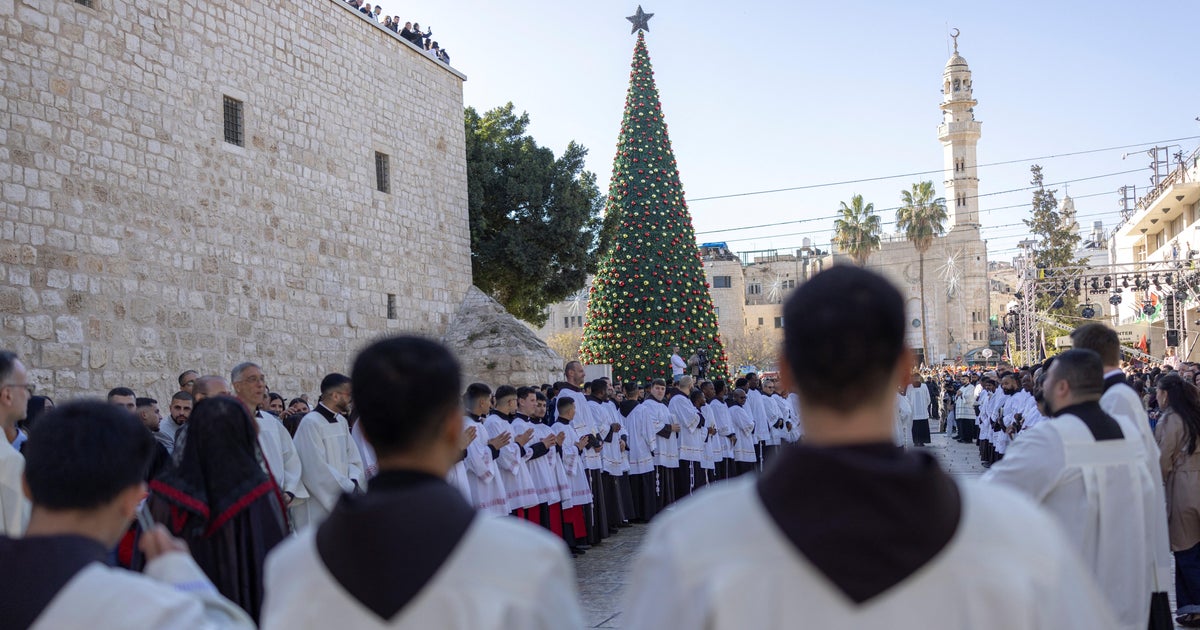
Bethlehem, the revered birthplace of Jesus Christ, on Christmas Eve hosted its annual Christmas tree lighting ceremony in the historic Manger Square, marking a poignant return to a cherished tradition after a two-year hiatus enforced by the ongoing conflict in the region. The event, historically a beacon of joy and wonder that draws pilgrims from across the globe, was a stark testament to resilience this year, being the first such celebration since the devastating war in Gaza commenced in 2023. While thousands of residents from nearby towns and villages gathered to partake in the festivities, a noticeable and deeply felt absence was that of international tourists and Christian pilgrims, whose usual throngs were replaced by a sparse few.
For more than two years, the Holy Land has been grappling with the profound repercussions of the conflict. Following Hamas’ deadly terrorist attacks on Israel on October 7, 2023, the subsequent war in Gaza plunged the region into turmoil. This grim reality led church leaders to make the difficult decision to cancel Bethlehem’s public Christmas celebrations in both 2023 and 2024, casting a pall over what is typically the city’s most vibrant and economically crucial season. The usual festive decorations, carols, and vibrant processions were replaced by a somber quiet, mirroring the deep anguish felt throughout the Palestinian territories. Travel advisories from numerous countries deterred visitors, transforming Bethlehem’s bustling streets into desolate pathways, and its vibrant markets into hushed spaces.
However, a glimmer of hope emerged with the recent Trump administration-brokered ceasefire in Gaza. For Bethlehem Mayor Maher Canawati, this fragile peace was a compelling enough reason to rekindle the spirit of Christmas and endeavor to bring the faithful back to the very place where the Christmas story began. Speaking on the significance of the event, Canawati underscored the vital role of tourism in the city’s survival. "Bethlehem, you know, we are living from tourists, from tourism and from pilgrims who come to stay in our hotels, to eat in our restaurants, to buy our souvenirs that we’re producing here," Canawati explained, his voice conveying the urgency of the situation. "And there was a complete halt on tourism for the past two years." His decision to proceed with the tree lighting was not merely an act of celebration, but a desperate plea for normalcy and economic revival for a city teetering on the brink.
The economic devastation inflicted by the absence of tourism has been catastrophic for Bethlehem. The city, intrinsically linked to its role as a pilgrimage destination, relies almost entirely on the influx of visitors. In times of peace, the 4th-century Church of the Nativity, one of the world’s oldest and most sacred Christian sites, would welcome an astonishing 15,000 visitors every single day. This steady stream of pilgrims sustained a thriving ecosystem of hotels, restaurants, artisan shops, and tour services. The abrupt cessation of this flow led to an unprecedented economic collapse, driving unemployment rates in Bethlehem up to a staggering 70%. Hotels, once fully booked months in advance, reported record high vacancies, their empty rooms serving as silent monuments to the city’s plight.
The human toll of this crisis is deeply personal. Muhammad Abu Jurah, whose family has owned and operated a souvenir shop in Bethlehem for generations, shared his heartbreaking experience. For years, his shop was a bustling hub, employing six staff members who helped craft and sell unique local keepsakes. Over the last two years, however, with no tourists to purchase his wares, Abu Jurah was forced to make the agonizing decision to lay off his entire staff. "We don’t have a lot of tourists because, you know, the war," he lamented, "So, this is why they have a big problem in Bethlehem without tourists." His story is echoed by countless families in Bethlehem whose livelihoods have been shattered.
Matthew Qasis, a seasoned tour guide who has spent his entire adult life navigating Bethlehem’s historical sites and sharing its stories with visitors, expressed a profound sense of despair. "I’ve never seen the area so quiet," he confessed, the stillness a stark contrast to the vibrant energy he once knew. His career, built on connecting people to the spiritual heart of Christianity, had come to a virtual standstill. Yet, amidst the quiet, Qasis clung to a powerful message he wished to convey to Christians around the world: "Come back, because Bethlehem belongs to everyone, and Bethlehem is a message of love and peace." His words resonated with the core identity of Bethlehem, a place traditionally associated with hope and universal brotherhood. He emphasized that this message of peace is "needed now more than ever," serving as a prayer that the faithful would soon return to the place believed to be Christmas’s origin.
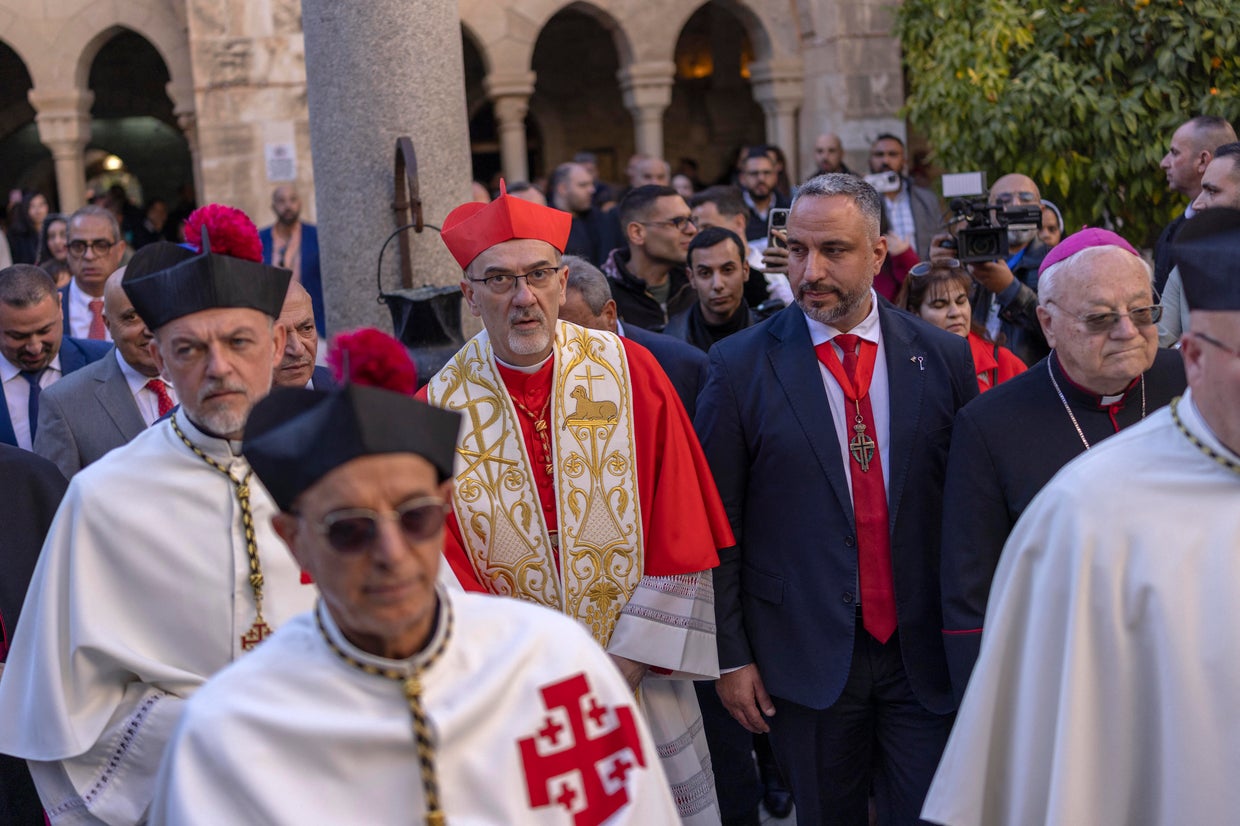
The ceremony itself, though subdued compared to pre-war years, was steeped in spiritual significance. The faithful, primarily locals, gathered in Manger Square, their faces a mix of solemn reflection and hopeful anticipation. The annual Christmas procession, a tradition stretching back centuries, saw clergy members making their way through the ancient streets. The highlight, the lighting of the magnificent Christmas tree, brought a collective sigh of relief and a spark of joy, its lights piercing the lingering darkness of recent years. The tree, adorned with symbols of peace and resilience, stood not just as a festive decoration but as a powerful symbol of enduring faith and the unwavering spirit of the Bethlehem community.
The holiday celebrations were formally commenced by Cardinal Pierbattista Pizzaballa, the Catholic Church’s top leader in the Holy Land and the Latin Patriarch of Jerusalem. He led the traditional procession from Jerusalem to Bethlehem on Wednesday, a journey imbued with historical and spiritual weight. Addressing the crowd in Manger Square, Cardinal Pizzaballa delivered a heartfelt message, calling for "a Christmas full of light." His words carried particular resonance given the preceding years of conflict. "After two years of darkness, we need light," Pizzaballa declared, his voice a beacon of spiritual leadership. He encouraged the community to actively embody this hope: "We, all together, we decide to be the light, and the light of Bethlehem is the light of the world." The Cardinal also brought greetings from the small, embattled Christian community in Gaza, where he had held an early Christmas mass on Sunday, adding a poignant layer of solidarity and shared suffering to his message.
The return of the Christmas tree lighting ceremony in Bethlehem, despite the continued challenges and the absence of international pilgrims, stands as a powerful symbol of hope and resilience. It is a testament to the enduring faith of a community that has faced immense hardship, yet refuses to let its spiritual light be extinguished. The messages from Mayor Canawati, shop owner Muhammad Abu Jurah, tour guide Matthew Qasis, and Cardinal Pierbattista Pizzaballa collectively paint a picture of a city deeply wounded but determined to heal, and a people yearning for the return of peace and the embrace of the global community. Bethlehem, the cradle of Christmas, once again sends forth its universal message of love and peace, now more than ever, a desperate prayer for healing in a fractured world. The journey to full recovery will undoubtedly be long and arduous, but with the lighting of the tree, a crucial step towards reclaiming its identity as a global beacon of hope has been taken.
The Associated Press contributed to this report.