Putin aide says "much work to be done" on Ukraine peace plan after Moscow meeting with Kushner and Witkoff
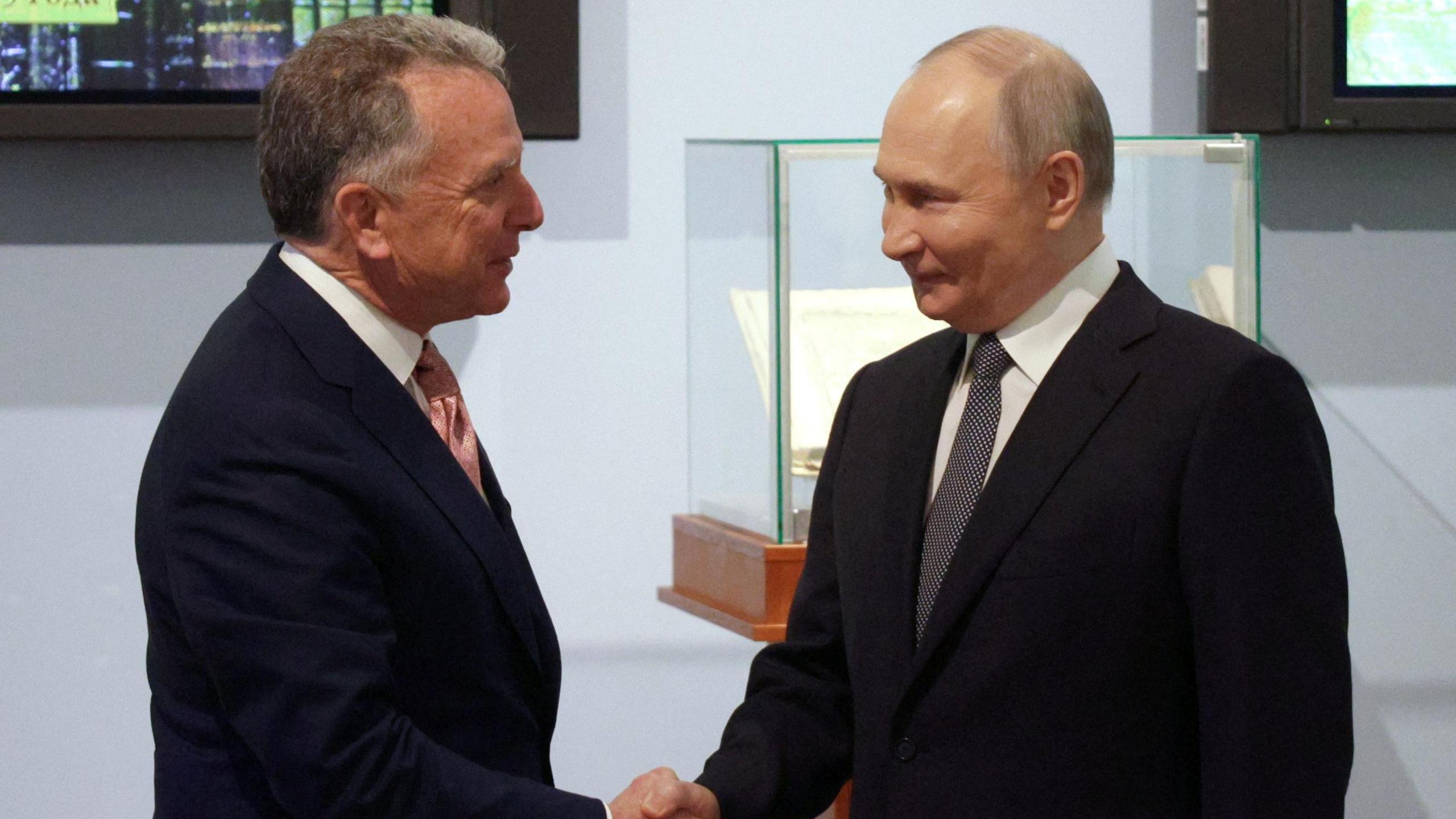
A top aide to Russian President Vladimir Putin, Yuri Ushakov, stated there is still "much work to be done" following a high-stakes, five-hour meeting in Moscow on Tuesday, December 2, 2025, between President Donald Trump’s son-in-law, Jared Kushner, and U.S. special envoy Steve Witkoff, and the Russian leader himself. The clandestine diplomatic mission underscored the Trump administration’s intensified push to broker an end to the protracted and devastating war in Ukraine, a conflict that has reshaped global geopolitics and claimed countless lives.
The meeting, held at the Kremlin, came on the heels of parallel discussions between U.S. and Ukrainian officials in Florida over the preceding weekend, signaling a concerted, multi-pronged effort by Washington to advance a peace initiative. Ushakov characterized the talks as "constructive, very useful, and substantive," a cautiously optimistic assessment from a seasoned Russian diplomat. However, he quickly tempered expectations, confirming that a comprehensive compromise on the deeply entrenched territorial issues in Ukraine—the undeniable core of the conflict—remained elusive.
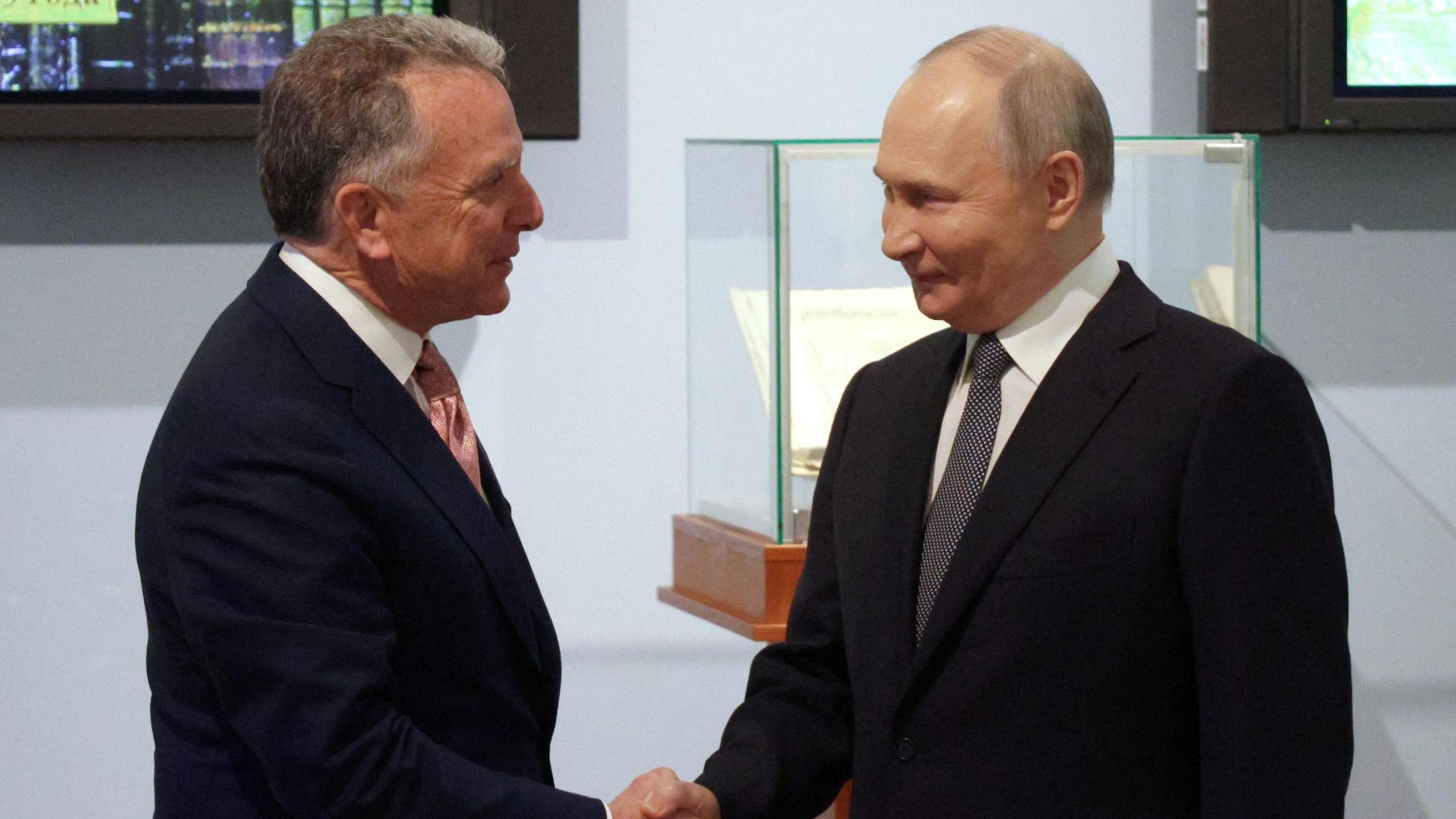
"The territorial issue, naturally, is the most important for us, and for the Americans too. A compromise option has not yet been found, but some American developments look more or less acceptable, but they need to be discussed," Ushakov conveyed to reporters after the meeting, hinting at a glimmer of flexibility on Moscow’s part regarding certain proposals. He added, "Some formulations that were proposed to us are acceptable to us." Despite these glimmers, the veteran aide reiterated the sobering reality: "We are no closer to resolving the crisis in Ukraine, and there is much work to be done." This phrase, "much work to be done," became the leitmotif of the post-meeting briefing, underscoring the formidable diplomatic chasm that still separates the warring parties.
During the extensive dialogue, Moscow reportedly received four additional documents, supplementing the original 28-point peace plan that the Trump administration had initially floated last month. Ushakov, however, remained tight-lipped about the specific contents of these new proposals, stating that both Russia and the U.S. had agreed to maintain strict confidentiality regarding the details of the discussions. This secrecy, while common in sensitive diplomatic negotiations, also fueled speculation about the nature of the concessions or demands being put forth by each side.
The choice of Jared Kushner and Steve Witkoff as special envoys raised eyebrows in diplomatic circles, given their lack of traditional foreign policy experience. Kushner, a real estate developer and former senior advisor to President Trump, and Witkoff, a prominent real estate mogul and long-time associate of the Trump family, represent an unconventional approach to high-stakes diplomacy. Their involvement highlights President Trump’s preference for personal envoys and his belief in a "deal-maker" approach to international relations, often bypassing established State Department channels. Ushakov confirmed that no direct talks between Putin and President Trump were currently scheduled, but Putin had asked Witkoff and Kushner to relay "important political signals" directly to the American president. The two envoys are expected to return to the U.S. to brief President Trump, after which they will re-engage with Russian officials via telephone, maintaining the momentum of the nascent dialogue.
The Moscow meeting is the latest in a series of intense diplomatic maneuvers initiated by the Trump administration to fulfill President Trump’s campaign promise of ending the conflict, which by late 2025 has dragged on for nearly four years, exacting an enormous human and economic toll. The war has destabilized Europe, triggered a global energy crisis, and inflamed geopolitical tensions worldwide. With a renewed mandate, President Trump has made resolving the conflict a cornerstone of his second term, positioning himself as the ultimate mediator.
Earlier in the week, Secretary of State Marco Rubio, who participated in the weekend talks with Ukrainian officials in Florida, had offered a similarly cautious but hopeful outlook. He described those conversations as "another very productive session" but acknowledged that "there are a lot of moving parts." President Trump himself expressed optimism after the Sunday talks, telling reporters, "I think that there’s a good chance we can make a deal." He further suggested that the initial U.S.-backed peace proposal had undergone significant revisions in response to criticism.
The original 28-point plan, unveiled last month, had drawn considerable pushback from both U.S. and European officials who deemed it overly favorable to Russia. A particularly contentious provision reportedly called for Ukraine to cede territory it currently controlled in the Donetsk region to Russia. Such a concession would be a monumental blow to Ukrainian sovereignty and a dangerous precedent in international law, making it a near-impossible sell for Kyiv. President Trump, addressing these concerns, stated over the weekend, "They’re making concessions," referring to the Russians. "They’re big concessions. They stop fighting, and they don’t take any more land." This statement implied a shift in the Russian position or, at the very least, a reinterpretation of the proposed terms by the American side.
Ukrainian President Volodymyr Zelenskyy, navigating the treacherous waters of international diplomacy and domestic pressure, held a news conference on Tuesday, prior to the Moscow talks. He revealed that the peace plan had been refined and whittled down to 20 points following earlier discussions in Geneva and Florida. Zelenskyy indicated a willingness to engage, stating on the social media platform Telegram that Ukraine would "wait for signals from the American delegation after its meetings in Russia." His readiness to meet with President Trump underscored Ukraine’s desperate need for a diplomatic resolution, provided it upholds the nation’s core interests. "We will receive certain signals. If the signals work, if it is fair play with our partners, then perhaps we will meet with the American delegation very soon," he said, adding, "I am ready to meet with President Trump. Everything depends on today’s talks."
For Moscow’s part, President Putin had previously described the proposals not as a firm draft agreement but merely a "set of issues put forward for discussion," reflecting the Kremlin’s strategic ambiguity and its desire to maintain leverage. This cautious approach from both Moscow and Kyiv highlights the immense complexities involved in negotiating an end to a conflict of this magnitude, where national pride, territorial integrity, and the lives of millions hang in the balance.
Just last week, a U.S. official had told CBS News that Ukraine had "agreed to a peace deal," with Ukrainian national security adviser Rustem Umerov concurring that a common understanding on a proposal had been reached, though details were still being finalized. President Trump had expressed optimism over this development, noting only "a few remaining points of disagreement." However, the Kremlin swiftly countered, stating it was "premature" to suggest that the two sides were close to a peace deal, effectively dampening expectations and reasserting the significant hurdles that remain.
The core challenge remains the "territorial issue." Ukraine, backed by its Western allies, insists on the full restoration of its 1991 borders, including Crimea and the Donbas regions. Russia, conversely, has integrated these territories into its constitution and views any discussion of their return as non-negotiable, a fundamental red line. The "acceptable formulations" mentioned by Ushakov could pertain to a temporary ceasefire, security guarantees for both sides, the status of occupied territories pending a future resolution, or even a framework for international supervision, but a permanent resolution without addressing the land issue seems improbable.
The involvement of non-traditional envoys like Kushner and Witkoff, while potentially offering a fresh perspective, also carries risks. Their lack of deep institutional knowledge and experience in multilateral diplomacy could lead to missteps or alienate traditional allies who prefer established diplomatic channels. European leaders, many of whom have steadfastly supported Ukraine and imposed severe sanctions on Russia, are likely watching these American-led, back-channel negotiations with a mix of hope and apprehension, concerned that any deal might undermine their own efforts or compromise principles of international law.
The path to peace is fraught with immense difficulties. Beyond territorial disputes, issues such as reparations for war damages, the return of displaced persons, accountability for war crimes, and long-term security guarantees for Ukraine must be addressed. The trust deficit between Moscow and Kyiv is profound, making any agreement difficult to reach and even harder to enforce. International monitoring, robust verification mechanisms, and sustained political will from all parties will be crucial for any peace plan to succeed. As Ushakov rightly concluded, while lines of communication are open and discussions are constructive, "much work remains to be done" before the guns fall silent and a lasting peace can truly take root in Ukraine.
Nancy Cordes, James LaPorta, Camilla Schick, Margaret Brennan, Callie Teitelbaum and Kathryn Watson contributed to this report.