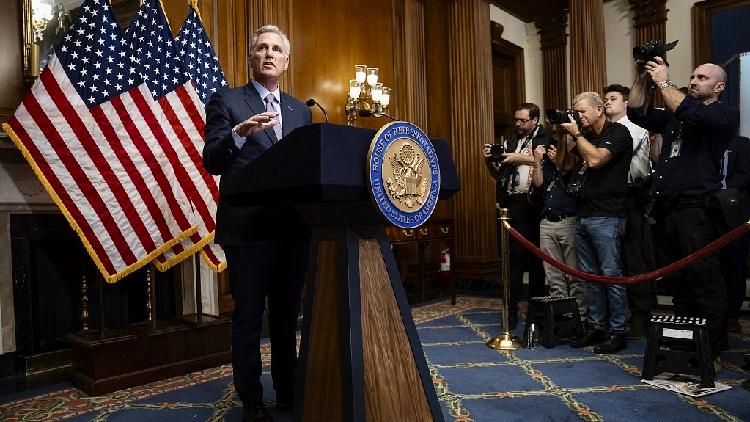
X’s new feature reveals foreign origins of some popular U.S. political accounts
In a significant move that sent ripples through the digital landscape, social media platform X, formerly Twitter, unveiled a new feature on Saturday, November 25, 2025, allowing users to pinpoint the geographic origin of accounts. The immediate aftermath of this rollout, announced by X’s head of product, Nikita Bier, has been nothing short of revelatory, unmasking a network of seemingly American political accounts with popular followings as being operated from distant corners of the globe, primarily South Asia, Africa, and Eastern Europe. This development has reignited urgent concerns about foreign interference in U.S. political discourse and the integrity of online information.
For years, accounts bearing names like @TRUMP_ARMY or @MAGANationX have cultivated substantial followings, often numbering in the thousands or even hundreds of thousands. Their profiles typically feature patriotic imagery – portraits of President Donald Trump, vibrant voter rallies, and American flags – and their constant stream of posts about U.S. politics positions them as ardent supporters and diehard fans of the president and the MAGA movement. Yet, the weekend’s update to X’s platform has peeled back this carefully constructed facade, exposing the true geographic bases of their operators.
The "About This Account" tool, as dubbed by X, provides a simple mechanism for transparency: by tapping or clicking on an account’s signup date displayed on its profile, users can now view the country or region where that account is based. Within hours of its launch, online sleuths and independent researchers quickly began to identify numerous popular accounts that, despite their overt American branding and political commentary, were unequivocally rooted outside the United States. This stark contrast between professed identity and actual location has amplified warnings from experts regarding the pervasive and often subtle nature of foreign influence operations targeting American democracy.
NewsGuard, a prominent firm dedicated to tracking and combating online misinformation, was among the first to corroborate these findings. Their researchers identified multiple accounts that had successfully posed as politically engaged Americans, only to be revealed as originating from Eastern Europe, Asia, or Africa. These accounts were not merely passive observers; they were actively engaged in disseminating misleading and polarizing claims about U.S. politics, including particularly incendiary accusations, such as the baseless assertion that Democrats had bribed the moderators of a 2024 presidential debate. Such claims, amplified by seemingly authentic American voices, have the potential to significantly distort public perception and erode trust in democratic processes.
Nikita Bier, X’s head of product, framed the new feature as a crucial step towards safeguarding the platform’s integrity. In a post on X, Bier stated, "This is an important first step to securing the integrity of the global town square. We plan to provide many more ways for users to verify the authenticity of the content they see on X." This statement underscores X’s recognition of the severe challenges posed by inauthentic accounts and influence operations, a problem that has plagued social media platforms for over a decade.
However, the implementation of such a tool is not without its complexities and limitations. In countries where punitive speech restrictions are prevalent, X has incorporated a privacy measure allowing account holders to display only their general region rather than a specific country. For instance, an account based in India might simply show "South Asia" as its origin. Bier also claimed on Sunday that, following an update, the tool would achieve 99.99% accuracy, though this assertion has yet to be independently verified. A significant challenge to accuracy remains the widespread use of Virtual Private Networks (VPNs), which can effectively mask an account’s true geographical location. Furthermore, some internet service providers automatically route traffic through proxy servers, adding another layer of ambiguity. Consequently, certain accounts may display a notice indicating that their location data might not be entirely accurate due to VPN usage or automatic proxy routing.
Alexios Mantzarlis, director of the Security, Trust, and Safety Initiative at Cornell Tech and a former director of the International Fact-Checking Network, offered a cautious assessment of the new feature. "Location data will always be something to use with caution," Mantzarlis commented. "Its usefulness probably peaks now that it was just exposed, and bad actors will adapt. Meta has had similar information for a while and no one would suggest that misinformation has been eliminated from Facebook because of it." His remarks highlight the persistent "arms race" between platform security measures and the evolving tactics of those seeking to exploit them. While X’s new tool provides valuable transparency, it is unlikely to be a silver bullet in the ongoing battle against online manipulation.
The specific examples unearthed by the new feature paint a vivid picture of the deception. Many of the exposed accounts were adorned with U.S. flags or made comments explicitly designed to suggest an American identity. One notable instance involved an account named "@BarronTNews_," which, despite displaying "Mar A Lago" as its profile location, was revealed to be based in "Eastern Europe (Non-EU)." This account, boasting over 580,000 followers, posted on Tuesday, "This is a FAN account, 100 % independent, run by one guy who loves this country and supports President Trump with everything I’ve got." The stark contradiction between its self-description and its actual origin underscores the sophisticated efforts made to mimic genuine grassroots support. Other accounts supported conservative figures like the slain activist Charlie Kirk or President Donald Trump’s children, further embedding themselves within specific ideological niches.
Beyond merely revealing foreign origins, NewsGuard also uncovered a disturbing trend of misinformation surrounding the location feature itself. Investigators found several instances where malicious users created fake screenshots, falsely accusing legitimate American accounts of being operated from abroad. This "meta-misinformation" attempts to discredit the tool and sow further distrust among users, complicating efforts to distinguish authentic information from propaganda.
The motives behind these foreign-operated accounts are varied but often converge on two main objectives: financial gain and geopolitical influence. While some operations may indeed be state-sponsored attempts to interfere in U.S. politics – a phenomenon extensively documented in past elections, notably Russia’s Internet Research Agency (IRA) activities in 2016 – Mantzarlis suggests that for many of the most visible accounts unmasked this week, money is likely the primary motivator. These actors engage in "engagement farming," posting sensational or polarizing content to garner followers and interactions, which can then be monetized through advertising, selling access to their audience, or even promoting specific products or services. However, this does not preclude the possibility of state actors also leveraging such financially motivated networks or directly running their own more sophisticated operations, as prior academic and nonprofit research has extensively shown.
The rollout of the "About This Account" tool has also sparked a debate among X users regarding privacy versus transparency. While many users welcomed the added layer of information as essential for discerning credible sources, others expressed concerns. "Isn’t this kind of an invasion of privacy?" one X user queried, adding, "No one needs to see this info." This sentiment reflects a fundamental tension in the digital age: the right to privacy for individuals versus the collective need for transparency to protect democratic discourse from covert manipulation. Balancing these competing interests remains a formidable challenge for social media platforms and policymakers alike.
Looking ahead, X’s new feature represents a critical, albeit initial, step in a continuous battle for information integrity. The "global town square" that Elon Musk envisions cannot thrive if its public squares are secretly populated by foreign operatives masquerading as local citizens. This transparency tool, while imperfect and subject to circumvention, provides users with a vital piece of context that was previously absent. It empowers individuals to make more informed judgments about the content they consume and the sources they trust.
However, as Alexios Mantzarlis warned, bad actors will inevitably adapt. The next phase of this digital arms race will likely see more sophisticated VPN usage, more cunning persona development, and potentially a shift to less scrutinized platforms. The challenge for X and other social media giants will be to continuously innovate their detection and transparency mechanisms, utilizing advanced AI and machine learning to identify coordinated inauthentic behavior, while also fostering media literacy among their user base. Ultimately, the fight against foreign influence and misinformation is not solely a technological one; it requires a collective commitment from platforms, governments, researchers, and individual users to uphold the principles of authentic discourse and democratic participation.