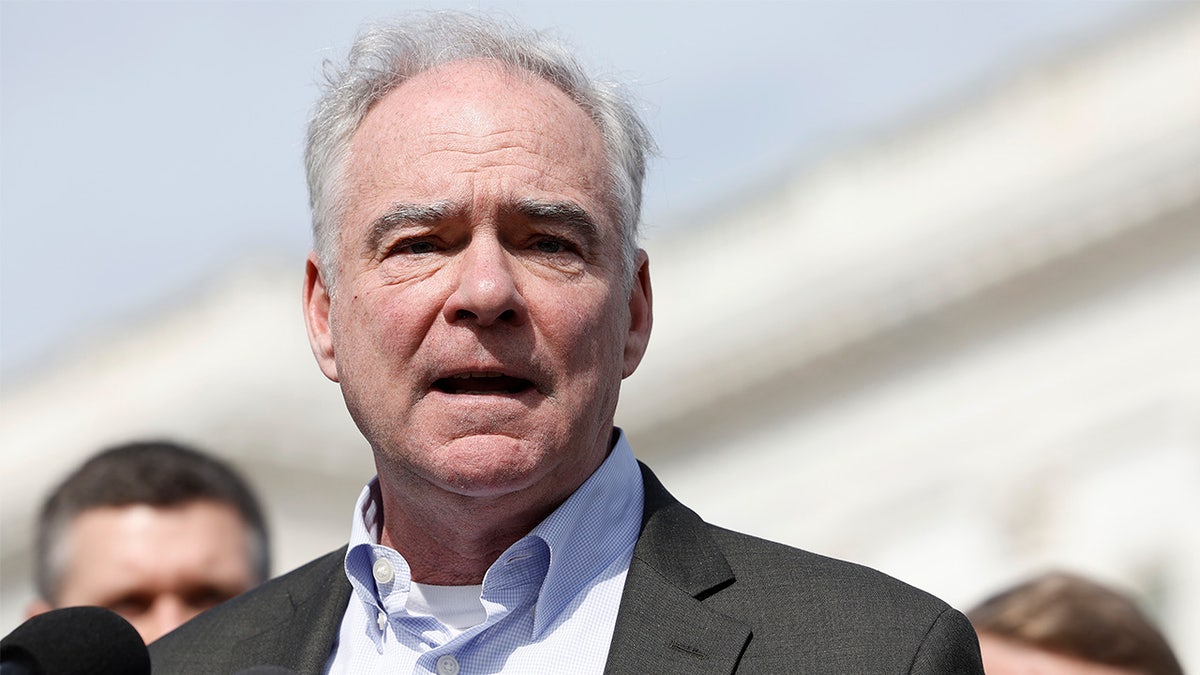
Sen. Tim Kaine says reported second strike on alleged drug boat "rises to the level of a war crime if it’s true."
The chilling allegation, first brought to light by The Washington Post, suggests a U.S. military follow-on strike on an alleged drug boat in the Caribbean earlier this year resulted in the deliberate killing of survivors, an act that Democratic Senator Tim Kaine of Virginia unequivocally stated "rises to the level of a war crime if it’s true." Speaking on "Face the Nation with Margaret Brennan" on November 30, 2025, Kaine minced no words, asserting that such an action would constitute "a clear violation of the DoD’s own laws of war, as well as international laws about the way you treat people who are in that circumstance." This stark declaration from a senior lawmaker underscores the profound gravity of the situation and immediately ignited a firestorm of debate and calls for investigation into the conduct of U.S. military operations.
The report, published by The Washington Post on Friday, November 28, 2025, detailed an incident from September, marking the U.S.’s first strike on a suspected drug smuggling vessel in the Caribbean. According to the Post, Defense Secretary Pete Hegseth allegedly issued a verbal order to "leave no survivors." This directive, the report claimed, led to a subsequent strike targeting individuals who had survived the initial assault and were in the water, resulting in the deaths of two additional people. The implications of such an order, if proven true, are staggering, challenging fundamental tenets of international humanitarian law and military ethics.
Defense Secretary Hegseth, however, swiftly and vehemently denied the Post’s reporting. In a post on X (formerly Twitter), he dismissed the allegations as "fabricated, inflammatory and derogatory," maintaining that U.S. operations in the Caribbean are "lawful under both U.S. and international law." This direct contradiction sets the stage for a high-stakes investigation, with the credibility of both a major news outlet and the head of the Pentagon hanging in the balance. It is crucial to note that CBS News, in its own reporting, has not independently confirmed The Washington Post’s claims, highlighting the ongoing need for definitive evidence and official transparency.
At the heart of Senator Kaine’s condemnation lies the established body of international law governing armed conflict, particularly the Geneva Conventions. These conventions explicitly prohibit targeting civilians or members of the armed forces who are wounded, sick, or shipwrecked. Furthermore, they mandate that such individuals must be "collected and cared for," irrespective of their prior involvement in hostilities. The principle of no quarter – denying surrender and killing those who would otherwise be protected – is a universally condemned practice and a grave breach of the laws of war. A group of former military lawyers, specialized in international law and rules of engagement, echoed this sentiment. In an assessment outlined on Saturday, November 29, 2025, they articulated that the reported second strike, if it occurred as described, would indeed constitute a violation of international or domestic law, classifying it as a potential war crime. Such a designation carries immense weight, not only for the individuals potentially involved but also for the United States’ standing on the global stage and its commitment to upholding humanitarian principles.
The serious nature of these allegations has not gone unnoticed within the halls of Congress. Leaders of both the House and Senate Armed Services committees have publicly pledged to investigate the reported follow-on strike. This bipartisan commitment signals a shared concern over the potential implications for military conduct and accountability. Senator Kaine, who sits on the Senate Foreign Relations Committee and has long been a vocal proponent of congressional oversight in matters of war, outlined to CBS News’ chief White House correspondent Nancy Cordes the myriad questions lawmakers have been pressing the administration on regarding these strikes. These include demanding concrete evidence that the individuals on board the targeted vessels were indeed "narco traffickers," questioning the strategic rationale for conducting strikes rather than attempting interdiction and capture, and, perhaps most critically, seeking a robust legal justification for these operations in international waters. Kaine expressed deep frustration, stating, "We had to pry with a crowbar after weeks and weeks out of the administration, the supposed legal rationale for the strikes at international waters. It was very shoddy." This perceived lack of transparency and a weak legal foundation only amplifies the urgency of the current investigation.
The controversy over these alleged strikes is further complicated by the broader geopolitical context of escalating U.S. pressure on Venezuela. Since the initial strike on September 2, the U.S. has conducted nearly two dozen boat strikes across the Caribbean and eastern Pacific Ocean. Senator Kaine views these actions as part of a dangerous pattern, asserting that "it’s time for Congress to rein in a president who is deciding to wage war on his own say-so, which is not what the Constitution allowed." Kaine has a history of attempting to curb presidential authority in this domain, having twice tried to pass war powers resolutions specifically aimed at preventing the president from conducting strikes against Venezuela. These earlier efforts garnered support from a handful of Republicans, indicating a degree of bipartisan concern over executive overreach in foreign policy.
The situation surrounding Venezuela has grown increasingly tense. Kaine noted that his previous war powers resolution attempts predated the current scenario where "all of these assets have amassed around Venezuela, and before President Trump said that the airspace needs to be closed." Indeed, President Trump recently posted on Truth Social, declaring that Venezuela’s airspace should be considered "CLOSED IN ITS ENTIRETY." This hawkish rhetoric, coupled with visible military deployments, signals a potential shift towards more direct military action, including possible ground action, against Venezuelan President Nicolas Maduro’s regime.
Senator Kaine warned that if "ground action" were to commence, the numbers in the Senate supporting a war powers resolution would undoubtedly change. He affirmed his intention to move "immediately" on such a resolution "should there be military action." Kaine believes that the "escalating pace and some of the recent revelations" – specifically referencing the "kill everyone order apparently dictated by Secretary Hegseth" – will garner significantly more support for his motions when they are refiled. This indicates a growing congressional appetite to assert its constitutional authority over matters of war and peace, especially when allegations of serious misconduct emerge.
Rep. Mike Turner, an Ohio Republican who is a prominent member of the Armed Services Committee and formerly led the House Intelligence Committee, also appeared on "Face the Nation" Sunday. While acknowledging the gravity of the situation, Turner stated that "Congress does not have information" confirming that the reported follow-on strike occurred. However, he quickly added, "If that occurred, that would be very serious, and I agree that that would be an illegal act." This sentiment from a Republican colleague reinforces the bipartisan concern regarding the alleged actions, even amidst the ongoing lack of definitive, independently verified information.
The potential ramifications of these allegations are vast. Beyond the immediate legal and ethical questions, there are significant implications for the credibility of the U.S. military, its standing in international law, and its relationships with allies. If confirmed, such actions could undermine global efforts to uphold the laws of armed conflict and provide fodder for adversaries to criticize U.S. conduct. The internal impact on military morale and adherence to ethical standards could also be profound. The narrative of "no survivors" runs counter to core values of professionalism and humanity often espoused by the U.S. armed forces.
The path forward demands a thorough, independent, and transparent investigation. The public, the international community, and indeed the U.S. military itself, require a clear understanding of what transpired in the Caribbean in September. Whether through congressional hearings, internal military inquiries, or potentially even international legal scrutiny, the truth of these allegations must be uncovered. Only then can appropriate accountability be sought and measures implemented to prevent any recurrence of actions that could indeed "rise to the level of a war crime." The contributions of Caitlin Yilek to this report further highlight the collaborative journalistic effort to bring clarity to this complex and deeply troubling issue.