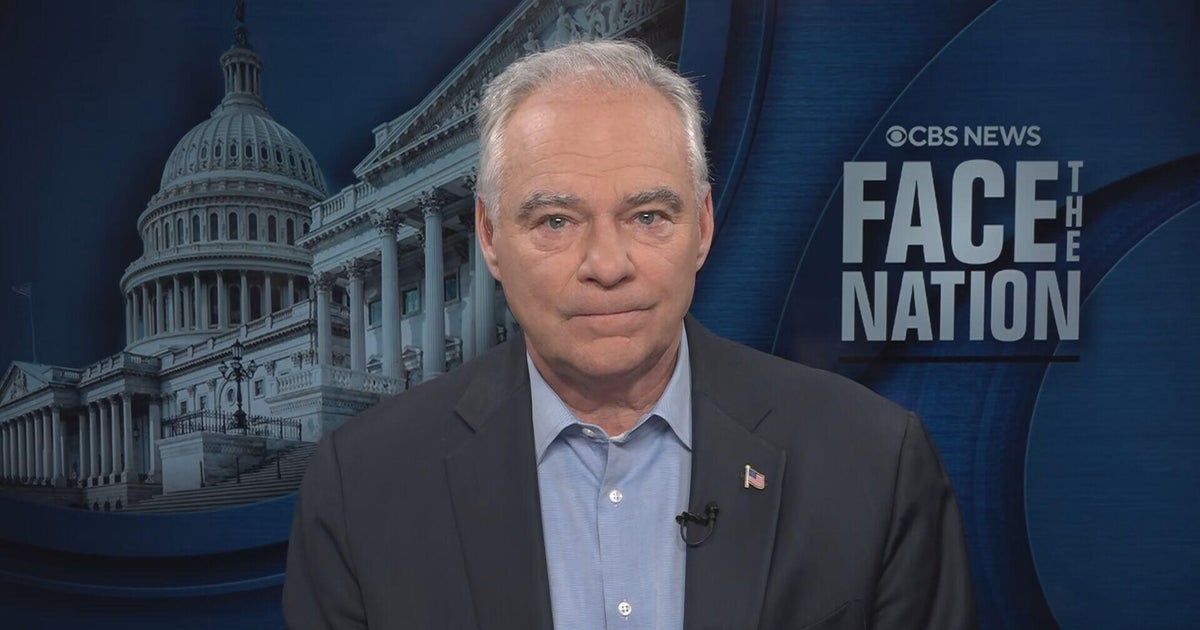
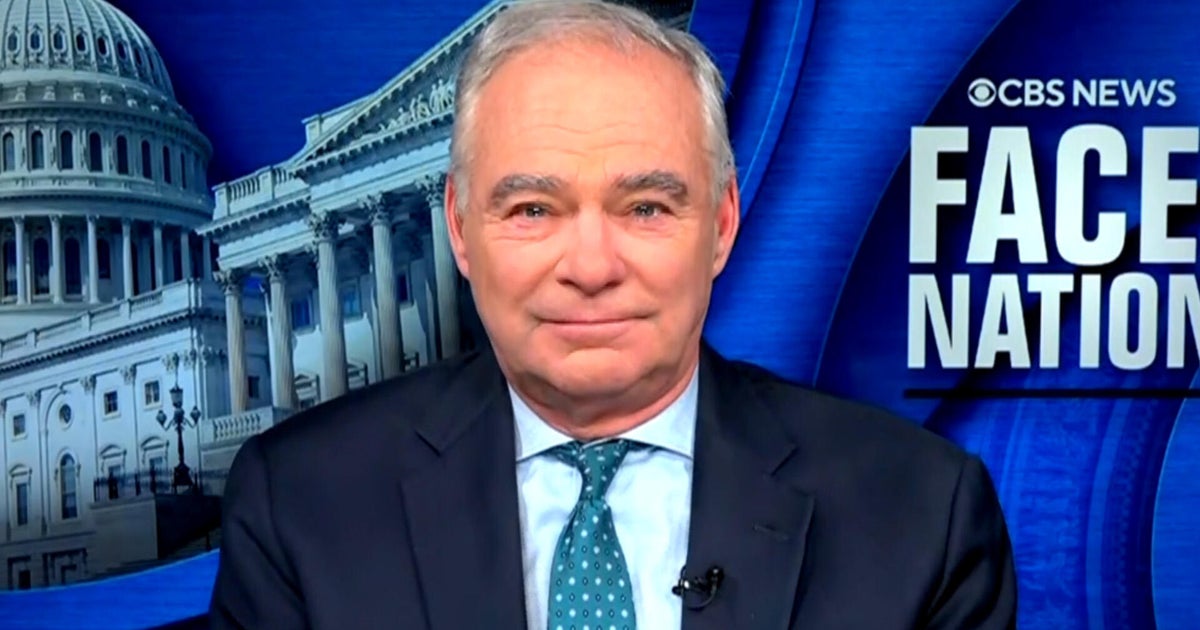
Transcript: Sen. Tim Kaine on "Face the Nation with Margaret Brennan," Nov. 30, 2025
On November 30, 2025, Senator Tim Kaine, a Democrat representing Virginia, appeared on "Face the Nation with Margaret Brennan," where he was interviewed by Nancy Cordes. The wide-ranging discussion covered critical national and international issues, including escalating tensions in Venezuela, controversial military strikes in the Caribbean and Pacific, a surprising presidential pardon, and significant shifts in U.S. immigration policy following a tragic domestic incident. The interview highlighted Senator Kaine’s consistent advocacy for congressional oversight on war powers and his strong concerns regarding executive actions perceived as undermining democratic principles and international law.
The interview began with an urgent focus on the unfolding situation in Venezuela, where signs of imminent military action, potentially involving ground forces, were becoming increasingly clear. Senator Kaine addressed his previous, unsuccessful attempts to pass war powers resolutions that would mandate President Trump to seek congressional approval before initiating any military intervention. He noted that while his initial resolutions failed, the intensifying situation—marked by the massing of military assets around Venezuela and President Trump’s declaration about closing Venezuelan airspace—had fundamentally altered the context. Kaine expressed confidence that the political calculus in Congress would change, stating, "I do believe the numbers will change." He vowed to immediately refile resolutions alongside a bipartisan group of colleagues, including Senators Schumer, Paul, and Schiff, should military action commence. This move underscores a persistent tension between the executive and legislative branches regarding the authority to commit U.S. forces abroad, a debate rooted in the Constitution’s allocation of war powers to Congress.
Kaine then shifted to the controversial boat strikes in the Caribbean and Pacific, a separate but related area where he had previously sought to curb executive power. He referenced a new report from The Washington Post detailing an alleged "kill everyone order" issued by Secretary Hegseth regarding the first suspected drug boat targeted. According to the report, when two individuals survived the initial strike, a follow-on attack was reportedly launched. Senator Kaine articulated grave concerns, suggesting that if the report were true, it would constitute "a clear violation of the DOD’s own laws of war, as well as international laws about the way you treat people who are in that circumstance. And so this rises to the level of a war crime if it’s true."
He pressed for answers from the Pentagon, questioning the administration’s claims about the individuals on board being narcotraffickers, especially given that two survivors from a different strike—one Colombian, one Ecuadoran—were not arrested or prosecuted but instead returned to their home countries and released. Kaine emphasized the strategic advantage of interdiction over strikes: "If you know where the ships are, you can interdict. And when you do, you get evidence. You get individuals. You can squeeze them to give testimony against their higher-ups. You get evidence with the drug seizures." He further lambasted the administration’s "shoddy" and "not at all persuasive" legal rationale for the strikes in international waters, which remained classified but deeply concerning to lawmakers. The Senator cited a series of alarming indicators: the early retirement of the head of SOUTHCOM, reports that SOUTHCOM’s lead attorney deemed the strikes unlawful, and the decision by key allies like the United Kingdom to cease sharing intelligence with the U.S. in this domain due to their belief that the strikes are illegal. These points collectively painted a picture of an administration operating outside established legal and ethical boundaries, prompting Kaine’s renewed call for Congress to "rein in a president who is deciding to wage war on his own say so, which is not what the Constitution allows."
The discussion then turned to a domestic development with significant international ramifications: President Trump’s announcement of his intent to pardon former Honduran President Juan Orlando Hernández. Hernández had been convicted in a U.S. federal court for conspiring with drug cartels to facilitate the movement of over 400 tons of cocaine from Honduras to the United States. He was serving a 45-year sentence, with evidence including his reported statement about wanting to "shove drugs up the nose of gringos." Senator Kaine expressed profound shock at the President’s decision, calling it "shocking" and a stark contradiction to the President’s tough stance on drugs originating from other countries. Kaine questioned the underlying motives, suggesting that the pardon might imply "that pardons are now for sale by this White House" and undermine the very premise of the Venezuela military posturing. He referenced the earlier pardon of Ross Ulbricht, founder of the Silk Road darknet market, as another instance that cast doubt on the administration’s true commitment to combating narcotrafficking. Kaine highlighted the perception in Latin America, noting that "The President of Colombia has said that he thinks it’s about the U.S. trying to seize oil assets in Venezuela." Drawing on his own experience living in Honduras, Kaine underscored how such actions fuel "conspiracy theories" across the Americas, necessitating deep investigation by Congress upon its return to Washington.
Finally, the conversation shifted to pressing domestic policy changes in the wake of a tragic shooting involving two National Guard members. The Trump administration responded by halting all asylum decisions and Afghan immigration applications, with the President calling for a "permanent pause to immigration from what he calls ‘third world countries.’" Senator Kaine began by offering condolences for the "sad fact" of the deaths of Ms. Beckstrom and Mr. Wolfe, emphasizing that "they should have been at home at Thanksgiving, celebrating Thanksgiving with their families, not deployed in a political deployment, to do law enforcement in D.C. that the D.C. police and other local law enforcement agencies can do." He lauded the bravery of service members but criticized the orders they receive from civilian leadership, drawing a parallel between the "Hegseth order to kill them all" and the "political stunt deployment" of guardsmen.
Kaine unequivocally condemned the administration’s broad immigration response. While acknowledging the need to prosecute the individual criminal responsible for the shooting "to the full extent of the law," he argued against "painting with a broad brush" and targeting entire populations. He asserted that pausing asylum processes or immigration from numerous "third world countries" was unjust and counterproductive. Highlighting Virginia’s diverse demographic, where "about one out of nine of us is an immigrant," Kaine championed immigrant communities as "an enormous source of strength to our commonwealth and to our country." He concluded by reiterating that it is "wrong to target them all for the bad actions of an individual, just like we wouldn’t target other communities in the United States for the bad actions of one individual." The Senator anticipated that these immigration policy changes would be a major topic of debate and legislative action in Congress in the coming week.
Senator Kaine’s interview on "Face the Nation" provided a comprehensive overview of the complex challenges facing the United States, both domestically and internationally. His remarks underscored a consistent theme: the critical importance of congressional oversight, adherence to the rule of law, and a balanced approach to national security that respects constitutional boundaries and human dignity. As Congress prepared to reconvene, these issues promised to dominate the legislative agenda, setting the stage for potentially contentious debates over executive power, military engagement, and immigration policy.