Fetterman on "mass chaos" of government shutdown: I support healthcare tax credits but won’t "hold our government hostage"
In a pivotal moment for American governance, Democratic Senator John Fetterman of Pennsylvania cast a decisive vote to advance a deal aimed at ending what has been described as the longest government shutdown in modern U.S. history. His decision, coming after weeks of federal paralysis and escalating public distress, underscored a pragmatic approach to legislative deadlock, prioritizing immediate relief over prolonged partisan struggle. Speaking to CBS News hours after the vote, Fetterman articulated a clear rationale: the "mass chaos" unleashed by the shutdown had become intolerable, pushing a critical mass of Senate Democrats, including himself, to seek an immediate resolution.
The senator, known for his distinctive political style and often independent stance, was one of eight members of the Democratic caucus who voted late Sunday to move forward on a bill designed to fund the government until at least late January. This bipartisan maneuver was contingent on a crucial concession from Senate GOP leadership: a promise to hold a vote by the following month on extending a slate of vital health insurance tax credits, among other negotiated terms. Fetterman, a staunch advocate for accessible healthcare, emphasized the importance of these credits while firmly rejecting the tactic of government paralysis. "We need to find a way forward because I strongly, strongly support those tax credits to make health care more affordable," Fetterman stated in an interview with "CBS Mornings," scheduled to air Wednesday. "But I just refuse to shut our government down and hold our government hostage."
The implications of Fetterman’s vote, and the broader deal it supported, are far-reaching. While the Senate still requires a vote on final passage and the House must approve the bill before the government can officially reopen – a process that could take several days – the advancement marked a significant shift in the political landscape. The shutdown, which had dragged on for an unprecedented duration, had plunged millions of Americans into uncertainty and disrupted essential federal services. From the daily operations of federal agencies to the financial stability of government employees, the impact was profound and multifaceted, creating a palpable sense of urgency that ultimately broke through partisan gridlock.
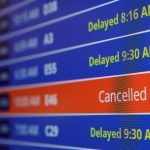
Fetterman’s decision to break ranks with the majority of his Democratic colleagues, including Senate Minority Leader Chuck Schumer, was rooted in a deep concern for the tangible harm inflicted upon ordinary citizens. He highlighted a litany of disruptions that, in his view, made the continuation of the shutdown untenable. Severe disruptions to air travel, including flight cancellations and delays stemming from understaffed air traffic control and TSA operations, created a ripple effect across the nation’s transportation network, affecting millions of travelers and businesses. Uncertainty surrounding the Supplemental Nutrition Assistance Program (SNAP) threatened the food security of vulnerable families, raising alarms about potential widespread hunger. Furthermore, the missed paychecks for hundreds of thousands of federal employees placed immense financial strain on families, impacting their ability to pay rent, mortgages, and other essential bills, and subsequently dampening local economies reliant on their spending.
"I think enough people collectively agreed… we would find eight people overall to do that," Fetterman remarked, underscoring the shared realization among a faction of Democrats that the crisis had escalated beyond acceptable limits. This collective acknowledgment of the shutdown’s devastating consequences provided the impetus for compromise, even in the face of strong opposition from within their own party.
The health insurance tax credits at the heart of the negotiation are a critical component of the Affordable Care Act (ACA), designed to make health coverage more affordable for millions of Americans who purchase plans through the federal and state marketplaces. These subsidies reduce monthly premiums, making insurance accessible to individuals and families who might otherwise struggle to afford it. Their potential expiration loomed as a significant threat, risking a substantial increase in healthcare costs for millions and potentially leading to a surge in the uninsured population. For Fetterman, securing a path to extend these credits was a non-negotiable priority, albeit one that he believed should not be pursued at the cost of national stability.
The deal, however, was not without its critics. Some high-profile Democrats, including Senate Minority Leader Chuck Schumer, accused Fetterman and the other seven Democrats of "caving" to Republican demands. Their argument was that the GOP leadership had not made concrete promises to extend the health insurance subsidies but had merely agreed to hold a vote, leaving the ultimate outcome uncertain. This perspective viewed the deal as a capitulation, undermining the Democratic Party’s long-standing demand for a more definitive commitment on healthcare affordability. The political calculus for these critics centered on the belief that holding the line, even through a prolonged shutdown, might ultimately yield a stronger, more guaranteed legislative victory for their policy priorities.
Fetterman, who had consistently voted in favor of a House GOP-backed bill to keep the government open with no strings attached in previous iterations of the crisis, vehemently rejected the premise of "caving." His stance was clear: "I refuse to gamble with the food insecurity of 42 million Americans." This powerful statement encapsulated his moral and political conviction that the immediate, tangible suffering of citizens outweighed the tactical advantages of continued legislative brinkmanship. He positioned his vote not as a concession, but as a responsible act of governance aimed at mitigating widespread harm.
Beyond the policy disagreements, Fetterman also took aim at the political posturing he observed during the shutdown. He accused critics of the deal of using their opposition as a campaign fundraising pitch, turning the national crisis into an opportunity for political gain. "Many of the ones now that are railing at it jumped on fundraising emails," he asserted, adding, "I refuse to monetize the outrage." This critique highlighted a deeper concern about the commercialization of political conflict, where public anxiety and division are exploited for partisan advantage, rather than channeled toward constructive solutions. It spoke to a broader frustration with a political system often perceived as prioritizing ideological purity and electoral strategy over the practical needs of the populace.
The senator acknowledged the challenging reality of divided government, where achieving legislative goals often requires difficult compromises. "We have to negotiate with the Republicans because America decided to put us in the minority," he explained, recognizing the democratic mandate that shapes the current political landscape. This acknowledgement is fundamental to his approach, which seeks to navigate legislative impasses through dialogue and negotiation, rather than through confrontational tactics that could further destabilize the government.
Fetterman’s philosophy is rooted in a fundamental understanding of democratic governance: "That’s the essence of democracy: To find a way forward because our parties have different priorities." He argued that while parties naturally hold distinct visions and priorities, the ultimate responsibility of elected officials is to transcend those differences to ensure the basic functioning of government and protect the well-being of its citizens. The alternative, he warned, is to allow millions of American lives to be impacted by political deadlock, a consequence he firmly refused to accept. His vote, therefore, was not merely about reopening the government or advancing healthcare credits, but about upholding what he views as the foundational principles of American democracy: compromise, responsibility, and a refusal to hold the nation hostage for partisan gain.