
3 Bob Ross paintings fetch over $600,000 at auction benefiting public television; 27 still on block
Los Angeles, CA – In a vibrant testament to the enduring appeal of one of public television’s most beloved figures, three original paintings by the famously serene artist Bob Ross fetched a staggering sum of over $600,000 at a recent auction. Held on Tuesday, November 11, 2025, at Bonhams in Los Angeles, these sales marked the initial phase of an ambitious initiative to auction 30 of Ross’s iconic works, with all proceeds dedicated to supporting public television stations across the United States. These stations, vital cultural and educational pillars, have faced significant challenges due to recent cuts in federal funding, making this philanthropic endeavor a crucial lifeline.
The atmosphere at Bonhams was electric, buzzing with collectors, art enthusiasts, and fervent admirers of the artist whose gentle demeanor and signature "happy little trees" captivated millions. The highlight of the evening was undoubtedly "Winter’s Peace," a serene snow-covered landscape painted by Ross entirely during a 1993 episode of his seminal program, "The Joy of Painting." This particular masterpiece, imbued with Ross’s characteristic tranquil beauty and inviting depths, ultimately sold for an impressive $318,000 to a spirited bidder participating via telephone, far exceeding its pre-auction estimate.
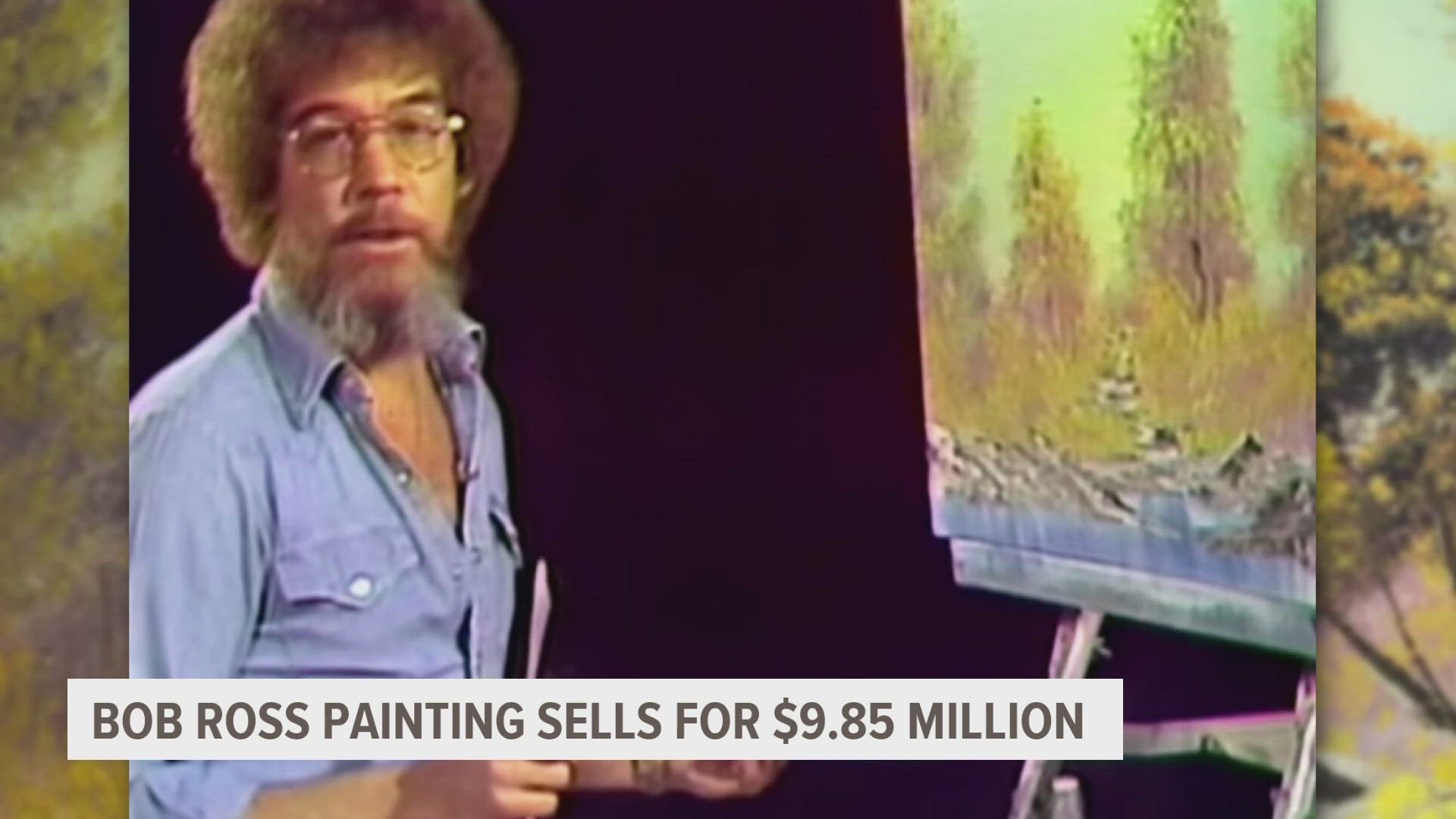
Aaron Bastian, the auctioneer, skillfully guided the bidding, at one point interjecting with a sentiment that perfectly encapsulated Ross’s philosophy: "For a good cause — and you get the painting," he announced. During a brief pause in the bidding, Bastian invoked the painter’s timeless wisdom, reminding potential buyers, "Bob would remind you that this is your world, and you can do anything you want." This subtle nod to Ross’s encouraging ethos resonated deeply, underscoring the emotional connection many feel to the artist, who passed away in 1995 but whose spirit continues to inspire.
Two other significant works from Ross’s oeuvre also commanded impressive prices. "Home in the Valley," another lush, verdant landscape created during a 1993 episode, captivated bidders with its idyllic charm and intricate detail, ultimately selling for $229,100. The third painting, a dramatic yet peaceful composition titled "Cliffside," depicted a rugged, majestic scene that fetched $114,800. These final figures, which include the buyer’s premium—an additional charge levied by the auction house on top of the winning bid—reflect a robust and enthusiastic market for Ross’s originals. While the identities of the fortunate buyers remain undisclosed, their acquisitions are not merely art purchases but investments in cultural heritage and philanthropy.
Remarkably, the bids for all three paintings soared well past their initial pre-auction estimates, which had topped out around $50,000 per piece. This significant overperformance underscores not only the burgeoning demand for Bob Ross’s original artwork but also the powerful incentive of supporting public broadcasting. Collectors are increasingly recognizing the unique blend of artistic merit, nostalgic value, and cultural significance that Ross’s works represent. Each painting is a tangible piece of a cultural phenomenon, a direct link to the man who taught generations that "there are no mistakes, just happy accidents."
The sales at Bonhams in Los Angeles are merely the beginning of this extensive charitable undertaking. The initiative, orchestrated by Bob Ross, Inc., plans to offer a total of 30 original paintings, marking the largest public release of Ross’s works ever. Three additional paintings are scheduled for auction at Bonhams in Marlborough, Massachusetts, on January 27, 2026, with further auctions planned at various Bonhams locations throughout the coming year. All profits generated from these sales are pledged directly to stations that license content from American Public Television (APT), the primary distributor for many popular public broadcasting programs.
The urgency of this fundraising effort cannot be overstated. Public television stations, which serve as invaluable community resources for education, news, and cultural enrichment, have been severely impacted by significant reductions in federal funding. As sought by the Trump Administration, Congress had eliminated $1.1 billion previously allocated to public broadcasting, leaving approximately 330 PBS and 246 NPR stations scrambling to maintain operations and programming quality. These cuts have created a precarious financial landscape for many stations, particularly smaller and rural broadcasters, who rely heavily on federal support and licensing fees to deliver their content.
The revenue from these auctions will directly address the critical need for licensing fees, which enable stations to broadcast beloved and essential programs. Beyond "The Joy of Painting," APT distributes a wide array of popular and critically acclaimed shows such as "America’s Test Kitchen," "Julia Child’s French Chef Classics," and "This Old House." These programs, along with local news, educational content for children, and documentaries, form the backbone of public broadcasting’s mission, providing accessible, high-quality media that enriches lives and strengthens communities. Without adequate funding, the ability of these stations to acquire and air such content is severely compromised.
Joan Kowalski, president of Bob Ross Inc., articulated the profound connection between Ross’s legacy and the mission of public television. In a statement, she emphasized that these stations "have been the gateway for generations of viewers to discover not just Bob’s gentle teaching, but the transformative power of the arts." Her words highlight the symbiotic relationship: public television provided the platform for Ross to share his art and philosophy, and now his art is giving back to sustain that platform for future generations. This initiative is a powerful demonstration of how cultural icons can rally support for the institutions that nurtured them.
Bob Ross himself was a public television staple throughout the 1980s and 90s, instantly recognizable by his distinctive afro and his perpetually warm, reassuring demeanor. Born in 1942, Ross’s journey to becoming a beloved painting instructor was unconventional. He served as an Air Force drill sergeant for 20 years, a role starkly contrasted with the gentle persona he later cultivated. It was during his military career, stationed in Alaska, that he discovered his passion for painting and developed his signature "wet-on-wet" technique, allowing him to complete a painting in a mere 30 minutes.
"The Joy of Painting," which premiered in 1983, quickly became a cultural phenomenon. For 11 years, Ross invited viewers into his studio, guiding them step-by-step through the creation of landscapes filled with "happy little clouds," "happy little trees," and majestic mountains. His calm, almost meditative voice, coupled with his encouraging words—such as his famous dictum that "we don’t make mistakes, just happy accidents"—made the show a therapeutic experience for millions, regardless of their artistic inclination. He wasn’t just teaching people how to paint; he was teaching them to embrace imperfection, find joy in creation, and believe in their own abilities.
Ross died at the relatively young age of 52 from complications related to lymphoma, leaving behind a vast catalog of artwork and a legacy of kindness and artistic encouragement. Yet, his popularity has only surged in the decades since his passing. His shows found a new generation of fans through streaming platforms and social media, experiencing a particular resurgence during the lockdowns of the COVID-19 pandemic. In times of stress and uncertainty, Ross’s tranquil presence and optimistic philosophy offered a much-needed balm, proving that his message of peace, creativity, and self-acceptance is truly timeless. He became a meme, a cultural touchstone, and an enduring symbol of wholesome content.
The extraordinary prices fetched at this auction also speak to a broader trend in the art market: the increasing value placed on works by culturally significant figures, especially those with a strong philanthropic tie. While Ross’s works were not traditionally considered "fine art" in the elite gallery sense during his lifetime, their immense cultural impact, combined with their rarity as originals (he painted thousands, but many were given away or kept privately), has elevated their market status. This auction positions Ross’s paintings not just as memorabilia, but as legitimate, highly sought-after artistic assets that carry both intrinsic aesthetic value and a powerful narrative.
The success of these initial sales bodes well for the remaining 27 paintings yet to be auctioned. Given the fervent bidding and the prices achieved, it is highly probable that the entire collection will generate a substantial sum, providing a significant boost to public television stations struggling to navigate a challenging financial landscape. This initiative by Bob Ross, Inc., in partnership with Bonhams, stands as a powerful example of how a beloved cultural legacy can be leveraged for vital charitable causes.
In essence, these auctions are more than just sales of paintings; they are celebrations of a man who taught the world to paint and to embrace the joy in life’s "happy accidents." They are also a critical demonstration of support for public broadcasting, an institution that continues to enrich American lives through education, culture, and community engagement. As the remaining Bob Ross originals come to market, each stroke of paint on canvas will not only represent a happy little tree or a majestic mountain but also a vital contribution to the future of public television, ensuring that its transformative power remains accessible for generations to come.