9 Best Robot Vacuums (2025): Tested and Reviewed in Real Homes
The landscape of home automation is rapidly evolving, and nowhere is this more evident than in the realm of robot vacuums. As we move further into 2025, we are witnessing a significant convergence in design, features, and pricing across the market. What was once considered a luxury or a niche gadget has now become a mainstream appliance, with manufacturers pushing the boundaries of what these autonomous cleaners can achieve. This comprehensive guide, based on extensive testing and real-world reviews, aims to navigate the crowded market and highlight the top contenders, as well as those that fall short. Our mission is to help you find the perfect robotic companion to keep your floors pristine, reflecting the latest advancements and practical performance in everyday homes.
Compare Top 10 Robot Vacuums
After rigorous testing in diverse real-home environments, from bustling family homes with pets to minimalist apartments, we’ve identified the crème de la crème of robot vacuums for 2025. These models represent the pinnacle of current technology, offering a blend of powerful cleaning, intelligent navigation, user-friendly interfaces, and reliable performance that stands out from the competition. While the market is flooded with options, these nine (and a bonus tenth for comparison purposes) have consistently delivered exceptional results, proving themselves to be invaluable assets in maintaining a clean living space.
- Roborock S9 MaxV Ultra (The Flagship Performer): Priced at approximately $1,899, the S9 MaxV Ultra sets the standard for premium robot vacuums. Boasting an incredible 12,000 Pa suction power and advanced ReactiveAI 3.0 obstacle avoidance, it navigates complex layouts with unparalleled precision. Its auto-emptying, auto-refilling, and self-washing mop station make maintenance virtually hands-free, providing deep cleaning for both carpets and hard floors. Ideal for large homes with high traffic and pets, its performance justifies the investment.
- DreameBot L20 Ultra Complete (Innovation King): At $1,699, the L20 Ultra Complete impresses with its MopExtend™ technology, allowing its mop pads to extend to clean right up to baseboards and corners – a game-changer for mopping. With 10,000 Pa suction and dual rotating mops, it handles stubborn stains and debris effortlessly. Its smart mapping and object recognition are top-tier, ensuring efficient and thorough cleaning cycles.
- Ecovacs Deebot T20 Omni (Value Innovator): For around $1,099, the T20 Omni offers a compelling balance of high-end features at a more accessible price point. It features hot water mop washing for superior pad hygiene, 9,000 Pa suction, and an auto-lift mopping system that intelligently raises pads on carpets. Its TrueMapping 2.0 navigation ensures efficient path planning and obstacle avoidance, making it a strong contender for various home types.
- Shark AI Ultra 2-in-1 Robot Vacuum & Mop (Smart & Powerful): Available at $899, this Shark model is a testament to the brand’s commitment to smart cleaning. It combines powerful suction (around 8,000 Pa) with an effective sonic mopping system. Its AI Laser Navigation provides precise mapping and obstacle detection, while the self-emptying base offers convenience. It’s particularly good for homes with varied floor types and moderate pet hair.
- iRobot Roomba j9+ (Pet Hair Pro): Priced at $1,299, the Roomba j9+ is specifically engineered for pet owners. Its P.O.O.P. (Pet Owner Official Promise) guarantees it will avoid pet waste, while its powerful suction and dual multi-surface rubber brushes effectively pick up pet hair without tangling. Imprint® Smart Mapping allows for customizable cleaning zones, making it an intelligent choice for targeted cleaning.
- Yeedi M20 Pro (Budget-Friendly All-Rounder): Coming in at $699, the Yeedi M20 Pro offers excellent value. It provides strong suction (around 7,000 Pa) and a reliable mopping function. Its LiDAR navigation creates accurate maps for efficient cleaning paths, and its self-emptying station minimizes user interaction. A great option for those seeking robust performance without the premium price tag.
- Ultenic T10 Pro (Sleek & Efficient): At $549, the Ultenic T10 Pro stands out with its slim profile and efficient cleaning capabilities. It features 3,000 Pa suction, LiDAR navigation, and a user-friendly app. While not as feature-rich as its high-end counterparts, it performs admirably on everyday dirt and dust, making it suitable for smaller homes or as a secondary cleaner.
- Eufy RoboVac X8 Hybrid (Twin-Turbine Power): This model, priced at $499, boasts Eufy’s unique Twin-Turbine technology, delivering 2x the suction power (up to 4,000 Pa) for deeper cleaning. It offers both vacuuming and mopping functions, with precise iPath™ Laser Navigation. It’s a solid choice for those prioritizing vacuuming performance on a mid-range budget.
- Wyze Robot Vacuum (Smart Home Integration): At an affordable $299, the Wyze Robot Vacuum integrates seamlessly into the Wyze smart home ecosystem. It features LiDAR mapping, 2,100 Pa suction, and provides reliable daily cleaning. While basic compared to others, its smart features and connectivity make it an excellent entry-level option for tech-savvy users.
- (Bonus) Narwal Freo X Ultra (The Future of Mopping): While we had some connectivity issues during our initial testing (see below), the Narwal Freo X Ultra, at $700, deserves a mention for its innovative features. Its self-cleaning roller mop and baseboard dusting capability are promising. Once connectivity issues are resolved, this could easily climb our rankings, showcasing the continuous evolution in the robot vacuum space.

Photograph: Adrienne So
We are approaching the great robot vacuum convergence. At whatever price you want to pay, you can find a robot vacuum that will look very similar and have similar features. Here are a few that also worked well for us, offering unique advantages or catering to specific needs, but didn’t quite make our top list for various reasons.
Other Robot Vacuums to Consider
- Shark PowerDetect ThermaCharged Pro for $800: I am currently testing this vacuum, which is very reasonably priced given its feature set. It boasts several intriguing functionalities, such as an odor neutralizer, which is a welcome addition for pet owners. I also appreciate the convenience of being able to add cleaner directly to the clean water tank, simplifying the mopping process by eliminating the need for a separate compartment. However, its navigation system, while functional, leaves something to be desired. It exhibits a remarkably slow cleaning speed, taking a full 6 hours to cover an 800-square-foot area, which is considerably longer than many competitors and might be a deal-breaker for those with larger homes or a need for quick clean-ups.
- Ecovacs Deebot X11 Omnicyclone for $1,300: Ecovacs, the parent company of Yeedi, proudly debuted the Deebot X11 this year at IFA 2025, showcasing its innovative Omnicyclone technology. This feature is designed to prevent the bagless dust bin from getting clogged, promising more consistent suction and less frequent manual cleaning. While the technology is impressive, a similar cyclone system has already appeared in the more affordable Ecovacs subbrand, Yeedi, specifically the Yeedi S20 Infinity. For consumers seeking this advanced dust management, the Yeedi S20 Infinity might offer a more cost-effective alternative, making the X11 a bit pricey for its innovation given the existence of its cheaper sibling.
- Roborock Qrevo Curv for $950: This model was Roborock’s flagship vacuum in 2024 and continues to be a highly capable machine. Reviewer Ryan Waniata even praised it as the best robot vacuum he had ever used, a testament to its strong performance. It features slightly less suction power than this year’s Saros 10R, but it proved its mettle by successfully cleaning an entire carpet covered in baking powder during our tests. The Qrevo Curv offers robust cleaning and smart features, making it a strong option. We are currently awaiting its official release into the North American market, which will make it more widely available to consumers in the region.
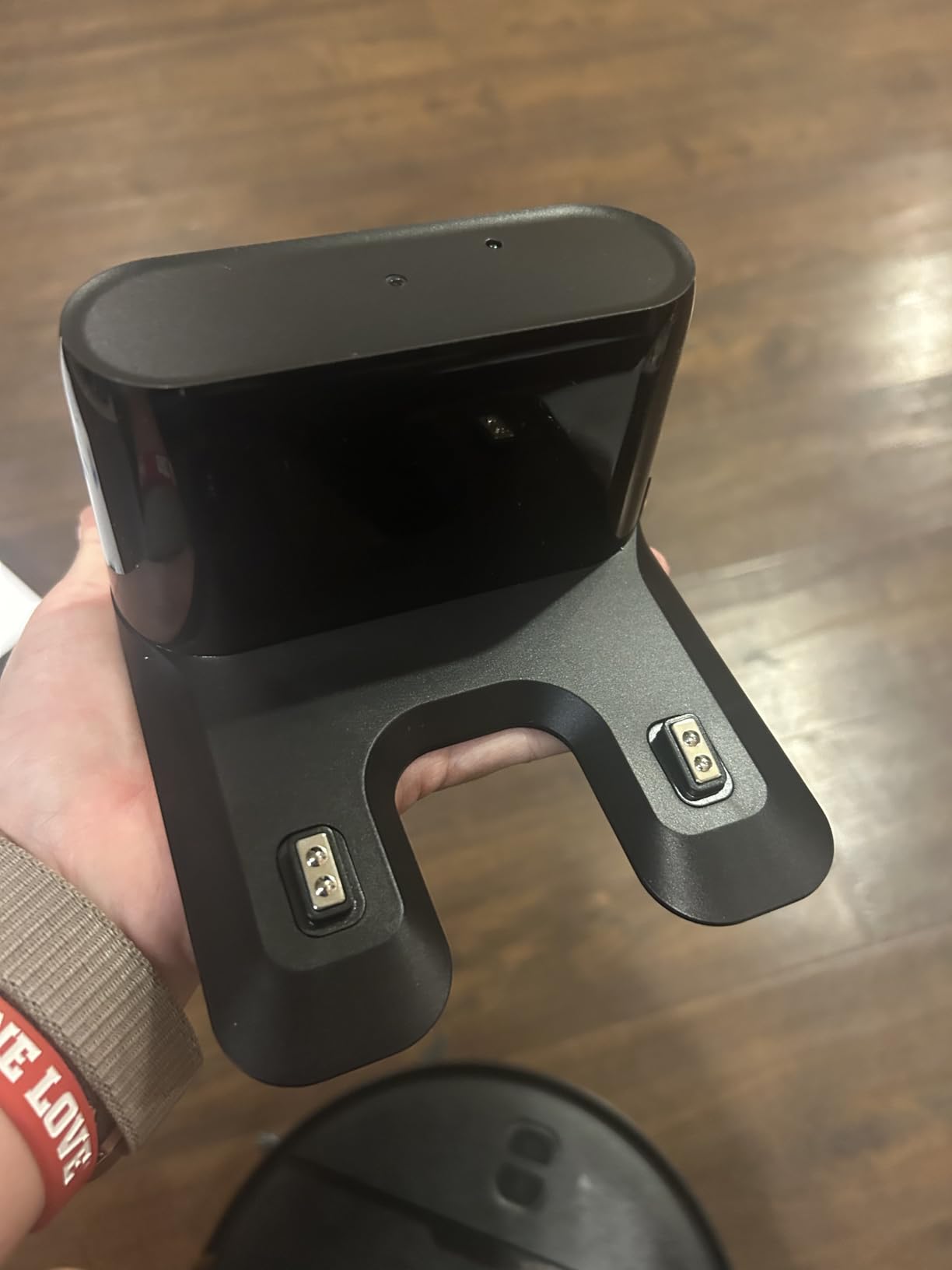
- Tapo TP-Link RV20 Max for $160: This is a perfectly fine, slim, and basic robot vacuum that held the title of our most affordable pick for a significant portion of the year. It’s an excellent entry-level option for those on a tight budget or in smaller living spaces. However, my long-term testing in my living room has revealed a recurring frustration: it frequently gets knocked off its charging dock. This often leads to the vacuum running out of battery before completing its cleaning cycle or returning to base, requiring manual intervention to get it back on track and charged. This dock instability can detract from the hands-free convenience that robot vacuums promise.
- Eufy Mach S1 Pro for $800: The Eufy Mach S1 Pro is an astoundingly beautiful robot vacuum, designed to be a centerpiece in your kitchen rather than an appliance to be hidden away. Its transparent water chamber, which illuminates, adds a touch of elegance, and an integrated ozone generator purportedly eliminates up to 99.99 percent of bacteria, offering enhanced hygiene. It also boasts ultra-precise navigation and a self-cleaning roller mop that washes itself as it cleans, ensuring optimal performance. However, its suction power is only 8,000 Pa, which is less than some of our other top picks. Furthermore, its charging dock is exceptionally tall at 26.4 inches, making storage challenging in many homes and potentially limiting placement options.
Avoid These Robot Vacuums
Not every vacuum earns a spot on our list, and some even warrant a warning. These are the models that, despite promising specifications or brand recognition, consistently underperformed, exhibited significant flaws, or created more hassle than convenience during our real-world testing. These are the ones I repacked straightaway, advising caution or outright avoidance.
- Mova Z60 Ultra Roller for $1,099: Mova is Dreame’s more affordable sub-brand, and the Z60 is presented as the company’s latest flagship vacuum with impressive specs, including a staggering 28,000 Pa of suction, roller mopping, and automatic roller mop fluffing. However, during testing, it frequently got lost, struggling with navigation even in relatively simple layouts. The specialized mop tray, a key feature, proved to be high-maintenance, frequently clogging and leaking, turning the promise of automated mopping into a messy chore.
- Mova P50 Pro Ultra Robot Vacuum for $649: This robot vacuum also boasts an impressive 19,000 Pa of suction and a wide array of high-end features, such as an extendable side brush and an intelligent dirt detection system. Reviewer Molly Higgins appreciated its self-cleaning capabilities and auto-emptying bin. However, despite its supposedly smart systems, the mapping was consistently inaccurate. Small obstacles frequently threw it off its path, and over time, the vacuum even started avoiding entire rooms, rendering it ineffective for whole-home cleaning.
- Eufy E28 Combo Robot Vacuum for $898: I had high hopes for this model, especially as a household with two dogs and two kids, frequently needing deep carpet cleaning in addition to regular vacuuming and mopping. This vacuum offers both mopping and a detachable carpet cleaning station. Unfortunately, the water injection system proved to be wonky and unreliable. The robot vacuum had to be perfectly positioned to receive water from the tank, often requiring me to tap it into place with my foot. Worse, every time I attempted to mop, it leaked water all over my kitchen floor. While the carpet cleaner component was effective, the pervasive leaking issues with the mopping function made it a frustrating and impractical device.
- iRobot Combo J7+ for $399: iRobot has historically produced well-regarded robot vacuums, and I’ve appreciated their designs for years. However, the software experience on this particular model was poor when I initially tested it. Since then, the company has undergone significant corporate changes and released a new line under a new CEO. Given these developments, we advise holding off on this specific model. We will update this roundup once we have thoroughly tested iRobot’s latest lineup to provide a current assessment of their software and performance.
- Ecovacs Deebot T50 Max Pro Omni for $800: This robot vacuum, despite its premium price and "Omni" designation suggesting comprehensive features, failed a fundamental test: my tester could not consistently make it back to its docking station. A robot vacuum that cannot reliably self-dock loses much of its autonomous convenience, turning a smart appliance into a frequent source of frustration.
- TP-Link Tapo RV30C for $229: I initially liked the simplicity and straightforward functionality of this robot vacuum, especially at its price point. However, a critical long-term issue emerged: replacement bags for its auto-emptying station are no longer available. This renders a functioning robot vacuum useless once its initial supply of bags runs out, as it can no longer effectively collect and dispose of dust. This lack of ongoing support for consumables is a significant drawback.
- Eureka J20 and Eureka J15 Pro Ultra for $1,000: Eureka is a highly respected name in the traditional vacuum field, and these robot vacuums are aesthetically pleasing, coming with many bells and whistles. However, both models consistently struggled with a basic home obstacle: the tiny lip between the hardwood floor of my kitchen and the carpet of the living room. They found this transition completely insurmountable, often getting stuck or refusing to cross. Furthermore, the accompanying app would inexplicably forget the entire map every time the vacuum encountered even a minor obstacle, forcing a complete re-mapping process. This persistent navigation and mapping failure made them incredibly annoying to use.
- Narwal Freo X Ultra for $700: This is a beautiful vacuum with a feature-rich design, including innovative baseboard dusting. However, despite my extensive efforts—moving it from room to room to find better Wi-Fi, and switching between different phones to try various versions of the app—I was repeatedly unable to connect it to the app. Without app connectivity, the vacuum’s smart features and scheduling capabilities are inaccessible, rendering it largely unusable as an intelligent robot. While reviewer Nena Farrell had an easier time, my experience was plagued by connectivity issues.
- Switchbot K10+ for $270: You can accessorize this tiny robot vacuum with additional cleaning accessories, like a stick vacuum or an air purifier, which sounds innovative. Unfortunately, the robot vacuum itself remains a poor performer. This is the only vacuum where I’ve ever experienced a "pooptastrophe"—it dragged dog poop all over my house, a nightmare scenario for any pet owner. Reviewer Simon Hill also tested this vacuum and found it to be "suicidal," noting that its roller gets clogged easily, it frequently fails to find its way back to the dock, and it often hurls itself down stairs, posing a significant safety and damage risk.
- Shark PowerDetect 2-in-1 for $700: This vacuum surprisingly cleaned well, demonstrating decent suction and mopping capabilities. However, it lacks an auto-emptying feature, requiring frequent manual bin emptying. The DirtDetect feature, which is supposed to identify dirtier areas, did not work effectively. Most critically, the accompanying app was completely bonkers: maps were inaccurate, it couldn’t manage multiple floors, and cleaning times were consistently incorrect. These software deficiencies severely undermined its potential utility.
- Dyson 360 Vis Nav for $500: Multiple reviewers, including Chris Haslam and Reviews team director Martin Cizmar, have all tried this vacuum with consistently disappointing results—it’s simply not good. It constantly gets stuck, rams into furniture like coat racks with excessive force, and routinely misses scraps of dirt visible to the naked eye. Dyson has indicated that it will be updating its robot vacuum line in early 2026, so we strongly suggest holding off on purchasing this model until at least then, in hopes of significant improvements.
What Navigation System Do I Use?
Robot vacuum manufacturers will often emphasize suction power as the most critical specification. However, that is a misconception—the true determinant of a robot vacuum’s effectiveness and your satisfaction is its navigation system. It simply doesn’t matter how powerful a vacuum’s suction is if it constantly gets stuck, misses large areas, or navigates haphazardly. A more sophisticated or expensive navigation system doesn’t guarantee perfection, but it provides a much better starting point for reliable, efficient cleaning. Many modern vacuums also cleverly combine multiple systems to enhance their capabilities.
- Sensor mapping: This is the most basic and typically found in the most inexpensive vacuums. These robots use a combination of simple sensors along their exterior—such as cliff detectors on the bottom to prevent falls down stairs, and wall detectors on the bumper to register contact—to "ping-pong" around your home. They essentially bump into obstacles, change direction, and continue, slowly building a rough understanding of the space. While affordable, this method can be less efficient, often missing spots or repeating areas, and can be frustrating in complex layouts.
- Gyroscope: An affordable but surprisingly effective method of mapping, gyroscopes have been used in navigation systems for centuries. In robot vacuums, a spinning wheel or light helps the vacuum determine its orientation and changes in direction. This allows the vacuum to maintain a relatively straight line and build a more coherent, albeit still somewhat rudimentary, map of its environment compared to purely random sensor-based navigation. It helps the vacuum follow a more logical path, often in S-shaped patterns.
- Lidar: Lidar, which stands for "light detection and ranging," is a highly precise navigation technology. The vacuum emits pulsed lasers that bounce off objects in its environment. By measuring the time it takes for these light pulses to return, the vacuum can accurately determine how far away each object is. This creates a detailed, real-time 3D map of your home, allowing for efficient path planning, obstacle avoidance, and the ability to clean in neat, parallel lines. It’s excellent for mapping and works well in dark conditions.
- Camera navigation: This system involves a camera mounted on the robot vacuum, essentially giving the vacuum "eyes" to look around. The camera captures visual data of the surroundings, which the robot then processes to understand its location, identify obstacles, and map the environment. While I’ve found this system to be extremely accurate for obstacle recognition and mapping, it raises important privacy considerations. Users must diligently check for additional security protocols to ensure that potentially "hilarious" (or sensitive) images of their home don’t inadvertently end up on the internet, as some past incidents have highlighted.
- SLAM: SLAM, or "simultaneous localization and mapping," is a foundational algorithm used in many advanced robot vacuums. With SLAM navigation, the vacuum uses complex algorithms to process a multitude of data points—for example, how many times the wheels have rotated, combined with data from cameras, LiDAR, or other sensors—to continuously calculate its current position while simultaneously building and updating a map of its surroundings. It’s a sophisticated system that allows for dynamic and adaptive navigation, usually employed in combination with a few, or all, of these other navigation technologies for robust performance.
- IMU: An inertial measurement unit (IMU) is a sophisticated system that combines multiple sensors, typically including gyroscopes (to measure orientation and angular velocity) and accelerometers (to measure linear acceleration). By integrating data from these sensors, an IMU allows the robot vacuum to navigate by dead reckoning—estimating its current position based on a previously determined position and the changes in velocity and direction it has experienced. It helps in maintaining a sense of movement and position even when other sensors might be temporarily obscured.
- Machine learning: Many robot vacuum manufacturers now tout their own proprietary mapping and navigation systems, often heavily leveraging machine learning (ML) and artificial intelligence (AI). For example, iRobot uses a system called Imprint Smart Mapping, and Roborock employs SmartPlan. These systems learn and adapt as the vacuum cleans, improving their understanding of your home’s layout, identifying no-go zones, and optimizing cleaning paths over time. They typically come in combination with other hardware sensors like cameras or lasers, using ML algorithms to interpret the sensor data and make smarter cleaning decisions.
Robot Vacuum Tips
Robot vacuums, despite their advanced technology, have a complicated task: navigating and cleaning an ever-changing environment—your home. No robot vacuum will be absolutely perfect, but with a few practical tips, you can significantly improve their performance and extend their lifespan. If you’re still having trouble, consider checking out our dedicated guide to getting the most out of your robot vacuum.
- Do robot vacuums work on hardwood? Yes, absolutely. Most robot vacuums are designed to work effectively on a variety of hard floor surfaces, including hardwood, tile, laminate, and vinyl. Many models also feature different cleaning modes that allow you to select the appropriate setting for carpeting, hard floors, or a combination. If you own a combination mop-vacuum, it is crucial to only use the brand’s recommended liquid cleaner. Using a generic or unapproved cleaner can lead to severe issues, such as clogging your docking station’s internal plumbing or leaving streaks on your floors.
- Will my pet hate my robot vacuum? Maybe, it really depends on the individual pet. I’ve personally introduced three dogs to robot vacuums with minimal problems; usually, after an initial period of curiosity or apprehension, they become accustomed to its presence. However, if you’re nervous about your pet’s reaction, you can try a gradual introduction. For the first few runs, turn the vacuum on while supervising, and offer your pets treats or positive reinforcement when the vacuum is active. This can help them associate the robot with positive experiences.
- Stay home for your robot vacuum’s first few runs. Your home likely has "hot spots"—a strangely angled door jamb, a lumpy rug, or a collection of cables—where your robot vacuum is prone to getting stuck. It’s wise to supervise the vacuum during its initial cleaning cycles so you can rescue it if it gets into trouble. Before each run, do a quick visual sweep for common robot "booby traps," such as charging cables, loose ribbons, small toys, or pieces of string, which can easily tangle in brushes and halt operations.
- Check your Wi-Fi. If you have a Wi-Fi-enabled robot vacuum, it’s important to note that most of them can only connect to the older, more widespread 2.4-GHz wireless band, rather than the faster 5-GHz band. If you’re experiencing problems connecting your robot vacuum to your home network, ensure that your router is broadcasting a 2.4-GHz signal and that you are attempting to link the vacuum to the correct band. Consult our guide to setting up your smart home for more comprehensive tips on network configuration.
- Vacs need maintenance. Like any sophisticated piece of machinery—especially one that comes into regular contact with the grimiest parts of your house—your robot vacuum requires regular care and maintenance. Error messages on the app or the robot itself may prompt you to empty the dust bin mid-run, cut tangled hair off the rollers, or wipe off the cliff sensors to ensure optimal performance. Always refer to your instruction manual for specific maintenance guidelines, and don’t hesitate to check YouTube for visual tutorials if you’re unsure.
- Vacuum during the day. If you have the flexibility to choose your robot vacuum’s cleaning schedule, it’s generally better to schedule a run during daylight hours, perhaps at 2 pm, rather than at midnight. Many advanced vacuums, particularly those utilizing camera navigation or visual sensors, rely on ambient light to effectively "see" and map their environment. Cleaning in complete darkness can sometimes hinder their navigation accuracy and overall efficiency.
- Don’t throw out your hand vacuum. I hate to be a downer, but even with the best robot vacuum, you’re probably still going to need a full-size manual vacuum or a powerful cordless stick vacuum once in a while. Robot vacuums are excellent for maintaining daily cleanliness, but they aren’t always ideal for quick spot cleaning of spills, reaching tight corners that the robot can’t access, or tackling extremely deep-seated dirt in carpets. I personally keep a Dyson cordless around for these specific tasks, ensuring comprehensive cleaning when needed.
- Be wary about disposable bags: Some robot vacuums, especially those with auto-emptying stations, pull collected dust into a disposable bag within the docking station. This system offers convenience, allowing you to neatly toss out a full bag instead of dealing with dusty bins. However, there’s a significant caveat: some companies, unfortunately, discontinue selling these replacement bags altogether (I’m looking at you, TP-Link). This can leave you with a perfectly functioning robot vacuum that becomes unusable because it can no longer effectively suck up and store dust. Before purchasing, try to find information on how long essential consumable parts, like these bags, are guaranteed to be available from the manufacturer.
How We Test
My personal journey of reviewing robot vacuums began in 2017, and since then, I’ve had the opportunity to test well over 100 different models (though I haven’t tracked the exact number, it averages roughly one new model every two weeks for eight years). Each WIRED gear tester approaches the task by setting up the vacuum in their own real-world home environment, strictly following the manufacturer’s instructions. We ensure the setup location has a clear and stable Wi-Fi signal, as connectivity is crucial for smart features.
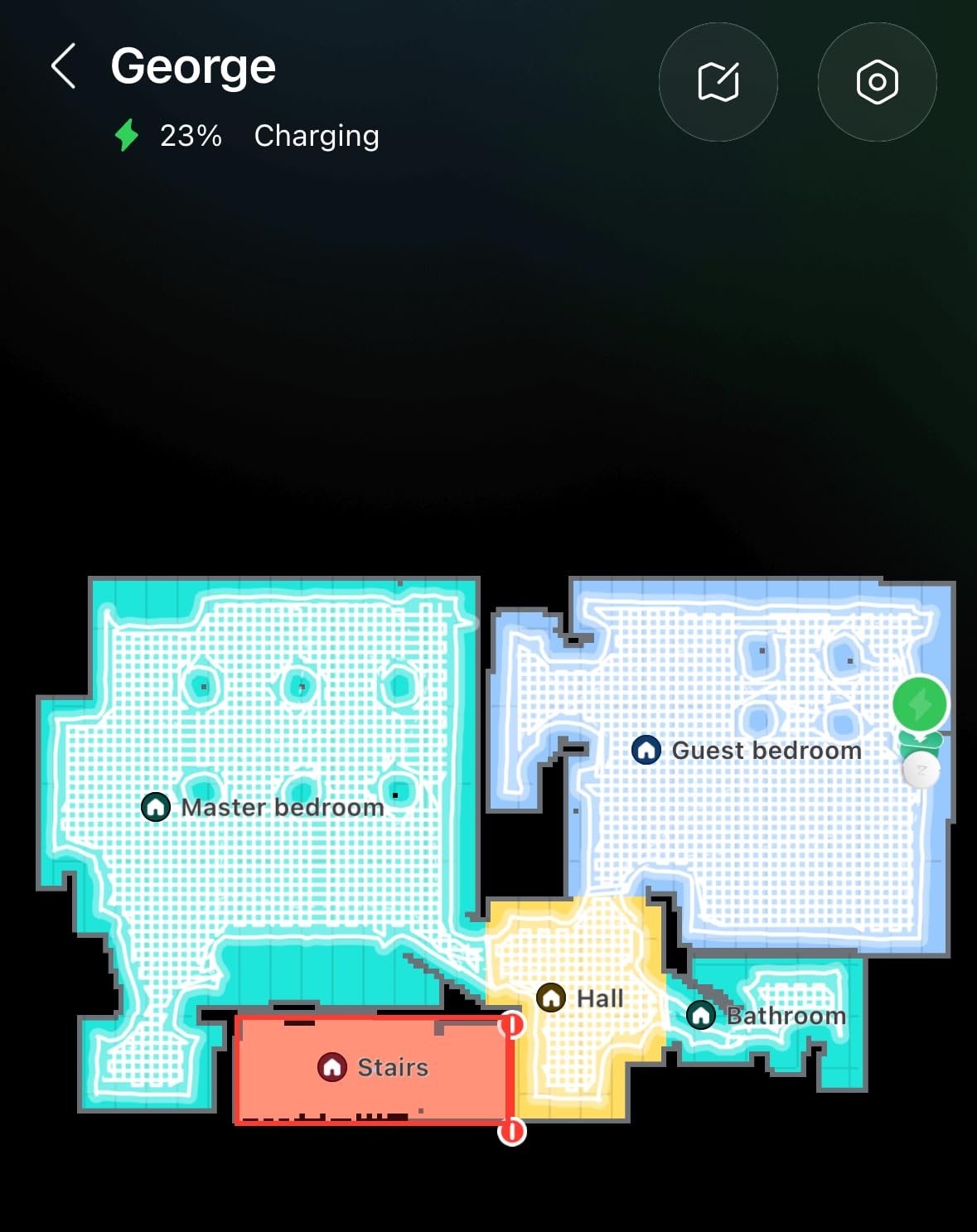
Over a minimum period of two weeks, we operate each vacuum daily, meticulously examining a comprehensive range of performance factors. We assess battery life under various cleaning modes and floor types; evaluate the functionality and intuitiveness of the accompanying mobile app; scrutinize the accuracy and consistency of the generated floor maps; and observe whether the vacuum consistently cleans around the edges of rooms and furniture.
A critical part of our testing involves assessing how well the vacuum picks up dirt of various sizes and compositions. This includes challenging materials such as fine sand (simulating outdoor grit), lint (common household debris), pet hair (a major concern for many users), Cheerios (larger, lighter debris), wood chips (heavier, irregularly shaped particles), and fine flour (testing suction and sealing capabilities).
Beyond raw performance, we also consider mitigating factors that impact the user experience. We note if a vacuum is incredibly loud during operation, which can be disruptive in a home environment. Aesthetics are also considered; while subjective, an overly bulky or unsightly charging station can make integration into a home difficult. We evaluate its physical fit, ensuring it can maneuver under furniture and into tight spaces. For a robot vacuum to be truly useful, it must not only clean well but also be something you want to use and have around your home. Finally, we always note the manufacturer’s stated suction power in Pascals (Pa)—a higher number generally indicates greater suction capability, which we cross-reference with our real-world pickup tests.
Power up with unlimited access to WIRED. _Get best-in-class reporting and exclusive subscriber content that’s too important to ignore. Subscribe Today._