Rep. Sheila Cherfilus-McCormick of Florida charged with stealing FEMA money, using it for her campaign, DOJ says
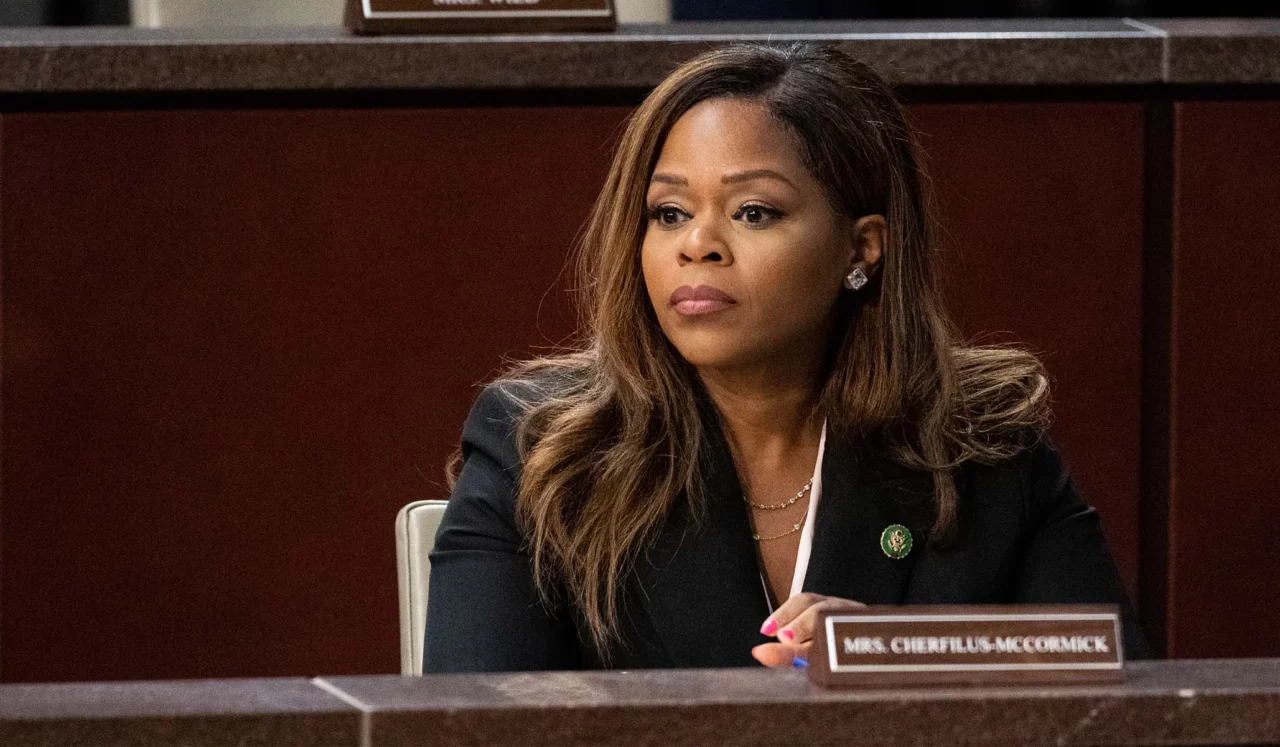
Washington D.C. – In a stunning development that reverberated through the halls of Congress and across the nation, Democratic Representative Sheila Cherfilus-McCormick of Florida was formally indicted in federal court on Wednesday, facing grave accusations of illicitly diverting millions of dollars in federal emergency funds and channeling a portion of these funds into her own political campaign. The charges, unveiled by the Justice Department, cast a shadow over the lawmaker’s tenure and raise serious questions about the integrity of public service and the use of critical disaster relief resources.
According to the Justice Department’s detailed statement, the allegations stem from events in 2021, a pivotal year preceding Cherfilus-McCormick’s successful election to Congress. At the heart of the federal probe is Trinity Healthcare Services, a health care company that Rep. Cherfilus-McCormick herself operated. Prosecutors contend that this company received an egregious overpayment of $5 million on a contract that was funded by the Federal Emergency Management Agency (FEMA), specifically designated for crucial coronavirus vaccination efforts. Rather than rectifying what was initially described by some as a "clerical error," the defendants in the case are alleged to have "conspired to steal" this substantial sum, orchestrating its movement through a complex web of multiple accounts to obscure its origins and ultimate destination.

A particularly damning aspect of the indictment is the accusation that a significant portion of this overpaid money was subsequently siphoned off and strategically deployed to bolster Cherfilus-McCormick’s nascent campaign for the House of Representatives, aiming to secure her seat representing South Florida. The Justice Department meticulously outlined what it describes as a sophisticated "straw donor" scheme. Under this alleged illicit arrangement, the congresswoman is accused of funneling segments of the purloined funds to close associates, including friends and family members. These individuals, in turn, purportedly made donations to her campaign, effectively masking the true source of the campaign contributions and circumventing stringent campaign finance laws designed to ensure transparency and prevent undue influence.
Attorney General Pam Bondi did not mince words in her official statement, condemning the alleged actions with palpable severity. "Using disaster relief funds for self-enrichment is a particularly selfish, cynical crime," Bondi declared, underscoring the gravity of misusing funds earmarked for public safety and health emergencies. She emphasized the foundational principle of legal equality, stating, "No one is above the law, least of all powerful people who rob taxpayers for personal gain. We will follow the facts in this case and deliver justice." The Attorney General’s strong language highlights the Justice Department’s commitment to vigorously prosecuting cases involving corruption and the betrayal of public trust, particularly when it involves funds intended for vulnerable populations during times of crisis.
As of Wednesday evening, the specific charges leveled against Rep. Cherfilus-McCormick and any other implicated defendants had not been explicitly detailed in the Justice Department’s public statement, nor was an official indictment readily accessible on the federal court database. This initial lack of specificity left many observers awaiting further clarity on the precise legal framework under which the congresswoman would be prosecuted, though the broad strokes of fraud, conspiracy, and campaign finance violations were clearly established.
In a swift and unequivocal rebuttal issued early Thursday morning, Rep. Cherfilus-McCormick vehemently denied all allegations, asserting her innocence. "This is an unjust, baseless, sham indictment – and I am innocent," she stated, challenging the legitimacy of the legal proceedings. She also raised pointed questions about the timing of the indictment, suggesting it was politically motivated. "The timing alone is curious and clearly meant to distract from far more pressing national issues," she remarked, implying a potential ulterior motive behind the charges. The congresswoman reiterated her commitment to full cooperation with legal authorities, affirming, "From day one, I have cooperated with every lawful request, and I will continue to do so until this matter is resolved." Expressing gratitude for the unwavering support from her constituents, she conveyed confidence in the eventual triumph of truth. "I am deeply grateful for the support of my district, and I remain confident that the truth will prevail. I look forward to my day in court. Until then, I will continue fighting for my constituents."
Her legal team echoed this defiant stance in a separate statement, affirming their client’s dedication to public service and vowing to clear her name. "Congresswoman Cherfilus-McCormick is a committed public servant, who is dedicated to her constituents. We will fight to clear her good name," the statement read, signaling a robust defense against the federal charges. The response from House Minority Leader Hakeem Jeffries was notably cautious, reflecting the delicate political tightrope often walked when a member of one’s own party faces criminal allegations. Speaking to reporters late Wednesday, Jeffries indicated he would issue a more comprehensive statement after conferring directly with Cherfilus-McCormick, but he underscored the fundamental legal principle, stating, "She’s innocent until proven guilty."
This is not the first time Rep. Cherfilus-McCormick’s company, Trinity Healthcare Services, has come under scrutiny regarding financial irregularities. Earlier in the year, the company was the subject of a lawsuit initiated by emergency officials in Florida, centering on an alleged multimillion-dollar overpayment. The Florida Department of Emergency Management (FDEM) had contracted with Trinity to facilitate the registration of individuals for COVID-19 vaccines, a critical public health initiative. The lawsuit alleged that, due to what the state characterized as a "clerical error," Trinity Healthcare Services was mistakenly paid more than $5 million instead of the intended $50,000. Crucially, the FDEM asserted that Trinity "knowingly" processed this erroneous invoice and subsequently refused to return the substantial overpayment.
In its legal defense, Trinity Healthcare Services contended in court papers that the state had inexplicably delayed for three years before notifying the company about the alleged overpayments, raising questions about the state’s own diligence and the timeliness of its claims. The company further asserted that it had expressed its willingness to engage in discussions to resolve the dispute with the Florida Department of Emergency Management, but alleged that the agency failed to respond to these overtures. Despite the contentious nature of the dispute, the state ultimately dropped the case last year following a period of mediation between the two parties, the terms of which were not publicly disclosed, leaving some questions lingering about the precise resolution of that particular financial entanglement.
Adding another layer of complexity to Rep. Cherfilus-McCormick’s legal and ethical challenges, she has also been the subject of an ongoing investigation by the House Ethics Committee. This probe was initiated after the Office of Congressional Ethics (OCE) reported last year that the congresswoman may have "requested community project funding that would be directed to a for-profit entity." This specific allegation suggests a potential conflict of interest, where a lawmaker might steer federal funds, ostensibly intended for public benefit, towards a private company with which they have a direct financial connection or ownership, such as Trinity Healthcare Services. Such practices, if substantiated, could violate congressional ethics rules designed to prevent members from using their official positions for personal financial gain.
The federal indictment of a sitting member of Congress is an inherently serious matter, carrying profound implications not only for the individual involved but also for the legislative body and the public trust it represents. If convicted of the charges, Rep. Cherfilus-McCormick could face significant penalties, including lengthy prison sentences, substantial fines, and the loss of her congressional seat. The legal process, which will likely involve arraignment, discovery, and potentially a protracted trial, is expected to be a high-profile affair, drawing national attention to the allegations of corruption and the misuse of public funds intended for vital disaster relief. The case serves as a stark reminder of the rigorous scrutiny applied to those in positions of power and the unwavering commitment of law enforcement agencies to hold elected officials accountable for actions that betray their oath of office and the trust of the American people. The presumption of innocence remains paramount, and Rep. Cherfilus-McCormick will have her day in court to present her defense against these severe accusations.