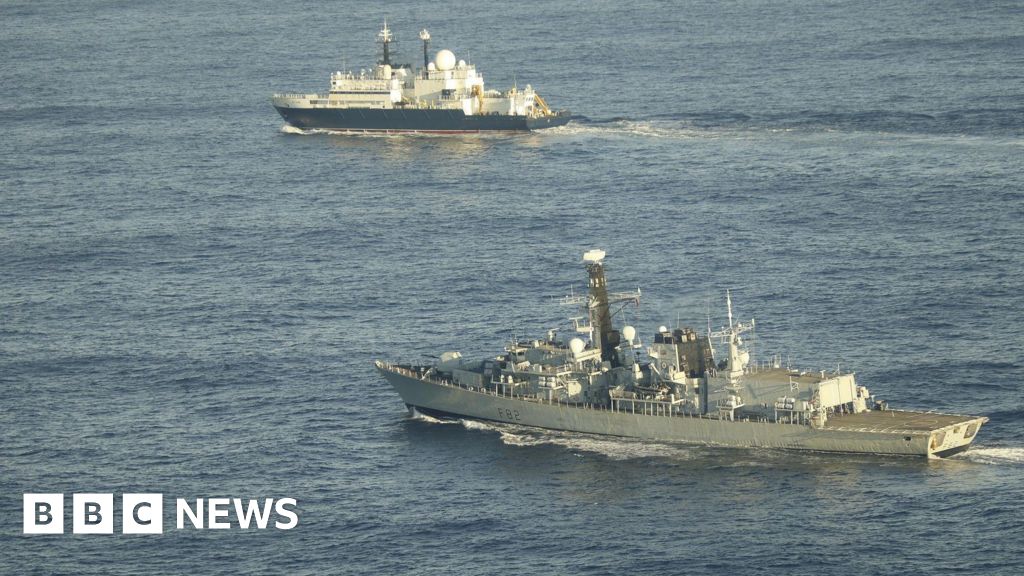
Britain warns Russia after spy ship comes close to its waters: "We are ready"
London, UK – November 19, 2025 – Britain has issued a unequivocal warning to Russia, asserting its preparedness to counter any incursions into its sovereign territory following the alarming detection of the Russian spy ship Yantar on the very edge of UK waters, specifically north of Scotland. This stern message, delivered by Defense Secretary John Healey, comes in the wake of a highly provocative incident where the Yantar reportedly directed lasers at pilots of British Royal Air Force (RAF) surveillance aircraft, marking a significant escalation in what many perceive as a burgeoning "shadow war" beneath the waves.
Defense Secretary Healey, addressing reporters in London on Wednesday, conveyed a direct and resolute message to Moscow and President Vladimir Putin: "We see you. We know what you’re doing." He emphasized the unprecedented nature of the laser targeting, stating, "This is the first time we’ve had this action from Yantar directed against the British RAF. We take it extremely seriously." The implications of such an act, which can disorient pilots and jeopardize flight safety, underscore the rising tensions in the North Atlantic. Healey left no room for ambiguity regarding Britain’s resolve, adding, "And if the Yantar travels south this week, we are ready." He further stressed that "We have military options ready should the Yantar change course," indicating a comprehensive and immediate response framework in place.
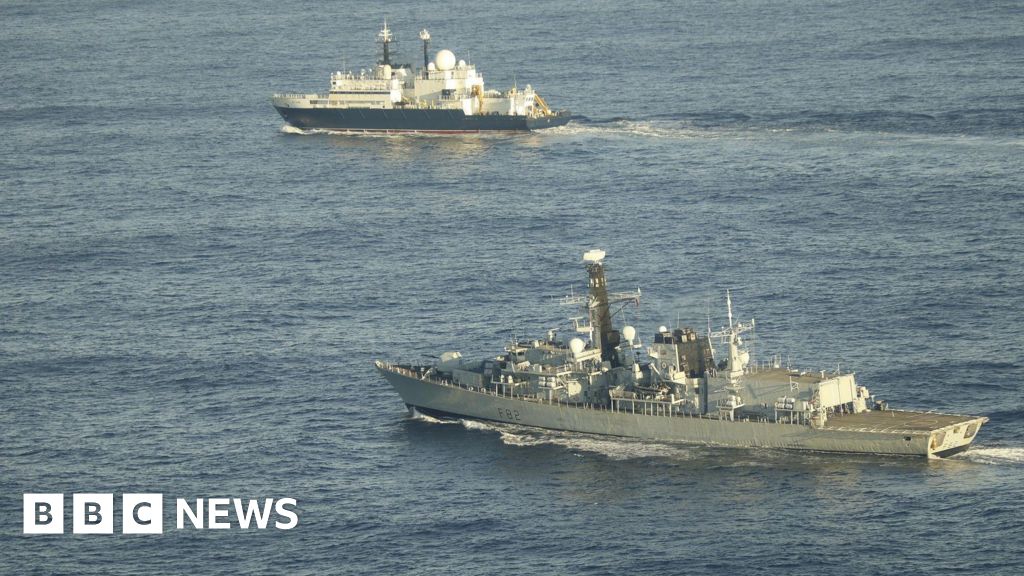
The Yantar, an oceanographic research vessel, is far from a benign scientific ship. Officially known as Project 22010 Yantar-class intelligence ship, it is a key asset of the Russian Navy’s Main Directorate of Deep-Sea Research (GUGI), a highly secretive unit believed to be responsible for underwater intelligence gathering and special operations. Equipped with an array of sophisticated sensors, remotely operated underwater vehicles (ROVs), and deep-sea submersibles, the Yantar’s primary mission involves mapping the seabed, inspecting critical undersea infrastructure, and potentially, preparing for sabotage operations. Its capabilities allow it to collect highly detailed data on the precise location, depth, and vulnerabilities of fiber-optic communication cables, gas pipelines, and other vital subsea networks that underpin global communication, finance, and energy supplies. In peacetime, it gathers intelligence; in a time of conflict, it could be instrumental in severing these vital lifelines, causing widespread disruption and economic chaos.
British officials and their NATO allies have long tracked the Yantar, recognizing its dual-use nature. Its presence near the UK’s Exclusive Economic Zone (EEZ) is viewed not as a casual transit but as a deliberate act of reconnaissance and intimidation. The act of directing lasers at an RAF surveillance aircraft represents a qualitative shift in Russia’s grey-zone tactics. While not a direct attack, it is a dangerous provocation that interferes with military operations in international airspace. Such actions carry a high risk of miscalculation, potentially leading to unintended consequences in an already volatile geopolitical climate. For the UK, ensuring the safety of its military personnel and asserting its right to monitor suspicious activity near its waters is paramount.
The gravest concern articulated by Defense Secretary Healey revolves around the Yantar’s potential threat to critical undersea infrastructure. "It is part of a Russian fleet designed to put and hold our undersea infrastructure and those of our allies at risk," Healey stated, drawing a direct link to the series of unexplained attacks on pipelines and communication cables under the Baltic Sea earlier this year. These incidents, which caused significant damage and raised alarm across Europe, highlighted the acute vulnerability of these vital networks. Although no definitive perpetrator was officially named, Western intelligence agencies have broadly pointed towards Russia, citing its documented capabilities in undersea warfare and a history of hybrid tactics aimed at destabilizing Western nations. The Yantar’s proximity to the UK, a crucial hub for transatlantic cables connecting Europe to North America, intensifies fears of similar disruptive activities. Protecting these invisible lifelines has become a top national security priority for Britain and its allies, recognizing that their disruption could cripple economies, sow panic, and undermine collective defense efforts.
The declaration of "military options ready" signals a robust and multi-faceted defensive posture by the United Kingdom. While the specifics of these options remain classified, they likely encompass a range of responses from enhanced surveillance and shadowing by Royal Navy vessels and RAF maritime patrol aircraft to more assertive measures if the Yantar were to engage in overt hostile acts or cross into territorial waters. This could include the deployment of dedicated anti-submarine warfare (ASW) assets, sophisticated electronic warfare countermeasures to disrupt the Yantar’s intelligence gathering, or even direct interdiction to compel the vessel to alter its course. The message is not merely one of warning but of a credible threat of force, underscoring Britain’s unwavering commitment to protecting its sovereignty and vital national interests. This proactive stance is designed to deter further provocative actions and ensure that any potential adversary understands the high costs of such endeavors.
This isn’t the Yantar’s first brush with British defenses. Last year, following a similar warning, the Russian vessel reportedly departed UK waters, demonstrating the effectiveness of assertive deterrence. More recently, in January, the Yantar was closely monitored and shadowed by HMS Somerset, a Royal Navy Type 23 frigate, as it navigated the English Channel. These repeated encounters highlight Russia’s persistent probing of Western defenses and its systematic efforts to gather intelligence in strategically vital maritime chokepoints. However, the laser incident represents an escalation beyond mere presence and surveillance, moving into a realm of direct, albeit non-lethal, interference with military assets. This suggests a growing willingness on Russia’s part to test the boundaries of international maritime law and acceptable conduct, further ratcheting up regional tensions.
The heightened friction surrounding the Yantar’s activities is deeply embedded in the broader geopolitical landscape characterized by strained relations between Russia and the West. Russia’s ongoing full-scale invasion of Ukraine, its aggressive posture towards NATO, and its pervasive use of hybrid warfare tactics – encompassing cyberattacks, disinformation campaigns, and energy weaponization – have created an environment of profound distrust. The UK, a steadfast ally of Ukraine and a key member of NATO, has been at the forefront of condemning Russian aggression and imposing sanctions. Incidents like the Yantar’s close approach to British waters serve as constant reminders of Russia’s intent to project power, gather intelligence, and sow discord beyond the immediate conflict zones. The protection of critical infrastructure, particularly energy pipelines and communication cables, has become inextricably linked to broader national security and economic stability concerns for Europe, making incidents like this particularly potent.
While the immediate warning comes from Britain, such incidents are invariably analyzed and discussed within the wider NATO alliance and among allied intelligence communities. The protection of critical undersea infrastructure, especially the vast network of transatlantic communication cables, is a collective security concern for all member states. NATO has significantly increased its focus on maritime security in recent years, establishing dedicated task forces and enhancing surveillance capabilities to monitor Russian naval activity in the North Atlantic and Arctic regions. A provocative act against one NATO member, particularly involving a vessel with the Yantar’s specific capabilities, reverberates across the entire alliance, reinforcing the shared understanding of the threat and strengthening the imperative for coordinated vigilance and deterrence.
As of November 19, 2025, the encounter with the Yantar serves as a stark reminder that the "new Cold War" is being fought not only on land and in cyberspace but also in the deep, silent realm beneath the ocean’s surface. The UK’s firm and public response signals a clear determination to counter Russia’s hybrid tactics and robustly defend its sovereign interests. The coming days and weeks will undoubtedly reveal whether the Yantar alters its course or continues its provocative maneuvers. Regardless of its immediate trajectory, the incident underscores the ongoing necessity for robust defense capabilities, sophisticated intelligence gathering, and unwavering political resolve to navigate an increasingly complex and dangerous international landscape. The message from London is unambiguous: Britain is watching, and it is ready to act decisively to protect its security and that of its allies.