Some U.S. lawmakers say Ukraine-Russia peace plan appears to favor Moscow: "That is unacceptable"
A proposed 28-point peace plan, reportedly crafted by the Trump administration to end the protracted Ukraine-Russia war, has ignited a firestorm of criticism among U.S. lawmakers, who vociferously condemned the framework as disproportionately favoring Moscow. The plan, which demands significant territorial and security concessions from Kyiv, has been branded "unacceptable" by a bipartisan chorus of legislators who argue it rewards aggression and undermines international law.
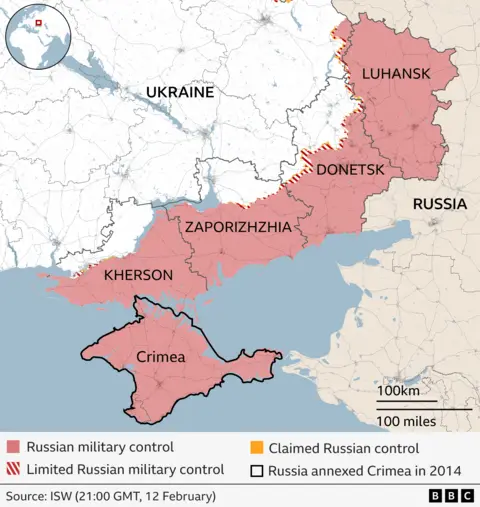
According to a draft shared publicly by a Ukrainian opposition politician and subsequently confirmed by a White House official, the controversial deal would compel Ukraine to surrender its eastern Donbas region and Crimea, territories illegally annexed or occupied by Russia, and irrevocably renounce its aspirations for NATO membership. While the plan reportedly incorporates feedback from both Russian and Ukrainian officials, and diplomatic discussions are ongoing, President Trump has reportedly set a stringent deadline, urging Ukrainian President Volodymyr Zelenskyy to respond by Thanksgiving Day.
The immediate backlash from Capitol Hill underscored deep-seated anxieties regarding the plan’s implications for Ukraine’s sovereignty and the broader international order. Members of the influential Senate Foreign Relations Committee, including Democrat Jeanne Shaheen and Republican Thom Tillis, issued a joint statement on Saturday expressing "significant concerns over the details of the reported peace plan." Their statement highlighted the decade-long illegal Russian occupation of Ukrainian territory and Ukraine’s valiant four-year defense against Russia’s full-scale invasion.
"No one wants a just and lasting peace more than the Ukrainian people," the committee members asserted, acknowledging the profound suffering endured by the nation. "However, we will not achieve that lasting peace by offering Putin concession after concession and fatally degrading Ukraine’s ability to defend itself." This sentiment reflects a fundamental principle often cited in foreign policy: that appeasement of aggressors rarely leads to enduring stability. They stressed that "History teaches us that Putin only understands strength and will not abide by any agreement unless it is backed by force." The lawmakers urged close consultation with Ukrainian and NATO partners, advocating for "real pressure on Russia to come to the negotiating table" and sending an unequivocal message to the Kremlin—and implicitly to "would-be aggressors in Beijing"—that "America will stand unwaveringly in defense of freedom." This broader geopolitical warning suggests concerns that a perceived weakening of resolve in Ukraine could embolden other revisionist powers.
Echoing these grave reservations, the co-chairs of the bipartisan Congressional Ukraine Caucus also lambasted the proposed framework. In a statement shared on Saturday, they declared that the plan "appears to favor the interest of the aggressor," Russian President Vladimir Putin, "over the sovereignty and security of a democratic Ukraine." The caucus articulated a stark assessment, stating, "This framework does not offer a genuine path to lasting peace, but instead, demands the surrender and capitulation of Ukraine to Russian aggression." They characterized the Trump administration’s endorsement of such a plan as raising "serious concerns," particularly given the U.S.’s historical role as a guarantor of democratic values and international norms.
The caucus firmly reiterated that "The international community must remain firm in supporting Ukraine, upholding the principles of territorial integrity and self-determination, and rejecting any plan that rewards an aggressor." Their statement underscored a critical lesson derived from post-World War II diplomacy: that "Lasting peace comes not from conceding to aggression, but from the strength and unity of free nations that refuse to bow to it." The lawmakers’ collective stance suggests a deep ideological divide with the administration’s approach, fearing that such concessions could set a dangerous precedent, inviting future territorial grabs and destabilizing regions far beyond Eastern Europe.
The international reception to the proposed U.S. plan has been lukewarm at best, with European governments notably absent from its drafting process. European officials contacted by CBS News confirmed they were not involved, raising questions about allied unity and communication. Western leaders gathered at the G20 summit in South Africa on Saturday offered a diplomatic but pointed critique, stating that the plan "needs additional work." This measured response from key allies signals a lack of international consensus and potential friction within the transatlantic alliance, should the U.S. press forward with a plan perceived as unilateral and detrimental to Ukraine’s long-term interests. The exclusion of European partners, who have also borne significant economic and security costs supporting Ukraine, further complicated the perception of the plan’s legitimacy and viability.
The origins of this contentious peace initiative trace back to recent meetings between U.S. and Russian officials. CBS News reported on Thursday that the plan was developed following an October 24 meeting in Miami between Mr. Trump’s envoy, Steve Witkoff, and Kirill Dmitriev, a key adviser to Russian President Vladimir Putin. The fact that the framework was reportedly shaped through direct engagement with a Russian official, seemingly before extensive consultation with Kyiv or key European allies, has fueled criticism that Ukraine’s interests were not adequately represented from the outset.
Looking ahead, Ukrainian envoys are slated to meet with a U.S. delegation in Geneva, Switzerland, to discuss the proposal. The American contingent is expected to include high-ranking officials such as Secretary of the Army Dan Driscoll, Secretary of State Marco Rubio, and envoy Steve Witkoff. The Associated Press reported that nine Ukrainian officials, including Zelenskyy’s chief of staff, are expected to participate in these critical talks. The pressure on the Ukrainian delegation will be immense, as they navigate a proposal that fundamentally challenges their nation’s territorial integrity and future security alignment.
The timing of this diplomatic push coincides with a somber day in Ukraine, as the nation commemorated its "great famine" on Saturday. The Holodomor, an artificial famine orchestrated by Soviet leader Josef Stalin in the early 1930s, resulted in millions of deaths from starvation and remains a profound historical trauma for Ukrainians. In a video address delivered on this solemn occasion, President Zelenskyy directly addressed the ongoing struggle, drawing a powerful parallel between past and present existential threats. His words were imbued with defiance and national resolve: "We defended, defend and will always defend Ukraine," Zelenskyy declared. "Because only here is our home. And in our home, Russia will definitely not be the master." This resolute statement underscores Ukraine’s unwavering commitment to its sovereignty and serves as a direct rebuttal to any plan demanding the surrender of its territory or its national aspirations.
The proposed peace plan thus faces significant hurdles, both domestically within the U.S. and internationally. The bipartisan condemnation from U.S. lawmakers highlights a deep-seated belief that concessions to an aggressor are not a path to lasting peace but rather an invitation for further instability. The international community’s reserved reaction, coupled with Ukraine’s staunch refusal to cede its territory, suggests that the Trump administration’s 28-point proposal is unlikely to be a straightforward solution to the complex and devastating conflict. Instead, it has ignited a new front in the diplomatic battle, testing alliances and challenging fundamental principles of international relations. The coming weeks, leading up to the Thanksgiving deadline, will be critical in determining the fate of this controversial plan and the future trajectory of the Ukraine-Russia war.