Louvre jewel heist investigation nets 4 more arrests, authorities say
Paris, France – The elaborate investigation into last month’s audacious daylight heist of imperial jewels from the Louvre Museum has intensified, with French authorities announcing four additional arrests on Tuesday. This development signals a significant expansion of the police dragnet, as investigators piece together the network behind one of the most brazen museum thefts in recent history.
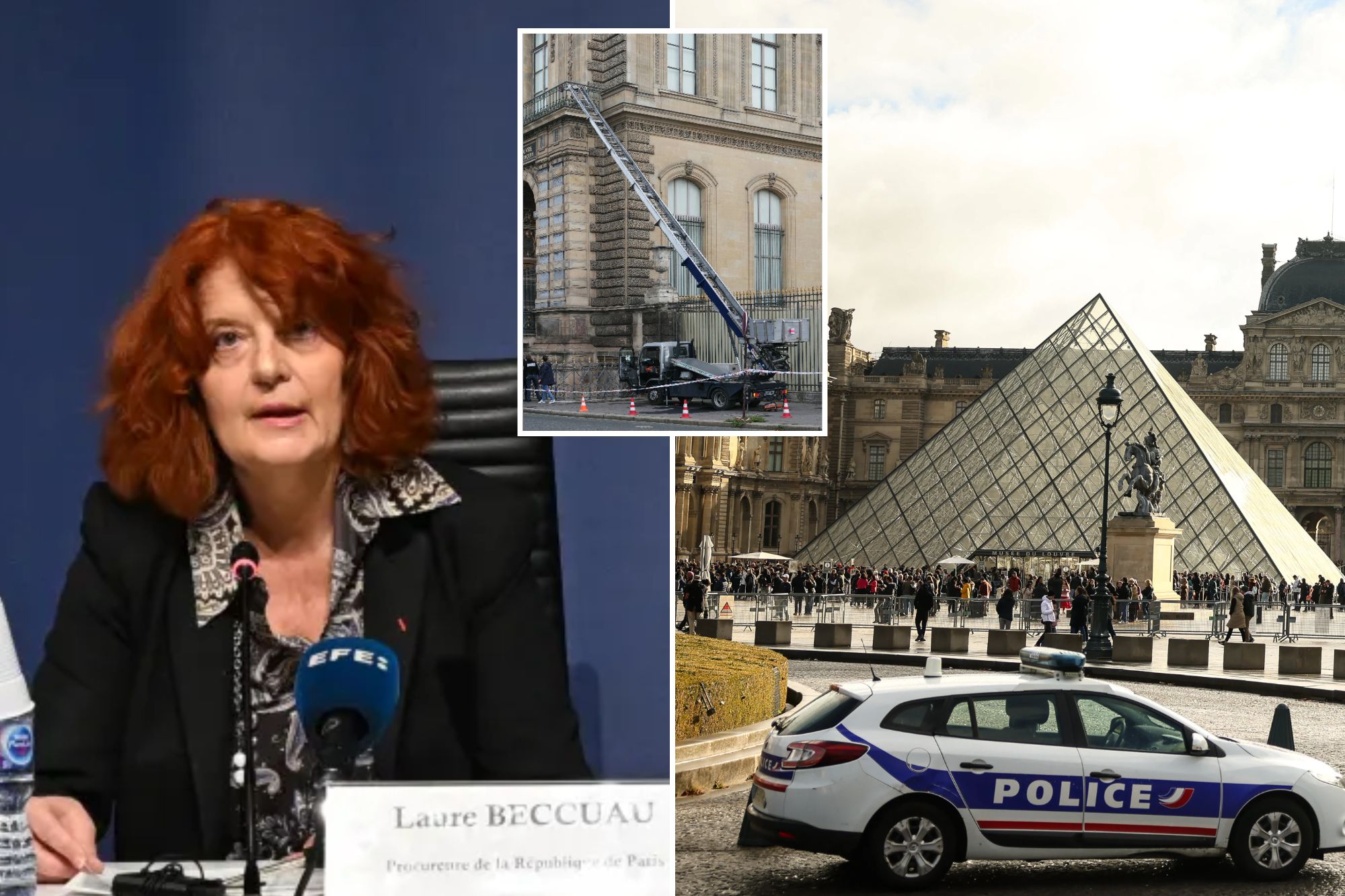
Paris prosecutor Laure Beccuau, whose office is spearheading the complex inquiry, identified the newly apprehended suspects as two men, aged 38 and 39, and two women, aged 31 and 40, all hailing from the wider Paris region. While the specific roles these individuals are suspected of having played in the October 19 theft remain undisclosed by the prosecutor’s statement, their arrests underscore the ongoing, methodical efforts to dismantle the criminal enterprise responsible. Under French law, these suspects can be held for questioning for up to 96 hours, a critical period for investigators to extract information that could lead to further breakthroughs, including the recovery of the priceless stolen artifacts.
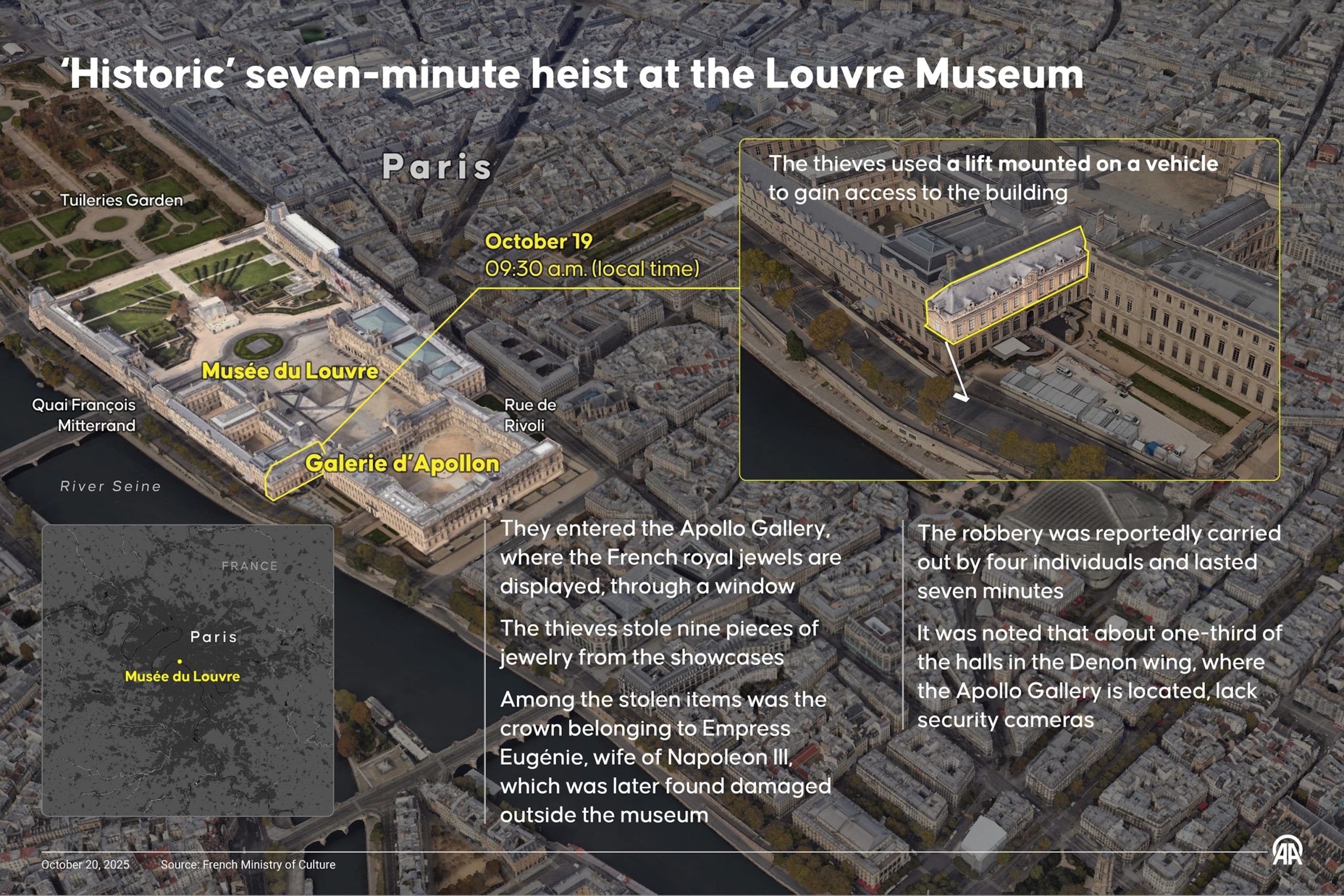
The loot, with an estimated value soaring to approximately $102 million, continues to elude authorities. This staggering sum represents not merely monetary worth but an irreplaceable loss of French cultural heritage. Among the treasures snatched from the Louvre’s hallowed Apollo Gallery are a diamond-and-emerald necklace originally gifted by Emperor Napoleon to his second wife, Empress Marie-Louise, alongside other magnificent jewels tied to the 19th-century Queens Marie-Amélie and Hortense. Perhaps most iconic is Empress Eugénie’s pearl-and-diamond tiara, a testament to the opulence of the Second French Empire. In a fleeting moment of haste or perhaps a struggle, the thieves notably dropped a diamond-and-emerald-studded crown, also once belonging to Eugénie, as they made their escape, leaving a glimmer of what was lost on the museum floor.
These latest arrests build upon earlier successes in the investigation. Previously, a police dragnet had already apprehended other suspected members of the four-person team believed to have executed the initial robbery. Investigating magistrates had filed preliminary charges against three men and one woman who were taken into custody last month. Among them was a 37-year-old man, whose DNA was crucially found within the basket lift used during the robbery, providing a direct link to the crime scene. Prosecutor Beccuau had revealed earlier that this individual was in a relationship with one of the previously arrested women, and they shared children, hinting at a familial or close-knit aspect to the criminal group. The man’s extensive criminal record, which included 11 prior convictions predominantly for theft, strongly suggested a background in professional crime rather than amateur opportunism. The first two men arrested were also reportedly known to the police for previous theft-related offenses and resided in Aubervilliers, a northeastern suburb of Paris, indicating potential local connections and a pattern of criminal activity.
The heist itself unfolded with a breathtaking audacity that stunned the world. The Louvre, universally recognized as the world’s most-visited art museum, was breached in broad daylight. The entire operation, from entry to escape with the jewels, was executed in a mere seven minutes, a testament to the perpetrators’ meticulous planning and ruthless efficiency. The thieves employed a highly unconventional and sophisticated method: they parked a moving truck equipped with a large ladder or basket lift directly below the museum’s Apollo Gallery. Ascending swiftly in the bucket lift, they then proceeded to break a window, gaining entry into the supposedly impenetrable gallery. Once inside, they utilized industrial-grade angle grinders to cut into the reinforced glass display booths housing the treasures, before making their getaway on scooters, disappearing into the bustling Parisian streets.
The incident immediately triggered a profound re-evaluation of security protocols at the venerable institution. Louvre director Laurence des Cars candidly revealed new details about the glaring security breach during a recent testimony. She highlighted that the power tools used by the robbers to penetrate the display cases were specifically designed for cutting through concrete, not typically glass. "It’s a method that had not been imagined at all" when the display cases in the Apollo Gallery were last replaced in 2019, she confessed. At that time, the primary security concern and design focus had been to counter an attack originating from inside the museum, potentially involving weapons, rather than a sophisticated external assault with heavy-duty tools.
Des Cars emphasized that footage from the museum’s extensive camera network showed the display cases "held up remarkably well and did not break apart," indicating the sheer force and specialized equipment the thieves employed. "Videos show how difficult it was for the thieves," she added, underscoring the determination and resources of the perpetrators. In response to the exposed vulnerabilities, the director assured lawmakers that new surveillance cameras and advanced anti-intrusion systems would be swiftly installed at the iconic Paris landmark, marking a significant upgrade to its security infrastructure.
This security overhaul is being integrated into the broader, decade-long "Louvre New Renaissance" plan, which was launched earlier this year. With an estimated cost of up to 800 million euros ($933 million), this ambitious initiative aims to comprehensively modernize the museum’s aging infrastructure, alleviate severe crowding, and ultimately dedicate a specialized gallery to the world-famous Mona Lisa by 2031. The heist has inadvertently spotlighted the critical importance of robust security within this extensive modernization project.
Beyond the immediate security concerns, the incident also brought into focus the immense pressures faced by the Louvre due to its overwhelming popularity. Des Cars noted that the famed glass pyramid, inaugurated in 1989, was originally designed to accommodate approximately 4 million visitors annually. However, in recent years, the museum has been crumbling under the weight of mass tourism, forcing the director to restrict the daily number of visitors to 30,000. Despite these measures, the Louvre has already welcomed over 8 million people this year, illustrating the monumental challenge of balancing public access with the preservation and protection of its invaluable collections. The ongoing investigation and the subsequent security enhancements are not just about recovering stolen jewels; they represent a renewed commitment to safeguarding a shared global heritage against increasingly sophisticated threats.
The Associated Press contributed to this report.