What is considered bad debt (and why should it matter to borrowers)?
The modern financial landscape sees many individuals increasingly relying on credit to navigate the persistent pressures of rising everyday costs. From essential groceries and fuel to housing, a growing segment of the population finds itself utilizing borrowed funds to bridge the widening gap between their expenses and income. This reliance is not merely anecdotal; recent data consistently highlights a significant increase in household debt, signaling that more borrowers are feeling the cumulative strain of elevated prices, stubborn inflation, and a frequently challenging job market. For millions, this growing dependence on credit is not a path to stability but rather pushes their budgets into increasingly precarious territory.
While certain forms of borrowing can strategically support long-term financial growth and provide lasting value — such as financing a home that can appreciate over time or investing in higher education to enhance earning potential — other types of debt do little more than drain financial resources and severely restrict future economic flexibility. The insidious nature of these less beneficial debts often lies in their rapid growth and high carrying costs, quietly undermining an individual’s financial stability over many years. Many borrowers carry these burdens without fully grasping their true expense, particularly in a period where interest rates have climbed significantly into the double digits. This makes a clear and comprehensive understanding of what qualifies as "bad debt" not just helpful, but critically important right now. With borrowing costs remaining high, the specific type of debt you hold can profoundly impact your ability to save, build a healthy credit profile, and effectively manage unforeseen financial setbacks.

What is Considered Bad Debt?
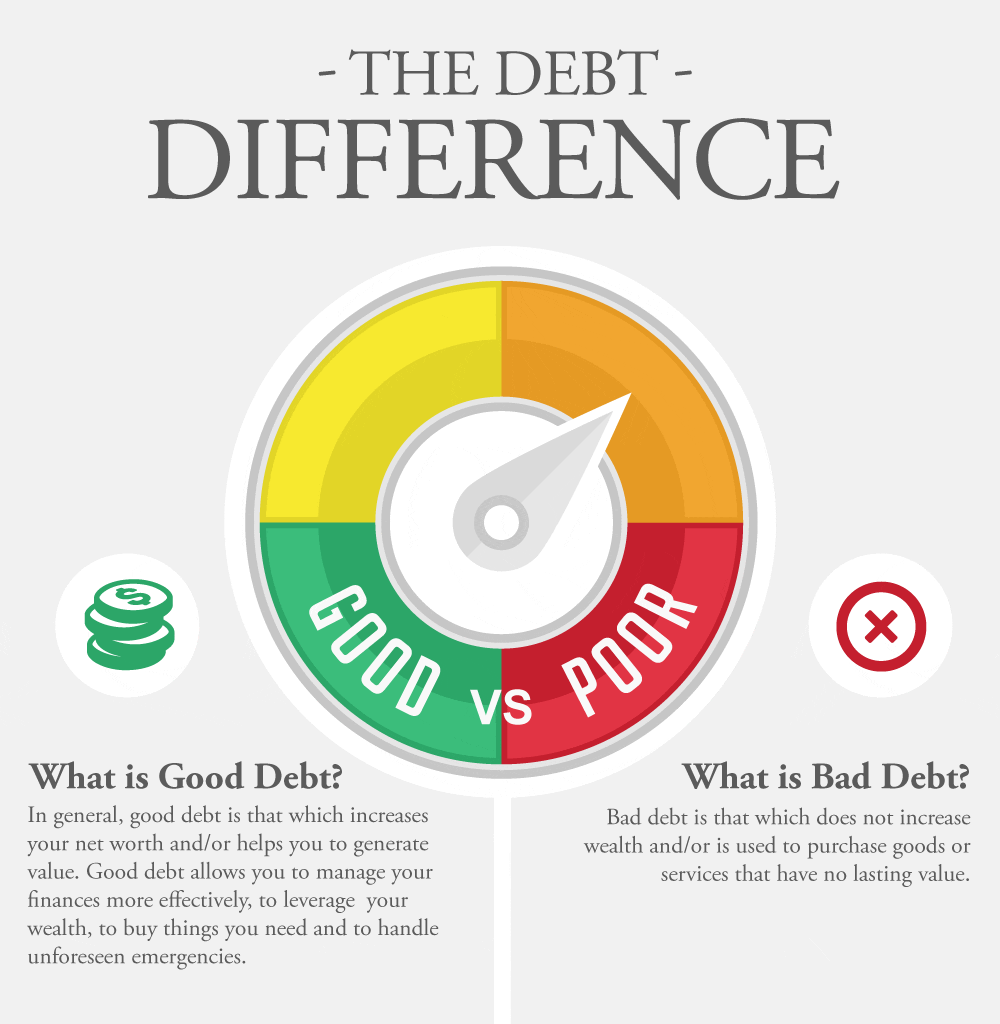
At its core, bad debt is any form of borrowing that ultimately costs you more than it ever gives back in terms of tangible, lasting value or financial return. Unlike "good debt" – which strategically supports long-term wealth creation, personal development, or the acquisition of appreciating assets (like a mortgage on a primary residence or a student loan that leads to a higher-paying career) – bad debt typically offers no meaningful return on investment. Instead, it acts as a persistent drain on your cash flow, significantly limits your financial flexibility, and frequently comes saddled with exorbitant interest rates that render it exceedingly difficult, if not virtually impossible, to repay effectively. The defining characteristics of bad debt include its consumption-oriented nature, its tendency to finance items that quickly depreciate or offer no long-term asset, and its high carrying costs that erode financial progress.
Common Examples of Bad Debt:
The most pervasive and commonly cited example of bad debt is credit card debt. With average Annual Percentage Rates (APRs) often hovering above 22% or even higher today, any revolving credit card balances can expand at an alarming pace. This rapid compounding can occur even when borrowers are diligently making only their minimum monthly payments. The structure of revolving credit, where interest accrues on the remaining balance and often on new purchases before the previous balance is cleared, makes it exceptionally harmful. It can trap individuals in prolonged repayment cycles, where a significant portion of their payments goes directly to interest rather than reducing the principal balance.
However, bad debt extends far beyond just credit cards. Other notable examples include:
- Payday Loans: These short-term, small-dollar loans are often marketed as quick solutions for immediate cash needs. However, their APRs can skyrocket into the triple digits, sometimes exceeding 400% or more. Designed to be repaid on the borrower’s next payday, they frequently lead to a detrimental cycle of re-borrowing as individuals find themselves unable to repay the principal and exorbitant fees, creating a debt trap that is notoriously difficult to escape.
- Store Credit Cards: While often tempting with initial discounts or rewards programs, store-specific credit cards typically carry much higher interest rates than general-purpose credit cards. They encourage spending at a particular retailer, often on discretionary items that are prone to rapid depreciation, and their high APRs can quickly negate any initial savings or perceived benefits.
- High-Interest Personal Loans for Depreciating Assets: Taking out a personal loan at a high interest rate to finance purchases of items that rapidly lose value, such as lavish vacations, expensive electronics, luxury clothing, or non-essential consumer goods, falls squarely into the bad debt category. The asset provides no long-term financial benefit, and the cost of the loan quickly outweighs any fleeting enjoyment derived from the purchase.
- Auto Loans on Overpriced or Unnecessary Vehicles: While an auto loan for a reliable vehicle needed for work or transportation can be considered a necessary expense, financing an excessively expensive car with a high interest rate, especially if it’s beyond one’s means or primarily for luxury, can quickly become bad debt. The vehicle itself depreciates rapidly, and the high cost of financing can become a significant and enduring financial burden that consumes a large part of one’s budget.
What fundamentally connects these diverse forms of debt is their shared lack of significant long-term benefit for the borrower and their inherent tendency to escalate rapidly when payments are missed or delayed. This rapid growth is particularly pertinent in today’s economic climate, where the twin pressures of inflation and elevated borrowing costs make it increasingly challenging for numerous households to manage both their daily living expenses and their mounting monthly debt obligations simultaneously.
Why Bad Debt Should Matter to Borrowers:
Understanding and proactively addressing bad debt is not merely about managing numbers; it’s about safeguarding your entire financial future and overall well-being. Its impact reverberates across several critical aspects of a borrower’s life:
-
Erosion of Financial Health and Cash Flow: Bad debt acts as a relentless siphon on your monthly income. A substantial portion of your earnings is diverted to servicing high-interest payments, leaving considerably less money available for essential needs, building savings, or making strategic investments. This erosion of disposable income can prevent you from establishing or maintaining an emergency fund, making it virtually impossible to weather unexpected financial shocks without falling further into debt. It also severely hinders your ability to invest for retirement, a down payment on a home, or other crucial long-term goals, effectively stalling your wealth-building efforts. The constant burden of high payments creates a perpetual cycle of financial stress, making it difficult to achieve any significant financial progress.
-
Damage to Credit Score and Future Borrowing Power: Your credit score is a crucial metric that lenders use to assess your creditworthiness, influencing everything from loan approvals to interest rates. Bad debt, particularly high credit card balances and maxed-out accounts, directly impacts your credit utilization ratio – the percentage of your available credit that you are currently using. A high utilization ratio signals to lenders that you are a higher risk, potentially indicating financial distress or over-reliance on credit. This can drag down your credit score significantly. A lower credit score, in turn, translates into higher interest rates on future loans (like mortgages or new auto loans), potentially increased insurance premiums, and even difficulties in securing rental housing or certain types of employment. It makes future borrowing more expensive and, in some cases, entirely inaccessible, effectively limiting your financial options when you need them most.
-
Mental and Emotional Toll: The burden of overwhelming debt extends far beyond mere financial figures; it exacts a substantial mental and emotional toll. Chronic debt can lead to significant stress, anxiety, and even depression. The constant worry about making payments, the feeling of being trapped in a cycle, and the pervasive fear of financial instability can negatively impact personal relationships, disrupt sleep patterns, and diminish overall quality of life. This psychological weight can hinder productivity at work and make it challenging to focus on other aspects of life, inadvertently creating a vicious cycle where stress impedes effective financial management.
-
Hindrance to Long-Term Financial Goals: Bad debt can derail your most important financial aspirations. Saving for a down payment on a home, funding your children’s education, or building a comfortable retirement nest egg become increasingly challenging when a large portion of your income is consistently consumed by high-interest debt payments. Each dollar spent on interest is a dollar that could have been invested, saved, or used to build equity and secure your future. The longer bad debt persists, the further you fall behind on achieving these critical life milestones, potentially delaying them indefinitely.
How to Get Rid of Bad Debt Quickly (and Affordably):
Once you’ve identified the presence of bad debt in your financial portfolio, the critical next step is to strategize the most affordable and efficient path toward its elimination. Several highly effective options are available, catering to different financial situations and credit profiles:
-
Consolidate It with a Lower-Rate Option:
- Debt Consolidation Loan: If you possess a reasonably good credit score, a debt consolidation loan can be an exceptionally powerful tool. This involves taking out a single, new personal loan with a lower fixed interest rate to pay off multiple high-interest debts, primarily credit cards. The benefits are significant: a single monthly payment simplifies budgeting, and the lower interest rate can drastically reduce the total amount you pay over time, allowing more of your payment to go towards reducing the principal balance. Borrowers with excellent credit stand to gain the most substantial savings and find this option highly advantageous.
- Balance Transfer Credit Card: Another effective consolidation strategy involves transferring high-interest credit card balances to a new credit card offering a 0% introductory APR on balance transfers for a specific promotional period (e.g., 12 to 24 months). This allows you to pay down the principal aggressively without accruing any interest during that critical period. However, this approach demands strict discipline to pay off the entire balance before the introductory period expires and the regular, often high, APR kicks in. It’s also important to note that a balance transfer fee (typically 3-5% of the transferred amount) usually applies.
-
Get Help from a Reputable Debt Relief Company (Debt Settlement):
For borrowers facing severe financial distress – those who are already struggling to keep up with minimum payments, have fallen significantly behind, or are facing collection calls – debt settlement may present a more viable and immediate solution. In this approach, a professional debt relief company acts as your advocate, negotiating directly with your creditors on your behalf. The primary objective is to persuade creditors to accept a reduced total amount to settle the debt, typically requiring a lump-sum payment. While this can drastically lower your repayment burden and provide a quicker exit from debt, it’s crucial to understand the potential downsides, which include a negative impact on your credit score, potential fees from the settlement company, and in rare cases, the possibility of being sued by creditors if negotiations fail. It is absolutely essential to vet any debt relief company thoroughly to ensure its legitimacy, ethical practices, and track record. -
Work with a Credit Counselor on a Tailored Debt Management Plan (DMP):
A debt management plan (DMP) is offered through non-profit credit counseling agencies. Under a DMP, the agency works with your creditors to consolidate your multiple unsecured debts (like credit cards) into one manageable monthly payment. Often, they can successfully negotiate lower interest rates, waive late fees, and help stop persistent collection calls. While these plans typically take three to five years to complete, they provide a structured, supportive environment and a clear timeline for becoming debt-free. DMPs generally require closing the accounts included in the plan, but they typically have a less severe and more temporary impact on your credit score compared to debt settlement. This option is particularly helpful if you feel overwhelmed by numerous debt obligations and need a structured, guided pathway out. -
Take Advantage of Hardship Help Available to You:
If you are experiencing a temporary but serious financial setback – such as a job loss, a major medical emergency, a significant reduction in income, or a natural disaster – many credit card issuers and lenders offer temporary hardship arrangements. These programs can provide crucial breathing room by reducing your interest rates, waiving certain fees, or structuring a temporary repayment plan with lower monthly payments or even a period of forbearance (pausing payments). It is vital to proactively contact your creditors as soon as you anticipate or experience financial difficulty. Explaining your situation and requesting assistance can often prevent missed payments from damaging your credit and help you stay afloat during challenging times.
Additional Personal Strategies:
Beyond these formal options, incorporating sound personal finance practices can significantly accelerate your debt repayment journey:
- Create a Detailed Budget: Gain a clear understanding of exactly where your money is going each month and identify areas where you can cut back to free up more funds specifically for debt repayment.
- Debt Snowball or Avalanche Method: The debt snowball method involves paying off the smallest debt first to build psychological momentum and motivation, while the debt avalanche method prioritizes debts with the highest interest rates to save the most money over time. Choose the method that best suits your psychological and financial needs.
- Increase Income: Explore opportunities for a side hustle, taking on extra shifts or overtime at your current job, or negotiating a raise to dedicate any additional income directly to debt reduction.
The Bottom Line:
Bad debt is far more than just a line item on your monthly budget; it actively undermines your long-term financial stability and severely limits your future financial options. In the current economic climate, characterized by persistently elevated interest rates and climbing household debt levels, discerning what constitutes harmful debt and understanding its profound implications has become more critical than ever. Whether you are grappling with high-rate credit card balances, juggling multiple store cards, or caught in the snare of predatory payday loans, the paramount step is to acknowledge the problem early and decisively implement strategies to resolve it. Procrastination only allows bad debt to compound, making it exponentially harder to escape its grasp. Fortunately, a range of effective debt relief solutions exists. By exploring options such as debt consolidation, settlement, credit counseling, or hardship programs, you can find a more affordable and structured path toward clearing those debilitating balances for good, ultimately paving the way for a more secure, stable, and prosperous financial future.