
Booze Without the Burn? An Enzyme-Tinkering Startup Aims to Make Spirits Smoother
In the sophisticated lexicon of professional spirits reviews, the term "smooth" often carries a nuanced, almost pejorative connotation, hinting at a lack of character or complexity. Yet, for the average consumer, "smoothness" remains the holy grail—a universally desired quality that signifies an enjoyable, palatable drinking experience, free from the dreaded burning sensation. This fundamental disconnect between industry connoisseurs and the broader market underscores a persistent challenge in distillation: how to craft spirits that are both rich in flavor and effortlessly easy to drink. The distilling industry, ever eager to cater to consumer demand, employs a variety of techniques to achieve this elusive smoothness. Some methods, like the patient aging of a fine whiskey for a decade and a half, are steeped in tradition and respect, allowing time to mellow harsh edges and integrate complex flavors. Others, however, border on the less savory, involving the judicious (or sometimes excessive) addition of chemical additives, sugars, and glycerin to mask the alcohol’s bite. While these approaches can yield varying degrees of success, none has ever managed to completely eliminate the characteristic fiery sting that alcohol imparts on the palate and throat.
This enduring challenge piqued the curiosity of Joana Montenegro, a seasoned food scientist with a background at industry giants like General Mills and Land O’Lakes, and Martin Enriquez, a former telecom executive. This husband-and-wife duo, driven by an almost whimsical curiosity during the early days of the COVID-19 lockdown, founded Voodoo Scientific. Their audacious question, seemingly overlooked by centuries of distillers and scientists, was deceptively simple: Why exactly does alcohol burn? And, perhaps more importantly, could that gasp-inducing, throat-searing sensation be eradicated entirely, without compromising the spirit’s integrity?
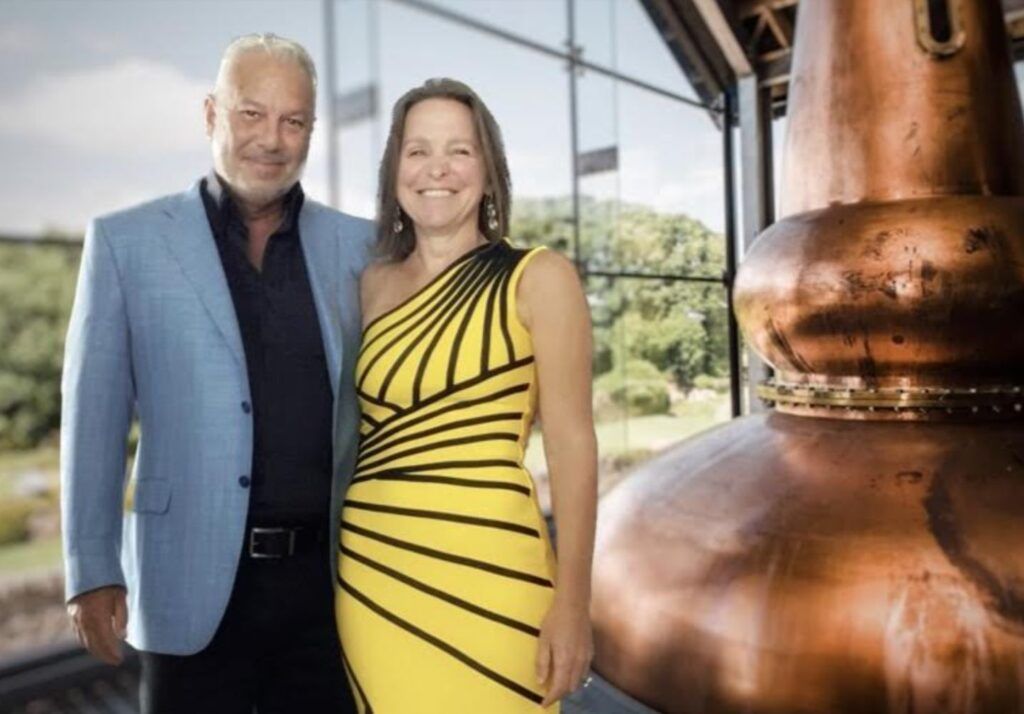
Conventional wisdom, reinforced by countless fiery shots of "firewater," dictates that ethanol—the alcohol itself—is the culprit behind the burn. However, Voodoo Scientific’s deep dive into scientific literature revealed a surprising truth: no one had definitively pinpointed the precise compounds responsible for this unpleasant sensation, nor had they fully understood the underlying biological mechanism. Enriquez recounted their initial frustration, noting, "Nobody could describe the compounds that make that harsh, painful bite. No one could really identify what it is that attacks you and creates pain." Undeterred, Montenegro, leveraging her expertise in food science, proposed a more fundamental approach: to identify the specific pain receptor in the mouth that was being triggered by the spirit. Their quest led them to consult with David Julius, the Nobel Prize-winning head of physiology at the University of California, San Francisco (UCSF). Despite Julius’s initial bemusement at a Go-Gurt patent holder’s interest in pain receptors, he eventually provided invaluable guidance, helping the duo navigate the complexities of neurobiology to pinpoint the exact receptor responsible for alcohol’s burn: TRPA1.
The identification of TRPA1 was a breakthrough, yet it presented a new conundrum. In traditional food science, once an undesirable receptor (like those responsible for bitterness) is identified, the standard solution is to block it with a chemical compound, essentially masking the unpleasant sensation. This strategy, however, proved futile for alcohol’s burn. Montenegro explained the unique property of TRPA1: "This receptor has a very unique property called reversible bonding. It’ll bond to a thing, it’ll give you a jolt, and it’ll let it go—and then it’ll bond to another one." Unlike receptors that can be saturated and effectively turned off, TRPA1 continuously re-engages with irritants, which is why the burning sensation persists sip after sip. "In other words, you can’t block it," she concluded. "It’s designed to continuously alert you that you’re consuming something that is an irritant." This inherent biological warning system meant that simply masking the burn was not a viable long-term solution.
With blocking the receptor off the table, the Voodoo Scientific team pivoted to Plan B: directly removing the triggering compounds from the distillate. The challenge, of course, was identifying these compounds. Utilizing advanced GC mass spectrometry, a technique capable of separating and identifying individual chemical components within a mixture, they meticulously analyzed hundreds of molecules present across various spirit categories. Through this painstaking process, they managed to whittle down the extensive list to just nine specific compounds that possessed the characteristics known to activate the TRPA1 receptor. The most astonishing revelation was that none of these nine compounds were ethanol itself. Instead, they were various by-products of the fermentation process, substances expelled by yeast that remarkably survive distillation. Montenegro elaborated, "As yeast ages, fat around the cell starts to oxidize. It’s this oxidation that leads to these kinds of compounds being created." This crucial insight explained why the burn is universal across all fermented products—be it tequila, rum, or moonshine—as these compounds are present in every spirit, albeit in minuscule quantities (parts per million or billion). Enriquez succinctly summarized the finding: "There’s nothing you can do to stop this. It’s just a natural adjacent bioprocess to fermentation, making alcohol."
The discovery that these "burning" compounds were natural by-products of fermentation, rather than ethanol itself, paved the way for Voodoo Scientific’s innovative solution. If they couldn’t block the receptor, and the compounds were naturally occurring, perhaps nature held the key to their neutralization. That answer arrived in the form of a specific class of enzymes from the dehydrogenase family. These enzymes are naturally occurring catalysts, already known for their role in converting acetaldehyde to ethanol during fermentation. The Voodoo Scientific team, however, discovered that certain variants within this family possessed an additional, invaluable capability: they could convert the nine offensive compounds into something entirely neutral during the fermentation process. Montenegro eloquently described this natural synergy: "The beauty of nature is, when you have an irritant, nature tends to have a way of detoxifying it. Detoxifying enzymes takes these precise compounds and converts them into a neutral and safe organic acid." This organic acid, she noted, is actually a precursor to an ester, a class of compounds often associated with pleasant fruity or floral aromas in spirits, meaning its presence is never a detriment to the final product. Crucially, the enzyme itself does not survive distillation, ensuring that no active biological agent remains in the finished spirit.
Voodoo Scientific’s innovation wasn’t in creating a novel enzyme from scratch, but rather in identifying and harnessing an existing biological tool. They collaborated with a biotech company, sifting through thousands of commercially available enzymes to pinpoint the handful capable of targeting and transforming their nine identified "burning" compounds. Their intellectual property, solidified by US patent #12359150, granted in July 2025 and titled "Enzymatic smoothing of beverages," isn’t for the enzyme itself. As Montenegro explained, a broad family of enzymes can perform the task, and slight modifications could easily yield similar results. Instead, their patent protects the method—the ingenious process of utilizing any enzyme from this broad class during fermentation "to reduce or remove an oral pain response." This strategic patenting ensures that Voodoo Scientific remains at the forefront of this groundbreaking approach to spirit refinement.
Voodoo Scientific’s pioneering product, named Viriato after a legendary warrior from Montenegro’s native Portugal who famously repelled Roman invaders, is poised to revolutionize the spirits industry. While large-scale production is still a year or two away, Viriato is already undergoing rigorous testing by R&D teams at distilleries across the globe. One such early adopter is Pete Barger, CEO of Southern Distilling in North Carolina, who first encountered the Voodoo Scientific team five years ago during their nascent COVID-era development. Barger was immediately captivated, stating, "I liked the concept and the technical approach," praising Voodoo’s fresh perspective in an industry often bound by rigid traditions. "So much of the American whiskey space is ‘We do it that way because that’s how we’ve always done it.’ But we know we can use new technology to get better results." Barger’s initial tastings of Viriato-treated samples have been encouraging, leading him to believe that the enzyme isn’t merely a "fix for a bad product," but rather a tool that unlocks unprecedented creative possibilities for distillers. He envisions a future where "a better, cleaner distillate going into a barrel" means distillers "don’t have to ask that barrel to atone for the sins of production." For Southern Distilling, Barger anticipates Viriato becoming an integral, "all or nothing" component of their entire production process.
Enriquez shares Barger’s optimism, believing that Viriato will empower distillers, whom he considers artists, to explore new flavor profiles and nuances previously unattainable due to the masking effect of the burn. Independent testing further validates Viriato’s transformative potential. In January 2025, experts at the Beverage Testing Institute (BTI) evaluated treated samples. BTI president Jerald O’Kennard reported that tasters found the treated spirits significantly less harsh. More strikingly, one processed sample surprised them by tasting "more like rum than moonshine." O’Kennard concluded, "It has this transformational aspect. It’s almost like it could create a new product category." This suggests that by removing the irritants, the true, underlying character of the fermented base can shine through, potentially leading to entirely new sensory experiences and innovative spirit classifications.
However, the advent of "booze without the burn" raises legitimate ethical and public health concerns. If the natural pain response, the very "gain" of the burn, serves as a biological deterrent to excessive consumption, removing it could, theoretically, encourage faster and greater intake. Medical professionals express valid apprehension. Dr. Nicole Avena, a neuroscience researcher at the Mount Sinai School of Medicine, voiced her concern: "This is basically removing the biological barrier to overconsuming alcohol. A burning sensation or adverse taste is beneficial. It is the sense that it helps us to limit our intake. People could definitely run a risk of becoming highly intoxicated rather quickly." Similarly, Dr. Jared L. Ross, an emergency medicine doctor in Charleston, while not certain it would be a primary driver for overconsumption, acknowledged that it "may get you to consume the drink in front of you faster," which could inadvertently lead to higher overall intake.
Voodoo Scientific’s founders, however, contend that the industry already engages in practices that effectively mask alcohol’s bite, often with less desirable methods. Montenegro and Enriquez point out that distilleries routinely add significant amounts of sugar, glycerin, and other chemical additives precisely to hide the harshness. Enriquez challenges, "And you’re going to have to get rid of cocktails if you go down that road," implying that the inherent pleasantness of mixed drinks already bypasses much of the "burn" deterrent. They argue that their enzymatic approach offers a superior alternative: rather than adulterating spirits with masking agents, Viriato eliminates the root cause of the irritation, resulting in a cleaner, more authentic product. They believe this approach is ultimately better for both producers, who can craft purer spirits, and consumers, who receive a product free from unnecessary additives.
Intrigued by the claims, I subjected Viriato to a personal "Pepsi Challenge," receiving a tasting kit containing pairs of vodkas and unaged whiskeys (moonshine)—one traditional, one enzyme-treated. After nearly two decades of professional spirits tasting, my palate is somewhat desensitized to the standard "burn" at typical proof levels, so I didn’t expect a dramatic reduction in searing sensation. And indeed, I detected little burn in any of the samples. However, the Viriato-treated samples presented a profound difference in texture and character. What the enzyme truly diminished was a pervasive sense of roughness and immaturity. The harsh edges, the raw pungency often associated with relatively inexpensive, unaged spirits, were remarkably softened, making the treated versions feel more refined and polished. More importantly, the absence of these distracting irritants allowed other flavors to emerge with startling clarity. The hefty amount of sugar often used to "smooth" vodka became effortlessly detectable, no longer counterbalanced by alcohol’s bite. Similarly, the underlying grain character of the vodka base, often obscured, was now distinctly apparent.
Montenegro confirmed that this amplification of intrinsic flavors is a key, added benefit of Viriato. She believes that with the burn eliminated, distillers will no longer feel the need to resort to masking additives, aligning with a growing consumer demand for transparency and "clean label" products. "Consumers are becoming increasingly concerned with the fact that there are all these secret things that are getting added to their liquid that aren’t on a label, and which don’t have to be on a label," she noted. "So if you no longer have to add these ingredients to mask things, it’s better for everyone." If Viriato indeed catches on, it could usher in an era of cleaner, less adulterated spirits, offering a superior drinking experience without the harshness or the need for artificial concealment. Sounds like a remarkably smooth idea.