Climate protesters march on COP30 with costumes and drums demanding to be heard
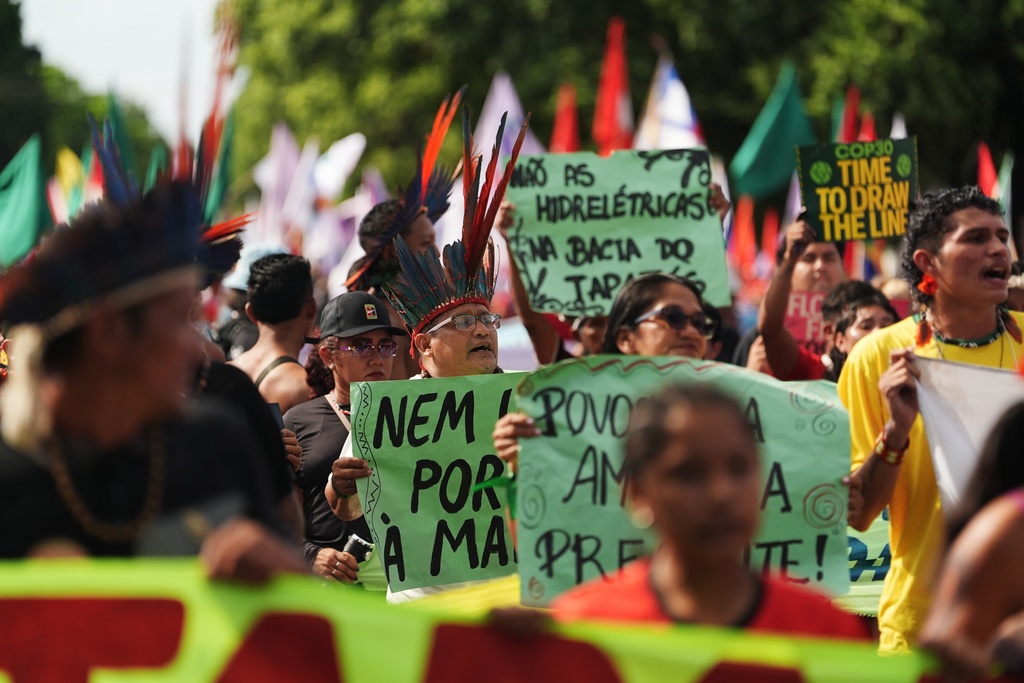
Belem, Brazil – November 15, 2025 marked the vibrant and defiant midpoint of the annual United Nations climate talks, COP30, as thousands of climate activists from across the globe converged on the streets of Belem, Brazil. With a kaleidoscope of costumes, rhythmic drumming, and a unified chorus of demands, protesters staged what is traditionally the largest day of action, making an undeniable statement to world leaders grappling with the planet’s escalating environmental crisis. Their message was clear: they demand to be heard, and they demand more decisive, human-centric action.
The march was a powerful visual spectacle, a living mosaic of grief, anger, and unwavering hope. Some participants, dressed in somber black gowns, performed a symbolic funeral for fossil fuels, their silent procession a stark reminder of the environmental devastation wrought by continued reliance on carbon-intensive energy. Hundreds more donned bright red shirts, a potent symbol of the sacrifices and "blood" of colleagues globally who have dedicated their lives, and often faced immense danger, in the fight to protect the environment. Other groups, diverse in origin and cause, chanted in unison, waved colossal flags emblazoned with environmental slogans, and held aloft hand-painted signs calling for urgent policy changes. The air buzzed with a palpable energy, a blend of indigenous wisdom, youth activism, and grassroots organizing, all amplified by booming sound systems mounted on trucks that served as mobile platforms for movement organizers.

Marisol Garcia, a Kichwa woman from Peru, marched at the vanguard of one such procession, her voice resonating with ancestral wisdom and present-day urgency. "We are here to put pressure on world leaders," she declared, emphasizing the need for "more humanized decisions." Her words encapsulated a central theme of the protest: a call for policies that prioritize the well-being of communities, ecosystems, and future generations over corporate profits and political expediency. This sentiment was echoed throughout the crowd, reflecting a widespread belief that current climate negotiations often overlook the lived realities of those most affected by environmental degradation.
The demonstrators embarked on a roughly 2.5-mile route, bringing their powerful message tantalizingly close to the main venue of the COP30 talks. This was not the first time protesters had made their presence felt during the summit. Earlier in the week, activists had twice disrupted the proceedings by encircling the conference venue, with one incident on Tuesday resulting in minor injuries to two security guards. These actions underscored the growing frustration among activists with the pace and perceived inadequacy of official climate negotiations. The protests serve as a crucial external pressure point, reminding delegates inside the conference halls of the urgent expectations of the global citizenry.
Inside the COP30 venue, a full day of sessions was underway, tackling some of the most complex and critical issues facing the planet. Discussions centered on implementing the ambitious agreement from the previous year: a commitment by rich nations to provide $300 billion annually in climate financial aid to developing countries. This aid is vital for assisting poorer nations in transitioning away from fossil fuels, adapting to the increasingly severe impacts of a warming world, and compensating for the irreversible damages caused by extreme weather events. The urgency of these talks was amplified by the stark realities confirmed by the State of the Global Climate report: 2024 saw global temperatures, greenhouse gas emissions, and sea levels all reach unprecedented record highs, painting a grim picture of accelerating climate change.
A striking feature of the Belem protests was the palpable sense of freedom and empowerment among the demonstrators. Many reveled in the ability to express their dissent openly, a stark contrast to previous climate talks held in more authoritarian countries like Azerbaijan, the United Arab Emirates, and Egypt, where civil liberties and the right to protest are often severely restricted. This newfound freedom allowed thousands of people to join the procession, which stretched for most of the march’s designated route, creating an overwhelming wave of collective action.
Among the impassioned voices was Ana Heloisa Alves, a 27-year-old youth leader, who expressed awe at the sheer scale of the demonstration. "This is incredible," she exclaimed, her face alight with determination. "You can’t ignore all these people." Alves’s specific fight centered on the Tapajos River, a vital waterway that the Brazilian government aims to develop commercially, threatening local communities and biodiversity. Her group’s signs, proclaiming "The river is for the people," highlighted the interconnectedness of environmental protection, indigenous rights, and local livelihoods. Pablo Neri, coordinator for the Movimento dos Trabalhadores Rurais Sem Terra (Movement of Rural Workers Without Land) in Brazil’s Para state, emphasized the need for greater inclusivity in the climate movement, arguing that COP organizers should involve more grassroots participants to truly reflect the evolving, popular nature of climate activism.
A significant subplot to the COP30 talks was the conspicuous absence of the United States. Under President Donald Trump, who has consistently dismissed climate change as a "scam," the U.S. had opted to skip the negotiations. This marked the second time the Trump administration had withdrawn from the decade-old Paris Agreement, an accord that, despite its challenges, was being partially celebrated in Belem as a landmark achievement. Todd Stern, former U.S. Special Envoy for Climate, commented on the situation, stating, "It’s a good thing that they are not sending anyone. It wasn’t going to be constructive if they did," highlighting the perceived obstructionist stance of the administration.
However, the U.S. absence at the federal level was partially offset by the presence of two prominent state governors: California’s Gavin Newsom and New Mexico’s Michelle Lujan Grisham. Their attendance underscored the ongoing commitment of subnational entities within the U.S. to curb emissions and engage in global climate efforts. Newsom, a Democrat, was particularly vocal in his criticism of the Trump administration’s decision, remarking earlier in the week that Brazil is a country the U.S. "should be engaging with, not slapping with 50% tariffs," referencing unrelated trade tensions.
The anti-imperialist sentiment was vividly captured by demonstrator Flavio Pinto from Para state. Dressed in a brown suit and an oversized American flag top hat, he balanced precariously on stilts, fanning himself with novelty hundred-dollar bills bearing Trump’s face. His sign boldly declared, "Imperialism produces wars and environmental crises," connecting global political and economic structures to the climate emergency. This act served as a powerful critique of the perceived role of powerful nations and corporations in perpetuating environmental injustice.
Another compelling group was led by Vitoria Balbina, a regional coordinator for the Interstate Movement of Coconut Breakers of Babaçu. Mostly women, they marched wearing distinctive domed hats crafted from the fronds of the Babaçu palm. Their demand was for greater access to these vital trees on private property, which are not only crucial for their livelihoods but also hold profound cultural significance. Balbina articulated that the march was not merely about fighting and resisting on a climate and environmental front, but fundamentally about "a way of life," underscoring the deep connection between ecological health and cultural survival.
As the marchers progressed up a gentle hill, they formed a vibrant "sea of red, white, and green flags," symbolizing their diverse origins and shared purpose. Onlookers gathered outside a corner supermarket, leaning over railings and capturing the historic moment on their cellphones. "Beautiful," murmured a man passing by, carrying grocery bags, acknowledging the power and visual impact of the demonstration.
The COP30 climate talks are scheduled to conclude on the following Friday. While analysts and some participants have tempered expectations, not anticipating any major new, groundbreaking agreements, there remains a strong hope for substantial progress on past promises. Chief among these is the crucial financial aid package designed to help developing nations adapt to the devastating and rapidly unfolding impacts of climate change. The protesters on the streets of Belem, with their costumes, drums, and unwavering voices, ensured that the urgency of these decisions, and the human cost of inaction, resonated far beyond the conference walls, serving as a powerful reminder that the world is watching, and demanding change.