Got a Pixel 10? Google’s Android Phone Can Now Share Files With Apple’s AirDrop
For years, the digital divide between Android and iPhone users has been a persistent source of frustration, often extending beyond mere technical inconvenience into tangible social friction. This platform incompatibility has manifested in various forms, perhaps most famously in the "green bubble shaming" phenomenon. This social dynamic, predominantly observed in the United States, sees iPhone owners ostracizing or making fun of Android users for their messages appearing as green bubbles in iMessage group chats, a stark contrast to the coveted blue bubbles associated with Apple’s proprietary messaging service. This seemingly trivial aesthetic difference underscores a deeper issue: the deliberate creation of "walled gardens" by tech giants like Apple, designed to keep users locked into their respective ecosystems, often at the expense of seamless cross-platform interaction. The exclusion from group chats, the inability to easily share high-quality media, and the general feeling of being a "second-class citizen" in a predominantly iPhone-centric social circle have been real-life consequences for Android users.
Recognizing these significant disruptions, Google has embarked on a sustained campaign to bridge these gaps and minimize platform-induced friction. One of its most visible efforts has been a fervent crusade to convince Apple to adopt the Rich Communication Services (RCS) messaging standard. RCS, touted as the modern successor to the aging SMS and MMS protocols, promises a host of enhanced features, including read receipts, typing indicators, higher-quality photo and video sharing, and improved group chat functionality—all features that iPhone users already enjoy within iMessage. Google’s push for RCS aims to standardize these advanced messaging capabilities across both Android and iOS, thereby eliminating the common messaging hiccups and the "green bubble" stigma that plague interactions between the two platforms. While Apple has largely resisted this adoption, citing security and privacy concerns, Google continues to champion RCS as the universal solution for a more inclusive messaging future.
Beyond messaging, Google has also demonstrated a willingness to collaborate with Apple on critical user safety initiatives. A notable example is their joint effort to create a universal specification for unwanted tracking alerts. This collaboration enables both Android and iOS devices to identify and alert users to the presence of an unknown AirTag or other Bluetooth trackers that might be traveling with them without their consent. This rare instance of inter-company cooperation highlights areas where user safety transcends competitive boundaries, setting a precedent for potential future collaborations.
Today marks a significant stride in Google’s ongoing mission to foster greater interoperability, as the company announces a groundbreaking development that directly addresses long-standing incompatibility issues with Apple’s popular file-sharing system, AirDrop. For years, iPhone, iPad, and Mac owners have enjoyed the effortless convenience of AirDrop, a wireless sharing system that allows them to seamlessly share files, contacts, photos, videos, and virtually any other digital content with other Apple devices in close proximity. This elegant solution has been a hallmark of the Apple ecosystem, providing an intuitive and rapid method for transferring data. Android phones, meanwhile, have their own robust sharing protocol called Quick Share (formerly Nearby Share), which offers similar functionality within the Android ecosystem. However, the chasm between these two systems meant that sharing content directly between an Android phone and an iPhone was often a cumbersome process, typically relegated to slower methods like email, cloud storage, or third-party messaging apps, all of which compromise speed, quality, or privacy.
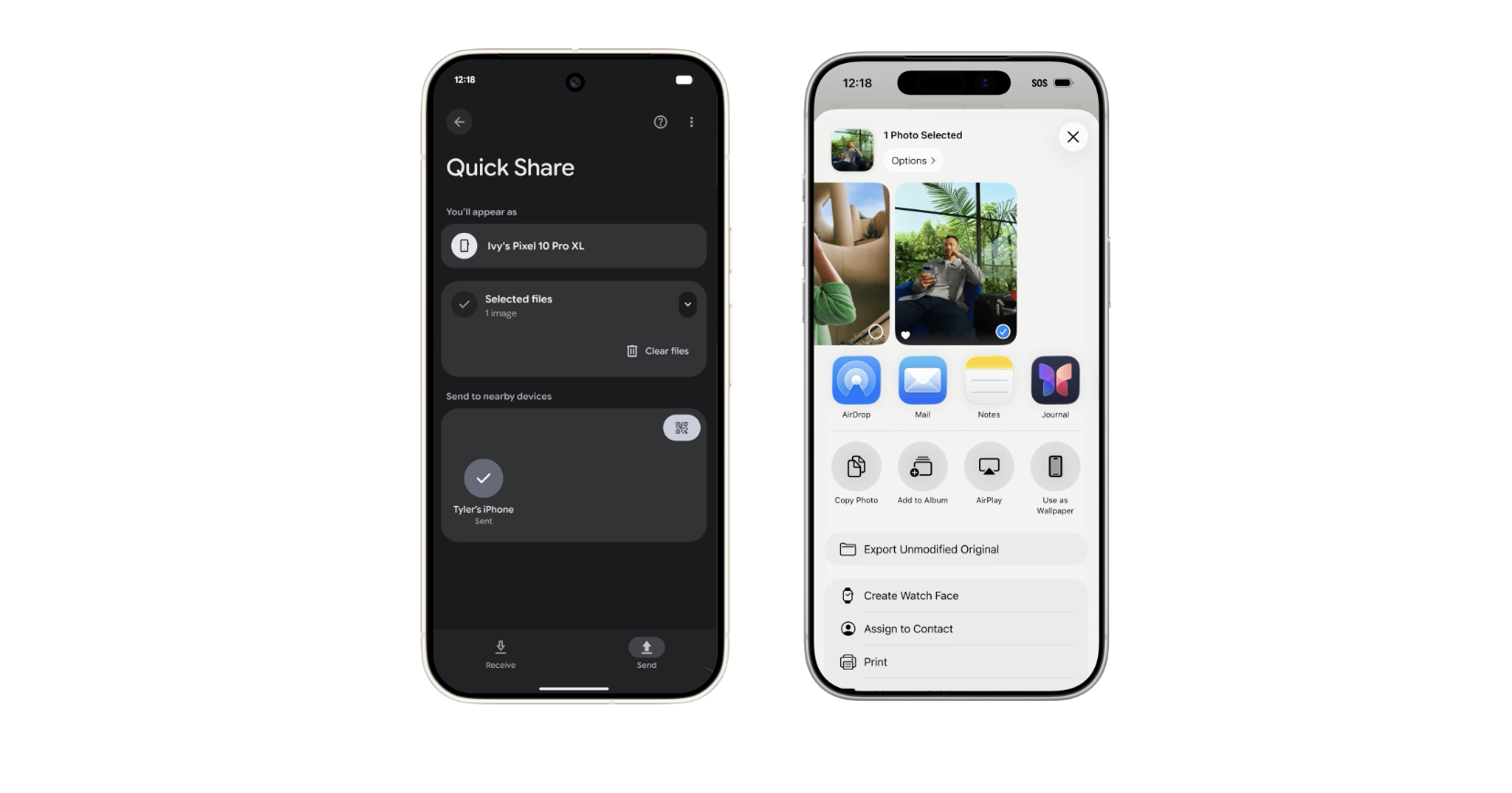
Starting today, and notably beginning with Google’s latest flagship smartphones, the Pixel 10 series, this long-standing barrier is finally breaking down. Google’s Quick Share can now interact directly with AirDrop, enabling Pixel 10 users to send data—be it files, contacts, or photos—to iPhones, iPads, and Macs of any variety. This development signifies a major step towards a more unified and friction-less mobile experience, allowing users to move beyond the limitations of their chosen platform for basic data transfer.
However, there is a crucial caveat to this newfound cross-compatibility. For the sharing to occur, the iPhone user must adjust their AirDrop settings to the "Everyone for 10 Minutes" mode, rather than the more restrictive "Contacts Only" mode. While this might seem like a minor inconvenience, it’s an important detail for users to be aware of. Google emphasizes that this requirement is not a workaround or a hack; it’s a direct, peer-to-peer connection established between the Pixel 10 and the Apple device. Crucially, the data being shared is not routed through any intermediary server, ensuring that shared content is not logged, nor is any extra, unnecessary data exchanged during the transfer. This direct connection ensures a high level of privacy and security for the transferred files. Naturally, the interoperability works both ways: iPhone owners will also be able to send data back to Pixel 10 phones, provided the AirDrop settings are appropriately configured on their end.
It’s important to note that Google achieved this cross-compatibility without direct collaboration with Apple. A Google spokesperson confirmed to WIRED, "We accomplished this through our own implementation." This highlights Google’s proactive stance in addressing user pain points, even when it requires independent engineering efforts to bridge gaps in Apple’s typically closed ecosystem. Despite this independent development, Google reiterated its open invitation for collaboration, stating that it "welcomes the opportunity" to work with Apple to enable this sharing function to operate seamlessly even when AirDrop is set to the "Contacts Only" mode, which would further enhance user convenience and security. Google’s overarching goal, as articulated by the spokesperson, is unequivocal: "Our goal is to provide an easy and secure file-sharing experience for our users, regardless of who they are communicating with."
Underpinning this significant technical achievement is a robust security architecture, detailed in a security blog post by Google. The company attributes the synergy between Quick Share and AirDrop to the utilization of the memory-safe Rust programming language. Rust is renowned for its ability to prevent common programming errors, such as buffer overflows and null pointer dereferences, which are frequent sources of security vulnerabilities in software. By building the underlying protocols with Rust, Google has laid a foundation that inherently offers stronger protection against exploitation. Dave Kleidermacher, vice president of Google’s platforms security and privacy, explained, "These overlapping protections on both platforms work in concert with the secure connection to provide comprehensive safety for your data when you share or receive." This layered security approach, combining Rust’s memory safety with secure connection protocols, aims to instill confidence in users about the integrity and privacy of their shared data.
To further validate the security of this new interoperability feature, Google engaged NetSPI, a third-party and independent penetration testing firm, to conduct a thorough security audit. NetSPI’s findings were remarkably positive, concluding that the interoperability between Quick Share and AirDrop is "notably stronger" than other industry implementations they have observed. This independent validation is crucial, especially when considering past attempts to foster cross-compatibility between iOS and Android that have met with significant challenges, if not outright failure. A notable example is the startup Beeper, which attempted to route Android messages through Apple’s iMessage servers to make them appear as blue bubbles on iPhones. This endeavor sparked a high-profile "cat-and-mouse" game with Apple, which swiftly blocked Beeper’s access, citing security concerns and ultimately leading to the startup’s acquisition. Google’s approach with Quick Share, by leveraging existing AirDrop functionality rather than attempting to bypass Apple’s core messaging infrastructure, demonstrates a more strategic and secure pathway to interoperability.
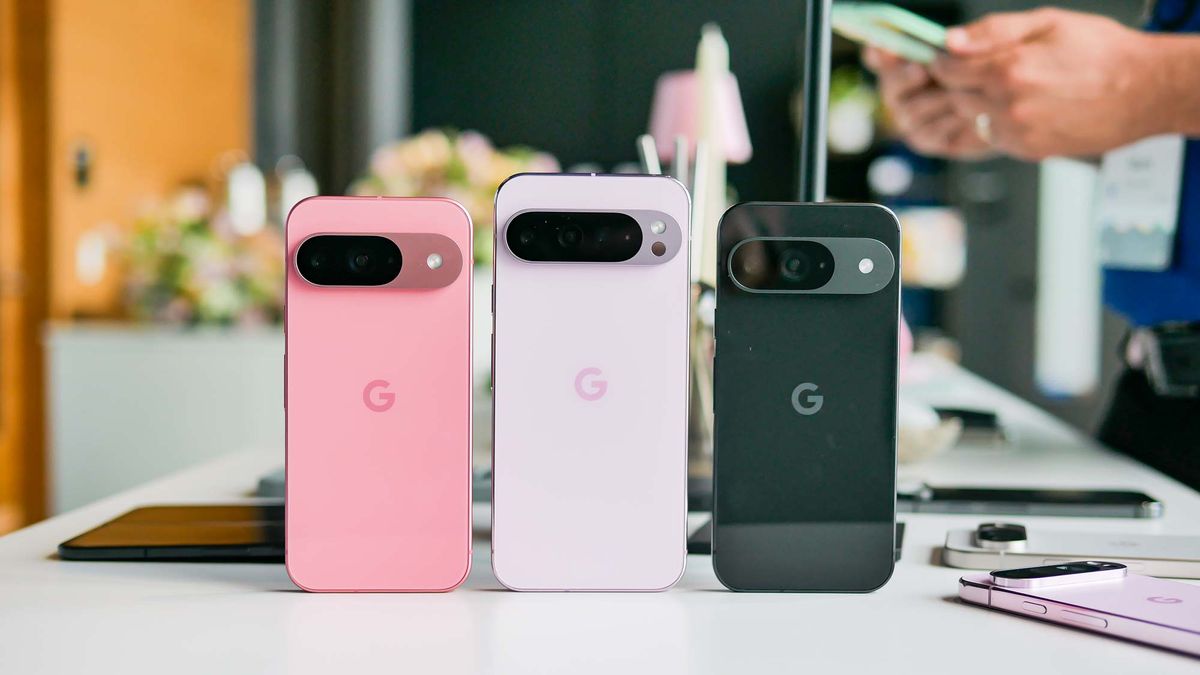
While the implications of this new feature are far-reaching, its immediate availability is somewhat limited. Currently, the Quick Share-AirDrop compatibility is exclusively available on Google’s latest Pixel 10 smartphones, which made their debut in August. This includes the Google Pixel 10, Pixel 10 Pro, Pixel 10 Pro XL, and the innovative Pixel 10 Pro Fold. Consequently, the number of users who can immediately benefit from this breakthrough is confined to early adopters of these specific devices. However, Google has explicitly stated its intention to expand this feature to a wider array of Android devices in the future, signaling a commitment to making cross-platform sharing more accessible to the broader Android user base. As the feature rolls out starting today, some Pixel 10 owners may not see it immediately on their devices, as is common with staged software updates.
For those with a Pixel 10 device eager to try out this new capability, the process is straightforward. First, ensure your Pixel 10 is updated with the latest software. Then, simply select the content you wish to share—be it a file, a contact, or a photo—and choose "Quick Share" from the sharing menu. Crucially, the iPhone owner on the receiving end must have their AirDrop settings configured to "Everyone for 10 Minutes Only." Once these conditions are met, the Pixel 10 device will become visible to the iPhone, allowing for seamless reception or sending of data.
This development marks a significant step forward in Google’s long-term vision of a more open and interconnected digital world. It addresses a fundamental user pain point, reducing the friction that has long characterized interactions between two of the world’s most popular mobile ecosystems. By enabling direct file sharing between Pixel 10 phones and Apple devices, Google is not just enhancing the functionality of its own devices; it’s also fostering a more inclusive digital environment where the choice of smartphone doesn’t dictate one’s ability to easily connect and share with others. While the journey towards complete cross-platform harmony, particularly in areas like messaging, continues, this breakthrough in file sharing represents a tangible and impactful victory for users on both sides of the digital divide. It sets a positive precedent and perhaps even puts gentle pressure on Apple to further consider interoperability, ultimately benefiting millions of smartphone users worldwide.