Swatch’s New OpenAI-Powered Tool Lets You Design Your Own Watch
Rewind to 2017, a bygone era before the ubiquitous presence of generative AI tools like ChatGPT and DALL-E, and long before Zoom calls became an inescapable part of daily life. In those comparatively nascent technological times, Swatch, ever the innovator in accessible timekeeping, unveiled an online platform that promised a degree of personalization for its legion of fans. Dubbed Swatch x You, this pioneering endeavor allowed customers to "customize" their own Swatch watches. However, to label it "design" would have been an overstatement.
The original Swatch x You platform primarily focused on its standard New Gent 41-mm model. Users were presented with a selection of pre-designed patterns – surprisingly limited in scope, as many noted – which they could then manipulate. The customization largely involved positioning, zooming, and rotating these existing graphics to fit over the watch dial and strap. Beyond visual tweaks, the platform offered the practical addition of a chip for NFC payments and a charming, albeit brief, personal message (up to 15 characters) etched onto the case back. While a fun and novel concept for its time, Swatch x You was never intended to deliver a truly bespoke or unique creation. It was a step towards personalization, but firmly within a predefined framework.
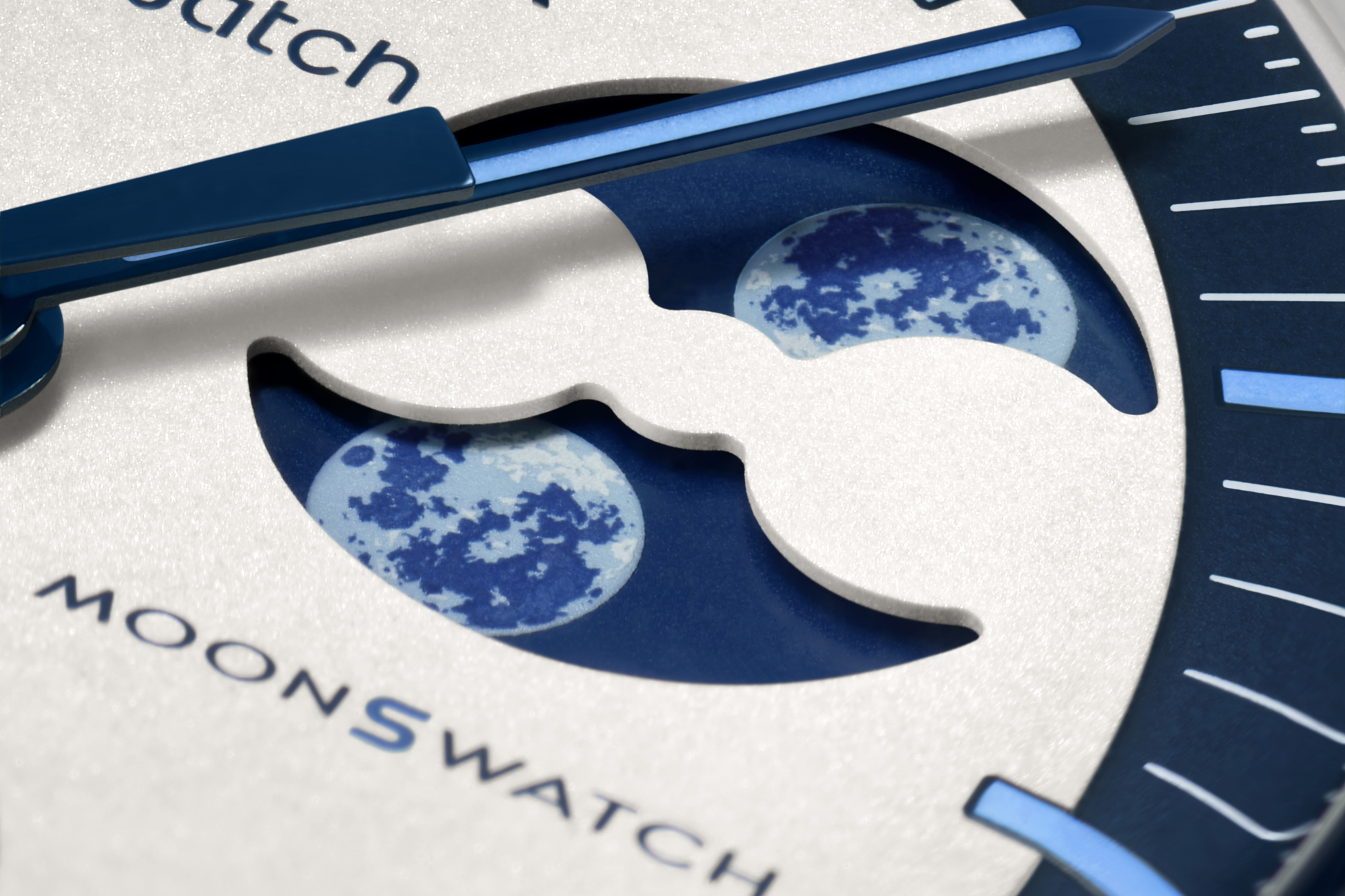
Fast forward to today, and the landscape has dramatically shifted. The Swiss watchmaker, renowned for its disruptive MoonSwatch collaboration that sent shockwaves through the industry, is now taking its Swatch x You concept into the artificial intelligence age. Introducing AI’DADA, an OpenAI-powered design tool that promises to transcend mere customization, offering a quantum leap into genuine co-creation.
AI’DADA is set to revolutionize how consumers interact with the brand, transforming the passive act of choosing into an active process of imaginative creation. Swatch boldly claims that this AI-driven platform empowers users to craft "entirely unique watches" from a blank digital canvas, limited only by the boundless reaches of their imagination. The process is elegantly simple: after logging into a Swatch account, users submit a text prompt detailing their desired watch design. In less than two minutes, the AI processes this input, bringing to life a "unique watch design." To underscore the unparalleled individuality of each creation, every AI’DADA watch proudly bears a "1/1" sign on its case back, certifying its singular existence.
The level of personalization doesn’t stop at the primary design. Much like its predecessor, AI’DADA allows for further refinement. Users can delve deeper into the watch’s aesthetics, selecting specific indexes for the dial or even choosing the color of the watch’s intricate mechanism, adding another layer of bespoke detail. However, in a move designed to manage both server load and perhaps to foster a more considered creative process, Swatch has imposed a daily limit of three prompts per user on AI’DADA. This restriction, which Swatch frames as a "creative challenge," aims to make each design attempt feel more special and deliberate, encouraging users to truly think through their ideas before prompting the AI.
At its core, AI’DADA represents a sophisticated evolution of the Swatch x You model, now supercharged with advanced image-generation software provided by OpenAI. This powerful integration allows the public to emblazon their timepieces with virtually any graphic they can envision and articulate. This transformative capability, while exciting, inevitably raises critical questions about content moderation and brand integrity. What, indeed, could possibly go wrong when the floodgates of public imagination are opened, supported by a powerful AI?
The potential for misuse and the creation of inappropriate or controversial designs is a significant concern that Swatch has had to address head-on. Roberto Amico, Swatch’s global head of digital, offered reassurances regarding the extensive guardrails implemented within the AI’DADA system. These protective measures specifically target problematic content, such as offensive imagery, hate symbols, and, crucially, copyrighted logos like those of competitors. Amico emphasized that Swatch has integrated not only its own stringent content policies but also leverages existing restrictions inherent in OpenAI’s underlying models.
However, the path to these guardrails wasn’t entirely straightforward. In a revealing anecdote shared at the launch event in Switzerland, Swatch Group CEO Nick Hayek Jr. confessed to engaging in a considerable "battle" with OpenAI to remove some of its more restrictive existing guardrails. Hayek’s objective was to make AI’DADA "more liberal, more Swatch"—a testament to the brand’s long-standing ethos of irreverence and boundary-pushing creativity. He candidly admitted that his initial prompts on AI’DADA, playfully exploring themes of "sex, drugs, and rock ‘n’ roll," were promptly rejected by the system. This incident highlights the delicate balance between fostering unbridled creativity and upholding responsible content guidelines. Despite the sophisticated filters and OpenAI’s built-in safeguards against reproducing nudity or religious iconography, one can never underestimate the ingenuity of the general public to find creative workarounds. The true test of how "bulletproof" this moderation model is will undoubtedly unfold over time.
Beyond the immediate prompts, the AI’DADA model draws its creative wellspring from a meticulously curated data set. By default, the AI taps into over 40 years of Swatch’s rich heritage—an expansive archive encompassing countless watch designs, product aesthetics, original artworks, and even street art collaborations. Users fond of a specific pattern or color from a 1980s Swatch dial or strap will find that influence woven into the AI’s creative output. The platform is also steeped in the brand’s celebrated artistic collaborations with iconic figures like Keith Haring, Vivienne Westwood, and even musical legends such as Phil Collins. It is only when a user’s prompt ventures far beyond the scope of this extensive in-house archive that AI’DADA then expands its reach, drawing inspiration from OpenAI’s broader and more generalized data. This strategic approach ensures that while the tool offers limitless creativity, it remains deeply rooted in Swatch’s distinctive brand identity and artistic legacy.
From a logistical standpoint, Swatch maintains ownership of all designs created through the AI’DADA platform, as well as the anonymized data generated from customer submissions. This ensures brand control and allows for future analysis of design trends without compromising individual user privacy. Impressively, Swatch is promising an expedited delivery timeline: customers can expect their individually designed watches to arrive within just two to five days from the point of order confirmation, depending on their global location. This rapid turnaround is a significant achievement, highlighting Swatch’s efficient production capabilities, especially for its standard models.
However, for all the groundbreaking innovation AI’DADA brings, there’s one major disappointment that has resonated across the internet community: the current limitation to the New Gent model. Enthusiasts had fervently hoped to leverage this powerful AI tool to design their very own personalized MoonSwatches. The MoonSwatch, an unexpected global phenomenon, has undeniably been the watch world’s biggest success story in recent memory, challenging traditional notions of luxury watchmaking and accessibility. The clamor for customized versions of these highly sought-after timepieces is understandable, yet, sadly, personalized MoonSwatches were always going to be an improbable offering at this stage.
The core reason lies in the inherent complexity and distributed nature of the MoonSwatch manufacturing process. Unlike the New Gent, which utilizes more conventional production lines, the MoonSwatch is crafted from bioceramic, a unique material developed by Swatch Group. The process for creating the bioceramic components—including the monobloc case, pushers, crown, battery cover, and the loop on the Velcro bracelet—is intricate and multi-staged. It begins with raw ingredients like castor oil polymer, zirconium oxide powder, and specialized chemical pigments. These are fed into an extrusion machine, which combines them at an intense 200 degrees Celsius, yielding spaghetti-like strings of bioceramic. These strings are then granulized, making them ready for injection molding. Adding to this complexity, the raw powder and pigments, along with the watch movements themselves, are manufactured separately by various Swatch Group subsidiaries.
Even with every element of this sophisticated process, from component creation to final assembly, being completely automated, Swatch, which produces over 3 million watches annually, has struggled immensely to keep up with the overwhelming demand for its "vanilla" (standard) MoonSwatches across its more than 100 brick-and-mortar locations worldwide. The brand has even begun selling some models online to alleviate the pressure. The primary bottleneck in this elaborate production chain is the extrusion process, an area where Swatch has been investing heavily in new machinery to clear the notorious physical queues outside stores and address the substantial backlog of customer interest. Given such an intricate and high-demand production line, which integrates specialized elements from multiple companies and locations within the vast Swatch ecosystem, it is currently unfeasible to pivot to producing truly bespoke, personalized MoonSwatches where each individual piece is genuinely unique. The sheer logistical and manufacturing challenges would be monumental.
Yet, all hope is not lost for the dream of a personalized MoonSwatch. Nick Hayek Jr. offered an exclusive glimmer of optimism for the future. "I’m also not excluding anything. We will see when we have a lot of requests from consumers, because we listen to consumers," he stated, hinting at the brand’s responsiveness to market demand. "We had a success [with MoonSwatch] and we are always thinking further—and there might be this way to reflect it also. I will not exclude. Because it’s all our own companies, there’s no problem." Hayek further confirmed that AI’DADA’s offering will expand beyond the launch style of the New Gent, with other Swatch models slated to be added to the platform in the future, broadening the scope of personalized design.
For those eager to dive into this new era of watch design, a degree of patience will be required, reminiscent of the initial MoonSwatch launch. The AI’DADA tool on Swatch.com will initially be available only in Switzerland, commencing November 21. A customized New Gent created through AI’DADA will cost £170 (approximately $210), a premium price that reflects its unique, AI-generated design, considering the base New Gent model typically retails for around $95. Swatch has indicated that more countries will follow "soon," with an eventual worldwide rollout. In the interim, aspiring designers can begin contemplating the imaginative prompts they will unleash upon the AI, all while continuing to daydream about the possibility of one day crafting their very own, truly unique 1/1 MoonSwatch.