
Wisconsin woman who stabbed classmate to please Slender Man caught after leaving group home.
Morgan Geyser, now 23, the woman at the center of the chilling 2014 "Slender Man" stabbing case, has been apprehended in Illinois after a brief but intense manhunt. Geyser, who had been released from a psychiatric hospital earlier this year and was residing in a group home in Madison, Wisconsin, went missing after severing her GPS monitoring bracelet late Saturday evening. Her capture late Sunday night brought a swift end to the public’s renewed anxieties surrounding her presence outside institutional care, nearly 11 years after the brutal attack that shocked the nation.
Authorities in Madison, Wisconsin, had issued a public alert on Sunday, detailing Geyser’s disappearance. She was last seen around 8 p.m. Saturday in the company of an adult acquaintance, prompting concerns about her safety and that of the public. Police released a recent image of Geyser, captured on security video, hoping to aid in her swift recovery. The swift action by law enforcement, collaborating across state lines, underscores the high-profile nature and enduring public interest in this deeply unsettling case.
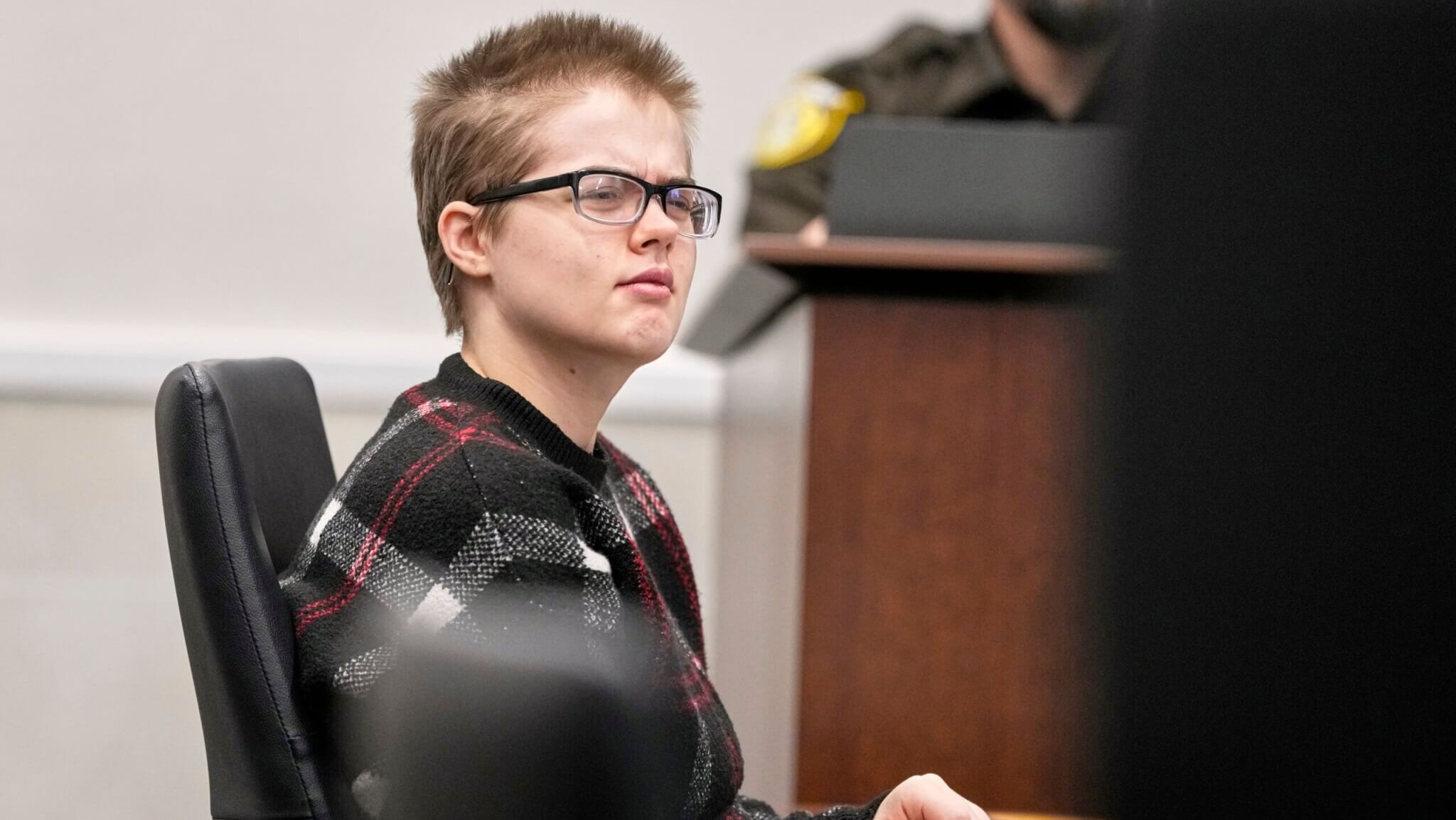
Geyser’s recent release marked a significant milestone in her long journey through the justice and mental health systems. After spending seven years at the Winnebago Mental Health Institute, a secure psychiatric facility, she was granted conditional release based on the testimony of three experts who affirmed her progress in battling severe mental illness. This decision, while carefully considered by the courts, inherently carried a degree of risk and public scrutiny, which has now been amplified by her unauthorized departure from the group home.
The original crime, a horrifying act of violence perpetrated by two 12-year-old girls, remains etched in the collective memory. In May 2014, Morgan Geyser and her friend, Anissa Weier, lured their classmate, Payton Leutner, into a wooded park in Waukesha, Wisconsin, following a sleepover. What began as a seemingly innocent gathering quickly devolved into a premeditated attempt at murder, driven by a dark obsession with the fictional internet character, Slender Man.
During the attack, Geyser, encouraged by Weier, stabbed Leutner a staggering 19 times with a kitchen knife. The wounds were severe, puncturing vital organs and leaving Leutner critically injured and bleeding profusely. Miraculously, despite being left for dead in the woods, Payton Leutner managed to crawl to a nearby road, where she was discovered by a passing cyclist. Her survival, after undergoing extensive surgery and a long recovery, is a testament to her incredible resilience.
Geyser and Weier fled the scene after the attack, attempting to embark on a misguided pilgrimage to Slender Man’s supposed mansion in northern Wisconsin. Their escape was short-lived; they were apprehended by authorities while walking along Interstate 94, disoriented and still clinging to their fantastical narrative. During interrogations, both girls chillingly confessed their motive: they believed that by sacrificing Leutner, they would appease Slender Man and become his proxies, fearing that failure to comply would result in harm to their own families. This twisted logic, born from a blend of mental illness and internet folklore, became the defining, and most disturbing, aspect of the case.
The Slender Man phenomenon itself, a product of a 2009 internet Photoshop contest, rapidly evolved into a pervasive piece of digital folklore, a "creepypasta" that spread across forums and social media. Depicted as a tall, thin, faceless entity in a suit, often with tentacles, Slender Man became a boogeyman for the digital age, inspiring countless stories, games, and fan art. For impressionable and mentally vulnerable children like Geyser and Weier, the lines between internet fiction and grim reality tragically blurred, convincing them of the character’s tangible existence and malevolent demands. The case ignited widespread debate about the influence of internet content on young minds and the potential dangers of unchecked digital immersion, especially for those grappling with underlying psychological conditions.
The legal proceedings that followed were complex and highly scrutinized. Morgan Geyser ultimately pleaded guilty in 2017 to being a party to attempted first-degree intentional homicide. However, her defense successfully argued that she was not criminally responsible for her actions due to severe mental illness, later diagnosed as early-onset schizophrenia. In 2018, Waukesha County Circuit Judge Michael Bohren committed her to a psychiatric hospital for a maximum term of 40 years, emphasizing the need for extensive treatment and public safety. Her time at Winnebago Mental Health Institute was intended to address the root causes of her psychosis, aiming for a level of stability that would one day allow for reintegration into society, albeit under strict supervision.
Anissa Weier, Geyser’s accomplice, also pleaded guilty in 2017 to a lesser charge of being a party to attempted second-degree intentional homicide with a dangerous weapon, similarly claiming mental illness. She was committed to a mental hospital for 25 years but was granted release in 2021, having served roughly seven years. Weier’s release came with conditions, including living with her father and wearing a GPS monitor, highlighting the differing judicial interpretations of their respective culpabilities and mental states. Her successful transition back into the community, at least until now, stood in contrast to Geyser’s more prolonged institutionalization.
For Payton Leutner, the victim, the scars of the attack are both physical and emotional, a permanent reminder of the day her childhood innocence was shattered. While she has largely maintained her privacy, her journey of recovery has been a testament to her strength. The world has watched, both horrified and fascinated, as the perpetrators of such a heinous act slowly navigated the justice system, grappling with questions of forgiveness, rehabilitation, and accountability.
Geyser’s seven years at Winnebago Mental Health Institute were reportedly dedicated to intensive therapy and medication, aimed at managing her schizophrenia. The experts who testified on her behalf earlier this year painted a picture of a young woman who had made significant strides in understanding her illness and developing coping mechanisms. They argued that her delusions had subsided, and she no longer posed the same level of threat. This testimony ultimately swayed the court to approve her transfer to a less restrictive group home setting, under the close watch of a GPS monitoring bracelet and a comprehensive supervision plan.
The decision to release Geyser, even to a supervised group home, was met with a mix of cautious optimism and palpable apprehension from the public. The gravity of her past crime, coupled with the inherent unpredictability of mental illness, raised valid concerns about public safety. Advocates for mental health rehabilitation emphasized the importance of reintegration for those who show genuine progress, while others argued that the severity of the original offense warranted continued, more stringent confinement. The legal framework attempts to balance these competing interests, often leading to decisions that are difficult and emotionally charged for all involved.
The recent disappearance began when Geyser, cutting off her GPS monitoring bracelet, effectively vanished from the group home without authorization. Madison, Wisconsin police promptly initiated a search, alerting the public to her missing status and providing her latest known image. The urgency of the situation was clear, given her history and the potential risks associated with an unsupervised individual with her past. The inter-state collaboration between Wisconsin and Illinois law enforcement agencies proved crucial, culminating in her capture in Illinois late Sunday night. Details surrounding her capture, including the exact location and circumstances, were not immediately released, but her apprehension brought a collective sigh of relief.
Her recapture now raises critical questions about the future of her release plan and the adequacy of the monitoring systems in place. It is highly probable that this violation of her release conditions will lead to a review by the courts, potentially resulting in her return to a more secure psychiatric facility or the imposition of even stricter supervision protocols. This incident undeniably sets back her progress toward full rehabilitation and will likely reignite public debate about the criteria for releasing individuals with such a violent history, particularly when mental illness is a mitigating factor.
The Slender Man stabbing case continues to serve as a stark reminder of the complex interplay between mental health, the influence of digital culture, and the juvenile justice system. It forces society to confront difficult questions about how to protect both victims and those who commit crimes while battling severe psychological disorders. As Morgan Geyser re-enters the legal and mental health spotlight, her story remains a tragic testament to the profound and sometimes dangerous power of belief, especially when unmoored from reality, and the enduring challenge of finding justice and healing in its aftermath. The vigilance surrounding her case underscores the lasting impact it has had, and will continue to have, on public discourse and policy for years to come.