Suicide bombers in northwest Pakistan kill at least 3 at security force headquarters.
The tranquility of a Monday morning in Peshawar, the bustling capital of Pakistan’s Khyber Pakhtunkhwa province, was shattered by a coordinated and devastating attack on the provincial headquarters of the Federal Constabulary. At least three security force officers lost their lives in a brazen assault by two suicide bombers, an incident that has once again cast a long shadow over the nation’s ongoing struggle against militant extremism. The attack, occurring on November 24, 2025, at approximately 12:07 AM EST (local morning), underscores the persistent and evolving threat posed by various militant groups operating in the volatile region bordering Afghanistan.
According to Peshawar City Police Chief Saeed Ahmad, the attack unfolded with chilling precision. One assailant detonated his explosive vest at the heavily fortified main gate of the Federal Constabulary compound, a critical security installation responsible for maintaining law and order and counter-terrorism operations in the province. The force of the blast sent shockwaves through the area, causing immediate casualties and creating a scene of chaos and destruction. Simultaneously, a second bomber attempted to penetrate deeper into the complex, aiming for what security officials believe was a more significant target within the headquarters. However, the swift and courageous response from the security forces on duty proved pivotal. Officers engaged the second attacker near the parking area, neutralizing the threat before he could detonate his explosives and inflict further devastation.
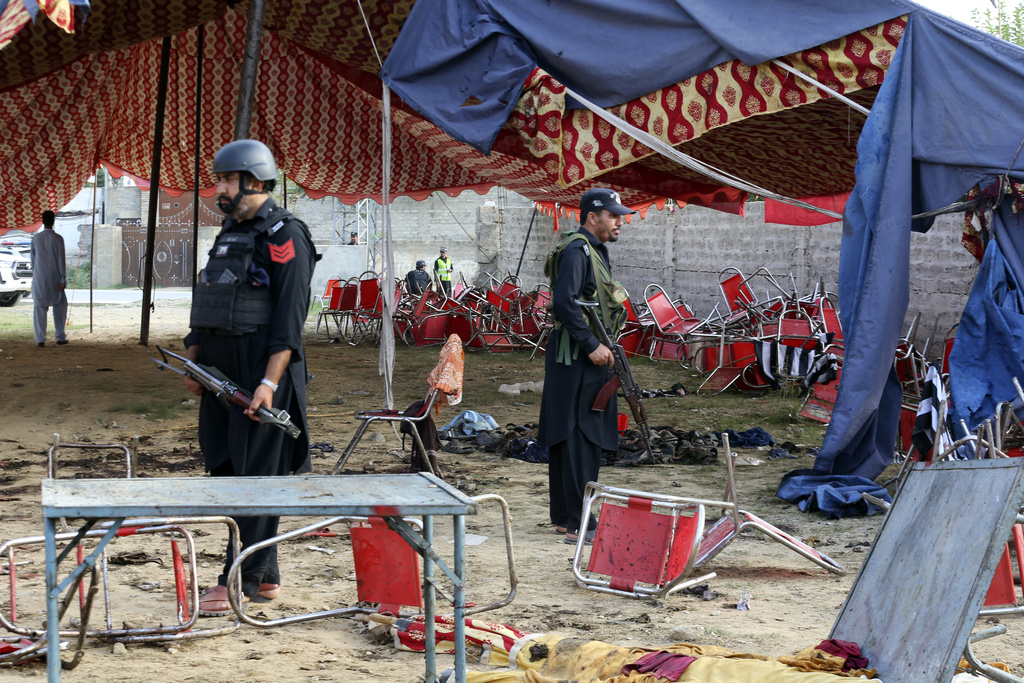
The prompt action by the security personnel is credited with preventing what could have been a far deadlier outcome. "Their immediate response and bravery undoubtedly saved many lives," stated Chief Ahmad in a subsequent briefing, highlighting the dedication of the officers who faced imminent danger. Rescue officials, including teams from the Edhi Foundation and other emergency services, rushed to the scene within minutes, providing first aid to the wounded and transporting the critically injured to nearby hospitals. The area was immediately cordoned off, and a thorough search operation commenced to ensure no other threats were present. While the situation was quickly brought under control, the incident served as a stark reminder of the ever-present danger faced by security forces in this troubled region.
The Federal Constabulary, a paramilitary force, plays a crucial role in supporting civil administration, guarding sensitive installations, and conducting counter-insurgency operations, particularly in the tribal districts and other vulnerable areas of Khyber Pakhtunkhwa. An attack on its provincial headquarters represents a significant blow, not just in terms of casualties but also as a symbolic challenge to the state’s authority. The three officers who perished in the line of duty have been hailed as martyrs, their sacrifice mourned by a nation weary of conflict. Details regarding their identities were withheld pending notification of next of kin, but their loss reverberated through the ranks of Pakistan’s security apparatus.
While no group immediately claimed responsibility for the audacious assault, the modus operandi bears the hallmarks of the Tehrik-i-Taliban Pakistan (TTP), commonly known as the Pakistani Taliban. This umbrella organization of various militant groups has been responsible for numerous similar attacks across Pakistan, targeting security forces, government installations, and civilians. The TTP’s resurgence has been a grave concern for Pakistan, particularly since the Afghan Taliban’s takeover of Afghanistan in August 2021. Experts and Pakistani officials alike have pointed to a worrying uptick in militant activities, marking a significant deterioration in the country’s internal security situation over the past few years.
Peshawar, strategically located at the mouth of the historic Khyber Pass, has long been a frontline city in Pakistan’s battle against extremism. Its proximity to the porous Afghan border has historically made it vulnerable to cross-border infiltration and the spillover of conflict from its western neighbor. The city has endured countless acts of terror, from market bombings to attacks on schools and mosques, each leaving an indelible scar on its resilient populace. The latest attack further exacerbates the climate of fear and insecurity, impacting daily life, economic activity, and the overall social fabric of the region. Residents expressed a mix of grief and defiance, lamenting the continuous cycle of violence but also reaffirming their resolve to stand against terrorism.
The current surge in militant violence has severely strained ties between Islamabad and the interim Taliban government in Afghanistan. Pakistan has repeatedly accused the Afghan Taliban of failing to curb the activities of the TTP, alleging that the group operates freely from Afghan soil and uses it as a sanctuary to plan and launch attacks into Pakistan. These accusations have been vehemently denied by the Afghan Taliban, who claim they are committed to not allowing their territory to be used against any other country. However, the evidence on the ground, as perceived by Pakistani intelligence and security agencies, suggests a different reality, with TTP leaders and fighters reportedly finding refuge and operational bases across the Durand Line.
This geopolitical tension has led to a series of cross-border skirmishes and diplomatic spats, further complicating an already delicate regional security landscape. Pakistan has urged the international community to pressure the Afghan Taliban to fulfill their commitments under the Doha Agreement, particularly concerning counter-terrorism. The inability to effectively address the TTP threat from Afghanistan poses a significant challenge to Pakistan’s stability and its long-term counter-terrorism strategy. Analysts suggest that the Afghan Taliban’s reluctance or inability to act decisively against the TTP stems from ideological similarities and historical ties between the two groups, making concerted action against the Pakistani Taliban politically complex for Kabul.
The attack in Peshawar is a stark reminder of the multi-faceted security challenges confronting Pakistan. Beyond the direct threat of the TTP, the country grapples with a complex web of extremist ideologies, regional proxy conflicts, and socio-economic vulnerabilities that militants often exploit. The Pakistani government, under immense pressure to restore peace and order, has reiterated its commitment to eradicating terrorism in all its forms. Military operations, intelligence-based actions, and border fencing projects are ongoing, but the fluid nature of the threat necessitates a comprehensive and adaptable strategy. This includes not only kinetic responses but also addressing the root causes of extremism through education, economic development, and deradicalization programs.
International condemnation of the attack was swift, with various nations expressing condolences to the victims and solidarity with Pakistan. The United States, the United Kingdom, and the United Nations all issued statements condemning the "senseless act of violence" and reaffirming their support for Pakistan’s efforts to combat terrorism. However, beyond diplomatic statements, there is a growing consensus that a more coordinated international approach is required to tackle the regional militant nexus effectively. The interconnectedness of extremist groups across borders demands shared intelligence, collaborative counter-terrorism efforts, and sustained pressure on states that might inadvertently or intentionally harbor such elements.
As Peshawar mourns its fallen heroes, the incident serves as a grim reminder that the fight against terrorism is far from over. The resilience of the Pakistani people and the determination of its security forces remain crucial in the face of such adversity. However, the recurring nature of these attacks underscores the urgent need for a robust and sustained strategy that tackles both the internal and external dimensions of the militant threat. Without a comprehensive approach that includes regional cooperation, intelligence sharing, and addressing the ideological underpinnings of extremism, the spectre of violence will continue to haunt the strategic and vital region of northwest Pakistan. The lives lost in Peshawar are a tragic testament to the ongoing sacrifices in this protracted battle for peace and security.