Maps show where storms threaten Thanksgiving travel across the U.S.
As millions of Americans prepare for one of the busiest travel periods of the year, a formidable combination of winter weather systems is threatening to derail Thanksgiving holiday plans across vast swathes of the United States. Forecasters are predicting a challenging week for travelers, with rain, snow, and powerful winds expected to sweep through the middle of the country and extend eastward, causing significant disruptions on both roads and in the air. The critical window for these impacts is from Tuesday through Wednesday, the peak travel days leading up to Thanksgiving Day.
According to CBS News meteorologist Nikki Nolan, two distinct weather systems are converging to create these soggy and wintry conditions. The first system, characterized primarily by wet weather, began its journey over the Ohio Valley before progressing northeastward later on Tuesday. This system is expected to bring widespread rainfall, potentially impacting densely populated metropolitan areas and major transportation corridors along the East Coast. While not as dramatic as heavy snowfall, persistent rain can significantly reduce visibility, create slick road conditions, and lead to flight delays at busy airports, compounding the usual holiday rush.
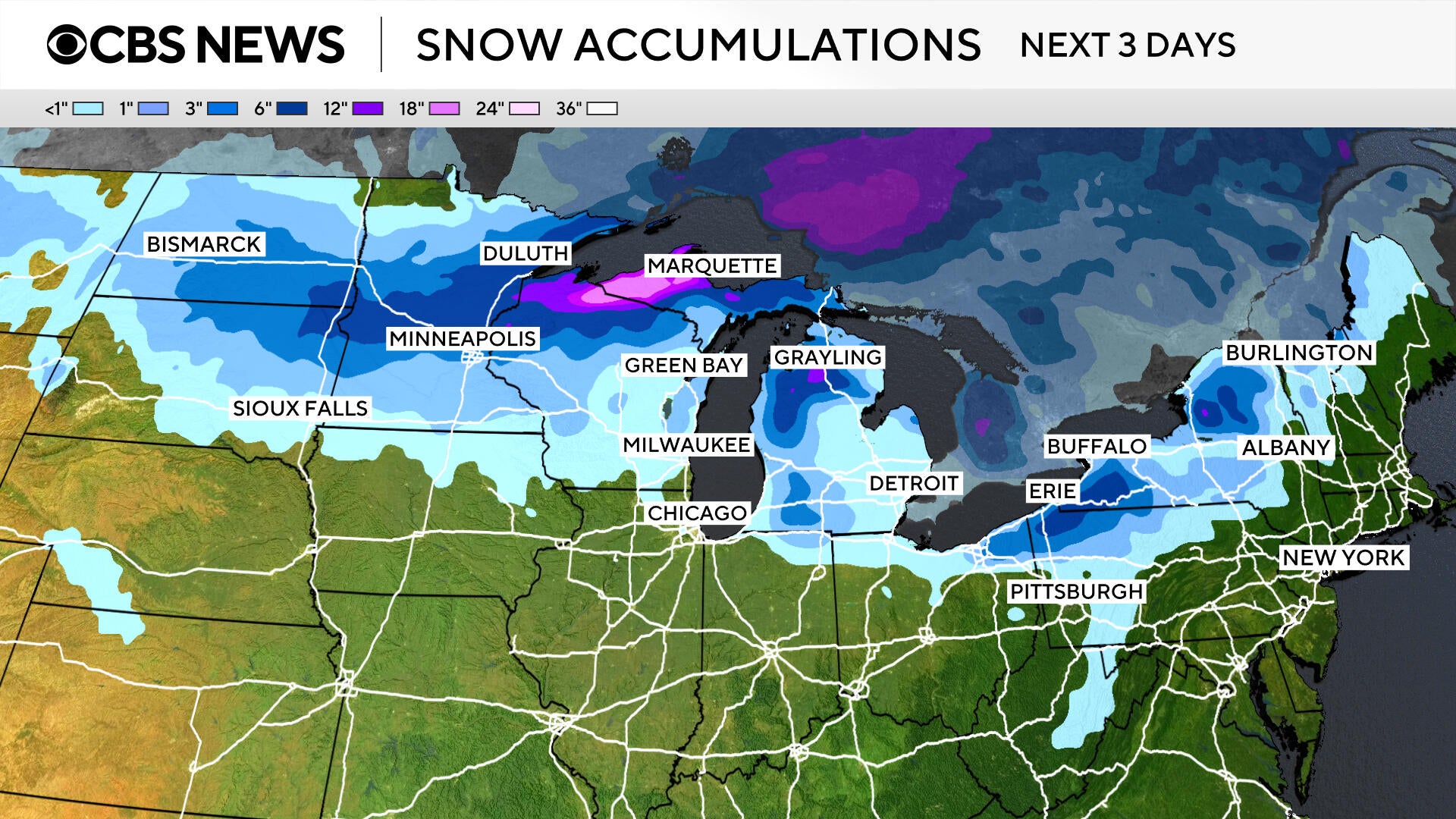
The second and arguably more severe system is anticipated to unleash strong winds and heavy snowfall across a broad northern band of the Midwest. This encompasses the Plains states and extends through the Great Lakes region, with its most significant effects expected to materialize through Wednesday. This system carries the classic hallmarks of a disruptive winter storm, posing considerable threats to ground transportation and potentially grounding flights in affected areas.
Winter storm warnings have been activated for several states, signaling the seriousness of the impending weather. Parts of North Dakota, Michigan, Minnesota, South Dakota, and Wisconsin are under these advisories, indicating expectations of hazardous conditions. In Grand Forks, North Dakota, a winter storm warning was slated to remain in effect through Tuesday night. Residents and travelers in this region were advised to brace for substantial snow accumulations, with up to 6 inches expected, coupled with powerful winds that could reach as high as 35 mph. Such conditions can lead to whiteouts, making driving extremely dangerous and potentially closing roads.
Further south in Minnesota, the Twin Cities metro area is grappling with the latter phase of a two-part storm system. The initial phase, which arrived on Monday evening, brought rainfall. However, this transitioned into a more severe combination of rain and significant snowfall, forecast to continue through Wednesday, as reported by CBS Minnesota. The region is bracing for considerable snow accumulation, with expectations of up to 5 inches by Wednesday morning, and localized areas potentially seeing as much as 8 inches. Beyond the sheer volume of snow, the accompanying blowing snow and biting cold temperatures are predicted to severely impact travel conditions on Wednesday. Drivers should anticipate slick roads, significantly slower commutes, and an increased risk of accidents. The severity of the weather has already prompted a number of schools in the area to announce closures, highlighting the immediate dangers and logistical challenges posed by the storm.
Moving eastward, Chicago, a major travel hub, is preparing for its own set of weather challenges. The city is expecting a period of light rain and fog through Wednesday. However, a significant cold front is forecast to sweep through the area on Wednesday, causing temperatures to plummet. On Thanksgiving Day itself, temperatures are likely to drop below freezing and remain low into Friday. While heavy snowfall might not be the primary concern, the combination of rain, fog, and then freezing temperatures creates treacherous conditions, particularly for ground travel. This is especially critical given that Chicago’s airports are anticipating an enormous volume of travelers, with approximately 3.6 million passengers expected this week, according to the Chicago Department of Aviation. Any delays or cancellations at O’Hare International Airport or Midway International Airport could have a cascading effect across the national air travel network.
The Northeast is also not immune to the holiday weather woes. Parts of upstate New York experienced powerful winds on Tuesday, according to the National Weather Service, which can pose risks to high-profile vehicles and power lines. Meanwhile, downstate areas, including the bustling metropolis of New York City, are facing significant rainfall later on Tuesday and into Wednesday. This precipitation could severely hamper travel in the crucial lead-up to Thanksgiving, impacting both road commuters and air passengers using major airports like JFK, LaGuardia, and Newark Liberty International. The forecast indicates that cold temperatures and blustery winds are expected to settle in on Thursday, Thanksgiving Day, as reported by CBS New York, adding another layer of discomfort and potential hazard for those traveling or attending outdoor events.
Nolan emphasized that the most severe impacts of this week’s winter weather will be concentrated in areas closest to the Canadian border. In these regions, some places could experience staggering snow accumulations of 20 to 30 inches, which would bring daily life to a standstill and render travel nearly impossible. Furthermore, high winds across the upper Midwest could potentially reach sustained speeds of 40 mph, with even stronger gusts. Such extreme conditions are highly likely to interrupt travel along major interstates, including I-29, I-90, and I-94, which are vital arteries for holiday travel. Major regional airports in cities such as Chicago, Duluth, Fargo, Minneapolis-St. Paul, and Pierre, South Dakota, are also expected to face significant operational challenges, including potential closures or widespread flight cancellations.
Beyond the snow and ice, a significant number of metropolitan areas across the eastern and southern U.S. are bracing for heavy rainfall. These cities include Atlanta, Birmingham, Boston, Cincinnati, Nashville, Philadelphia, Pittsburgh, and Washington, D.C. Nolan warned that this widespread rain could cause considerable delays for drivers traversing major interstates like I-20, I-40, I-65, I-75, and I-95. Air travelers at airports in these rain-affected cities, as well as in Indianapolis and Memphis, should also anticipate disruptions. Heavy rain can lead to reduced visibility, hydroplaning risks, and increased traffic congestion on roads, while at airports, it can cause ground stops, flight delays, and diversions.
The timing of these diverse weather phenomena could not be worse, coinciding with the peak of Thanksgiving travel, when millions embark on journeys to reunite with family and friends. The sheer volume of travelers means that even minor disruptions can quickly escalate into widespread chaos, affecting thousands of itineraries. Travelers are strongly advised to monitor local weather forecasts, check with their airlines for flight status updates, and consult road condition reports before departing. Preparedness, including allowing extra travel time, having emergency kits in vehicles, and being flexible with plans, will be paramount in navigating this challenging holiday travel week.
Nikki Nolan contributed to this report, providing critical meteorological insights that underscore the urgency of these travel warnings. As the storms unfold, travelers across the U.S. will need to remain vigilant and adapt to rapidly changing conditions to ensure a safe, albeit potentially delayed, arrival at their Thanksgiving destinations.