Luigi Mangione heads back to court for pretrial hearings in NYC. Here’s what his attorneys are arguing.
Luigi Mangione, the 27-year-old at the center of a high-profile murder case, is once again appearing in court in Manhattan, New York City. Accused of the fatal shooting of UnitedHealthcare CEO Brian Thompson last December, Mangione is facing a series of critical pretrial suppression hearings scheduled to commence on Monday, December 1, 2025. These hearings, expected to span several days, potentially up to a week, will determine what evidence the prosecution can present during the eventual trial, a decision that could significantly impact the outcome of this deeply watched case.
The defense team for Mangione is vigorously challenging the admissibility of several key pieces of evidence and testimony, arguing that their inclusion would violate their client’s constitutional rights and prejudice the jury. At the heart of their arguments are claims that law enforcement mishandled Mangione’s arrest and subsequent evidence collection, raising fundamental questions about due process and legal procedure.
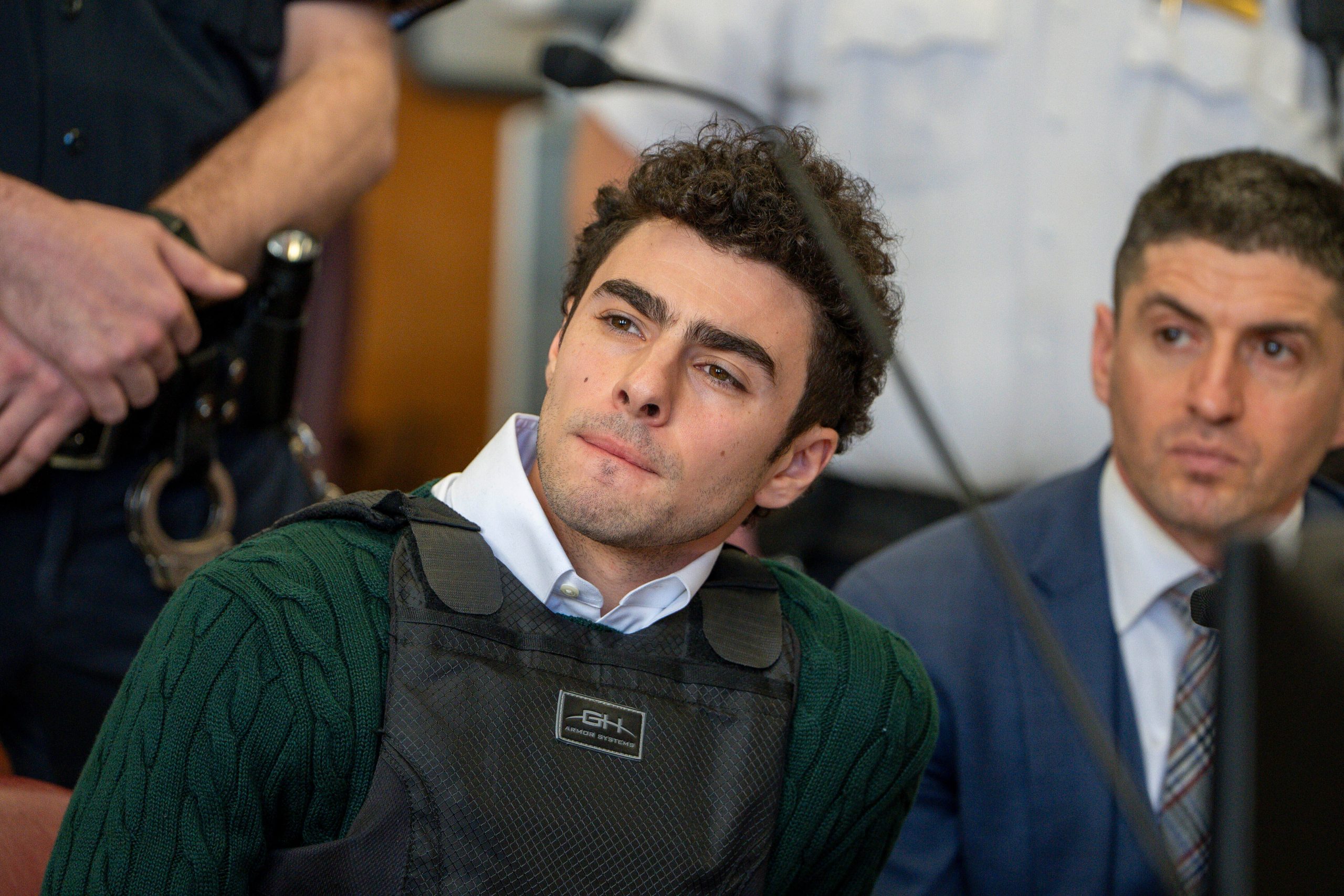
One of the primary contentions from Mangione’s defense attorneys revolves around statements he allegedly made to law enforcement. They assert that these statements should be suppressed because officers failed to provide Mangione with his Miranda warnings. Miranda warnings are a crucial set of rights, including the right to remain silent and the right to an attorney, that law enforcement officers are constitutionally required to inform a suspect of prior to custodial interrogation. The absence of these warnings, if proven, could render any subsequent statements made by Mangione inadmissible in court, potentially weakening the prosecution’s narrative significantly. The defense argues that Mangione was subjected to questioning without being properly apprised of these fundamental rights, thereby tainting any information he may have provided.
Further complicating the evidentiary landscape is the defense’s challenge to items seized at the time of Mangione’s arrest. Mangione was apprehended at a McDonald’s in Altoona, Pennsylvania, a detail that garnered national attention. His attorneys contend that evidence recovered from his backpack during this arrest should not be allowed at trial, claiming law enforcement conducted a warrantless search of the bag. They argue that this search occurred after Mangione had already been handcuffed and surrounded by officers, suggesting there was no immediate threat or exigent circumstance that would justify bypassing the Fourth Amendment’s requirement for a warrant. The Fourth Amendment protects individuals from unreasonable searches and seizures, generally requiring a warrant based on probable cause for law enforcement to search a person’s property.
Among the items found inside the backpack, and now subject to this suppression battle, were a gun featuring a 3D printed receiver, ammunition, and a distinctive red notebook. The 3D printed receiver is particularly notable as it often signifies a "ghost gun" – a firearm that lacks a serial number, making it untraceable and harder to regulate. The red notebook, described as Mangione’s diary, contains entries that prosecutors believe are highly incriminating, including one that reads, "The target is insurance. It checks every box." Another chilling note addressed to the FBI allegedly stated, "Frankly, these parasites had it coming." These writings, if admitted, could offer a powerful insight into the alleged motive behind Thompson’s killing, painting a picture of premeditation and a specific grievance against the insurance industry.
Legal analyst Rich Schoenstein weighed in on the backpack search, suggesting the prosecution might have a stronger argument. "The prosecution argues that there was good reason to search the bag immediately because they had to find out if there was anything dangerous in the bag," Schoenstein explained. He elaborated on the concept of exigent circumstances, an exception to the warrant rule, which allows officers to conduct a search without a warrant if there’s an immediate threat to public safety or a risk of evidence being destroyed. "If you’ve just arrested somebody who you think has shot a man in the back in the middle of the street, you might be worried about what else is in that bag, and indeed there was a weapon in that bag, so I think the prosecution has the stronger argument here." The presence of a firearm within the bag at the time of arrest could bolster the prosecution’s claim that officers acted reasonably to neutralize a potential threat.
Beyond the legality of the search, Mangione’s defense attorneys are also fighting to prevent the notebook entries and other writings from being made public during these hearings. Their concern is that if these highly prejudicial statements are disseminated, potential jurors could be exposed to them before the trial even begins, making it difficult for Mangione to receive a fair and impartial trial. The defense contends that such exposure would create an insurmountable bias, undermining the presumption of innocence. This highlights the delicate balance between public interest in a high-profile case and the defendant’s constitutional right to a fair hearing.
The defense’s challenges extend to testimony as well. They are arguing against the inclusion of non-eyewitness identification testimony at trial. This refers to situations where an individual who did not directly witness the alleged crime identifies the suspect from a picture or video, rather than having been present at the scene. The defense likely seeks to suppress such testimony on grounds of reliability, arguing that non-eyewitness identifications can be prone to error and may lack the direct evidentiary weight of a firsthand account, potentially misleading a jury.
In a procedural request, Mangione’s defense team has also renewed its plea for him to sit unshackled at the defense table during court appearances. Specifically, they are requesting that at least one of his hands be free, enabling him to take notes and actively participate in his defense. This request often stems from the legal principle that a defendant should appear before a jury without restraints, which could create a prejudicial impression of guilt. The ability to write is also seen as crucial for effective communication with counsel during the proceedings.
Prosecutors, for their part, have steadfastly denied all of the defense’s allegations regarding constitutional violations and improper evidence collection. They maintain that all actions taken by law enforcement were lawful and that the evidence they seek to present is admissible and crucial to proving Mangione’s guilt.
Luigi Mangione has pleaded not guilty to nine state charges, including murder in the second degree, the most serious count he faces. Earlier in September, a judge made a significant ruling by dropping two terrorism-related charges against him, which had initially been part of the indictment. If convicted of the top murder charge, Mangione faces a potential sentence of 25 years to life in state prison. However, the legal landscape for Mangione is even more dire, as he is also facing a separate federal death penalty trial, a possibility that underscores the extreme gravity and complexity of the charges against him.
These ongoing pretrial suppression hearings are not mere procedural formalities; they represent a critical juncture in the legal process. The judge’s decisions on these evidentiary challenges will profoundly shape the narrative that prosecutors can present to a jury and will undoubtedly influence the strategic approach of both the defense and prosecution as this high-stakes murder trial moves closer to its eventual start. The outcome of these hearings will determine what crucial pieces of the puzzle the jury will be allowed to see and consider in deciding Luigi Mangione’s fate.
:max_bytes(150000):strip_icc():focal(1016x304:1018x306)/luigi-mangione-court-nyc-8-22125-010ffe1580a044eab9f17e39985b2d59.jpg "Luigi Mangione heads back to court for pretrial hearings in NYC. Here's what his attorneys are arguing.")