Long-lost Rubens painting depicting crucifixion of Jesus Christ sells for $2.7 million
Updated on: December 1, 2025 / 7:37 AM EST / CBS/AP
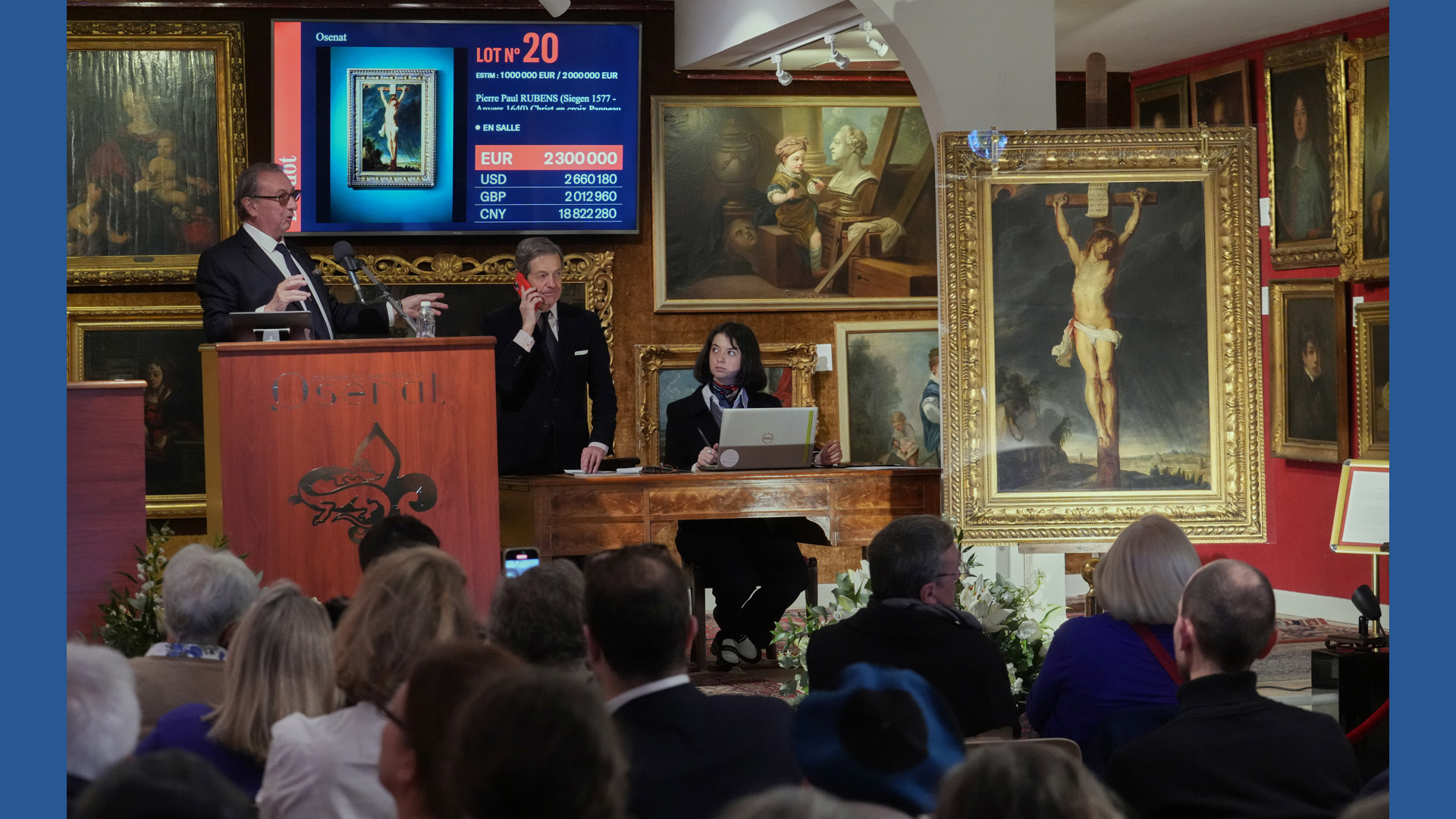
In a stunning revelation for the global art community, a monumental painting by the illustrious Flemish Baroque master Peter Paul Rubens, depicting the poignant crucifixion of Jesus Christ, has resurfaced after more than four centuries of obscurity. The artwork, once dismissed and profoundly undervalued, commanded an impressive $2.7 million at an Osenat auction in Versailles on Sunday, December 1, 2025. This sale marks a triumphant return to prominence for a piece of history believed to be lost forever, underscoring the enduring power of artistic discovery and the thrill of unearthing hidden treasures.
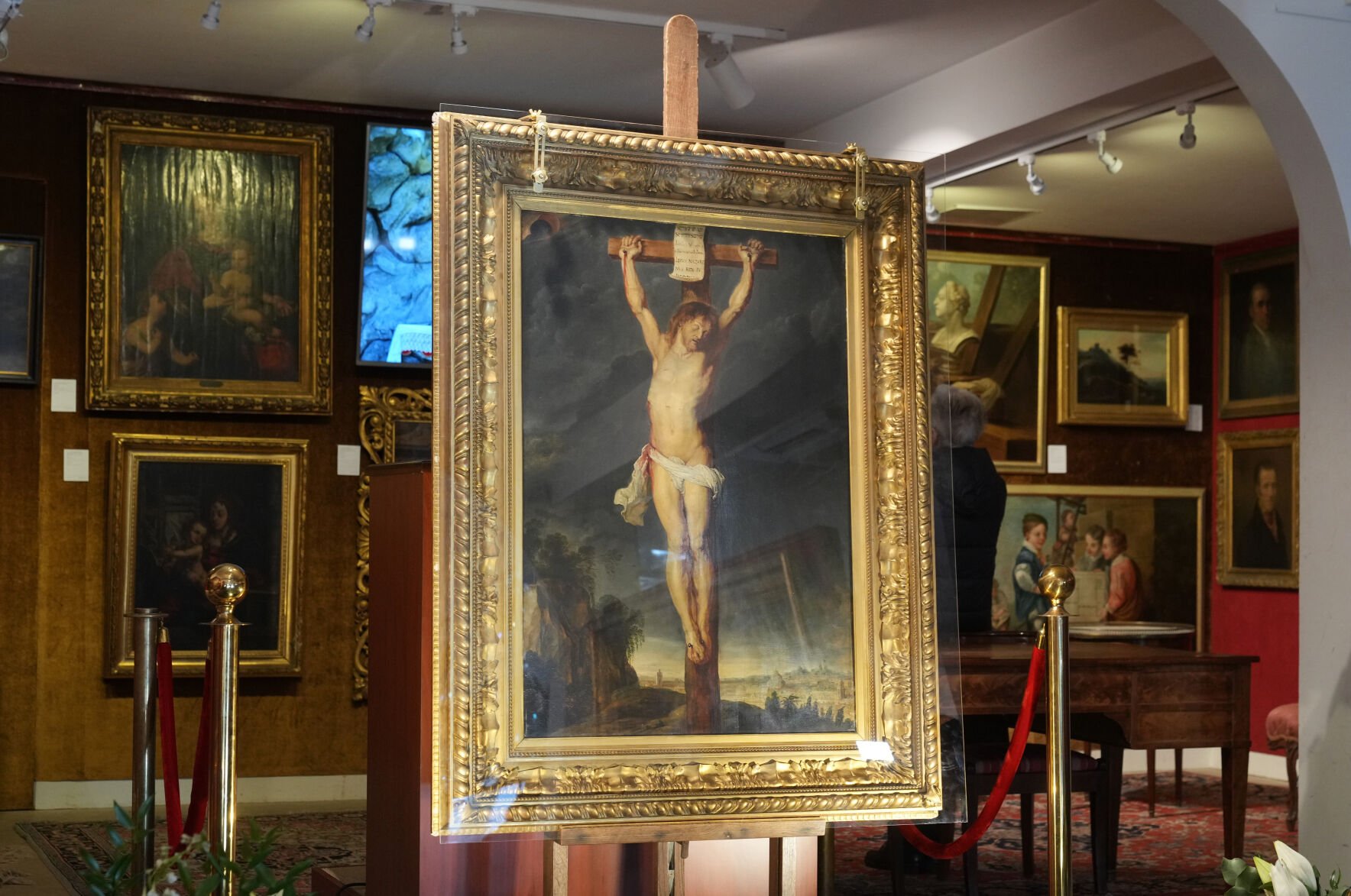
The journey of this particular Rubens masterpiece, from a forgotten corner of a Parisian townhouse to a celebrated auction highlight, is a captivating tale woven from threads of art historical detective work, rigorous scientific scrutiny, and an auctioneer’s unwavering conviction. For generations, the painting resided quietly within a private French collection, its true authorship masked by the passage of time and an initial misattribution that significantly understated its profound artistic and financial value. Early assessments had mistakenly classified it as merely a product of one of Rubens’s bustling workshops—a common practice for the prolific artist whose studio often produced numerous copies or variants of his popular themes. This misconception kept its estimated value at a modest figure, rarely exceeding $11,500, a stark contrast to its eventual multi-million-dollar price tag.
The dramatic re-evaluation and subsequent journey towards authentication began with Jean-Pierre Osenat, the discerning auctioneer whose intuition was piqued upon first encountering the painting. "I immediately had a hunch about this painting, and I did everything I could to try to have it authenticated," Osenat told The Associated Press, reflecting on the initial spark of recognition that set in motion a painstaking and ultimately rewarding authentication process. His foresight proved to be profoundly accurate, steering the artwork towards a destiny far grander than its previous quiet existence and validating the deep connection between expert intuition and scholarly verification in the art world.
The authentication process itself was a meticulous undertaking, representing a sophisticated blend of traditional art historical expertise and cutting-edge scientific analysis. Osenat’s first critical step was to seek the verification of the Rubenianum, the renowned Rubens committee based in Antwerp, Belgium. As the leading international center for Rubens research, their endorsement carries immense weight and is considered the gold standard for authenticating works by the master. This initial confirmation was then further solidified by the rigorous examination conducted by German art historian Nils Buttner, celebrated for his extensive research on the Flemish Baroque master. Buttner played a pivotal role in confirming the artwork’s provenance, its stylistic consistency with Rubens’s mature period, and its unique place within the artist’s oeuvre.
Scientific methods provided irrefutable evidence, acting as silent witnesses to the painting’s true origins. X-ray imaging allowed experts to peer beneath the visible layers of paint, revealing preliminary sketches and confident brushwork characteristic of Rubens’s dynamic hand. This underlying structure often betrays the original artist’s unique approach, distinct from even the most skilled workshop assistants. Pigment analysis, a forensic art technique, identified the specific materials used, aligning them precisely with the palette and compounds commonly employed by Rubens during his active career in the early 17th century. Perhaps most compelling was the microscopic examination of the paint layers. This forensic scrutiny revealed not only the expected white, black, and red pigments in the vivid depiction of flesh but also subtle, masterful traces of blue and green pigments – a signature technique Rubens utilized to imbue human skin with a remarkable depth, luminosity, and lifelike quality. This innovative approach to color, creating a vibrant illusion of pulsating blood and living tissue, is a hallmark of his genius and a definitive identifier of his authentic work.
The painting’s significance extends far beyond its confirmed authorship. Measuring 42 by 29 inches, it presents a singularly powerful and emotionally charged depiction of Christ on the cross. Buttner highlighted a unique aspect of this particular crucifixion, setting it apart from Rubens’s many other religious works: "The master often painted crucifixions but rarely depicted ‘the crucified Christ as a dead body on the cross.’" He further emphasized the painting’s distinctiveness, stating, "So this is the one and only painting showing blood and water coming out of the side wound of Christ, and this is something that Rubens only painted once." This specific theological detail, drawn from the Gospel of John (19:34), where a soldier pierces Christ’s side, resulting in a flow of blood and water, is rendered with an intense, almost visceral realism. Rubens’s unparalleled ability to convey raw human emotion and divine suffering, coupled with this unique iconographical choice, underscores his profound engagement with religious narrative and his capacity to infuse traditional subjects with fresh, impactful interpretations.
Peter Paul Rubens, a towering figure of the Baroque era, was renowned for his dynamic compositions, vibrant colors, and dramatic flair. His vast output included numerous religious altarpieces, powerful portraits, and richly allegorical mythological scenes, often executed with the assistance of his large and efficient workshop. However, this newly authenticated "Crucifixion" stands out for its intimate scale and the unique theological detail, strongly suggesting it was likely created for a private collector’s devotional purposes rather than a grand public church commission. This offers a rare and precious glimpse into the more personal devotional art Rubens produced, demonstrating his versatility and perhaps even a profound expression of his own personal faith.
Art expert Eric Turquin, addressing a packed house at the Osenat auction, underscored the painting’s incredible journey through history. He noted that the artwork had "virtually disappeared in the early 1600s," vanishing from public record shortly after its creation and entering a long period of obscurity. Its provenance was painstakingly traced, revealing that it had once belonged to the esteemed 19th-century French classic painter William Bouguereau, a fact that adds another layer of historical intrigue to its narrative. From Bouguereau, the painting was passed down through his family, remaining in private hands and out of scholarly view for generations, until its recent rediscovery ignited the art world and brought it back into the scholarly spotlight. The role of private collections in preserving, yet sometimes concealing, significant artworks is a perpetual dynamic in art history, and this Rubens is a prime example.
The auction itself was a testament to the painting’s rediscovered prestige and the fervent desire of collectors to own a piece of such profound history. The atmosphere in Versailles was charged with anticipation as bidders from around the globe, both in person and via remote channels, vied for the chance to acquire a genuine Rubens. The hammer price of $2.7 million reflects not only the intrinsic artistic merit of the work but also the intense demand for authenticated masterpieces by Old Masters, especially those with compelling narratives of rediscovery and unique iconographical elements.
Rubens’s enduring legacy as one of art history’s most influential painters is undeniable. His expressive style, rich symbolism, and innovative use of light and shadow profoundly shaped the course of European art, influencing generations of artists who followed. The rediscovery of a "lost" work by an artist of his stature is a rare and significant event, not just for private collectors and institutions, but crucially for art historians who gain new insights into his creative process, his stylistic evolution, and his thematic explorations. Each authenticated work contributes to a fuller, more nuanced understanding of his prolific career and the vibrant artistic landscape of the 17th century Baroque period.
The sale of this Rubens painting occurs amidst a particularly vibrant and often astonishing global art market, characterized by a series of record-breaking auctions for significant artworks across various periods. Just last week, a previously unknown work by French Impressionist Auguste Renoir, a tender portrait of his toddler son Jean, fetched $2.08 million at a Paris auction, highlighting the enduring appeal of Impressionism. November also witnessed the spectacular sale of a self-portrait by the iconic Mexican artist Frida Kahlo, which shattered records for a painting by a woman, selling for an astounding $54.66 million in New York. Two nights prior, a mesmerizing canvas by Austrian Symbolist Gustav Klimt commanded an astonishing $236.4 million, setting a new benchmark for a modern art piece.
These recent sales underscore a buoyant art market where provenance, irrefutable authenticity, and profound artistic significance drive extraordinary valuations. The Rubens "Crucifixion" fits perfectly into this narrative, albeit in the revered category of Old Masters, demonstrating that while contemporary and modern art often grab headlines with astronomical figures, the foundational works of Western art history continue to hold immense value and fascination. The drama of a "lost" masterpiece returning to the fold, especially one by an artist as revered and influential as Rubens, adds an irresistible allure that transcends mere financial transactions, speaking to the timeless power of art and its capacity to surprise and inspire across centuries.
The rediscovery and successful auction of Rubens’s "Crucifixion of Jesus Christ" is more than just a commercial transaction; it is a profound moment in art history. It reminds us that hidden treasures still await discovery, that meticulous scholarship and scientific rigor can bring forgotten masterpieces to light, and that the emotional and spiritual resonance of great art remains undiminished by time. This painting, now secured for future generations, will undoubtedly offer new avenues for study and appreciation, enriching our understanding of one of art’s most celebrated figures and the profound narratives he brought to life with unparalleled skill.
Agence France-Presse contributed to this report.