Pope visits Istanbul’s Blue Mosque for meeting with Turkish religious leaders.
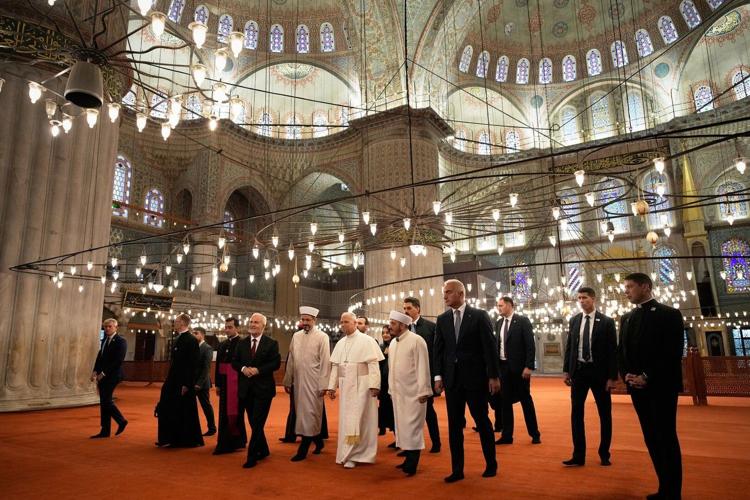
Pope Leo XIV embarked on a pivotal visit to Istanbul, Turkey, on Saturday, November 29, 2025, opening an intense day of meetings and liturgies focused on fostering interfaith dialogue and emphasizing Christian unity. A central and highly symbolic moment of his itinerary was a stop at Istanbul’s iconic Blue Mosque, officially known as the Sultan Ahmed Mosque. While the pontiff, history’s first American pope, followed in the footsteps of his recent predecessors by visiting the revered Muslim house of worship, his approach differed significantly, notably in his decision not to engage in prayer within its sacred halls.
Upon entering the 17th-century architectural marvel, Pope Leo XIV respectfully removed his shoes, donning white socks as he toured the mosque. His gaze frequently turned upwards, taking in the breathtaking expanse of its soaring, intricately tiled domes and the elegant Arabic calligraphy adorning its majestic columns. An imam, Asgin Tunca, guided the pontiff through the mosque, explaining its features and spiritual significance. The Vatican had initially indicated that Leo would observe a "brief moment of silent prayer" during his visit. However, this did not materialize. Imam Tunca later confirmed that he had extended an invitation to Pope Leo to pray, emphasizing that the mosque was "Allah’s house," but the Pope respectfully declined.
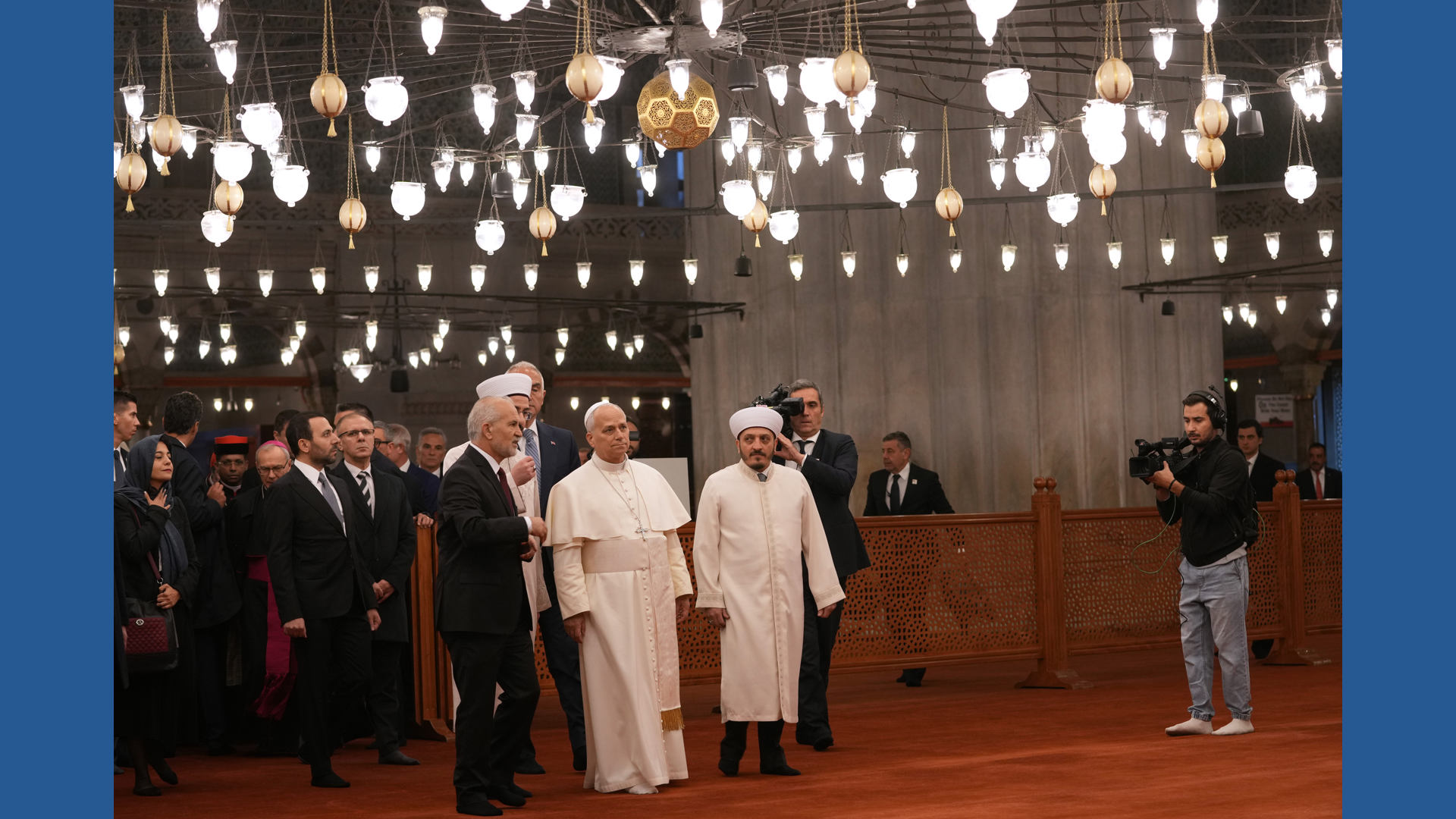
Vatican spokesman Matteo Bruni later clarified the pontiff’s experience, stating, "The pope experienced his visit to the mosque in silence, in a spirit of contemplation and listening, with deep respect for the place and the faith of those who gather there in prayer." This subtle yet significant distinction between "silent contemplation" and "prayer" became a talking point, especially as the Vatican subsequently issued a corrected version of its official bulletin for the trip, removing the prior reference to a "brief moment of silent prayer" without further elaboration. This careful wording underscored the delicate balance of interfaith engagement and the Vatican’s nuanced approach to religious protocol.
The Blue Mosque, a masterpiece of Ottoman architecture, stands as a powerful symbol of Istanbul’s rich Islamic heritage. Its six towering minarets pierce the city’s skyline, and its interior is adorned with tens of thousands of handmade ceramic tiles, predominantly blue, which give the mosque its popular name. For centuries, it has been a vibrant center of Muslim worship and a magnet for visitors from across the globe, making it a natural choice for papal visits aimed at demonstrating respect for Turkey’s Muslim majority and promoting interreligious harmony.
Papal visits to the Blue Mosque have historically been closely watched, often raising questions about the degree of interfaith engagement, particularly regarding prayer. These visits serve as potent gestures of goodwill and dialogue between Christianity and Islam, two of the world’s largest religions. Pope Leo XIV’s predecessors set notable precedents in this regard. When Pope Benedict XVI visited Turkey in 2006, the atmosphere was charged with tension. Months prior, Benedict had delivered a speech in Regensburg, Germany, which was widely interpreted as linking Islam and violence, causing significant offense in the Muslim world. In a concerted effort to mend relations and extend an olive branch, the Vatican added a visit to the Blue Mosque to his itinerary at the last minute. Benedict was warmly received and observed a moment of silent prayer, head bowed, as the imam prayed beside him, facing east. He later expressed gratitude for this shared moment, marking only the second time a pope had visited a mosque, following St. John Paul II’s brief stop in Syria in 2001.
Similarly, in 2014, there was no ambiguity when Pope Francis visited the Blue Mosque. He stood for a poignant two minutes of silent prayer, facing east, with his head bowed, eyes closed, and hands clasped in front of him. The Grand Mufti of Istanbul, Rahmi Yaran, famously told Pope Francis afterward, "May God accept it." These previous instances had established a precedent of popes observing a moment of prayer, making Leo XIV’s decision to opt for "contemplation" a noteworthy departure. Imam Tunca, speaking to reporters after Leo’s visit, reiterated his invitation, saying he told the Pope, "’If you want, you can worship here,’ I said. But he said, ‘That’s OK.’" Tunca concluded, "He wanted to see the mosque, wanted to feel (the) atmosphere of the mosque, I think. And was very pleased."
Another minor adjustment to the official program involved the head of Turkey’s Diyanet religious affairs directorate. The Vatican had initially stated he would accompany Leo at the mosque, but he did not attend. A Diyanet spokesman clarified that his presence was not expected at the mosque, as he had already formally welcomed Pope Leo in Ankara.
Conspicuously absent from Pope Leo XIV’s itinerary was a visit to the nearby Hagia Sophia. This historic landmark, once one of the most significant cathedrals in Christianity before becoming a mosque and then a museum, is a United Nations-designated world heritage site. Its omission from the papal schedule carried considerable weight, especially given its recent history. In July 2020, Turkey controversially converted Hagia Sophia from a museum back into an active mosque, a move that drew widespread international criticism, including from the Vatican and various Christian denominations worldwide. By not including Hagia Sophia, Pope Leo XIV avoided stepping into a highly sensitive political and religious issue, a decision that likely underscored his desire to maintain a focus on unity and dialogue without engaging in contentious historical disputes.
Following his visit to the Blue Mosque, Pope Leo XIV held a private meeting with Turkey’s Christian leaders at the Syriac Orthodox Church of Mor Ephrem. This gathering was a crucial part of his mission to bolster relations with the diverse Christian communities in Turkey, which represent a small but historically significant minority in a predominantly Sunni Muslim nation of over 85 million people. In the afternoon, the pontiff was scheduled for a deeply symbolic encounter with the spiritual leader of the world’s Orthodox Christians, Patriarch Bartholomew I, at the patriarchal church of Saint George. There, they were expected to sign a joint statement, reinforcing their commitment to ecumenical dialogue. The Vatican reported that in his remarks to the gathered patriarchs, Leo reminded them "that division among Christians is an obstacle to their witness." He notably pointed to the upcoming Holy Year in 2033, marking the anniversary of Christ’s crucifixion, and extended an invitation to all Christian leaders to undertake "a journey that leads to full unity" in Jerusalem. This initiative highlights Pope Leo’s strong emphasis on bridging the historical divides between the Catholic and Orthodox Churches, a core theme of his papacy.
The day concluded with a Catholic Mass held in Istanbul’s Volkswagen Arena, a significant event for the country’s small Catholic community, which numbers approximately 33,000 adherents. This Mass provided an opportunity for the Pope to minister directly to his flock, offering spiritual solace and reaffirming the Catholic Church’s presence and commitment in Turkey.
Adding an unexpected logistical wrinkle to the papal trip, Pope Leo XIV’s ITA Airways Airbus A320neo charter was among the aircraft caught up in a worldwide Airbus software update. This update was mandated by the European Union Aviation Safety Agency following an analysis that suggested a computer code issue might have contributed to a sudden drop in altitude experienced by a JetBlue plane the previous month. Vatican spokesman Matteo Bruni confirmed the issue on Saturday, assuring that ITA was actively working to resolve it. He noted that the necessary component for the aircraft update was en route to Istanbul, accompanied by the technician who would perform the installation. This unforeseen technical snag underscored the complex logistical challenges inherent in international papal travel, even for the most high-profile passenger.
Pope Leo XIV is scheduled to depart from Istanbul on Sunday afternoon, flying to Beirut, Lebanon, for the second leg of his inaugural international trip as pontiff. This journey across the Middle East is seen as a crucial early test of his diplomatic skills and a clear indication of his papacy’s priorities: fostering interfaith understanding, promoting Christian unity, and addressing the challenges faced by Christian communities in the region.