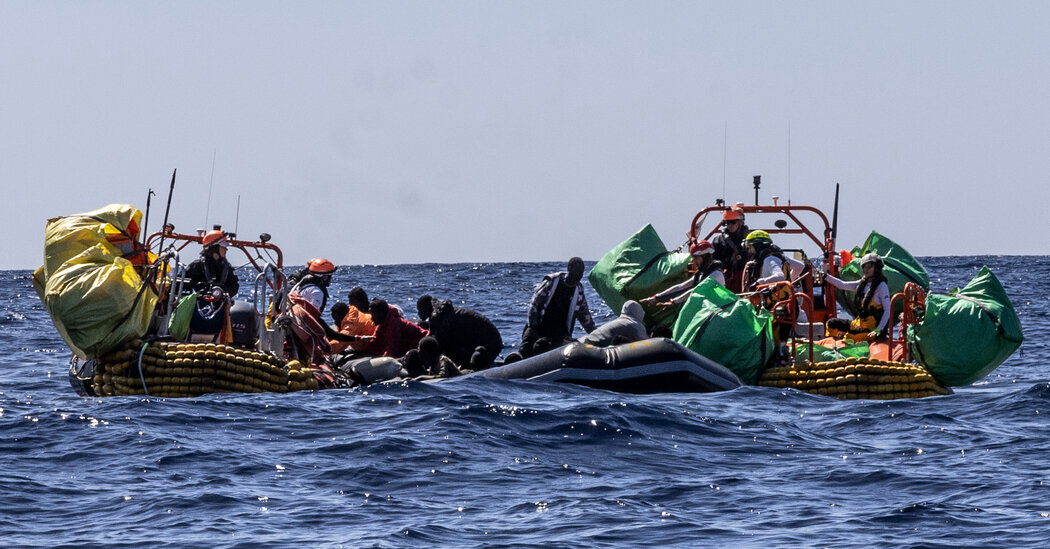
42 migrants presumed dead after boat sinks off Libya, and only 7 rescued after 6 days adrift, U.N. says. The United Nations announced on Wednesday, November 12, 2025, a devastating tragedy in the Central Mediterranean, confirming that 42 migrants are feared dead after their rubber boat capsized off the treacherous coast of Libya, with a mere seven individuals miraculously surviving after enduring six harrowing days adrift at sea. This grim incident, reported by the U.N.’s International Organization for Migration (IOM), underscores the perilous journey undertaken by thousands seeking refuge and a better life, often with fatal consequences.
The IOM statement detailed the nationalities of those tragically lost and the fortunate few who made it to safety. Of the 42 individuals now presumed deceased, the majority, 29, hailed from Sudan, alongside eight from Somalia, three from Cameroon, and two from Nigeria. Their hopes and dreams for a new beginning were swallowed by the unforgiving waves. The seven survivors, whose resilience against unimaginable odds offers a faint glimmer of hope amidst the despair, include four people from Sudan, two Nigerians, and one individual from Cameroon. Their rescue, after nearly a week battling the elements, dehydration, and the vast emptiness of the sea, is a testament to the sheer will to live, yet it also highlights the desperate lack of effective search and rescue mechanisms in one of the world’s deadliest migration routes.
Libya, a nation plunged into chaos following the 2011 civil war and the overthrow of longtime dictator Muammar Qaddafi, has regrettably transformed into a primary disembarkation point for countless migrants. These individuals, fleeing conflict, poverty, and persecution in various parts of Africa and the Middle East, embark on overcrowded and unseavorthy vessels, hoping to reach European shores. The country’s fragmented political landscape, divided since the conflict, has created a lawless environment exploited by human traffickers who operate with impunity, preying on the desperation of vulnerable individuals. Migrants often face horrific conditions in Libya, including arbitrary detention, torture, forced labor, and extortion, making the perilous sea crossing seem like the only viable escape.
The Central Mediterranean route remains one of the most dangerous migratory paths globally. The IOM had already reported at the end of October 2025 that at least 527 people had died off the coast of Libya alone since the beginning of the year. This latest tragedy pushes that grim tally even higher, painting a stark picture of the human cost of unaddressed migration challenges. These figures, however, represent only the known deaths, with many more disappearances likely going unrecorded, swallowed by the vast expanse of the Mediterranean. The true scale of the crisis is undoubtedly far greater than official statistics suggest.
The survivors’ accounts, though not fully detailed in the initial reports, invariably speak of unimaginable suffering: dwindling supplies, the terror of the boat taking on water, the agonizing wait for rescue, and the heartbreaking sight of fellow travelers succumbing to the harsh conditions. Six days adrift means severe dehydration, exposure to the elements, and profound psychological trauma. The question of who eventually rescued them, and under what circumstances, often underscores the ad-hoc and often insufficient nature of rescue operations in international waters, which frequently rely on merchant vessels or non-governmental organizations rather than coordinated state-led efforts.
Despite the prevailing lawlessness and the severe warnings issued by international bodies, the situation in Libya continues to draw desperate individuals. The U.S. State Department itself strongly advises American nationals to avoid travel to Libya due to "crime, terrorism, unexploded landmines, civil unrest, kidnapping, and armed conflict." This grim assessment underscores the profound instability that makes Libya a dangerous place for its own citizens, let alone for vulnerable migrants trapped within its borders. The lack of a strong, unified government means there is little oversight or protection for those passing through, leaving them at the mercy of militias and criminal gangs.
In a surprising and controversial development earlier this year, the Trump administration was reportedly engaged in discussions with the U.N.-backed Government of National Unity (GNU) in Tripoli, which controls the western portion of the country, regarding the prospect of deporting migrants from the United States to the African nation. This proposal immediately raised significant human rights concerns among advocates and international organizations, given Libya’s well-documented record of abuses against migrants, its unstable political climate, and the State Department’s own explicit travel warnings. The idea of sending vulnerable individuals, who may have legitimate asylum claims, back to a country deemed so dangerous by the U.S. government itself, highlighted a profound ethical dilemma and sparked debate about the responsibility of nations towards displaced populations. Critics argued that such a move would not only be a dereliction of humanitarian duty but could also place individuals at direct risk of further harm, exploitation, and even death, contradicting the very principles of international protection.
The ongoing crisis in the Central Mediterranean is not merely a series of isolated tragedies but a systemic failure involving multiple actors and complex geopolitical factors. European nations, grappling with internal political pressures, have increasingly focused on border externalization and deterrent policies, often leading to a reduction in dedicated search and rescue missions. This shift has been criticized by humanitarian organizations for effectively criminalizing rescue efforts and leaving migrants to drown. The IOM and other U.N. agencies consistently call for more robust and coordinated state-led search and rescue operations, along with the establishment of safe and legal pathways for migration to prevent individuals from falling into the hands of ruthless smugglers.
The underlying drivers of this mass movement of people – protracted conflicts in Sudan and Somalia, political instability in Cameroon and Nigeria, economic despair, and the growing impact of climate change – remain largely unaddressed. Until these root causes are tackled comprehensively, and until a more humane and coordinated international response to migration is implemented, tragedies like the one off the coast of Libya will continue to occur with heartbreaking regularity. Each presumed death represents a life unfulfilled, a family shattered, and a stark reminder of humanity’s collective failure to protect its most vulnerable members. The image of a lone Red Crescent worker beside a body bag, as captured in Surman on October 28, 2025, serves as a poignant and recurring symbol of this ongoing, preventable catastrophe. The global community must look beyond statistics and acknowledge the individual suffering, striving for solutions that prioritize human life and dignity above all else.