Microsoft’s Surface Laptop Is Marked Down by $350
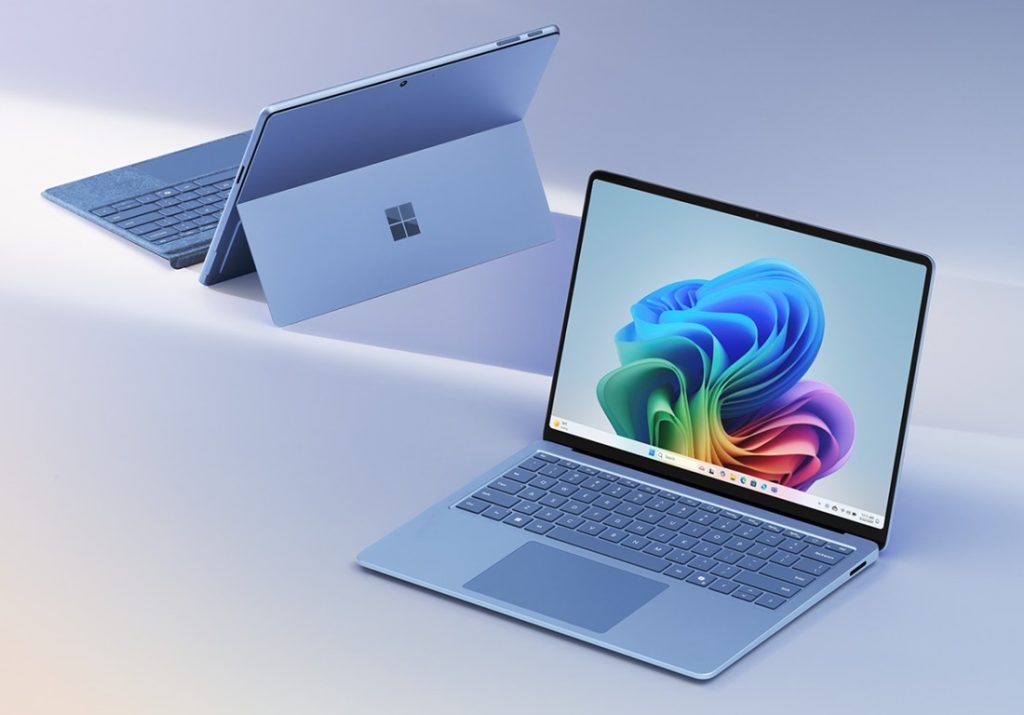
While Apple may have long cornered the premium first-party laptop market with its iconic MacBook lineup, Microsoft’s Surface laptops have been steadily forging their own path, demonstrating remarkable improvement and becoming an increasingly appealing option for a diverse range of users over the past few years. This evolution has culminated in devices that not only challenge the status quo but also offer a distinct Windows experience, often blending innovative design with robust performance. A testament to this growing appeal, last year’s highly anticipated seventh-generation Surface Laptop is currently subject to a significant price reduction, making it an even more enticing prospect for consumers. The base model, a compelling package in its own right, is presently marked down by a substantial $350 on Amazon, bringing its price to a tantalizing $849. This aggressive pricing strategy positions the Surface Laptop as a formidable competitor, especially for those seeking a premium Windows machine without the premium price tag typically associated with top-tier hardware.
The journey of the Surface Laptop series has been one of continuous refinement, starting from its inception as a sleek, minimalist device designed to showcase the best of Windows. Over successive generations, Microsoft has meticulously honed the design, performance, and user experience, moving from its early reliance on Intel processors to embracing more diverse silicon options. The 7th Edition represents a significant leap, particularly with its adoption of Qualcomm’s Snapdragon chips, signaling a strategic shift towards enhanced power efficiency and integrated AI capabilities. This commitment to innovation is evident in every facet of the device, from its stunning display to its thoughtfully designed chassis, making it a strong contender for anyone looking for a modern, capable laptop that stands out in a crowded market. The current discount amplifies its value proposition, making this advanced piece of hardware accessible to a broader audience who might otherwise have hesitated at its original launch price.

One of the standout features of the Surface Laptop (7th Edition, 2024) is its display. Eschewing the more common 16:9 or 16:10 aspect ratios, Microsoft has opted for a somewhat rare 3:2 ratio. This choice is not arbitrary; it significantly enhances the vertical screen real estate, making it an excellent panel for everyday use, particularly for productivity tasks such as document editing, web browsing, and coding. Users will find themselves scrolling less and viewing more content at a glance, which can dramatically improve workflow efficiency. Beyond its unique dimensions, the display itself is a technical marvel. It boasts a respectable brightness of up to 600 nits, ensuring excellent visibility even in well-lit environments or for quick work calls from a park bench on a sunny day. This level of brightness is crucial for maintaining clarity and color accuracy in varying lighting conditions, a common challenge for many portable devices. Furthermore, the inclusion of a 120-Hz refresh rate is a notable upgrade. While typically associated with gaming, a higher refresh rate smooths out all on-screen motion, from scrolling through web pages and documents to navigating the operating system’s interface. This results in a noticeably more fluid and responsive user experience, making daily interactions feel snappier and more enjoyable, even for those who don’t plan on engaging in intensive gaming sessions. Adding to its versatility, the screen is also a touch panel, offering an intuitive way to interact with Windows. While some users appreciate the direct manipulation of touch, the overall touchscreen support within the Microsoft OS still leaves some reviewers, including our own, "not super enthused." This sentiment often stems from Windows’ traditional desktop-centric interface, which, despite improvements, can still feel less optimized for touch input compared to tablet-first operating systems. Nevertheless, the option is there for those who prefer it, providing another layer of flexibility to the user experience.
Perhaps the most significant and talked-about change in the Surface Laptop 7th Edition is its departure from traditional Intel or AMD processors. Instead, Microsoft has strategically partnered with mobile chip maker Qualcomm, integrating their Snapdragon line of CPUs. This move is a bold statement, positioning the Surface Laptop at the forefront of the "Windows on ARM" revolution. For everyday tasks and general use, users should experience no discernible issues with performance. The Snapdragon X Plus and X Elite processors are designed for efficiency and offer robust capabilities for common productivity applications, web browsing, media consumption, and light content creation. The primary advantages of this ARM-based architecture include superior battery life, often extending well beyond a full workday, and fanless or near-fanless designs, leading to quieter operation and thinner, lighter chassis. This makes the Surface Laptop an ideal companion for mobile professionals and students who need a reliable machine that can keep up with their demanding schedules without constantly searching for a power outlet.
However, the transition to an ARM-based processor does introduce a new dynamic regarding software compatibility. While the Windows ecosystem is vast, many legacy applications were built specifically for x86 (Intel/AMD) architecture. To address this, Windows now features sophisticated built-in emulation software, specifically the Prism emulation layer, which allows these x86 applications to run seamlessly on ARM-powered devices. For the vast majority of popular programs, this emulation works remarkably well, often without users even noticing the underlying translation. Microsoft has invested heavily in optimizing this layer, ensuring that core applications like Microsoft Office suites, major web browsers, and many creative tools perform admirably. Despite these advancements, users may still occasionally encounter issues with highly specialized custom applications, certain third-party software that relies on deep system-level access, or specific drivers that haven’t yet been updated for ARM. These instances are becoming rarer as developers increasingly embrace ARM-native compilation, but it’s a consideration for users with unique software requirements. The long-term vision is for a more robust ARM-native software ecosystem, and the Surface Laptop with Snapdragon is a critical step in accelerating that transition.
Beyond general performance, the Snapdragon processor is specifically intended to provide strong support for AI applications and usage, leveraging its integrated Neural Processing Unit (NPU). This is a core component of Microsoft’s vision for "AI PCs," designed to accelerate on-device AI workloads, from enhancing video calls to powering intelligent assistants like Copilot. However, our reviewer, Brenda Stolyar, expressed some reservations regarding the actual results and the implementation of these AI features in practice. Stolyar noted that while the hardware is capable, companies often tend to "jam AI into places it shouldn’t be," leading to mixed results. Some features, such as AI captioning for video calls, worked adequately, providing useful real-time transcription. Yet, other, more ambitious features, like a setting designed to adjust the user’s eyes to appear as if they are constantly focusing on the webcam during video conferences, produced "odd side effects," potentially leading to an unnatural or even distracting appearance. This highlights the current nascent stage of consumer-facing AI features, where the potential is immense but the practical, polished implementation still requires significant refinement. While the NPU is undoubtedly powerful for accelerating AI tasks, the user experience of these features will depend heavily on software development and thoughtful integration by Microsoft and third-party developers.
For those looking to take advantage of this compelling offer, two different configurations of the Surface Laptop 7th Edition were spotted on sale, with availability potentially varying based on color preference. The base model, a highly capable machine for most users, features the 10-core Snapdragon X Plus processor, coupled with a generous 16 GB of RAM and a swift 512-GB SSD. This configuration, originally priced around $1,200, is now marked down by $350, bringing its price to an accessible $849 on Amazon. This represents excellent value for a premium, modern laptop with significant AI capabilities and impressive battery life. For users seeking even more power, an upgraded model is also available. This variant boasts the more powerful 12-core Snapdragon X Elite processor, maintaining the 16 GB of RAM and 512-GB SSD. This higher-end configuration, which typically retailed for approximately $1,400, receives an even more substantial markdown of $400, reducing its price to just $1,000. This makes the Snapdragon X Elite version a particularly attractive option for power users, creative professionals, or anyone who frequently juggles demanding applications and wants the absolute best performance an ARM-based Windows laptop can offer.
So, who is this deal for? The Surface Laptop 7th Edition, especially at these discounted prices, appeals to a broad demographic. Students will appreciate its portability, long battery life, and robust performance for academic tasks, while professionals will benefit from its sleek design, productivity-enhancing display, and reliable performance for everyday work. Early adopters interested in the future of Windows on ARM and AI integration will find it a compelling platform to explore. However, those who rely heavily on niche, legacy x86 applications or require absolute peak performance for extremely demanding tasks like high-end gaming or professional video editing with specific software might still need to consider traditional x86 alternatives or verify software compatibility.
If you’re still weighing your options and not entirely sold on the Surface and ARM experience, it’s always wise to explore other systems. There are many fantastic laptops on the market, each with its unique strengths. For instance, Apple’s MacBook Air remains a strong contender for its ecosystem and efficiency, while Windows users might look at options like the Dell XPS series for premium design and performance, or HP’s Spectre line for stylish versatility. These alternatives often feature Intel or AMD processors, providing a more established software compatibility landscape for some. However, for those intrigued by the promise of AI integration, stellar battery life, and a sleek, premium design at an exceptional price, the Microsoft Surface Laptop 7th Edition presents a truly compelling opportunity. The current discounts make it an opportune moment to dive into Microsoft’s vision for the modern laptop, offering a powerful, efficient, and forward-looking computing experience.