3 Best Hall Effect Keyboards for Gamers and Serious Typists (2025)
The landscape of mechanical keyboards has been revolutionized by Hall Effect (HE) technology, offering unparalleled precision, speed, and durability. For both competitive gamers seeking every millisecond advantage and serious typists demanding a reliable, customizable, and smooth experience, Hall Effect keyboards in 2025 represent the pinnacle of input device innovation. Unlike traditional mechanical switches that rely on physical contact, HE switches utilize magnetic fields, translating key presses into digital signals without any wear-and-tear from friction. This fundamental difference unlocks features like adjustable actuation points, rapid trigger functionality, and extended lifespan, making them a compelling choice for anyone serious about their desktop experience.
Understanding Hall Effect Keyboards
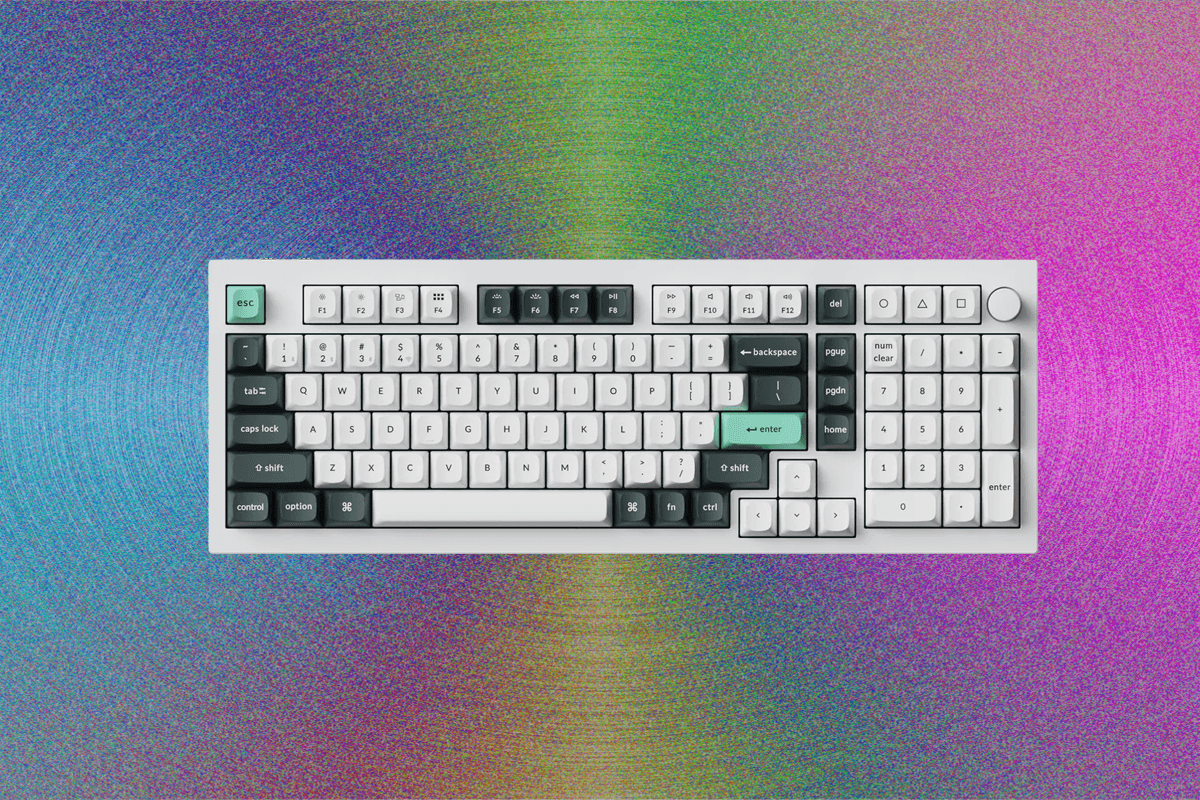
At their core, Hall Effect switches operate on the principle of magnetism. Each keycap houses a magnet, and beneath it, on the PCB, lies a Hall Effect sensor. As a key is pressed, the magnet moves closer to the sensor, changing the magnetic field strength. The sensor detects this change and registers an input. This contact-less design offers several significant advantages:
- Adjustable Actuation Point: Users can precisely set how deep a key needs to be pressed before it registers. For gamers, this means hair-trigger responses at 0.1mm for quick movements or a deeper 2mm for more deliberate actions. Typists can find their sweet spot for comfort and accuracy, reducing accidental presses or fatigue.
- Rapid Trigger: This revolutionary feature allows a key to reactivate instantly the moment it begins to reset, rather than needing to travel back to a fixed reset point. In competitive gaming, particularly in FPS titles, this translates to unprecedented responsiveness for strafing, peeking, and micro-adjustments, virtually eliminating input lag associated with key lift-off.
- Analog Input Potential: While not universally implemented, some advanced HE keyboards can detect the degree of key press, offering analog control similar to a joystick. This opens doors for nuanced movement in games, where a slight press could mean a slow walk, and a full press a sprint.
- Enhanced Durability: Without physical contact points, HE switches are less prone to mechanical failure from wear. This translates to a longer lifespan, often rated in hundreds of millions of keystrokes, outperforming traditional mechanical switches.
- Smoother Typing Feel: The magnetic actuation can result in a remarkably smooth and consistent keypress, free from the scratchiness or inconsistencies sometimes found in traditional switches, making for a more pleasant typing experience.
For 2025, the "best" Hall Effect keyboards seamlessly integrate these technologies with premium build quality, intuitive software, and a focus on user experience.
The 3 Best Hall Effect Keyboards for 2025
While the market is constantly evolving, these three hypothetical yet highly representative keyboards embody the ultimate blend of features, performance, and user experience we expect from top-tier Hall Effect keyboards in 2025.
-
QuantumPeripherals Apex Quantum Elite (Approx. $280)
The Apex Quantum Elite is engineered for the uncompromising competitive gamer. Featuring a full-size layout with a robust aerospace-grade aluminum chassis, it exudes premium build quality. Each key is equipped with QuantumPeripherals’ proprietary "Mag-Force X" Hall Effect switches, offering an astonishingly precise adjustable actuation range from 0.1mm to 4.0mm in 0.01mm increments. Its Rapid Trigger system, dubbed "HyperSense," boasts zero-debounce delay and allows for instantaneous key resets, providing an unparalleled advantage in fast-paced titles. The board features an 8,000-Hz polling rate for near-instantaneous communication with your PC. What truly sets the Apex Quantum Elite apart is its "QuantumSync" software suite, which allows for on-the-fly profile switching, macro programming, and per-key actuation adjustments without ever needing to minimize your game. It also includes an advanced SOCD (Simultaneous Opposite Directional Input) cleaning system, ensuring precise directional inputs crucial for fighting games. The gasket-mounted plate, combined with dual-layer sound-dampening foam, delivers a satisfyingly muted yet responsive typing sound, making it surprisingly pleasant for general use despite its gaming focus. For gamers who demand the absolute best in speed and customization, the Apex Quantum Elite is the undisputed champion. -
Typemaster Gear AuraType Pro (Approx. $260)
For serious typists who also enjoy gaming, the AuraType Pro strikes an exquisite balance. This 75% layout keyboard features a beautifully crafted CNC-machined aluminum body and "SmoothFlow" Hall Effect switches that prioritize typing comfort and acoustics. While still offering adjustable actuation (0.2mm to 3.8mm) and a responsive Rapid Trigger system (up to 4,000-Hz polling), the AuraType Pro shines in its tactile and auditory experience. It utilizes a sophisticated flex-cut PCB and a multi-layered gasket mount, paired with premium factory-lubed switches, resulting in a remarkably soft, bouncy, and acoustically pleasing typing feel. The PBT keycaps are double-shot, offering excellent durability and a premium texture. Its companion software, "AuraDesk," provides an intuitive interface for customizing actuation profiles for different applications (e.g., a shallow profile for gaming, a deeper one for writing) and includes advanced key remapping and macro capabilities. It also features a programmable OLED screen for displaying system info, time, or custom GIFs. The AuraType Pro proves that Hall Effect technology isn’t just for raw speed; it can elevate the typing experience to new heights, offering a blend of luxury and performance. -
BlazeTech Ignis Prime (Approx. $220)
The Ignis Prime aims to be the ultimate all-rounder, delivering robust Hall Effect performance without breaking the bank. This TKL (Tenkeyless) keyboard boasts "BlazeMagnet" switches, offering adjustable actuation from 0.15mm to 3.5mm and a highly effective Rapid Trigger system. It achieves an 8,000-Hz polling rate, ensuring minimal latency for gaming. The construction features a solid aluminum top plate and a durable ABS plastic bottom, striking a good balance between premium feel and cost. BlazeTech’s "IgnisControl" software is surprisingly comprehensive, offering straightforward controls for actuation, rapid trigger sensitivity, RGB lighting, and macro creation. One of its standout features is the integrated physical switch on the side, allowing users to quickly toggle between a "Gaming Mode" (shallow actuation, rapid trigger on) and a "Typing Mode" (deeper actuation, rapid trigger off) without needing to open software. The switches are factory-lubed, providing a smooth and consistent press, and the board utilizes a hybrid mounting system that offers a comfortable, responsive feel. The Ignis Prime is the perfect choice for users who want the full suite of Hall Effect benefits—speed, customization, and durability—in a well-rounded package that excels in both gaming and everyday productivity.
Other Hall Effect Keyboards to Consider
Beyond the top contenders, several other Hall Effect keyboards offer unique advantages and could be a great fit depending on your specific needs, though some come with caveats.
-
Asus Falchion Ace HFX for $200: The Falchion Ace HFX (7/10, WIRED Recommends) stands out with its compact 65% form factor and a wealth of innovative features. Underneath its unique design, it’s a genuinely solid Hall Effect keyboard. Small details like a versatile touchpad on the side, which can be programmed for various functions, and a physical rapid-trigger switch for instant activation/deactivation, enhance its daily usability. Paired with big-ticket items like an 8,000-Hz polling rate and one of the better customization software available, this keyboard is both intuitive for daily use and powerful for high-speed gaming. It feels good to type on, looks good with its distinctive design, and can be customized extensively without needing to close your game or open up separate software, making it incredibly convenient for dynamic adjustments.
-
SteelSeries Apex Pro Mini Gen 3 for $220: The Apex Pro Mini (6/10, WIRED Review) is a perfectly serviceable HE keyboard that delivers solid switches, fast refresh rates, and useful features like rapid trigger and mis-input protection. Its compact 60% layout is popular among competitive gamers. However, the build quality is a bit underwhelming for its premium price point, often feeling less substantial than competitors. SteelSeries’ GG software, while functional, can be tedious and resource-intensive at times. The Apex Pro Mini uses a tray mount with standard GH60 mounting points, which means the typing experience can feel a bit stiff compared to more flexible gasket-mounted designs, though it offers potential for aftermarket case customization. While it’s ultimately a capable keyboard, we can’t recommend it at its MSRP; waiting for a sale makes it a much more attractive option.
-
Sony Inzone KBD-H75 for $300: Sony’s first gaming keyboard under its Inzone brand, the KBD-H75, offers a comfortable typing experience, largely thanks to its Gateron switches, and boasts functional software. The Sony Inzone Hub provides extensive adjustable settings for its Hall Effect switches, including fine-tuning actuation distances and customizable rapid trigger functionality. It features bright RGB lighting and an 8,000-Hz polling rate, matching the highest-end gaming keyboards today, and its response time feels fantastic. The gasket-mount design is relatively firm, offering more comfort than a tray-mount without introducing excessive flex during typing. However, the KBD-H75 lacks an SOCD system (like Snap Tap), which is a drawback for certain gaming genres. The volume knob can also be finicky, sometimes getting "stuck" between two bumps and failing to register input. Moreover, for a wired-only keyboard at this price, the fact that only the top half is aluminum, with the bottom case being plastic, feels like a compromise. It’s a serviceable premium keyboard, but its high price point and minor flaws suggest waiting for a sale.
-
Elecom VK720A for $63: As one of the few Hall Effect keyboards on this list to use a non-Gateron switch, the Elecom VK720A stands out with its unique approach. The switches are solid and smooth, and the keyboard feels good to type on. It has some fun quirks, like swappable spacebars and a set of keycaps specifically designed for gaming, which are surprisingly effective. Its biggest drawbacks are a lack of wireless connectivity and a middling build quality that prevents it from competing with higher-end models. Despite these limitations, it remains a solid, budget-friendly option for those looking to experience Hall Effect technology without a significant investment.
Keyboards to Avoid
Not all Hall Effect keyboards are created equal, and some models, despite their features, fall short in critical areas. Here are a few to approach with caution:
-
Corsair K70 Pro TKL: If you’re only partially interested in a Hall Effect keyboard, the Corsair K70 Pro TKL (5/10, WIRED Review) might tempt you. However, its hybrid approach is its undoing: only the central cluster of keys uses Hall Effect switches, while the entire outer section employs standard mechanical switches. This results in inconsistent customization options and a jarring typing experience, with two distinct feels between the main keys and the peripheral ones. If you adjust the actuation distance of your HE switches, you’ll be stuck with a large number of keys that perform entirely differently, which can be frustrating. If you like the K70 design, we recommend saving money and opting for the Core TKL Wireless model instead, which provides consistent standard mechanical switches across the board and adds Bluetooth and 2.4-GHz wireless connectivity.
-
SteelSeries Apex Pro TKL: SteelSeries seemingly made the same mistake as Corsair, also opting to have only the central cluster of keys utilize Hall Effect switches. While this keyboard has a few advantages over Corsair’s version, such as a neat OLED display that adds both fun and functionality for displaying profiles or system info, the core issue of inconsistent switch technology remains. Given that SteelSeries offers a 60% HE keyboard (the Apex Pro Mini Gen 3 mentioned above) that provides just as many Hall Effect switches in a much more compact and consistent form factor, it’s hard to recommend the TKL version. You get the benefits of full HE without the compromise.
-
Corsair Vanguard Pro 96: The Vanguard Pro 96 feels like Corsair’s first serious attempt at a full Hall Effect keyboard, and physically, it’s quite competent. The build quality feels solid, the switches are smooth, and the 96% layout is ergonomic and efficient. Corsair’s SOCD feature, FlashTap, works incredibly well, and the switches feel responsive and quick with an 8,000-Hz polling rate and low latency. The memory foam wrist rest is comfortable, and the keycaps have a pleasant, grippy texture. The integrated screen primarily displays settings changes, and the knob can adjust actuation distance, volume, and swap windows. However, its software and customization are severely limited. The screen can only display GIFs and images, lacking options for vital system information like GPU and CPU temperatures. Crucially, multiple inputs (like enabling FlashTap, adjusting RGB, and changing actuation distance) cannot be remapped from their default keys, and some settings, like actuation distance, are exclusively controlled by the knob. Most disappointingly, the Vanguard Pro 96 is not compatible with Corsair’s iCue software, despite being advertised on the box. While Corsair claims iCue support is in the works, in the tech world, promises are often delayed. Physically, this is a really good keyboard, but in its current state, its software feels half-baked and hinders the user experience.
-
Syntech Chronos68: This keyboard unfortunately manages to do almost everything wrong when it comes to tuning a keyboard, resulting in a device that, while functional, is far from pleasant to type on. The largest issue lies with its Outemu dustproof switches, which are notably poor. Many Hall Effect keyboards can feel a bit soft at the bottom of the keypress, but none compare to the Chronos68. It exhibits a soft, uncomfortable bottom-out on some keys, but inconsistently so, making it feel like a significant percentage were over-lubed by the factory. The sensation is akin to typing directly into a slice of sponge cake or an Oreo dipped in milk. The assembly is a standard tray-mount, which brings typical flaws: stiffer spots where the plate screws into the case and softer spots elsewhere. Compounding this, the sound-dampening foam combines with the switches to create an unpleasant typing sound—a muted top-end, a heavy mid-range, and subtle low frequencies that make the keyboard sound like you’re listening through low-quality earplugs. While its performance is acceptable, offering expected features like Rapid Trigger, 8,000-Hz polling, adjustable actuation distance, and SOCD adjustment, the accompanying SynHub Driver software is laggy and awkward to use. Ultimately, the raw specs and functionality aren’t worth enduring the rest of this keyboard’s subpar user experience.
As the 2025 landscape for Hall Effect keyboards matures, choosing the right one means balancing cutting-edge performance with build quality and intuitive software. The best options provide comprehensive customization that genuinely enhances both gaming prowess and typing comfort, while those to avoid often compromise on fundamental user experience elements.