Israeli military strikes in Lebanon, Gaza kill dozens of people, heightening regional instability amidst fragile ceasefires and contested peace plans.
In a grim escalation of regional tensions, the Israeli military on Wednesday launched a series of airstrikes across southern Lebanon, targeting what it asserted were Hezbollah weapons storage facilities. These punitive actions followed a drone strike earlier in the day that tragically killed one person and wounded several others, including students on a passing bus, underscoring the severe civilian cost of the renewed hostilities. The strikes mark a significant uptick in cross-border violence, coming just a day after a devastating Israeli airstrike on Tuesday night claimed the lives of 13 people in the Palestinian refugee camp of Ein el-Hilweh, located in southern Lebanon. This particular incident represented the deadliest Israeli attack reported in the region since a precarious ceasefire in the Israel-Hezbollah war took effect a year prior, casting a dark shadow over prospects for lasting peace. Simultaneously, hospitals within the besieged Gaza Strip reported a distressing toll, confirming that Israeli strikes had killed at least 21 Palestinians, further compounding the human suffering in an already devastated enclave.
The Israeli military, in an unprecedented move earlier on Wednesday afternoon, issued a public warning that it would strike targets in several villages across southern Lebanon, explicitly identifying them as Hezbollah infrastructure. The military urged local residents to evacuate the designated areas, signaling an imminent and potentially widespread offensive. More than an hour after the warning, strikes commenced in the villages of Shehour and Deir Kifa. While immediate reports on casualties remained unavailable, the pre-emptive warning itself highlighted the Israeli military’s perception of an urgent threat. According to Israeli intelligence, Hezbollah was actively engaged in re-establishing its presence and rebuilding its operational capacity in southern Lebanon. This claim, however, was made without immediate public presentation of corroborating evidence. The military further asserted that the targeted weapons facilities were strategically embedded within civilian areas, a tactic it condemned as a direct violation of previous understandings and ceasefire agreements between Israel and Lebanon. A year ago, a ceasefire agreement had seen Israel withdraw from southern Lebanon, with Lebanon, in turn, committing to curtail Hezbollah’s activities in the border region. The recent strikes suggest a profound breakdown of these critical security arrangements.
Earlier in the day, the violence manifested in a deadly drone strike in the southern Lebanese village of Tiri. This attack on a car resulted in the death of one individual and left 11 others wounded, including several students who were aboard a nearby school bus caught in the blast radius. Both the Lebanese Health Ministry and state media confirmed the incident, with the state-run National News Agency specifically detailing that the school bus was merely passing near the targeted vehicle when the strike occurred. The bus driver and several students sustained injuries, transforming a routine journey into a scene of chaos and suffering. The Israeli military later claimed responsibility for the drone strike, stating it had successfully eliminated a Hezbollah operative, though it did not elaborate on the specific identity or operational significance of the individual.
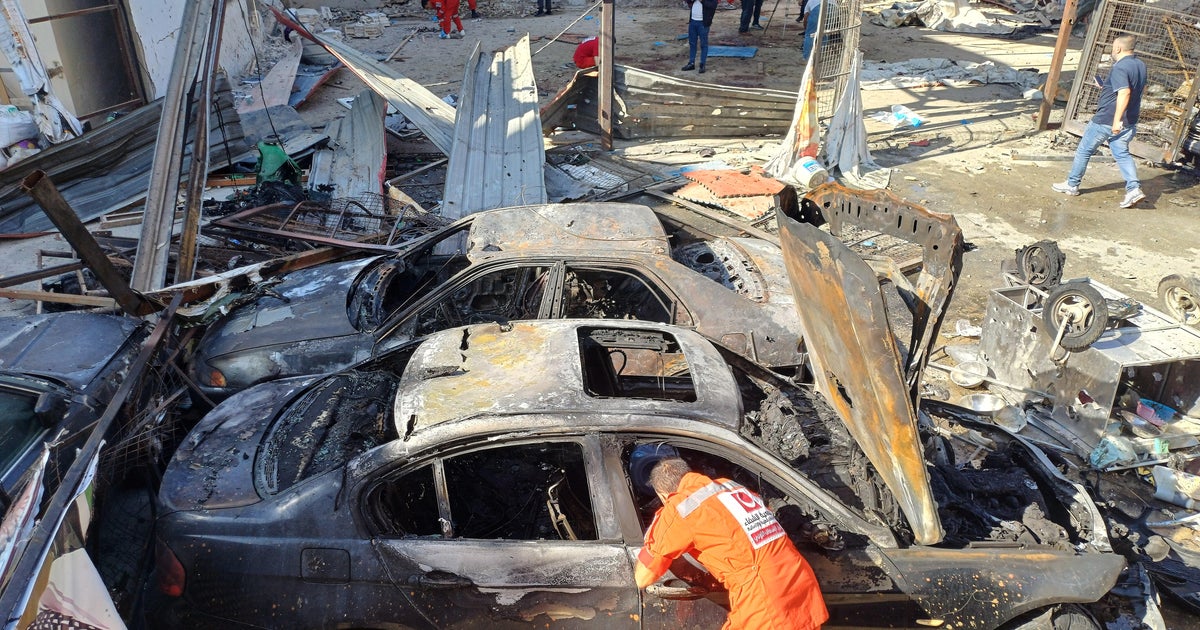
The situation in the Ein el-Hilweh refugee camp, situated just outside the bustling port city of Sidon, presented a complex picture on Wednesday. Despite the previous night’s deadly strike, superficial normalcy had seemingly returned to the camp. However, Lebanese authorities, wary of exacerbating an already volatile situation, prevented journalists from entering, limiting external observation of the aftermath. At the immediate scene of the strike, paramedics meticulously searched for human remains amidst a backdrop of a blood-stained wall, a stark reminder of the previous night’s carnage. Several cars lay burnt and mangled, and the ground was littered with broken glass and debris, testifying to the destructive power of the Israeli attack. The Israeli military subsequently justified its strike by stating it had targeted a Hamas training compound, which it alleged was being used to prepare for an attack against Israel and its army. The military reiterated its commitment to act against Hamas wherever it operates, signaling a broader and more aggressive stance against the group. However, Hamas vehemently condemned the attack, issuing a statement that denied the targeted sports playground was, in fact, a training compound, accusing Israel of deliberately targeting civilian infrastructure.
The recent Israel-Hezbollah war, which erupted on October 8, 2023, just a day after Hamas launched its devastating attack on southern Israel, saw Hezbollah fire rockets into Israel in solidarity with Hamas. That conflict resulted in a staggering human cost, with more than 4,000 lives lost in Lebanon, including hundreds of civilians. The World Bank estimated the destruction caused by the war at approximately $11 billion. In Israel, the conflict claimed 127 lives, among them 80 soldiers, highlighting the reciprocal nature of the violence.
Meanwhile, the humanitarian crisis in Gaza continued unabated, with hospitals reporting at least 21 Palestinians killed in Israeli strikes on Wednesday. These strikes occurred on both sides of the "yellow line," a demarcation established during last month’s ceasefire that nominally split the enclave in two. Under the terms of this fragile truce, the border zone was to remain under Israeli military control, while the area beyond it was designated as a safe zone. However, the recent fatalities underscore the continued peril faced by civilians even within the supposed safe areas. Officials at al-Ahli, Shifa, Nasser, and Kuwaiti hospitals meticulously documented the grim reality, confirming they had received the bodies of those killed from various locations, including Gaza City, Khan Younis, and the Muwasi area – the latter being a southern Gaza displacement camp where thousands of displaced Palestinians sought refuge. An additional Israeli strike in Shijaiyah, a Gaza City neighborhood located outside the designated safe zone where Israeli forces maintain a presence, also claimed one life.
The Israeli military, in explaining its actions in Gaza, stated that its strikes were a direct response to militants who had opened fire on Israeli forces in Khan Younis earlier in the day. The military reported that no Israeli soldiers were killed in these engagements, implying a successful defensive action. Despite the ceasefire agreement taking effect on October 10, Israeli strikes have not ceased entirely, though their frequency has reportedly decreased. According to Gaza’s Health Ministry, which does not differentiate between civilians and combatants in its casualty reports, a total of 280 deaths have been recorded since the truce began, averaging more than seven fatalities per day. This persistent toll highlights the extreme fragility of the ceasefire and the continued humanitarian crisis gripping the territory. Both sides have consistently accused the other of violating the terms of the truce, which were intended to include a substantial increase in the flow of humanitarian aid into Gaza and the return of hostages – both dead and alive – to Israel. The ongoing violence and mutual accusations underscore the deep-seated distrust and the monumental challenges to establishing genuine peace.
Against this backdrop of renewed violence, the international community has continued its diplomatic efforts. On Monday, the U.N. Security Council approved a U.S.-brokered plan for Gaza, which envisions an international stabilization force tasked with providing security in the territory and outlines a possible future path toward an independent Palestinian state. This vote was hailed by some as a crucial next step in solidifying the fragile ceasefire and charting a future for Gaza after two tumultuous years of war. The plan aims to bring much-needed stability and a framework for long-term political resolution.
However, Hamas, the militant group governing Gaza, was swift in its condemnation of the U.N.’s adoption of the plan. In a statement reported by Reuters, Hamas articulated its strong objections, asserting that "Assigning the international force with tasks and roles inside the Gaza Strip, including disarming the resistance, strips it of its neutrality, and turns it into a party to the conflict in favor of the occupation." This statement reveals Hamas’s profound suspicion of any international intervention that it perceives as undermining its military capabilities or legitimacy. According to Al Jazeera, Hamas further clarified its position, stating, "Any international force, if established, must be stationed solely on the borders to separate the forces and monitor the ceasefire, and must be entirely under the supervision of the United Nations." This stance highlights a critical divergence in perspectives on the role and scope of international intervention, posing significant challenges to the implementation of the U.N.-backed peace plan and underscoring the deep ideological chasms that continue to fuel the conflict.
The cumulative toll of recent Israeli military operations in both Lebanon and Gaza, resulting in dozens of deaths and numerous injuries, underscores the perilous state of regional security. Despite diplomatic efforts and nominal ceasefires, the underlying tensions and competing narratives continue to fuel a cycle of violence, leaving civilian populations vulnerable and the prospect of lasting peace increasingly remote. The continued violence, coupled with the rejection of international peace frameworks by key actors, suggests a long and arduous path ahead for any meaningful resolution to the deeply entrenched conflicts in the Middle East.