Justice Department Charges Four Men in U.S. in Scheme to Export AI Chips to China
Washington D.C. – In a significant move highlighting the U.S. government’s intensified efforts to safeguard its technological superiority, the Justice Department announced Thursday, November 20, 2025, the arrest of two Chinese nationals and two American citizens for their alleged involvement in an elaborate scheme to illegally export advanced Nvidia artificial intelligence (AI) chips to China. The charges underscore the critical national security implications of controlling access to cutting-edge semiconductor technology, particularly as global powers race to dominate the AI landscape.
The four individuals, identified as Cham Li, 38, a Chinese national residing in California; Jing Chen, 45, another Chinese national on an F-1 nonimmigrant student visa and residing in Tampa, Florida; Hon Ning Ho, 34, an American residing in Florida; and Brian Curtis Raymond, 46, an American residing in Alabama, face serious charges. They are accused of conspiring to violate the Export Control Reform Act (ECRA) and engaging in money laundering. The Justice Department, in its official statement, emphasized the deliberate and deceptive nature of the alleged operation, which sought to bypass stringent U.S. export regulations designed to prevent sensitive technology from falling into the wrong hands. Legal representation for the accused was not immediately clear following their arrests.
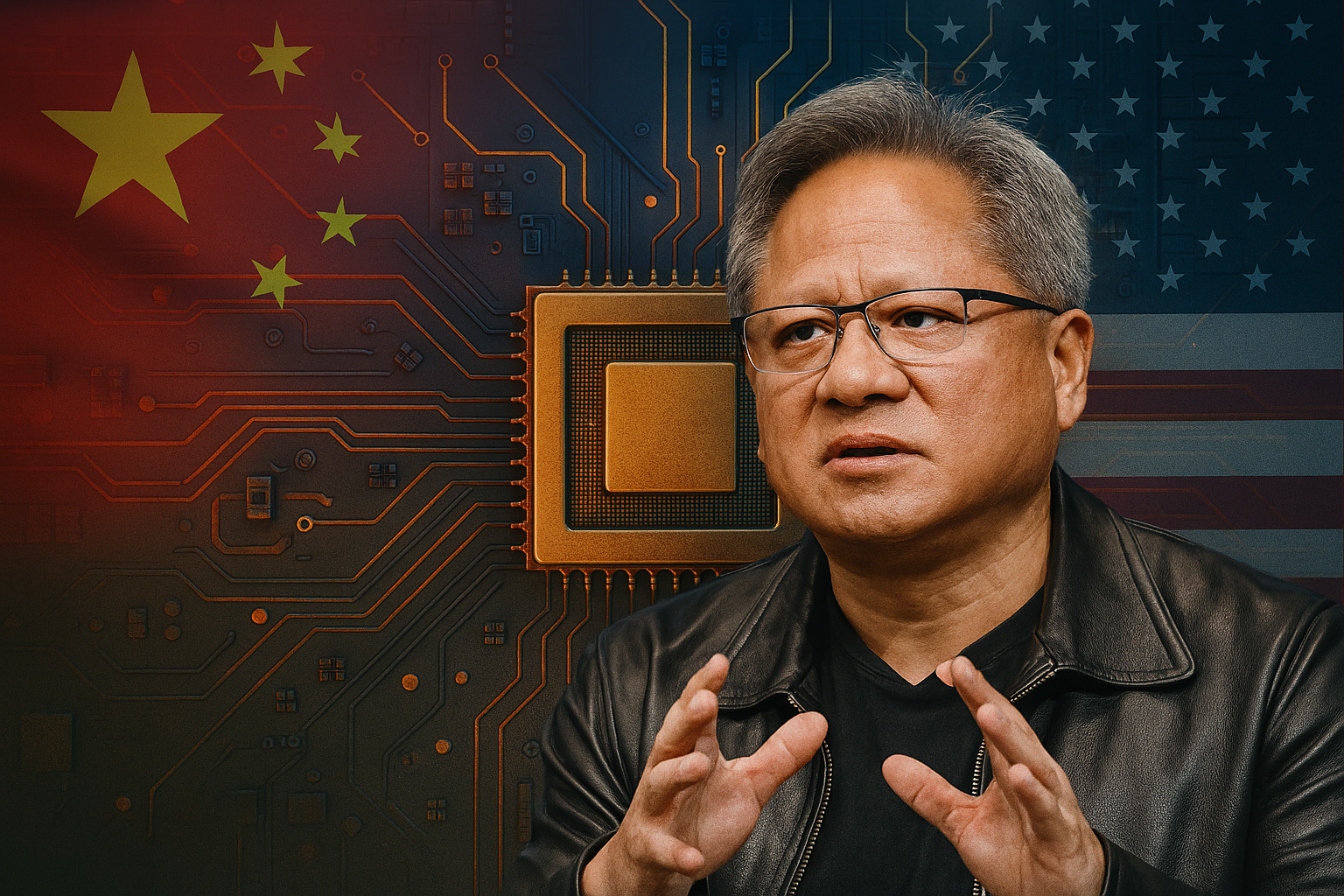
According to federal prosecutors, the sophisticated plot involved the illegal transshipment of advanced Nvidia graphics processing units (GPUs), specifically the high-performance A100 models, to China. These GPUs are at the forefront of AI development, offering unparalleled processing power essential for training complex AI models, running data centers, and powering advanced scientific research and military applications. The U.S. government views the unrestricted export of such technology to China as a direct threat to its national security and economic interests, given Beijing’s stated ambition to become the world leader in AI by 2030, a goal often linked to its military modernization programs.
Assistant Attorney General John Eisenberg, in a statement accompanying the announcement, condemned the defendants’ actions, describing them as a "deliberate and deceptive effort to transship controlled Nvidia GPUs to China by falsifying paperwork, creating fake contracts, and misleading U.S. authorities." This elaborate deception allegedly involved routing the chips through intermediary countries, specifically Malaysia and Thailand, to obscure China as the ultimate destination. Such transshipment tactics are a common method employed by illicit networks to circumvent export controls, exploiting less stringent regulatory environments in transit nations. The defendants are further accused of receiving nearly $4 million from Chinese entities to finance and facilitate this intricate export scheme, highlighting the significant financial incentives driving such illicit trade.
The investigation revealed that between October 2024 and January 2025, approximately 400 Nvidia A100 GPUs were successfully exported to China in two separate shipments. The sheer volume of these highly restricted components underscores the scale and ambition of the alleged conspiracy. Furthermore, law enforcement agencies successfully disrupted two additional planned shipments, preventing hundreds more of these critical chips from reaching China. This intervention prevented further compromise of U.S. technological advantages and demonstrated the effectiveness of federal counter-proliferation efforts.
A central tenet of the charges is the defendants’ alleged knowledge that licenses were explicitly required to export these specific items to China. Despite this awareness, none of the accused reportedly sought or obtained the necessary export licenses from the U.S. government. This willful disregard for federal law forms the basis of the conspiracy and ECRA violation charges, signaling a deliberate intent to flout established regulations. The Export Control Reform Act grants the U.S. government broad authority to control the export, re-export, and transfer of dual-use items—commercial items that also have potential military applications—for reasons of national security, foreign policy, and short supply. The A100 GPU falls squarely into this category, making its unauthorized export a severe breach of these controls.
The U.S. Justice Department has repeatedly emphasized that China’s aggressive pursuit of cutting-edge U.S. technology is a top priority for its intelligence and law enforcement agencies. This case serves as a stark reminder of the continuous challenges posed by foreign adversaries seeking to leverage American innovation for their strategic goals, including military advancements and intelligence gathering. The U.S. government’s strategy involves not only implementing strict export controls but also proactively investigating and prosecuting those who attempt to circumvent them, sending a clear message that such illicit activities will not be tolerated.
The penalties for violating the Export Control Reform Act and for money laundering are severe. Each charge carries a potential maximum sentence of up to 20 years in federal prison upon conviction. Given the gravity of the offenses and the national security implications, if found guilty, the defendants could face substantial time behind bars, along with significant fines. The prosecution aims to deter others who might consider engaging in similar schemes, reinforcing the U.S. commitment to protecting its technological edge.
This crackdown comes as Nvidia, the manufacturer of the chips in question, continues to demonstrate remarkable financial performance, largely driven by the surging demand for its AI-accelerating GPUs. Just this week, Nvidia reported robust earnings of $31.9 billion on record revenue of $57 billion for the third quarter, underscoring its pivotal role in the global AI ecosystem. While Nvidia itself is not implicated in the alleged illicit scheme, the incident highlights the immense value and strategic importance of its products, making them prime targets for those seeking to illicitly acquire advanced technology. The company has previously stated its commitment to complying with U.S. export controls and has even developed modified versions of its chips for the Chinese market to adhere to restrictions, though these "de-featured" chips still fall short of the capabilities of the A100.
The broader implications of this case extend beyond the arrests of the four individuals. It serves as a potent reminder of the ongoing technological rivalry between the United States and China, a competition that increasingly defines geopolitical dynamics. The U.S. administration has made it clear that it will employ all tools at its disposal, including criminal prosecutions, to prevent China from acquiring technologies that could enhance its military capabilities or undermine U.S. national security. This legal action is part of a larger, concerted effort by Washington to restrict China’s access to advanced semiconductors and semiconductor manufacturing equipment, which are considered foundational to future economic and military power.
Experts suggest that such enforcement actions will likely intensify, prompting companies and individuals involved in the global supply chain to exercise greater vigilance and ensure strict compliance with export regulations. For the defendants, the legal battle ahead will be arduous, as they face the full weight of federal prosecution for allegedly undermining U.S. national security through their participation in this high-stakes technological illicit trade. The outcome of this case will undoubtedly be closely watched by governments, industries, and intelligence agencies worldwide, as it sets a precedent for future enforcement in the critical arena of AI technology.