Authorities probe corruption, negligence in Hong Kong fire that killed at least 128. Hong Kong is grappling with the aftermath of its deadliest fire in decades, a catastrophic blaze at the Wang Fuk Court complex that claimed the lives of at least 128 people and injured scores more. The tragedy has quickly pivoted from a rescue operation to a wide-ranging investigation into allegations of corruption and gross negligence surrounding the apartment complex’s recent renovations, igniting public outrage and prompting a serious look into building safety standards in the densely populated city.
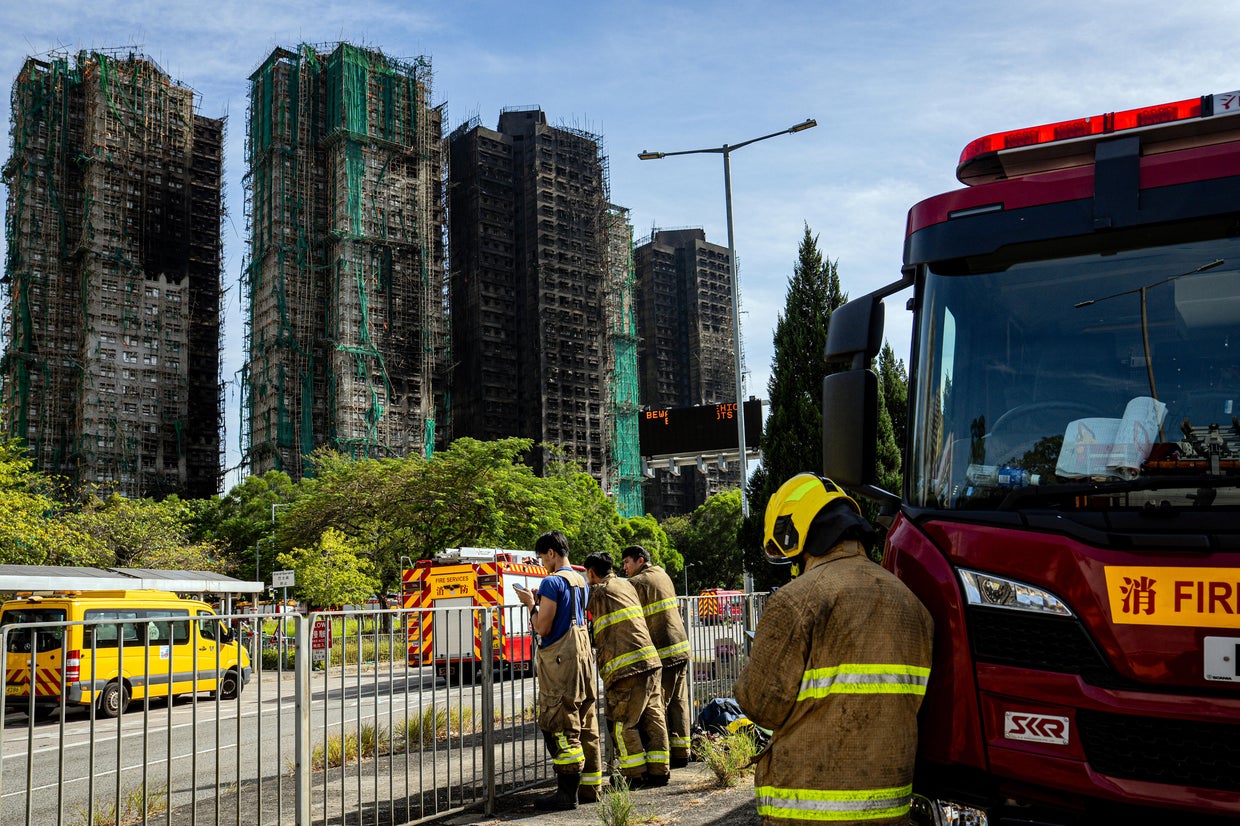
The inferno, which erupted on Wednesday afternoon, November 26, 2025, in Hong Kong’s northern suburbs, quickly engulfed seven of the eight towers of the Wang Fuk Court complex. This sprawling residential estate was home to approximately 4,800 residents, many of whom were elderly or migrant workers, making the rapid spread of the fire particularly devastating. Eyewitnesses described a terrifying scene as flames tore through the facade of the buildings, fueled by materials suspected to be highly flammable, leaving behind a charred and skeletal landscape. The sheer scale of destruction and loss of life has sent shockwaves across the city, forcing authorities to confront uncomfortable questions about oversight and accountability.
Just days after the initial blaze, the investigation has intensified, with law enforcement and anti-corruption agencies working in tandem. Police initially arrested three men from a construction company on suspicion of manslaughter and gross negligence. These individuals, whose identities were withheld but later identified through company documents, were subsequently re-arrested by the Independent Commission Against Corruption (ICAC) on Saturday night, November 29, 2025. This re-arrest underscores a more sinister dimension to the probe, suggesting that the negligence may have been compounded by corrupt practices, particularly given their leadership roles in the ill-fated renovation project. The ICAC had previously detained seven men and one woman linked to the project, indicating a broader net being cast over those involved.
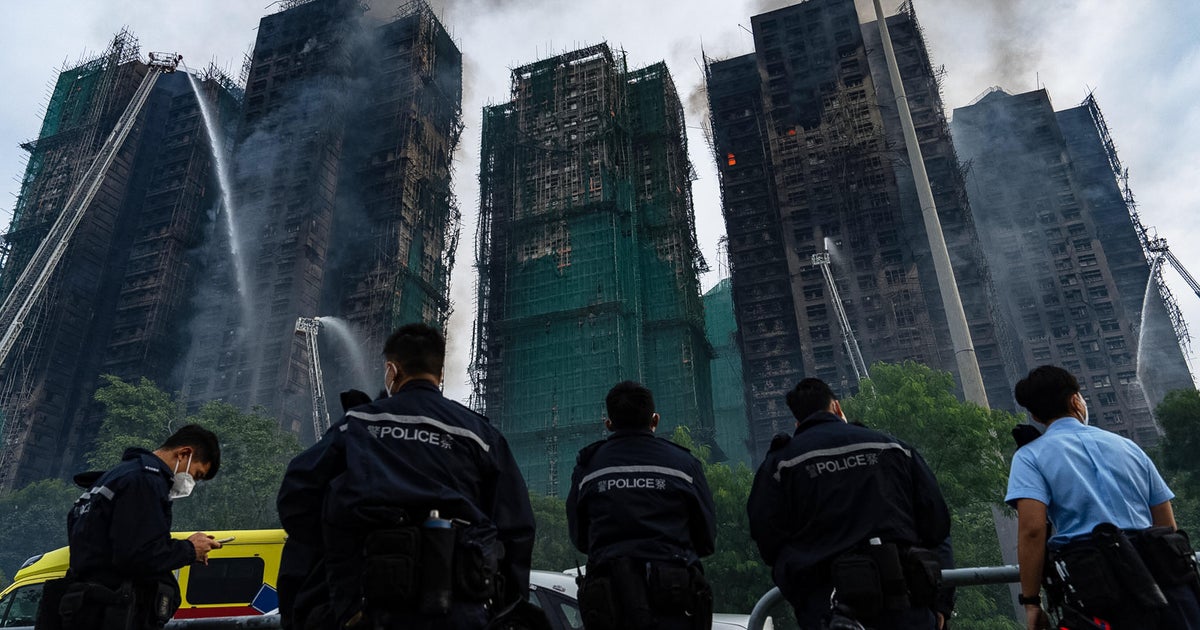
Although police have not officially named the construction firm, documents accessed from the homeowners association’s website pointed to Prestige Construction & Engineering Company as being in charge of the extensive renovations. In the immediate aftermath of the tragedy, police investigators were seen seizing numerous boxes of documents from the company’s offices, while attempts to reach them by phone went unanswered, signaling a swift and comprehensive evidence-gathering process. Central to the investigation are the materials used during the renovation, specifically the netting covering the scaffolding and the foam panels applied to windows, both of which are believed to have played a critical role in the rapid intensification and spread of the fire.
Disturbingly, residents of Wang Fuk Court had voiced significant safety concerns about the renovation project for nearly a year prior to the catastrophic fire. According to documents reviewed by The Associated Press, these concerns primarily centered on the nature and flammability of the scaffolding materials, particularly the netting that encased the buildings. The Hong Kong labor department, in a statement released on Saturday, confirmed that it had received such complaints. Furthermore, the department revealed that its officials had conducted no fewer than 16 inspections of the Wang Fuk Court renovation project since July 2024. Despite these inspections, and repeated written warnings to contractors to comply with fire safety requirements – with an inspection as recent as one week before the inferno – the tragedy could not be averted.
While the labor department asserted that the product quality certificate for the netting was in line with standards, it conceded that the safety netting itself had not been the specific focus of previous inspections. This distinction raises critical questions about the scope and effectiveness of past regulatory oversight. Preliminary investigations by Chris Tang, the city’s secretary for security, indicated that the fire originated on a lower-level scaffolding net of one of the buildings. From there, the blaze spread with alarming speed as the foam panels, suspected to be highly flammable, caught fire. Tang elaborated on the devastating sequence of events, stating, "The blaze ignited the foam panels, causing the glass to shatter and leading to a swift intensification of the fire and its spread into the interior spaces." The police have corroborated this assessment, highlighting the foam panels as a key accelerant.
Further details from the labor department on Saturday revealed that the Prestige Construction & Engineering Company had faced legal action before. Three prosecutions had been brought against the company for breaches of safety regulations related to working at height in construction. Two of these cases resulted in convictions and fines totaling 30,000 Hong Kong dollars (approximately $3,850 USD). Additionally, the company had been fined three separate times in 2023 for other violations unrelated to the Tai Po project, painting a picture of a contractor with a history of safety infractions. Compounding the tragedy, first responders discovered that some fire alarms within the complex, which housed a significant elderly population, failed to sound when tested. Andy Yeung, the director of Hong Kong Fire Services, acknowledged this critical malfunction, though he did not specify the exact number of non-functional alarms.
The sheer intensity of the blaze posed immense challenges for firefighters. It took them an entire day to bring the raging inferno under control, and the fire was not fully extinguished until Friday morning – a harrowing 40 hours after it first erupted. Derek Armstrong Chan, a deputy director of Hong Kong Fire Services, told reporters that crews had to prioritize apartments from which they had received emergency calls, often unable to reach them in the critical hours when the fire burned unchecked. The human cost of the heroic efforts was also immense; twelve firefighters were among the 79 people injured in the blaze, and tragically, one firefighter lost their life in the line of duty. Even two days after the fire began, smoke continued to billow from the charred skeletons of the buildings, a stark reminder of the devastation and the occasional flare-ups within the ruins.
While search and rescue efforts have concluded for anyone trapped alive, authorities have warned that more bodies may yet be recovered from the wreckage. As of Saturday, officials were still working to identify 44 of the 128 recovered bodies, adding to the agony of families awaiting news. Approximately 150 people remain unaccounted for, leaving a gaping void of uncertainty and grief for their loved ones. The tragedy also highlighted the vulnerability of Hong Kong’s significant migrant worker population; the Indonesian foreign ministry confirmed the deaths of two Indonesian migrant workers and reported that about 11 other migrants from the country, working as domestic helpers in the complex, remained missing.
The profound sense of loss resonated deeply within the community. Near the fire site, in a small children’s playground transformed into a makeshift memorial, Sara Yu, holding the hand of her 2-year-old son, Dominic, placed a single white rose. "I brought the kids here because I want them to understand that living in this world is something to be cherished," she said, her voice heavy with emotion. Outside a building where family members gathered to identify their loved ones from photographs, bouquets of white roses, lilies, and carnations accumulated, accompanied by a poignant sign that read: "More than 128 innocent lives, what did they do wrong?"
In a solemn display of mourning, the city lowered its flags to half-staff. Chief Executive John Lee led a three-minute silence on Saturday from government headquarters, with officials all dressed in black, acknowledging the collective sorrow and the gravity of the disaster. This fire marks the deadliest in Hong Kong in decades, surpassing the 1996 commercial building fire in Kowloon that killed 41 people. The only comparable tragedy in recent memory was a warehouse fire in 1948 that claimed 176 lives, as reported by the South China Morning Post. The Wang Fuk Court inferno thus stands as a grim testament to the potential cost of negligence and alleged corruption, prompting a nationwide re-evaluation of building safety regulations and the efficacy of their enforcement, as the investigations continue to unfold and the city begins the long process of healing and rebuilding.