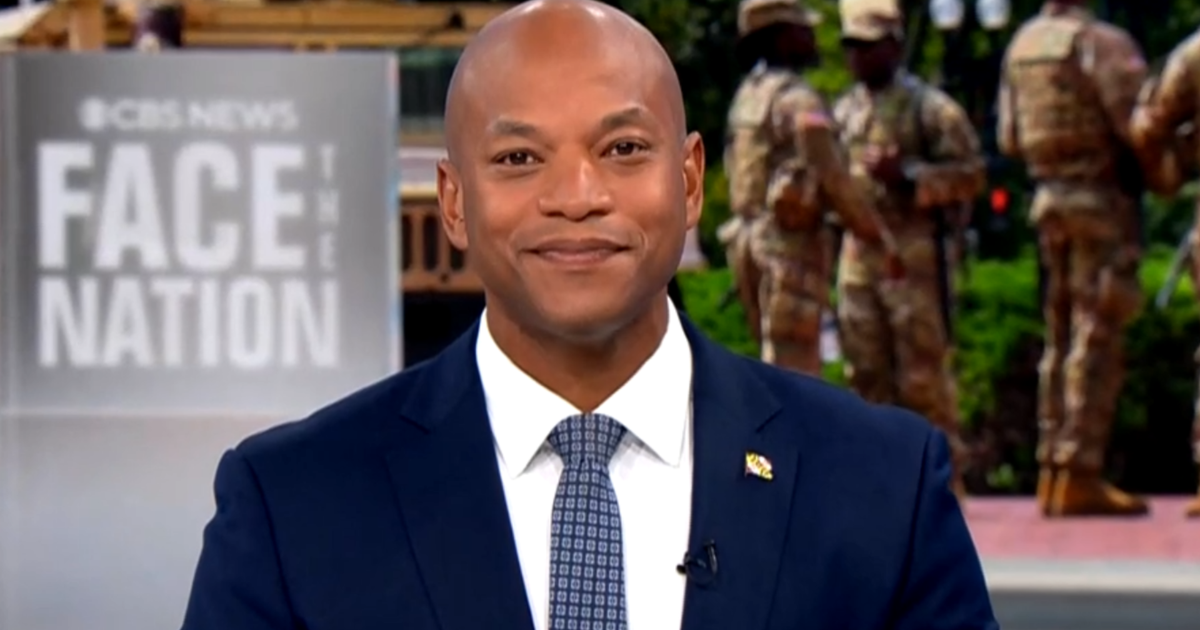
Transcript: Maryland Gov. Wes Moore on "Face the Nation with Margaret Brennan," Nov. 9, 2025
Maryland Governor Wes Moore Issues Scathing Critique of Trump Administration Amid Government Shutdown and Defends Redistricting Push on "Face the Nation"
Washington, D.C. – November 9, 2025 – Maryland Governor Wes Moore, a prominent Democrat, delivered a sharp rebuke of the Trump administration’s handling of a looming government shutdown and the subsequent humanitarian crisis, while also defending his controversial mid-decade redistricting initiative, during an interview on CBS’s "Face the Nation with Margaret Brennan." The governor’s impassioned remarks, broadcast on Sunday, November 9, 2025, underscored the profound impact of federal inaction on states and spotlighted a growing chasm between state-level urgency and federal political maneuvering.
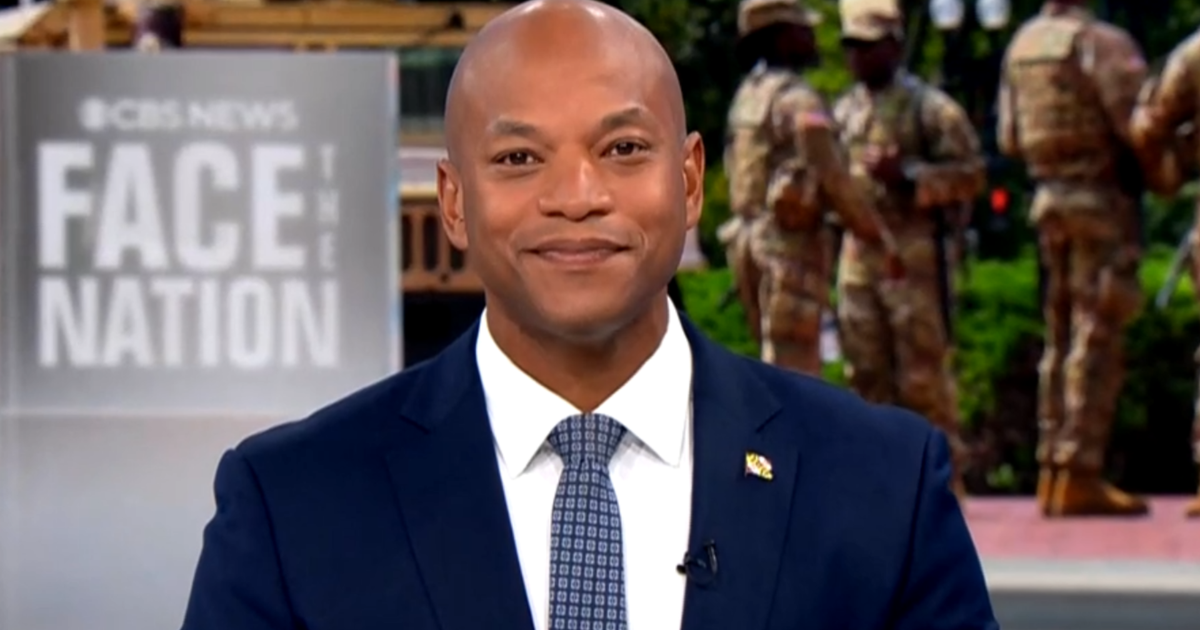
The interview, which aired on a day marked by significant federal uncertainty, opened with Brennan probing Governor Moore on the immediate repercussions of the Supreme Court’s stay on food aid, a critical component of the ongoing government shutdown. With one in eight Americans relying on food stamps, and approximately 700,000 Marylanders dependent on federal food assistance, the implications for the state were dire. Moore minced no words in expressing his frustration. "We don’t know, and that’s why we’re not waiting," Moore declared, outlining immediate, proactive steps Maryland had taken to mitigate the crisis.
In a striking display of state-level intervention, Governor Moore revealed that his administration had authorized over $10 million for heating assistance, an additional $10 million for Maryland food banks, and had made public transportation free for all federal workers in the state, many of whom were reporting to duty without pay. Crucially, Moore announced a staggering $62 million allocation to the Supplemental Nutrition Assistance Program (SNAP) to ensure that food aid would not be interrupted for Maryland residents "for as long as we can." This move came despite what Moore described as a lack of clarity and contradictory guidance from the federal government.
Moore’s criticism of the federal response was particularly cutting. "We are watching the president who is literally breaking the law so people can starve," he asserted, a grave accusation leveled directly at the Trump administration. He elaborated on the "chaos" emanating from Washington, recounting how Maryland had received "four different measures of guidance from the USDA and from the Trump administration" within a mere six days. This administrative disarray was further compounded by what Moore described as a federal threat to "punish" states like Maryland for fronting money to support their citizens. "There is a chaos, and it is an intentional chaos that we are seeing from this administration," Moore stated, highlighting a perceived hypocrisy where "they got money for everything… but when it comes to supporting the American people, that’s now when they are crying, well, we’re broke."
Brennan pressed Moore on the political calculus behind the shutdown, specifically referencing Senate Democratic Leader Chuck Schumer’s offer to end it in exchange for a one-year extension of Obamacare health care subsidies—an offer deemed a "nonstarter" by Republicans. While acknowledging the political significance for the upcoming midterms, Moore unequivocally rejected the notion that the pain inflicted by the shutdown could be justified by political gain. "There is no pain that is worth it. Our people are hurting, and they’re hurting because of these games that we continue to see from Washington, D.C.," he emphasized.
When asked if he would advise Democrats on Capitol Hill to simply take the vote to reopen the government and then continue negotiating health care, Moore reiterated his immediate demand for an end to the shutdown. "I want the government reopened now," he stressed, pointing out that Maryland, with over 260,000 federal workers, bore a disproportionate brunt of the shutdown’s impact. He also recalled that even before the current shutdown, Donald Trump had "fired over 15,000 Maryland workers, federal workers, more than any other state in this country."
However, Moore drew a firm line at the Republican demand concerning health care. He argued that reopening the federal government should not be contingent on "kicking up premiums by 90%, by kicking people off of health care." He characterized the Republican demand as possessing a "barbaric nature," particularly given the Trump administration’s control of the White House, House, and Senate, suggesting they could resolve the impasse with "just simply making a phone call." Moore highlighted the struggles of residents in Western Maryland and Appalachia, where he co-chairs the Appalachian Regional Commission, noting that many were already facing rising premiums and increased living costs due to existing policies. He concluded that no one in his state would deem it acceptable to sacrifice their health care for a government reopening.
The interview then shifted to another contentious issue: Maryland’s mid-decade redistricting efforts, following California’s Proposition 50 which allowed Governor Gavin Newsom to pursue similar plans to potentially gain additional Democratic congressional seats. Brennan pointed out that Maryland’s current congressional map, with only one Republican out of eight districts, was already considered by many to be drawn in an unfair way.
Governor Moore staunchly defended his decision to establish the Governor’s Redistricting Advisory Commission. "I think that the reason that I ordered the Governor’s Redistricting Advisory Commission is because I want to make sure that we can have a bipartisan group being able to look at the maps in the state of Maryland," Moore explained. He framed the initiative as a matter of parity, arguing that if other states like Texas, Florida, and Ohio were engaging in mid-decade redistricting to ensure fair maps, Maryland should not be an exception. "I’m just not sure why we should be playing by a different set of rules than Texas, or than Florida, or than Ohio or all these other places," he stated, countering Brennan’s insinuation that Maryland might be adopting "unfair policies."
The Maryland State Senate President, Democrat Bill Ferguson, has publicly voiced concerns that mid-cycle redistricting could backfire, writing that he believes it "twist rules for potential short term advantage while undermining trust in institutions and ultimately, democracy." Ferguson further cautioned that such a move "jeopardizes your state’s ability to fight against the radical Trump administration."
Moore dismissed these concerns, asserting, "I think fighting for democracy is never risky. I think that’s our job as leaders and elected officials." He clarified that his role was not to draw the maps, but to empower the bipartisan commission to engage with the public and conduct their work. When pressed by Brennan on whether he would commit to accepting a map that might result in more Republican districts, Moore demurred, stating that his job was "to make sure that I’m protecting the democratic process," while the state legislature would ultimately vote on the commission’s recommendations. He acknowledged his agreement with Senate President Ferguson on the "crisis that Donald Trump has put us in" and the administration’s tendency to treat the "Constitution like it’s a suggestion box." However, Moore emphasized a difference in "the urgency that this moment requires, the fight that this moment requires," vowing not to allow Donald Trump to dictate Maryland’s efforts to preserve its democracy.
Governor Moore’s appearance on "Face the Nation" painted a vivid picture of a state leader grappling with immediate humanitarian crises fueled by federal gridlock, while simultaneously pushing for significant democratic reforms at home. His direct challenges to the Trump administration and his resolute defense of Maryland’s independent course underscore a proactive and often confrontational approach to governance in a highly polarized national landscape. As the shutdown continues to inflict hardship and the redistricting debate unfolds, Moore’s positions are likely to keep him at the forefront of national political discussions.