Israeli President Responds to Trump’s Letter Asking Him to Pardon Netanyahu in Corruption Cases.
Jerusalem, Israel – In a development that underscores the complex interplay between international diplomacy, domestic legal systems, and high-stakes political alliances, Israeli President Isaac Herzog confirmed on Wednesday, November 12, 2025, that he had received a formal letter from U.S. President Donald Trump. The letter contained an extraordinary appeal: a request for Herzog to grant a pardon to Israeli Prime Minister Benjamin Netanyahu, who is currently embroiled in three separate corruption trials. This direct intervention by a foreign head of state into the judicial affairs of a sovereign nation immediately ignited discussions across Israel and beyond, highlighting the unique bond between the two countries while simultaneously testing the boundaries of diplomatic protocol and judicial independence. The news, first reported by CBS/AFP, quickly spread, drawing sharp focus to the ongoing legal battles that have plagued Netanyahu’s recent political career.
Netanyahu, affectionately known by his nickname "Bibi," has consistently and vehemently denied any wrongdoing in the ongoing court cases. His supporters have long characterized the trials as politically motivated, a cynical attempt by his opponents to remove him from power through legal means rather than at the ballot box. This narrative of "lawfare" – the use of legal systems to achieve political objectives – resonates deeply with President Trump, who himself has faced numerous legal challenges and has frequently accused his political adversaries of similar tactics.
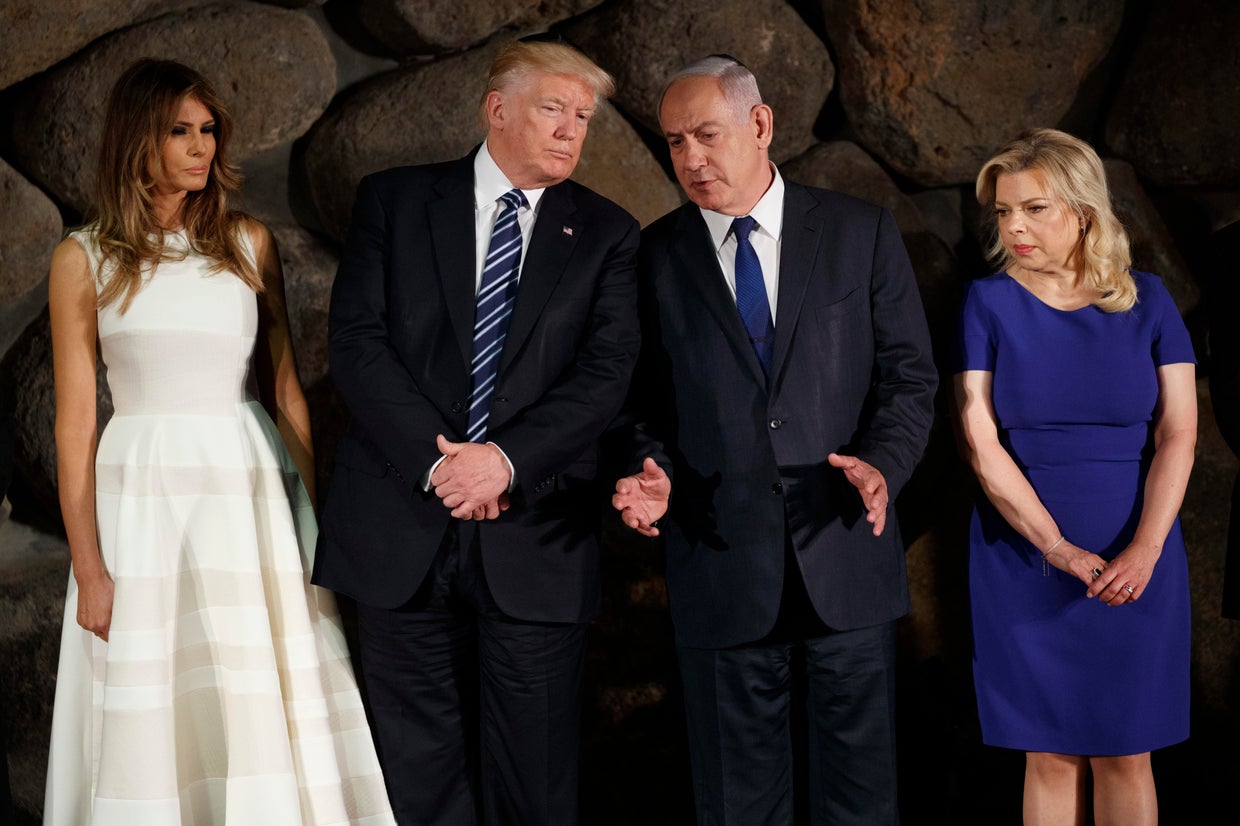
Indeed, the request from President Trump was not entirely unforeseen. In a memorable address to the Israeli parliament, the Knesset, in October of the same year, Trump publicly urged Herzog to pardon Netanyahu. During that speech, Trump deviated from his prepared remarks, telling the assembled lawmakers, "By the way, that was not in the speech, as you probably know! But I happen to like this gentleman right over here [Netanyahu], and it just seems to make so much sense." This impromptu endorsement provided a clear signal of his intentions, setting the stage for the formal letter that followed.
Herzog’s office, in a statement released following the receipt of Trump’s letter, acknowledged the communication. "This morning, President Isaac Herzog received the attached letter from U.S. President Donald Trump, calling on him to consider granting a pardon to Prime Minister Benjamin Netanyahu," the statement read. However, it quickly clarified the procedural limitations of the Israeli presidency, adding that the president could not initiate a pardon based solely on an external request from the American leader. Israeli law dictates a specific process for presidential pardons, typically requiring a formal submission from the individual seeking the pardon, often after a conviction or at a specific stage of legal proceedings.
In his letter, President Trump framed his appeal within the broader context of significant geopolitical achievements, particularly those fostered during his previous and current administrations. He wrote to Herzog at a "historic time, as we have, together, just secured peace that has been sought for at least 3,000 years." This phrase implicitly references the Abraham Accords, a series of normalization agreements between Israel and several Arab nations brokered during Trump’s previous term, and the more recent "fragile ceasefire in Gaza" that he also linked to their joint efforts. Trump continued, "I hereby call on you to fully pardon Benjamin Netanyahu, who has been a formidable and decisive War Time Prime Minister." While acknowledging respect for Israel’s independent justice system, Trump unequivocally stated his belief that the "case’ against Bibi… is political, unjustified prosecution."
The U.S. President further underscored his rationale by connecting the pardon request to the ongoing efforts to maintain regional stability. "Now that we have achieved these unprecedented successes, and are keeping Hamas in check, it is time to let Bibi unite Israel by pardoning him, and ending that lawfare once and for all," Trump asserted. This framing suggests a transactional view of diplomacy, where judicial outcomes might be linked to strategic partnerships and peace initiatives. It also highlights Trump’s consistent belief that Netanyahu, a staunch conservative ally, is being unfairly targeted, a sentiment he frequently expresses about his own legal entanglements.
Netanyahu’s corruption trials encompass three distinct cases, collectively known as Cases 1000, 2000, and 4000, which have cast a long shadow over his tenure and deeply divided Israeli society. In Case 1000, dubbed the "Gifts Affair," Netanyahu and his wife Sara are accused of accepting over $260,000 worth of luxury items – including premium cigars, fine jewelry, and expensive champagne – from wealthy benefactors, particularly Hollywood producer Arnon Milchan and Australian billionaire James Packer, in exchange for political favors. Case 2000, or the "Yediot Aharonot Affair," alleges that Netanyahu attempted to negotiate more favorable media coverage from Arnon Mozes, the publisher of the Yediot Aharonot newspaper, in exchange for curbing the circulation of a rival publication. Finally, Case 4000, the "Bezeq-Walla Affair," is considered the most serious, accusing Netanyahu of bribery, fraud, and breach of trust. Prosecutors allege that as prime minister and communications minister, he granted regulatory favors worth hundreds of millions of dollars to Shaul Elovitch, the controlling shareholder of the Bezeq telecom giant, in return for positive coverage from Walla News, a news website owned by Elovitch. The trials are ongoing, with no ruling yet delivered, making any discussion of a pardon premature in the legal sense, as a pardon typically follows a conviction.
Later on Wednesday, Netanyahu himself took to X (formerly Twitter) to express his gratitude. In a post, he thanked Mr. Trump for his "incredible support," adding: "As usual, you get right to the point and call it like it is. I look forward to continuing our partnership to bolster security and expand peace." This public endorsement from Netanyahu further solidified the narrative of a political persecution, aligning with Trump’s assertions and reinforcing the perception of a shared struggle against perceived injustice.
Herzog’s office, while firm on the procedural requirements, was careful to maintain diplomatic cordiality. The statement emphasized that the Israeli president holds Mr. Trump "in the highest regard and continues to express his deep appreciations for President Trump’s unwavering support for Israel." This acknowledgment underscores the critical importance of the U.S.-Israel alliance, a cornerstone of Israeli foreign policy and security. However, it concluded with a firm reiteration of the rule of law: "Alongside and not withstanding this… anyone seeking a Presidential pardon must submit a formal request in accordance with the established procedures." This response deftly balanced diplomatic courtesy with the imperative of upholding the integrity of Israel’s legal institutions.
The context of Trump’s request is particularly potent given Israel’s recent internal political turmoil. During his current term, which began in late 2022, Prime Minister Netanyahu championed far-reaching judicial reforms that sparked unprecedented mass protests across Israel. Critics argued that these reforms sought to weaken the independence of the judiciary, including the Supreme Court, and could potentially be used to impede or even halt Netanyahu’s own trials. The protests, which highlighted deep divisions within Israeli society over the future of its democracy, were only largely curtailed after the onset of the Gaza war in October 2023, shifting national focus to external security threats.
The parallel between Trump’s and Netanyahu’s legal challenges is also noteworthy. President Trump has consistently accused his political opponents of weaponizing the Justice Department against him. Since his return to the White House, his administration, now staffed by his appointees, has actively pursued investigations and prosecutions against Biden-era justice officials. For example, in September, he publicly urged Attorney General Pam Bondi to investigate former FBI Director James Comey, New York Attorney General Letitia James, and Democratic Senator Adam Schiff. Subsequently, Comey and James have reportedly been indicted on criminal charges, fueling Trump’s narrative of politically motivated legal action. This history provides crucial context for understanding Trump’s fervent belief that Netanyahu’s trials are similarly unjust and politically driven.
The request from President Trump, while diplomatically delicate, highlights a broader philosophical divide concerning the role of the judiciary and the nature of political power. For supporters of Trump and Netanyahu, the trials represent an overreach by unelected judicial and prosecutorial bodies, infringing upon the mandate of democratically elected leaders. For critics, the trials are a vital defense of the rule of law, ensuring that even the highest officeholders are accountable under the law. Herzog’s position as a largely ceremonial head of state, yet one with significant moral authority and the ultimate power of pardon, places him at the nexus of this profound debate. His response, emphasizing both appreciation for a key ally and adherence to legal protocol, reflects the delicate balance required to navigate such an intricate geopolitical and legal landscape. The saga of Netanyahu’s trials, now intertwined with a direct appeal from a sitting U.S. President, continues to be a defining feature of contemporary Israeli politics, with far-reaching implications for its democracy and its most vital international relationship.