Ukraine working on another prisoner exchange with Russia, Zelenskyy says.
President Volodymyr Zelenskyy announced on Sunday, November 16, 2025, that Ukraine is actively pursuing renewed negotiations with Russia to facilitate another large-scale prisoner exchange, an initiative that could potentially see approximately 1,200 Ukrainian captives return home. The Ukrainian leader underscored the critical humanitarian aspect of these efforts, intertwining them with broader diplomatic attempts to find a path towards ending the protracted conflict that has gripped the region for nearly four years.
"We are working to ensure another start to negotiations, so that after all there is a prospect to end this war," Zelenskyy stated in a message posted on X (formerly Twitter). He further elaborated on the intensive diplomatic activity surrounding the issue: "We are also counting on the resumption of POW exchanges – many meetings, negotiations, and calls are currently taking place to ensure this." This statement highlights the persistent commitment of Kyiv to secure the release of its citizens, even amidst ongoing hostilities and geopolitical tensions.
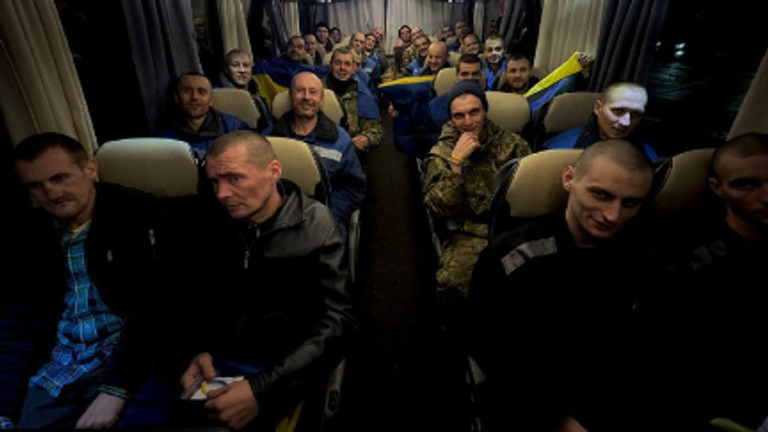
The efforts to restart these vital exchanges gained momentum following consultations held by Rustem Umerov, Secretary of Ukraine’s National Security and Defense Council, on Saturday. These discussions were notably mediated by key international actors, Turkey and the United Arab Emirates, indicating the continued reliance on third-party diplomacy to bridge the deep chasm between Kyiv and Moscow. Umerov confirmed that the parties involved reached an understanding to reactivate prisoner exchange agreements initially brokered in Istanbul. These foundational protocols, established with Turkish mediation in 2022, had previously set the framework for large, coordinated swaps, which have since seen thousands of prisoners exchanged, albeit sporadically. The Istanbul agreements represent a rare instance of sustained, albeit fragile, dialogue between the warring nations on a humanitarian front.
The immediate goal, Umerov conveyed, is to bring home the 1,200 identified Ukrainians. He expressed a hopeful sentiment that returning prisoners could "celebrate the New Year and Christmas holidays at home – at the family table and next to their relatives," emphasizing the profound human impact of these negotiations. While Moscow did not offer an immediate public comment on these developments, the agreement to hold technical consultations soon to finalize procedural and organizational details suggests a cautious optimism for progress on this front. The resumption of regular exchanges would not only provide immense relief to countless families but also signal a potential, however limited, avenue for de-escalation or at least a humanitarian pause in the relentless conflict.
However, against the backdrop of these hopeful humanitarian initiatives, the broader outlook for a swift resolution to the war remains bleak. Finnish President Alexander Stubb, a leader from a country with a direct 830-mile border with Russia, offered a sobering assessment on Sunday. Speaking to the Associated Press, Stubb warned that a comprehensive ceasefire in Ukraine is unlikely to materialize before the spring of 2026. He urged Europe to brace itself for a prolonged struggle, emphasizing the need for "sisu" – a potent Finnish concept embodying endurance, resilience, and grit – to navigate the challenging winter months ahead. This period is expected to witness continued Russian hybrid attacks and an intensified information war across the European continent.
Stubb’s pessimism about an immediate cessation of hostilities stems from a realistic appraisal of the current military and diplomatic landscape. "I’m not very optimistic about achieving a ceasefire or the beginning of peace negotiations, at least this year," Stubb stated, cautiously adding that it would be positive to "get something going" by March. His comments highlight the profound challenges in bridging the fundamental disagreements between Ukraine and Russia, particularly concerning territorial integrity and sovereignty.
As a leader of a smaller European nation, but one acutely aware of the geopolitical stakes, Stubb leverages his established relationship with U.S. President Donald Trump to advocate for sustained international support for Ukraine. The two leaders, who have engaged in golf and regular discussions, represent a crucial transatlantic link in the global response to the conflict. Stubb articulated his belief that to achieve lasting peace in Ukraine, President Trump and European leaders must collectively maximize pressure on Russia and its President, Vladimir Putin. He argued that Putin’s core objectives – to deny Ukraine’s independence, sovereignty, and territorial integrity – have remained unchanged since the war began nearly four years prior, making any genuine peace negotiations extraordinarily difficult without a significant shift in Moscow’s strategic thinking. This sentiment reflects a widespread conviction among Western allies that only sustained pressure can alter the Kremlin’s calculus.
The military situation on the ground continues to be dire, characterized by relentless Russian assaults and Ukraine’s resilient defense efforts. Overnight into Sunday, Russia launched a fresh wave of drone strikes that inflicted damage on energy infrastructure in Ukraine’s southern Odesa region, including a solar power plant. These attacks are part of a broader Russian strategy to cripple Ukraine’s energy grid, especially as the harsh winter approaches, threatening to plunge millions into darkness and cold. Ukraine’s State Emergency Service reported the extent of the damage, underscoring the constant threat to civilian infrastructure.
These combined missile and drone strikes on the power grid coincide with Ukraine’s strenuous efforts to hold back a persistent Russian battlefield push aimed at capturing Pokrovsk, a strategically important eastern stronghold. The battle for Pokrovsk represents a critical front in the ongoing struggle for control of the Donetsk region. Ukraine’s air force reported that Russia fired a total of 176 drones and one missile overnight, with Ukrainian forces demonstrating their improved air defense capabilities by successfully shooting down or neutralizing 139 of the incoming drones. This interception rate, while impressive, still allows a significant number of munitions to reach their targets, highlighting the overwhelming scale of Russian aerial attacks.
In a reciprocal move, Ukrainian forces conducted their own long-range strikes. Ukraine’s general staff announced on Sunday that its forces struck a major oil refinery in Russia’s Samara region, located deep within Russian territory. Concurrently, a warehouse storing drones for the elite Rubicon drone unit in the partially Russian-occupied Donetsk region was also targeted. These strikes are consistent with Ukraine’s strategy of targeting Russian military and economic assets to degrade Moscow’s capacity to wage war. Months of Ukrainian drone strikes on Russian refineries have aimed to deprive Moscow of crucial oil export revenues, which directly fund its military operations. While Russian officials did not immediately confirm these specific attacks, Russia’s defense ministry did claim on Sunday that its forces had shot down 57 Ukrainian drones overnight, indicating the ongoing intensity of the aerial warfare between the two nations.
The dual focus on humanitarian prisoner exchanges and continued military confrontation underscores the complex and multifaceted nature of the conflict. While diplomatic channels remain open for specific, limited objectives like prisoner swaps, the broader geopolitical landscape suggests a prolonged struggle. The resilience of the Ukrainian people, backed by international support, and the unwavering determination of both sides to achieve their objectives, point towards a winter of continued hardship and uncertainty, with the prospect of peace remaining a distant, yet intensely sought-after, goal.