MBS tells Trump Saudis will increase investments in U.S. to near $1 trillion
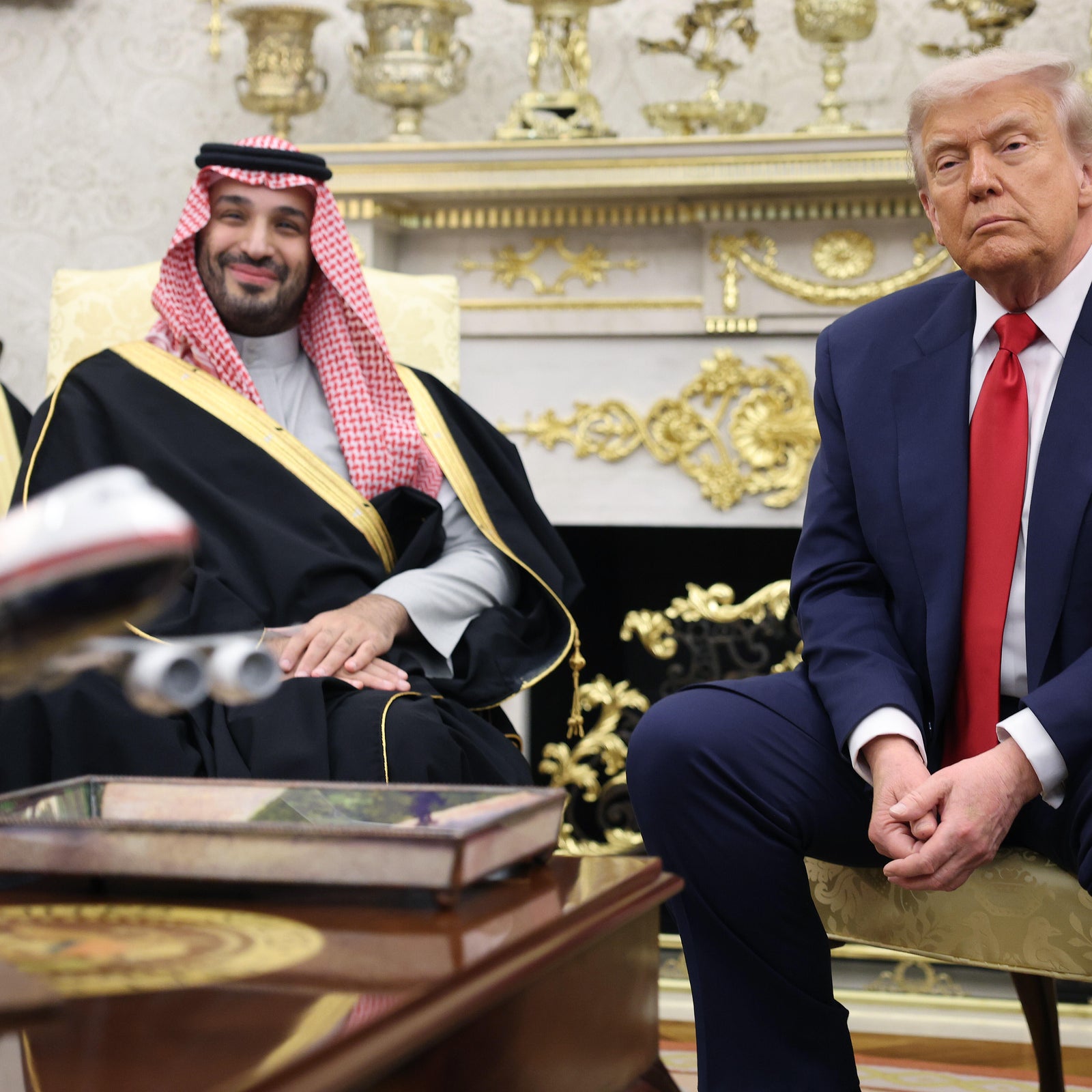
Saudi Crown Prince Mohammed bin Salman (MBS) informed President Trump during a high-profile White House visit that the Kingdom of Saudi Arabia intends to significantly boost its investments in the United States, aiming for a figure close to $1 trillion, a substantial increase from the existing $600 billion. The announcement, made amidst a complex backdrop of strategic alliances and lingering controversies, underscores the enduring economic and political importance of the U.S.-Saudi relationship, even as both nations navigate shifting global dynamics and internal pressures.
The new, ambitious investment target was publicly raised by President Trump himself during the Oval Office meeting. With his characteristic flair for deal-making and public negotiation, Mr. Trump directly challenged the Crown Prince to elevate the commitment. "I want to thank you because you’ve agreed to invest $600 billion into the United States, and because he’s my friend, he might make it a trillion, but I’m going to have to work on him," Mr. Trump stated, gesturing towards MBS. In response, Crown Prince bin Salman, often referred to by his initials MBS, affirmed his agreement, indicating that the final figure would indeed approach the $1 trillion mark. This public exchange highlighted the personal rapport cultivated between the two leaders, a relationship that has often bypassed traditional diplomatic channels.
However, the declaration of such a massive investment figure immediately invited scrutiny from economic analysts, policy experts, and the media, given past discrepancies between Saudi pledges and their actual realization. During Mr. Trump’s first administration, the president frequently lauded commitments totaling $450 billion in Saudi investments in the U.S. Yet, an economic analysis conducted by the Arab Gulf States Institute provided a stark contrast to this figure. Their findings indicated that the actual exports of American goods and services to Saudi Arabia from 2017 to 2020 amounted to only a fraction of the touted sum, approximately $92 billion – roughly one-fifth of the proclaimed investment.
Similarly, a significant defense agreement, publicly announced in May 2017 and valued at around $110 billion, was initially presented by the White House as taking immediate effect. This deal was heralded as a cornerstone of U.S.-Saudi security cooperation and a major boon for American defense manufacturers. However, records meticulously maintained by the Defense Security Cooperation Agency (DSCA), the body responsible for overseeing foreign military sales, painted a different picture. Between 2017 and 2020, the Defense Department formally notified Congress of merely $23 billion in possible arms sales to Saudi Arabia, indicating a considerable gap between the initial headline figure and the actual transactions. These historical precedents inevitably cast a shadow of skepticism over the latest $1 trillion pledge, prompting questions about the mechanisms for its implementation and the likelihood of its full materialization.
Beyond the economic figures, Crown Prince bin Salman’s visit to the White House carried immense geopolitical and diplomatic weight, marking his first trip to the U.S. since the brutal murder of Washington Post journalist and human rights activist Jamal Khashoggi in 2018. Khashoggi, a critic of the Saudi government, was killed inside the Saudi consulate in Istanbul by members of the Saudi government, an event that triggered widespread international outrage and severely strained Saudi Arabia’s relations with many Western nations, including the United States. About a month after Khashoggi’s killing, the U.S. Central Intelligence Agency (CIA) concluded that the crown prince had ordered the assassination. This assessment, though denied by MBS, put him at the center of a global human rights storm.
Despite the damning intelligence assessment, President Trump consistently worked to smooth over relations with the Saudis, often downplaying or dismissing the severity of the Khashoggi affair. MBS has consistently denied any direct involvement in ordering Khashoggi’s murder. However, in a candid 2019 interview with CBS News’ Norah O’Donnell on 60 Minutes, he acknowledged a degree of responsibility, stating that he took responsibility for Khashoggi’s death because his murder had been "committed by individuals working for the Saudi government." During the Oval Office meeting on Tuesday, when pressed on the Khashoggi issue, MBS offered a brief, somewhat circumspect comment: "About the journalist, it’s really painful to hear that anyone losing his life for no real purpose." President Trump, in turn, staunchly defended the Crown Prince, stating, "a lot of people didn’t like that gentleman [Khashoggi]" and adding that "he [bin Salman] knew nothing about it, and we can leave it at that." This swift dismissal of a significant human rights atrocity by the U.S. President underscored his prioritization of strategic and economic ties over moral condemnation.
The President’s robust defense of MBS extended to his human rights record, a position that stands in stark contrast to the findings and concerns regularly articulated by the U.S. State Department and numerous international human rights organizations. The State Department’s annual reports on human rights practices frequently detail concerns in Saudi Arabia, including arbitrary arrests and detentions, restrictions on freedom of expression and assembly, lack of due process, and the suppression of dissent. Yet, Mr. Trump offered glowing praise for the Crown Prince during their meeting. "We have an extremely respected man in the Oval Office today and a friend of mine for a long time, a very good friend of mine," Mr. Trump asserted. "I’m very proud of the job, what he’s done is incredible in terms of human rights and everything else." This public endorsement, coming from the highest office in the U.S., sparked further criticism from human rights advocates and some members of Congress, who argue that such rhetoric undermines American values and emboldens authoritarian regimes.
The pledge of nearly $1 trillion in investments by Saudi Arabia, primarily through its sovereign wealth fund, the Public Investment Fund (PIF), aligns with MBS’s ambitious "Vision 2030" plan. This transformative blueprint aims to diversify the Saudi economy away from its traditional reliance on oil, fostering new industries, creating jobs, and attracting foreign investment. Investing heavily in the U.S. serves multiple strategic purposes for Riyadh: it secures access to advanced technology, expertise, and innovation; generates substantial returns to fuel domestic projects; and solidifies a crucial political alliance with Washington. Sectors likely to benefit from such investments, if they materialize, include infrastructure (roads, bridges, utilities), technology (startups, research and development), manufacturing, energy (both traditional oil & gas and renewables), and entertainment. A trillion-dollar infusion could potentially support millions of jobs across various American industries, stimulate economic growth, and enhance U.S. competitiveness on a global scale.
However, the journey from a verbal pledge to concrete, realized investments of such magnitude is fraught with complexities. The Saudi PIF has indeed become a global investment powerhouse, with holdings in major companies and various asset classes worldwide. Yet, the scale of this new commitment would require meticulous planning, regulatory approvals, and sustained political will from both sides. The past record of overinflated figures suggests that future announcements will be met with a healthy dose of skepticism and will undergo intense scrutiny from independent analysts and congressional oversight bodies. Lawmakers, particularly those critical of Saudi Arabia’s human rights record or its regional policies, will likely demand transparency and accountability regarding the nature and destination of these investments.
Ultimately, the meeting between President Trump and Crown Prince Mohammed bin Salman, and the subsequent announcement of a near $1 trillion investment pledge, encapsulate the intricate and often contradictory nature of U.S.-Saudi relations. While economic incentives and strategic alliances, particularly concerning regional stability and counter-terrorism, continue to bind the two nations, profound disagreements persist on issues of human rights, governance, and the rule of law. The future realization of this monumental investment promise, and its true impact on both economies, will serve as a critical barometer for the health and direction of this vital, yet deeply complicated, bilateral relationship.