2 killed in church attack in Nigeria, days after dozens of schoolgirls abducted.
In a grim reminder of Nigeria’s escalating security crisis, two individuals were tragically killed in an attack on a church in the central part of the country, authorities confirmed, an incident that unfolded just days after dozens of schoolgirls were abducted and a staff member killed in a separate, but equally alarming, assault in the nation’s north. These events underscore the pervasive insecurity plaguing various regions of Nigeria, challenging the government’s efforts to restore peace and stability.
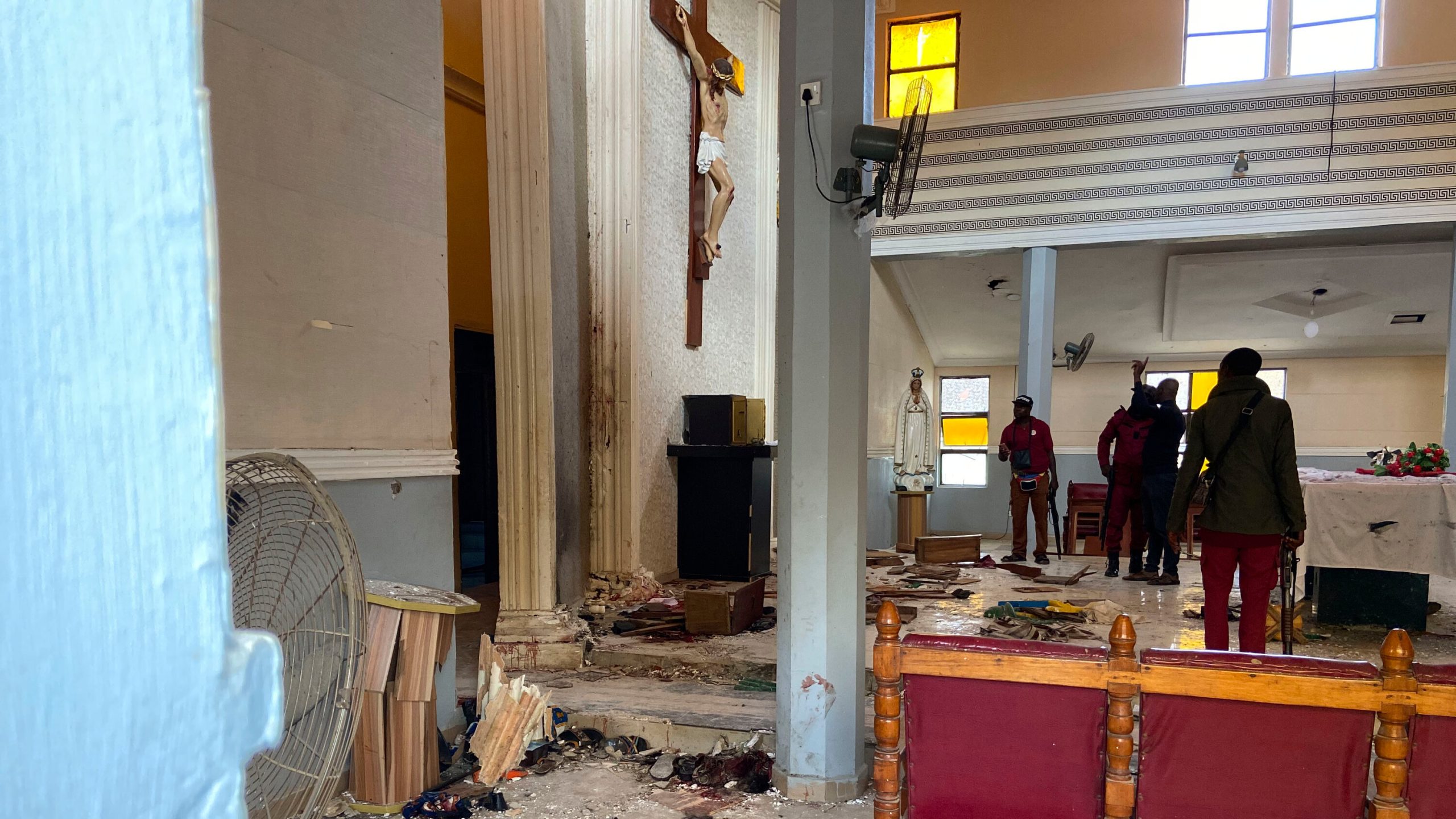
The recent church attack occurred on Tuesday night, November 18, 2025, in Eruku town, located in Nigeria’s central Kwara state. According to Adetoun Ejire-Adeyemi, a spokesperson for the Kwara state police, law enforcement officers swiftly responded to reports of gunfire echoing through the community. Upon arrival, they discovered a harrowing scene: one person had been fatally shot inside the church premises, while another victim was found deceased nearby. The motive behind this brutal assault remains unclear, and as of the latest reports, no group has claimed responsibility for the violence. Such attacks on places of worship, though less frequent than abductions, serve as potent symbols of the widespread lawlessness and the vulnerability of ordinary citizens.
This particular incident highlights the persistent ethno-religious tensions and conflicts that often simmer, and occasionally boil over, in Nigeria’s Middle Belt region. This area is a volatile flashpoint where primarily Christian farming communities and predominantly Muslim nomadic herders frequently clash over dwindling land resources, grazing routes, and water access. These disputes, often exacerbated by climate change and population growth, have tragically acquired a religious dimension over the years, leading to cycles of retaliatory violence and the emergence of militias aligning with either side. While the police investigation into the Eruku church attack is ongoing, the backdrop of these long-standing conflicts adds a layer of complexity to understanding the nature of such violence.
The Kwara State Governor, AbdulRahman AbdulRazaq, promptly issued a statement on Wednesday, November 19, praising Nigerian President Bola Tinubu for his decisive action in deploying an additional 900 troops to the state. This move reflects the federal government’s acknowledgment of the deteriorating security situation and its commitment to bolstering security forces on the ground. President Tinubu himself underscored the gravity of the situation by delaying his departure to South Africa, where he had been scheduled to attend the upcoming Group of 20 (G20) summit of the world’s leading rich and developing nations. Bayo Onanuga, a spokesperson for the President, confirmed that Tinubu’s decision was a direct response to the church attack and, more critically, the abduction of 24 schoolgirls that occurred on Monday, November 17.
The abduction of the schoolgirls unfolded in the northwestern state of Kebbi. Twenty-five schoolgirls were initially reported missing from the Government Girls Comprehensive Secondary School in Maga town. In a glimmer of hope amidst the despair, one of the abducted girls managed to escape her captors and is now safe, the school’s principal informed The Associated Press on Tuesday. This escape offers a small but significant testament to the resilience of the victims and potentially provides crucial intelligence for the ongoing search efforts. Local hunters, often the first line of defense in remote communities, have since embarked on a dangerous quest, combing through the dense forests near the school in a desperate bid to locate and rescue the remaining missing students.
The modus operandi of the abductors in Kebbi was chillingly familiar: gunmen scaled the perimeter fence of the school grounds, engaging in a fierce exchange of gunfire with police officers who were guarding the facility. Despite the efforts of the security personnel, the attackers overwhelmed them, succeeding in abducting the girls and tragically killing a staff member in the process. This type of mass kidnapping, particularly targeting schools, has become a horrifying hallmark of Nigeria’s security challenges, especially in the northern and central regions. These incidents are largely attributed to criminal gangs, often referred to as "bandits," who operate with impunity in remote areas, carrying out abductions for ransom.
Analysts and local communities widely agree that these bandit groups are driven primarily by financial gain, viewing human lives as commodities in a lucrative kidnapping-for-ransom industry. While no group has claimed responsibility for this specific abduction in Kebbi, the pattern aligns with the activities of these criminal networks. The repeated targeting of schools has had a devastating impact on education in Nigeria, particularly for girls, as fear of abduction forces many schools to close or parents to withdraw their children, thereby exacerbating educational disparities and socio-economic challenges. The memory of the Chibok girls’ abduction by Boko Haram in 2014, and subsequent mass kidnappings in places like Kankara, Dapchi, and Tegina, continues to cast a long shadow over the nation’s schooling system, instilling a deep sense of fear and insecurity among students, parents, and educators alike.
Adding another layer of complexity to Nigeria’s international standing and internal discourse, former U.S. President Donald Trump had earlier this month asserted that Christianity faces an "existential threat" in Nigeria. In a post on Truth Social late last month, Mr. Trump publicly accused the Nigerian government of not doing enough to prevent the killings of Christians, going as far as to state that the United States "may very well go into that now disgraced country, ‘guns-a-blazing’ to completely wipe out the Islamic Terrorists who are committing these horrible atrocities." He further instructed the Pentagon to begin preparing for possible military action in the West African nation.
The Nigerian government, under President Tinubu, vehemently rejected these claims, characterizing them as misinformed and not reflective of the national reality. On November 1, President Tinubu issued a strong rebuttal, asserting that "religious freedom and tolerance have been a core tenet of our collective identity and shall always remain so." He emphasized, "Nigeria opposes religious persecution and does not encourage it. Nigeria is a country with constitutional guarantees to protect citizens of all faiths." Tinubu’s administration has consistently maintained that while Christians are indeed among the victims of violence, the majority of those targeted by armed groups in Nigeria’s Muslim-majority north, where most attacks occur, are in fact Muslims. This nuance is crucial, as the narrative of an exclusive "Christian genocide" often obscures the broader, indiscriminate nature of the violence perpetrated by bandits and terrorist groups against all communities, irrespective of their faith. Such pronouncements from international figures, while aiming to highlight human rights concerns, often risk oversimplifying complex internal conflicts and potentially exacerbating religious divisions.
Nigeria’s north, particularly the northeast, has been grappling for over a decade with the insurgency waged by the Boko Haram group and its splinter faction, the Islamic State West Africa Province (ISWAP). These groups are driven by extremist ideologies and have been responsible for countless deaths, displacements, and humanitarian crises. In parallel, the northwest and parts of the north-central regions are tormented by the aforementioned armed gangs, or "bandits," whose primary motivation is economic gain through kidnapping, cattle rustling, and extortion. These multifaceted security challenges are further compounded by underlying socio-economic factors such as widespread poverty, high youth unemployment, governance deficits, corruption, and the proliferation of illicit small arms.
The confluence of these various forms of insecurity—insurgency, banditry, and communal clashes—creates a volatile environment that severely hinders development, displaces populations, disrupts livelihoods, and erodes public trust in governmental institutions. The recent church attack in central Nigeria and the mass abduction of schoolgirls in the northwest serve as stark reminders of the urgent need for a comprehensive and sustained approach to security. While the deployment of additional troops and presidential interventions signal a commitment to tackling these issues, the path to lasting peace and stability in Nigeria remains fraught with significant challenges, requiring not only military action but also robust governance, economic development, and social cohesion initiatives. The international community continues to watch closely, offering support where possible, as Nigeria grapples with these existential threats to its peace and unity.