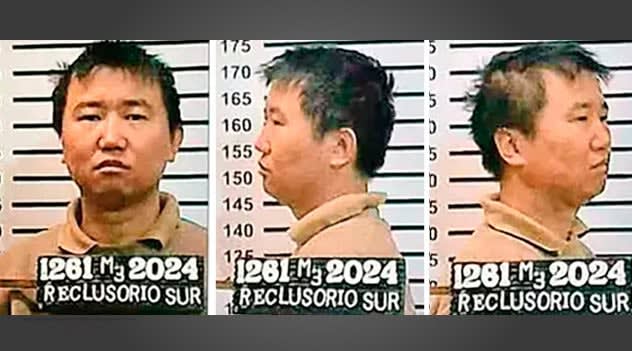
Accused fentanyl kingpin dubbed "Brother Wang" appears in U.S. court after being captured in Cuba
Zhi Dong Zhang, a Chinese national widely known by his notorious alias "Brother Wang," has been extradited to the United States and made his initial appearance in Brooklyn federal court, facing a litany of charges for allegedly orchestrating a vast international drug trafficking and money laundering enterprise. His apprehension marks a significant victory in the global fight against illicit narcotics, especially fentanyl, which continues to devastate communities across America. The dramatic saga of his capture, escape from Mexican custody, and subsequent recapture in Cuba underscores the complex and often perilous nature of international law enforcement efforts targeting high-level drug lords.
Zhang pleaded not guilty to the charges during his arraignment on Wednesday, November 19, 2025, in a court appearance that drew considerable attention. His lawyer, whose name was not disclosed, declined to comment following the proceedings. Federal prosecutors paint a grim picture of Zhang’s operation, describing it as a sophisticated, global network responsible for funneling thousands of pounds of deadly narcotics, including cocaine, methamphetamine, and the highly potent synthetic opioid fentanyl, into the United States and other nations. The scale of his alleged activities highlights the pervasive threat posed by transnational criminal organizations.
Deputy Attorney General Lisa O. Monaco, in a statement released by the Department of Justice, emphasized the importance of Zhang’s capture. "The defendant stands accused of running a global enterprise that pumped massive quantities of cocaine, fentanyl, and methamphetamine into our communities and laundered millions in narcotics proceeds," Monaco stated. "His return to the United States is a major step in dismantling a network that has fueled addiction, violence, and death." Her words underscore the U.S. government’s unwavering commitment to pursuing drug traffickers regardless of their location or the complexity of their operations.
According to federal prosecutors, Zhang’s criminal organization established its primary operational base in Mexico as far back as 2016. From there, it allegedly orchestrated the importation of drugs into the U.S. and meticulously laundered its illicit profits. The money laundering scheme was particularly elaborate, involving the creation of more than 100 shell companies in the United States. These front companies utilized false social security numbers and other fraudulent documents to obscure the true origin of the funds, effectively cycling at least $77 million in narcotics proceeds through legitimate financial systems. This intricate web of financial deception allowed the organization to move vast sums of money, making it incredibly difficult for law enforcement to trace the illegal funds back to their source.
The journey to Zhang’s appearance in a U.S. courtroom was fraught with international intrigue and a dramatic escape. Mexican authorities initially apprehended Zhang in Mexico City in October 2024, acting on a request from the U.S. government. However, a local judge controversially granted him house arrest, a decision that proved to be a critical misstep. Under military guard at the designated residence, Zhang managed to escape, triggering an intense international manhunt and raising questions about the security protocols and judicial oversight in Mexico.
His freedom was short-lived. Following extensive intelligence gathering and international cooperation, Zhang was eventually tracked down and recaptured in Cuba. Mexican authorities then played a pivotal role in facilitating his transfer to the United States on October 23, 2025. This collaboration, particularly with Cuba, highlights the often-complex dynamics of international law enforcement, where shared security interests can bridge diplomatic divides. The image of a handcuffed Zhang, escorted by Interpol agents next to an airplane, was later shared on social media by Mexican Security Secretary Omar Garcia Harfuch on October 24, 2025, a visual testament to the success of the recapture operation. Harfuch’s post noted the arrest of "Zhi Dong ‘N’," identified as responsible for international drug trafficking and money laundering, following investigative efforts, international cooperation, and coordination.
Zhang, a figure shrouded in multiple identities, was not just "Brother Wang." A wanted poster released by Mexican prosecutors in July 2025 listed several other aliases, including "BW," "Pancho," "HeHe," and "Mr. T." Such a multitude of aliases is characteristic of high-level criminal figures seeking to evade detection and compartmentalize their operations, making it harder for authorities to connect their various illicit activities.
The fentanyl crisis in the United States provides a grim backdrop to Zhang’s alleged crimes. Fentanyl, a synthetic opioid 50 to 100 times more potent than morphine, is a primary driver of the ongoing overdose epidemic, claiming tens of thousands of lives annually. The U.S. government has intensified its efforts to disrupt the supply chains of fentanyl, which often originate with precursor chemicals from China, are processed into finished drugs in Mexico by cartels, and then smuggled across the U.S. border. The capture of individuals like "Brother Wang" is therefore seen as crucial in stemming the flow of this deadly drug.
Beyond the charges in Brooklyn, Zhang also faces a related set of federal charges in Georgia, further illustrating the widespread nature of his alleged criminal enterprise. Government documents filed in that case describe a sophisticated cocaine and fentanyl trafficking network with key hubs established in the Atlanta and Los Angeles metropolitan areas. These documents allege that millions of dollars generated from drug sales were collected at stash houses in both Georgia and California. From there, the funds were deposited into various bank accounts, which Zhang could then access from his base in Mexico, thereby completing the illicit financial cycle. El Pais reported that Zhang is accused of laundering at least $20 million in the U.S. between 2020 and 2021, again using more than 100 shell companies and bank accounts to obscure the origins of the money.
The involvement of Chinese criminal organizations in global drug trafficking, particularly in the production and distribution of synthetic drugs like fentanyl, has been a growing concern for international law enforcement. These groups often leverage global supply chains and sophisticated financial networks to facilitate their operations, making them formidable adversaries. Zhang’s case is emblematic of this trend, highlighting the nexus between Chinese organized crime, Mexican drug cartels, and the devastating impact on American communities.
Zhi Dong Zhang remains detained pending his next court appearance, scheduled for January 2026. The legal battle ahead promises to be extensive, with prosecutors likely to present a mountain of evidence detailing his alleged global drug trafficking and money laundering activities. His capture and extradition represent a significant blow to the international drug trade and serve as a powerful testament to the persistence and collaborative efforts of law enforcement agencies across borders in their relentless pursuit of those who profit from addiction and death. The "Brother Wang" saga underscores the long reach of justice, even for those who attempt to operate in the shadows of a complex global underworld.