Zelenskyy talks with allies about U.S. peace plan, seeking to ensure Ukraine’s interests against Russia.
Ukrainian President Volodymyr Zelenskyy confirmed on Friday that he has engaged in extensive discussions with key European leaders regarding a proposed 28-point peace plan emanating from the Trump administration in the United States, designed to bring an end to Russia’s full-scale war in Ukraine. These critical conversations included French President Emmanuel Macron, United Kingdom Prime Minister Keir Starmer, and German Chancellor Friedrich Merz. Zelenskyy acknowledged the United States’ efforts, specifically stating that the leaders "value the efforts of the United States, President Trump, and his team aimed at ending this war." This diplomatic outreach underscores Ukraine’s intricate balancing act: acknowledging its crucial ally’s initiative while steadfastly safeguarding its core national interests against Russian aggression.
The proposed U.S. peace plan, a significant development in the ongoing conflict, reportedly contains several provisions that raise serious concerns for Ukraine and its allies. Among its most contentious points, the plan would purportedly require Ukraine to relinquish a substantial portion of its eastern territory, impose strict limitations on the size and scope of its military forces, and permanently bar the nation from joining the North Atlantic Treaty Organization (NATO). These stipulations bear a striking resemblance to long-standing demands made by Russian President Vladimir Putin, suggesting a potential alignment with Moscow’s objectives rather than a complete repudiation of its aggression. The prospect of ceding sovereign territory, curtailing defensive capabilities, and foreclosing future security alliances presents an existential dilemma for Kyiv, which has been fighting for its territorial integrity and self-determination since Russia’s unprovoked invasion in February 2022.
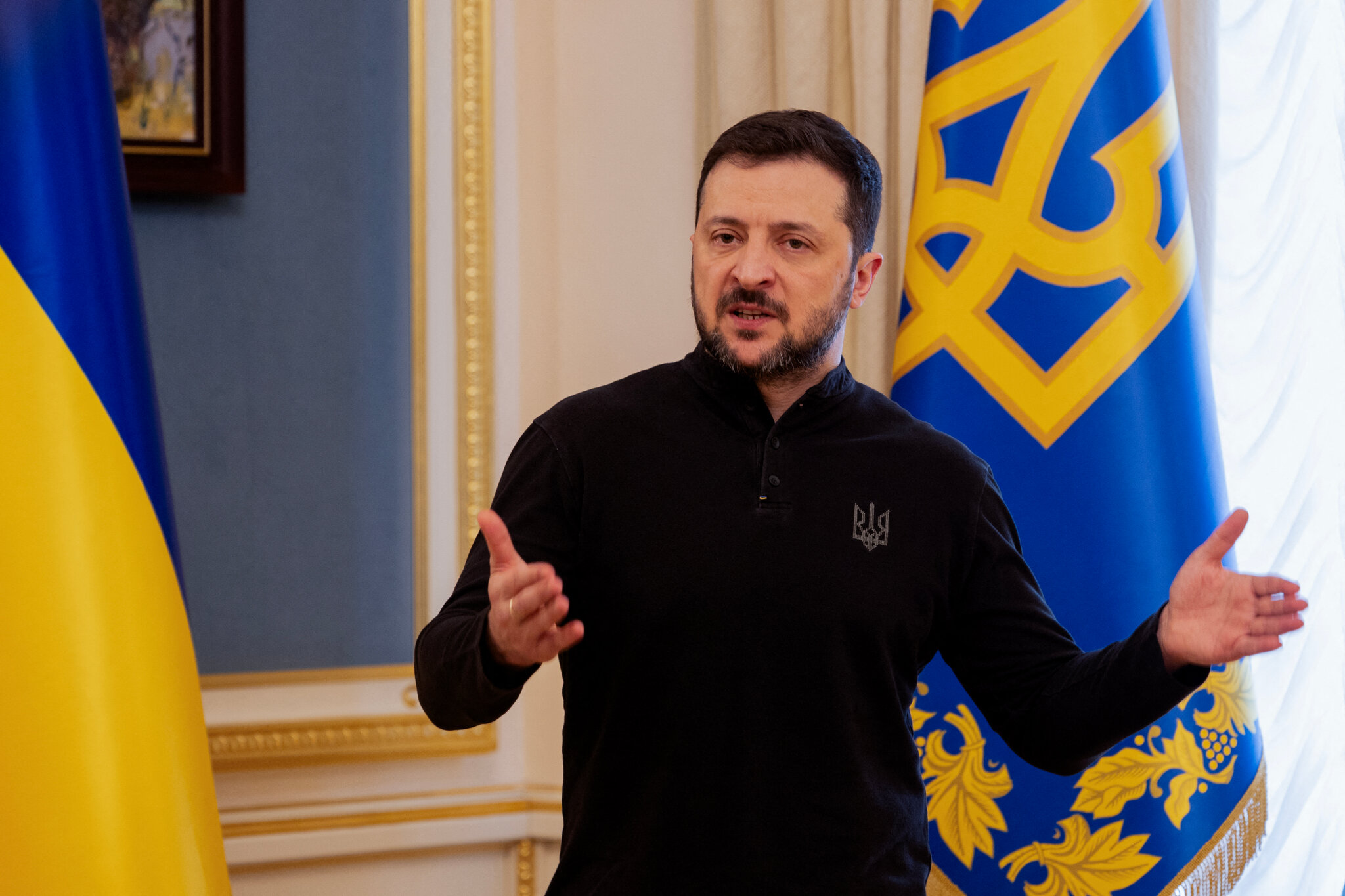
In addition to his consultations with European heads of state, President Zelenskyy also revealed that he had discussed the peace plan with U.S. Vice President JD Vance on Friday, following earlier talks with a "high-level delegation" from the United States. Furthermore, he indicated an expectation to speak directly with former President Donald Trump in the coming days, highlighting the multi-layered diplomatic engagement surrounding this American initiative. This direct communication with various U.S. political figures underscores the profound importance Ukraine places on American involvement in any peace process, given the indispensable military, financial, and political support provided by Washington since the war began. Zelenskyy articulated this reliance, stating, "We are fully aware that America’s strength and America’s support can truly bring peace closer, and we do not want to lose that."
Despite the U.S. proposal, the Kremlin’s reaction has been notably muted. Russian spokesperson Dmitry Peskov stated on Friday that the 28-point plan had not been discussed with Russia in detail, implying a lack of direct Russian involvement in its formulation or a strategic disinterest in its current form. This reaction, or lack thereof, adds another layer of complexity to the peace efforts, especially considering Zelenskyy’s firm assertion that "Russia has no real desire for peace — otherwise they would not have started this war." This sentiment reflects a deep-seated skepticism in Kyiv about Moscow’s intentions, viewing any Russian engagement as a tactic to solidify territorial gains rather than genuinely seek a just and lasting resolution.
The process of drafting this U.S. peace plan also appears to have unfolded with limited European input. European officials contacted by CBS News confirmed that while some governments were aware that the U.S. was working on a proposal, they were not involved in its drafting. As of Thursday, these officials stated that European governments had not even been briefed on the plan’s specific contents. This lack of initial consultation underscores a potential disconnect between Washington and its European allies, particularly on a matter of such critical regional security importance. It highlights the challenge of forging a unified Western approach to ending the conflict, especially when unilateral initiatives emerge from key partners.
President Zelenskyy’s public statements following his calls with European leaders emphasize Ukraine’s steadfast position. "We are working on the document prepared by the American side. This must be a plan that ensures a real and dignified peace," he declared on social media. He stressed the importance of close coordination, stating, "We are coordinating closely to make sure that the principled stances are taken into account," and noted that the leaders "coordinated the next steps and agreed that our teams will work together at the corresponding levels." This commitment to joint action with European partners is crucial for Ukraine, providing a collective voice to ensure that any proposed peace framework aligns with international law and the fundamental principles of sovereignty and territorial integrity.
Elaborating on his vision for peace, Zelenskyy reiterated principles he had previously outlined to the U.S. delegation. He stressed that from the war’s outset, Ukraine has maintained a simple, unequivocal position: "Ukraine needs peace. A real peace — one that will not be broken by a third invasion. A dignified peace — with terms that respect our independence, our sovereignty, and the dignity of the Ukrainian people. And it is exactly such terms that we must secure." This statement encapsulates Ukraine’s red lines: peace must be durable, preventing future aggression, and must unequivocally affirm its statehood and national pride. The concept of a "third invasion" refers to the need for security guarantees that would prevent a repeat of the 2014 annexation of Crimea and the 2022 full-scale invasion. Any peace deal that compromises these core tenets would be seen not as an end to the war, but merely a pause before renewed conflict. He concluded that Ukrainian teams would work on the American proposals "to ensure it’s all genuine," implying a rigorous review to ensure the plan truly serves Ukraine’s long-term interests.
The German government, following the phone call involving Zelenskyy, Macron, Starmer, and Merz, issued a statement that subtly but firmly articulated the European collective position. The four European leaders "welcomed the United States’ efforts to end the war in Ukraine," acknowledging the necessity of U.S. engagement. Crucially, however, the statement added that they "welcomed the commitment to Ukraine’s sovereignty and the willingness to provide Ukraine with robust security guarantees." This phrasing suggests a conditional welcome, emphasizing specific aspects that must be paramount in any peace initiative. It highlights European determination to ensure that while peace is pursued, it does not come at the expense of Ukraine’s fundamental right to exist as an independent, sovereign state with adequate protection against future threats.
Furthermore, the German statement specified that the leaders "pledged to continue pursuing the goal of safeguarding vital European and Ukrainian interests in the long term." This commitment is significant, underscoring the understanding that Ukraine’s security is inextricably linked to broader European stability. The statement then outlined critical preconditions for any understanding, including that the "Line of Contact serves as the starting point for any understanding and that the Ukrainian armed forces remain capable of effectively defending Ukraine’s sovereignty." This stipulation directly contradicts any proposal that would involve Ukraine ceding territory beyond the current front lines, reinforcing Kyiv’s position on territorial integrity. It also champions the ongoing need for Ukraine to maintain a robust defense capability, essential for deterrence and self-preservation.
Perhaps most importantly, the German statement concluded by asserting that any plan affecting the European Union, European countries, or NATO "requires the approval of European partners or a consensus among the allies." This declaration serves as a clear warning against any unilateral imposition of a peace plan that might undermine European security architecture or bypass the collective decision-making processes of the EU and NATO. It reinforces the principle that solutions to such a profound European security crisis must be developed in close consultation and agreement among all affected parties, not dictated by a single power, however influential. This collective European stance provides a crucial counterweight to any proposal that might unduly favor Russian demands or compromise Ukraine’s future.
In essence, while President Zelenskyy expresses gratitude for American efforts to mediate an end to the war, his robust diplomatic engagement with European leaders and his public pronouncements clearly indicate that Ukraine will not accept a peace deal that undermines its sovereignty, territorial integrity, or future security. The proposed U.S. plan, with its controversial stipulations regarding territorial concessions, military limitations, and NATO exclusion, has ignited a vital conversation among Ukraine and its Western partners. The coordination among Kyiv, Paris, London, and Berlin signals a united front committed to shaping any peace framework into one that truly delivers a "real and dignified peace" – a peace that respects Ukraine’s independence, safeguards its people’s dignity, and ensures it will not face a "third invasion." The path to peace remains fraught with challenges, requiring delicate diplomacy to reconcile varying interests and ensure that the ultimate outcome serves justice and lasting stability rather than rewarding aggression.