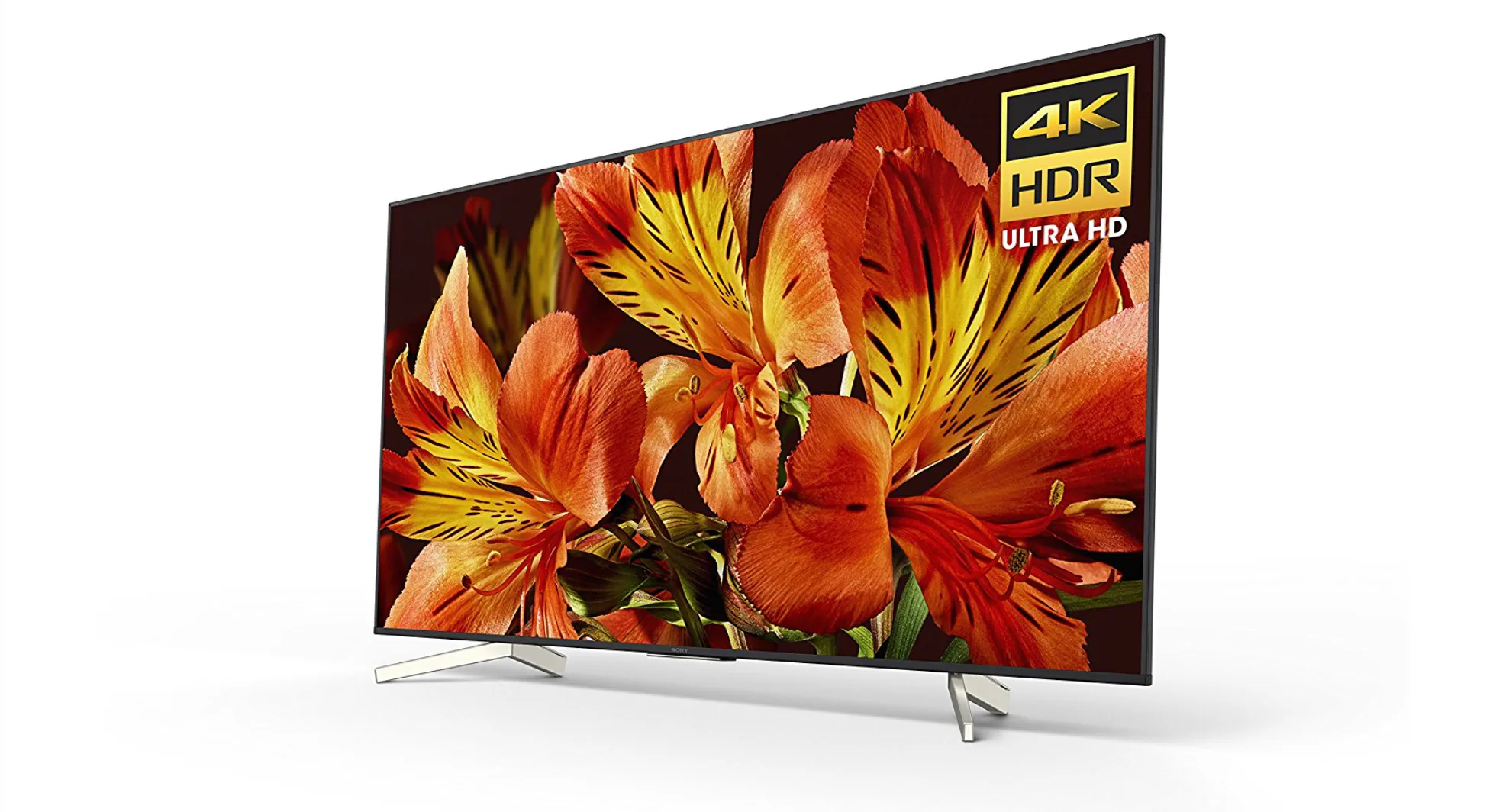
I Just Tested Panasonic’s Best TV Yet, and It’s Premium in Every Way But One
In the highly competitive arena of high-end televisions, only a select few models truly rise above the rest in terms of picture quality. It comes as little surprise that these top contenders are all OLEDs, a display technology renowned for its ability to control each individual pixel’s light output, delivering unparalleled contrast and perfect black levels. Over the past few years, OLED panels have also grown progressively brighter and more refined, pushing the boundaries of visual fidelity. What might genuinely surprise even seasoned TV enthusiasts is that Panasonic, a venerable name making an impressive return to the US market, now stands shoulder-to-shoulder with the usual suspects like Samsung, Sony, and LG, with its new flagship, the Z95B. This television is, quite simply, a masterpiece of engineering, save for one notable exception.
Following in the footsteps of last year’s Z95A, which marked Panasonic’s significant re-entry into the North American television landscape, the Z95B delivers a near-flawless performance that immediately captivates the viewer. Its visual prowess is characterized by perfect black levels that create a sense of infinite depth, alongside pristine detail and remarkably accurate color reproduction. The Z95B is noticeably brighter and more striking than its predecessor, a testament to Panasonic’s skillful integration of the same breakthrough RGB tandem panel technology found in LG’s stunning G5 OLED. This advanced panel allows for enhanced light emission and color volume, contributing to an overall more dynamic and impactful viewing experience. Beyond its visual brilliance, the Z95B also boasts an integrated sound system that is, without exaggeration, the best I’ve encountered from any television this year, offering an immersive audio experience that complements its stellar picture.
However, this otherwise premium package comes with a single, significant drawback: its smart interface. Panasonic has opted to use a version of Fire TV, which, despite its widespread adoption, feels awkwardly laid out, cluttered with Amazon advertisements, and even extends this budget feel to the remote control itself. For discerning buyers who are prepared to invest in a premium television, this integrated software experience can be a jarring contrast to the hardware’s excellence. Fortunately, for those who prioritize superior picture and sound and are willing to supplement their setup with a dedicated external streaming device, the Z95B emerges as one of the most compelling televisions available today, a true feast for both the eyes and the ears.
Screen on a Swivel: Thoughtful Design and Easy Setup
Unpacking and setting up the Z95B is, remarkably, a joyous and straightforward process, once you navigate the initial jigsaw puzzle of foam and cardboard packaging. The television’s industrial-strength swivel stand arrives as a single, robust piece, attaching to the display in mere seconds with just four small screws. This design choice not only ensures the stability of the 65-inch model I tested but also enhances accessibility, allowing for easy adjustment of viewing angles. Aesthetically, the Z95B immediately asserts its premium flagship status. Its remarkably thin bezels create an almost borderless viewing canvas, drawing you deeper into the content, while thoughtfully integrated fabric-wrapped acoustic accents subtly hint at the powerful audio system housed within.
The circular base of the stand is elegantly slim, allowing for the seamless placement of an external soundbar if desired. Yet, the Z95B truly shines as an all-in-one entertainment solution, thanks in no small part to its exceptional built-in audio. One minor consideration in its connectivity suite is the HDMI selection. The TV features just two ports with full HDMI 2.1 support, which is crucial for modern gaming features like Auto Low Latency Mode (ALLM) and Variable Refresh Rate (VRR) at refresh rates up to 144 Hz. Notably, one of these two HDMI 2.1 ports also serves as the eARC/ARC port, where a soundbar or external speaker system would typically connect. This means that users with multiple next-generation gaming consoles or those who plan to integrate a high-end soundbar might find themselves occasionally juggling inputs.
The built-in sound system is a powerhouse, supporting Dolby Atmos for a truly three-dimensional audio experience, though it foregoes DTS:X support. It employs an array of strategically placed speakers: up-firing units that bounce sound off the ceiling, side-firing speakers for wider immersion, a front speaker array for clear dialogue, and a backside woofer that provides surprising bass depth for an integrated solution. Panasonic further enhances the audio with its proprietary Sound Focus software, designed to provide more directional and precise sound delivery. For a television, the Z95B’s audio performance is genuinely impressive, characterized by remarkable depth and a surprisingly immersive soundstage that often negates the need for a separate soundbar. My only minor criticisms are that treble effects can occasionally exhibit a slight tinny quality at higher volumes, and the bass sometimes caused some console buzzing on my test setup.
Beyond its core video and audio capabilities, the Z95B offers a robust suite of features tailored for modern entertainment. Gamers will appreciate the inclusion of speedy input response, ensuring minimal lag between controller input and on-screen action. A convenient built-in game bar provides quick access to gaming-specific settings. Furthermore, it supports both AMD FreeSync Premium and Nvidia G-Sync, ensuring tear-free and smooth gameplay across a wide range of frame rates. For broader content consumption, the TV supports video streaming via Apple AirPlay and Google Cast, making it easy to share content from mobile devices. It also incorporates ATSC 3.0 for Nextgen channels from compatible TV antennas, offering access to advanced broadcast features. Crucially, the Z95B stands out by supporting all major HDR formats: HDR10, HDR10+, and Dolby Vision – a comprehensive compatibility that few, if any, other premium rivals can match, ensuring optimal playback for a vast library of HDR content.
Fire TV Is Not Fire: The Smart Interface Conundrum
For all the Z95B’s formidable hardware and performance attributes, its integrated Fire TV experience represents a significant drawback, especially when compared to the more polished and user-friendly interfaces offered by Google TV or Roku. The frustration begins with a busy and often cluttered homescreen that, despite its visual density, inexplicably limits the display of streaming apps to a mere six at a time, requiring a drop-down menu to access others. In today’s bifurcated streaming landscape, this limitation feels archaic and inconvenient. Similar to the Z95A, I experienced frustratingly slow loading times and occasional freezes with multiple apps when connected via Wi-Fi. While moving to an Ethernet connection resolved these issues, suggesting a potential network-specific quirk, it’s worth noting that I routinely test numerous televisions over Wi-Fi without encountering such persistent problems.
Full setup of the Z95B necessitates an Amazon account, or users can opt for a "Basic" homescreen mode, which, however, further restricts streaming options to just five core apps. The settings layout is far from intuitive, often requiring a frustrating hunt for specific options. For instance, some crucial settings, such as "One Touch Play," which might be needed to properly integrate a connected sound system, often need to be manually changed. This lack of seamless integration further reinforces the notion that the Z95B functions best as a standalone unit, with its superior internal audio system negating the need for external sound devices.
The accompanying remote control also falls short of premium expectations. It lacks backlighting, making it difficult to use in dimly lit rooms, and notably, it does not include a dedicated input key by default, forcing users to navigate through menus to switch sources. Two of its four quick keys are hardwired to Amazon services, reflecting the platform’s commercial bias. Even the integrated game bar, a useful feature for gamers, needs to be manually assigned to the single customizable quick key for easy access. While Alexa voice commands can be summoned from both the remote and the TV itself, privacy-conscious users will need to locate and physically toggle a mic switch hidden on the TV’s left flank to disable constant listening.
In fairness to Fire TV, it does offer a few redeeming qualities. Navigation, once you adapt to its quirks, is generally quick and responsive. The default screen savers are visually stunning, providing a pleasant aesthetic when the TV is idle. Additionally, the "Continue Watching" option is robust, allowing for seamless resumption of content across various platforms. For users who enjoy deep customization, Fire TV provides a plethora of settings and options to fine-tune the experience, though finding them can be a journey in itself.
That’s a Lotta Picture Modes! Tailoring the Visual Experience
Achieving an accurate and beautiful picture on the Z95B can be as simple or as involved as one desires, catering to both casual viewers and the most persnickety calibrators. All of the film-forward picture modes, and there are several, provide excellent results. Much like with the Z95A, I found myself consistently gravitating towards the "Professional 1" mode for standard HD/SDR broadcasts. This mode strikes an excellent balance, offering a brighter image than more strictly calibrated options like "Filmmaker" or "True Cinema," while still maintaining superb color accuracy and detail, making it ideal for a variety of viewing environments right out of the box. By default, "Professional 1" also conveniently disables ambient light sensors and motion smoothing, which are often undesirable for purists seeking the director’s intended vision.
The TV’s HDR/SDR Sync feature ensures that HDR10 and HDR10+ content will automatically match the chosen SDR mode (unless explicitly turned off), simplifying the setup process. The various HDR modes are remarkably consistent in their quality, but the preference for "Professional 1" for its default settings and brightness still holds. There is one intriguing nuance concerning HDR10 modes: they are all set to a backlight level of 70/100 by default, rather than the more common 100. Interestingly, setting the backlight to 100 during my testing introduced some clipping in contrast tests and led to over-brightening in certain scenes. Panasonic’s engineers confirmed that the TV is optimized to perform best at the 70 setting, ensuring that even the brightest highlights in 4K HDR Blu-rays are properly rendered without sacrificing detail or introducing artifacts. While users are welcome to crank the backlight for extra "pop," it’s generally unnecessary to achieve the full impact of HDR content.
Dolby Vision HDR operates under a different paradigm, with its backlight defaulting to 100, as is standard for the format. Even the default "Dolby Vision IQ" mode, which intelligently adjusts brightness based on ambient room light, looks fantastic. However, for the most accurate and cinematic experience, I preferred the slightly dimmer but more precise "Dark Mode" within Dolby Vision, which presented a virtually flawless image, requiring no further adjustments.
Stunning Payoff: A Theatrical Experience at Home
When it comes to raw performance, the Z95B handles like a dream, inviting you to simply sit back and revel in the ride. Throughout my testing, I repeatedly found myself referring to it as the "Avatar of TVs," a testament to its uncanny ability to imbue my favorite shows and movies with a thrilling, theme-park-like sense of spectacle. Before I even had a chance to adjust a single setting, I was utterly stopped in my tracks while passing by my wife’s Boba Fett catch-up session on Disney+. The flawless black levels of space, the glittering, pinprick stars, and the vibrant, beaded ruby cockpit lights shone with breathtaking brilliance, contrasting exquisitely against the pearlescent gleam of Din Djarin’s beskar helmet as he gracefully swooped through the cosmic depths.
Indeed, the vastness of space proves to be the ideal environment for a television boasting this level of staggering contrast. It’s not just the overtly dramatic moments that impress, but also the more subtly lit scenes that truly stand out. Guardians of the Galaxy Volume 2 provided a perfect showcase, brimming with searing highlights and colorful bursts of nebular glow. Yet, it was equally impressive in its rendering of nuanced moments, such as the crisp, defined sunrise illuminating the Guardians’ plumb-brown shirts, or the intricate shadow detail within the dark corridors of their small ship, all thanks to the Z95B’s masterful handling of color gradients and its ability to resolve the finest details in low-light areas.
This meticulous attention to detail extends to everything you watch, even seemingly mundane content like standard HD sitcoms such as The Office. I found myself oddly captivated by the subtle auburn highlights in Jim’s hair or the precise gleam of Andy’s tie – small details that, on a lesser TV, would simply blend into the background. This may not be the primary reason one invests in a premium television, but it is undeniably lovely to discover such joy in the little things. Skin tones are rendered with an almost touchably natural and clean appearance, enhanced by the TV’s knockout image processing. Even lower-quality video sources benefit significantly from the Z95B’s improved upscaling algorithms, making older content look surprisingly good.
Of course, this isn’t to say the Z95B lacks bombast; quite the opposite. When properly tasked, it gets as bright as anyone could reasonably need. Playing Mad Max: Fury Road on a 4K HDR Blu-ray disc with the Panasonic DP-UB9000 player elicited a perfect dichotomy between the dull, desaturated desert backdrop and the catastrophic lightning storm that rips across the screen. The storm’s jagged bolts split the sky with surgical precision, erupting with blistering shocks of orange and white, right down to the sputtering white-hot flare of an explosion.
A significant contributor to the Z95B’s visual potency is its excellent glare reduction. Like the LG G5, it manages to significantly diminish everything but direct reflections, while preserving its obsidian black backdrop. This results in a far more dramatic contrast in brighter rooms compared to rivals like Sony’s Bravia 8 II QD-OLED. While I believe the Bravia still holds a slight edge for overall image clarity, the difference is negligible. Only Samsung’s similar S95F QD-OLED potentially offers a more potent way to combat glare while simultaneously preserving contrast.
Given that they share the same cutting-edge panel, it’s unsurprising that the Z95B and LG G5 are remarkably similar in their performance. The Z95B, to my eye, felt slightly more natural in its color reproduction and lighting, and offered a marginally better experience for off-axis viewing, though this could be attributed to recency bias. To definitively pinpoint any real differences, a side-by-side comparison would be necessary. Over two weeks of rigorous testing, the only noticeable flaws I observed in the Z95B were some minor color banding in Dolby Vision streaming content and occasional, subtle image stuttering. (It’s worth noting that I reviewed the G5 after LG had addressed initial complaints regarding HDR color banding in their model.)
Ultimately, all four premium OLEDs from Panasonic, LG, Samsung, and Sony deliver knockout performance, each with its own subtle specialty. I find myself leaning towards the G5 and Z95B for their exceptional balance of fiery brightness with truly jet-black backdrops. The LG G5 does hold a slight edge with its four HDMI 2.1 ports and a more refined smart TV experience. However, the Panasonic Z95B is undeniably a formidable contender. If you are seeking an all-in-one screen that elevates every piece of content to showcase levels, and you are prepared to navigate its smart interface or bypass it entirely with an external device, then the Z95B is unequivocally the television to bring home.