What Kilian Jornet Packs to Climb Every 14er in the Mountain West in 31 days
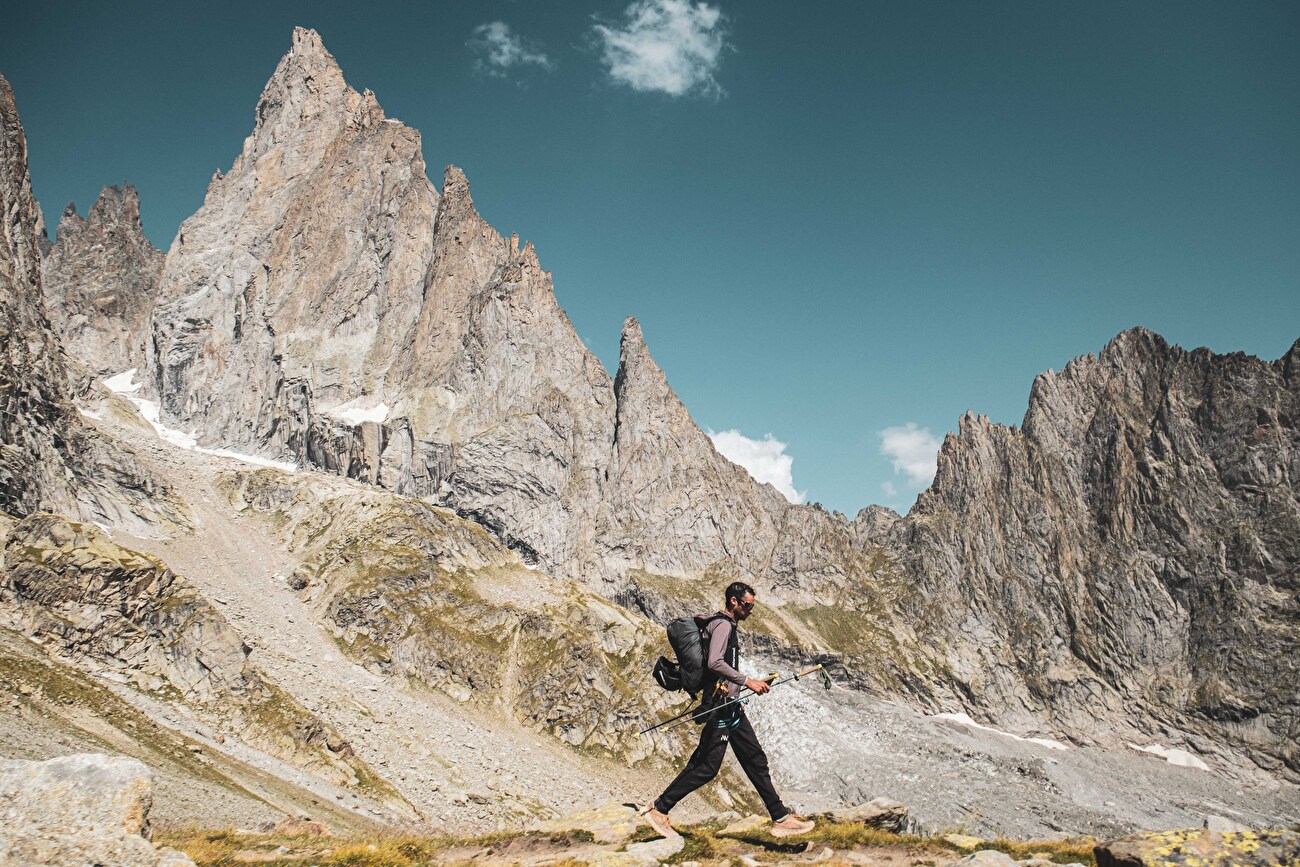
Kilian Jornet, often hailed as the world’s most exceptional trail runner and mountain climber, recently completed a feat that pushes the boundaries of human endurance and logistics. This past fall, the Spanish skyrunner embarked on his "States of Elevation" project, a self-powered odyssey that connected all 72 peaks exceeding 14,000 feet (known as 14ers) across the vast and challenging Mountain West. Described by The New York Times as "objectively absurd," this mission saw Jornet traverse 629 miles on foot, cycle an astonishing 2,568 miles, and accumulate a staggering 403,691 feet of elevation gain – all within an unbelievable 31 days. To put this into perspective, he averaged over 20 miles of running/climbing and 80 miles of cycling per day, while ascending the height of Mount Everest more than 13 times. Such an endeavor demands not only unparalleled physical and mental fortitude but also a meticulously selected array of gear.
After returning to his home in Norway, where he reunited with his wife, world-champion skyrunner Emelie Forsberg, and their three children, Jornet reflected on the expedition. Forsberg herself is deeply involved in Nnormal, the innovative gear company Jornet co-founded with shoe manufacturer Camper. The brand’s name, a fusion of "Norway" and "Mallorca" (where the products are designed and tested), reflects its roots. Jornet’s philosophy towards gear is pragmatic: "I try to have a minimalist approach, but as humans, we’re not made to go into extreme environments. If I go naked, I would probably die pretty soon, or if I go running, my feet will get pretty bruised if I’m not wearing shoes." This blend of minimalism and practicality defines his essential pack.
The Foundation: Running Shoes Built for Eternity
At the heart of Jornet’s gear strategy lies Nnormal, a brand committed to revolutionizing outdoor gear manufacturing through sustainable practices. Jornet articulated the company’s core challenge: "Probably the most important system is the most complicated. It’s very costly to be constantly rotating things … how can we have [a company] that’s not based on overconsumption?" The answer, they believe, lies in creating extraordinarily durable running shoes designed to last two to four years, significantly reducing waste compared to the average runner who discards shoes after 300-500 miles.
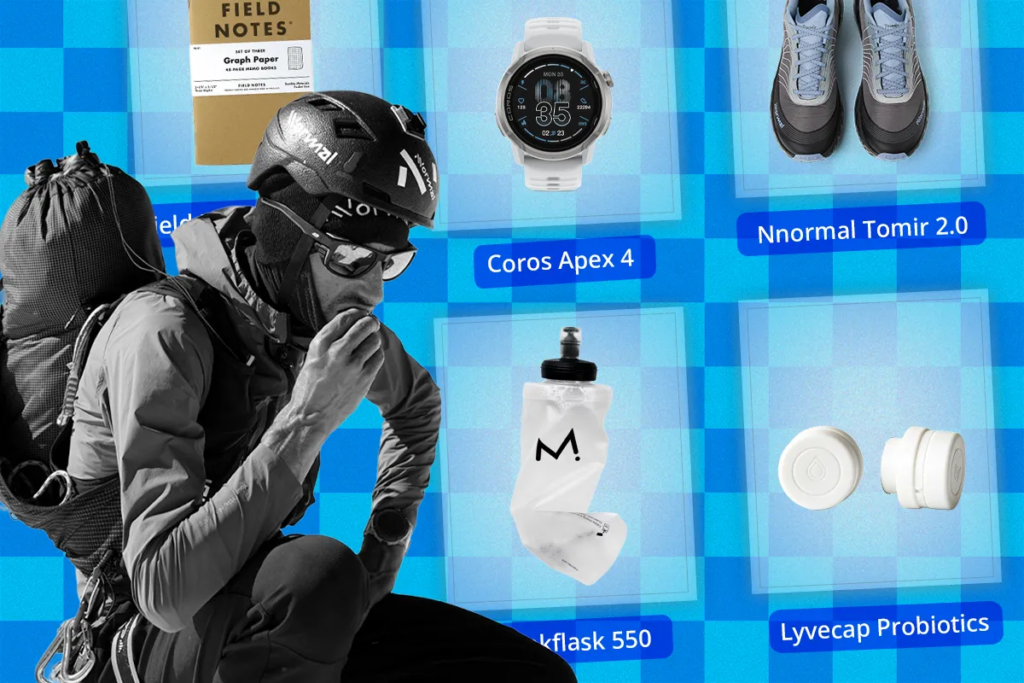
For the thousands of miles covered during "States of Elevation," Jornet relied on just two pairs of Nnormal shoes, a testament to their longevity and resilience. While the article highlights the waterproof Tomir Gore-Tex model, Jornet primarily used the Kjerag. Both models exemplify Nnormal’s design principles. The Kjerag features hardy yet lightweight Vibram lugs and an outsole, providing exceptional grip and durability across varied terrains, from rocky scree to muddy trails. Its abrasion-resistant upper ensures the shoe withstands constant abuse, while asymmetrical lacing allows for fine-tuned pressure relief, crucial for preventing discomfort and injury during ultra-long efforts. A specialized trail-running midsole offers responsive cushioning and stability, critical for maintaining efficiency and protecting the feet over hundreds of miles of diverse mountain paths. Complementing his footwear, Jornet also carries an Nnormal trail running jacket ($220) – a lightweight, packable, and highly protective layer essential for unpredictable mountain weather. The jacket’s robust construction yet minimal weight aligns perfectly with his minimalist approach, ensuring he is prepared for sudden downpours or chilling winds without carrying unnecessary bulk.
The Navigator: A Smartwatch Beyond Expectation
In the vast, often trackless expanses of the Mountain West, reliable navigation is paramount. While many fitness trackers rely on smartphone connectivity for GPS, Jornet dismisses this approach for his extreme endeavors: "The phone’s battery will die instantly." Instead, his lifeline for communication, data collection, and safety is the Coros Apex 4 ($429). This lightweight mountain watch is a marvel of endurance technology.
The Coros Apex 4 boasts an impressive 65 hours of battery life with full GPS tracking activated, more than sufficient for Jornet’s multi-day mountain ascents and descents without needing a recharge. Its dual-frequency GPS offers superior accuracy, crucial for navigating treacherous alpine environments where a few meters of error could lead to significant problems or even danger, such as falling into a crevasse. Beyond basic tracking, the watch incorporates a suite of climbing-specific features, including vertical algorithms for ascents, a barometric altimeter for precise elevation data, and real-time storm alerts. Jornet utilizes this data not out of obsession, but for a practical purpose: "I’m not obsessed with data, but it helps me to analyze every project and every race, and to stay safe." This analytical approach allows him to monitor his physiological responses, assess environmental conditions, and make informed decisions that are vital for both performance optimization and personal safety in remote, high-stakes environments. The watch acts as a portable command center, keeping him connected to essential information and, indirectly, to his support team.
The Fuel: Optimizing Performance from Within
Sustaining an average daily calorie burn of approximately 9,000 calories, as Jornet did during "States of Elevation," presents an immense nutritional challenge. Carrying enough traditional food – multiple steaks or chickens, as he wryly noted – would be impractical due to weight. Furthermore, relying solely on gels or conventional carbohydrates can lead to digestive issues and an inability to consume sufficient calories. His solution involves a high-calorie liquid supplement strategy, facilitated by his Maurten Drinkflask 550 ($22). Into this soft flask, he adds "a couple glugs of olive oil, butter, or coconut oil" to his specialized Maurten drink mixes. These fat sources significantly boost the caloric density of his hydration, allowing him to consume a vast amount of energy in a readily digestible and transportable form, preventing the "hitting the wall" phenomenon common in ultra-endurance events.
Beyond immediate fuel, Jornet places significant emphasis on his long-term internal health, particularly his gut microbiome. For five years, he has meticulously tracked data on his gut bacteria, collaborating with universities and major research institutions to understand how his microbiota adapts and changes, especially at altitude. He even humorously admits to carrying "bags of poop" for analysis during the "States of Elevation" project, highlighting his dedication to scientific understanding. His research has shown "different pieces growing and dying," demonstrating the dynamic nature of his internal ecosystem. To nurture this system, Jornet supplements with lactobacillus, a probiotic strain known to enhance sports performance by increasing endurance and reducing muscle soreness. While lactobacillus is found in many unpasteurized fermented foods like yogurt and kimchi, Jornet relies on Lyvecap Probiotic Supplements ($150) when traveling or in remote areas.
Interestingly, Jornet’s robust gut health has led to a controversial personal practice: he claims he never uses filtered water in the backcountry. "If you have a good immune system and good bacteria in my stomach, I have never had problems," he stated. However, he quickly adds, "This is not a practice that I can endorse for everyone," underscoring that his physiological adaptations and extensive scientific tracking enable such a personal choice, which could be risky for others. This highlights the unique insights Jornet gains from his data-driven approach, allowing him to push boundaries even in areas conventionally deemed unsafe.
The Analog Anchor: A Simple Notebook
Amidst all the high-tech gear, GPS watches, and scientific tracking, Jornet maintains a refreshingly analog habit: he always carries a paper notebook. He isn’t particular about the brand, often just grabbing "whatever notebook is there" from a local bookstore. This simple Field Notes Original Kraft (3-Pack) or its equivalent serves multiple purposes, grounding him in the present and allowing for creative expression and reflection.
As he traverses the awe-inspiring landscapes of the Mountain West, Jornet uses his notebook to sketch maps and draw the contours of the country, creating a personal, tactile record of his journey. He jots down "fun encounters" with wildlife or fellow adventurers, capturing the human element of his solitary quest. The notebook also serves as a practical tool for gear evaluation, allowing him to note performance observations on the fly, contributing to the iterative design process for Nnormal. Crucially, it’s a space for ideation – where he can "jot down ideas for future projects to ski, run, or climb." In an era dominated by digital screens, Jornet’s reliance on a physical notebook underscores the importance of slow, deliberate thought, personal connection to his environment, and the timeless act of recording one’s experiences, separate from the data streams of his electronic devices. It’s a space for the subjective experience, the human story behind the numbers.
Kilian Jornet’s "States of Elevation" project is a monumental achievement, a testament to what is possible when human potential meets meticulously chosen, purpose-built gear and a profound understanding of one’s own physiology. His gear choices reflect a philosophy of sustainable functionality, where every item serves a critical role, built to endure the extreme demands he places upon them. From the durable Nnormal shoes and the life-saving Coros watch to his scientifically optimized nutrition and the simple, reflective notebook, each component in Jornet’s pack contributes to his ability to not just survive, but thrive, in the world’s most challenging environments.