A Chinese humanoid robot walked 66 miles in 3 days, right into the Guinness World Records.
In a groundbreaking feat that underscores the rapid advancements in robotics and artificial intelligence, the AgiBot A2, a cutting-edge humanoid robot developed in China, has officially entered the Guinness World Records for completing the longest reported distance ever walked by a bipedal machine. The journey, a continuous 66-mile trek spanning three days, represents a monumental leap forward in robotic endurance, navigation, and autonomy, pushing the boundaries of what humanoid machines are capable of achieving outside controlled environments.
The remarkable journey commenced on the evening of November 10, 2025, from the bustling eastern Chinese city of Suzhou. Over the subsequent 72 hours, the AgiBot A2, standing at an impressive five feet and six inches tall, meticulously navigated a diverse range of urban and intercity landscapes. Its route encompassed both expansive highways and intricate city streets, a challenge that demanded sophisticated real-time decision-making, balance, and obstacle avoidance capabilities. The robot successfully concluded its historic expedition on November 13, arriving triumphantly at Shanghai’s iconic waterfront Bund area, a symbolic destination that highlights the fusion of tradition and futuristic innovation in China.
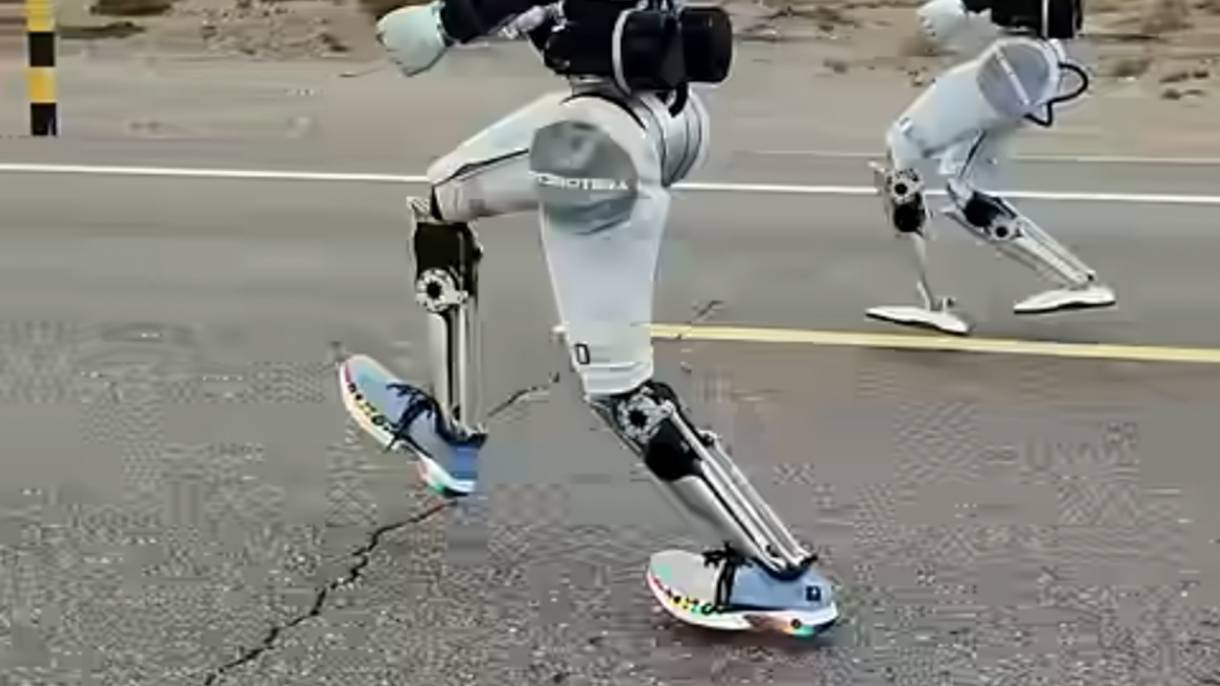
Shanghai-based robot manufacturer AgiBot, the visionary company behind the A2, proudly announced that its two-legged ambler demonstrated exceptional resilience and adaptability throughout its continuous 66-mile odyssey. The company emphasized that the robot not only traversed "varied surfaces" – a critical test of its locomotion systems – but also meticulously adhered to prevailing "traffic regulations," showcasing an unprecedented level of integration into human-centric environments. This certification by Guinness World Records on Thursday, November 20, 2025, officially recognizes the AgiBot A2’s journey as the first accomplishment of its kind, setting a new global benchmark for humanoid robot mobility and endurance.
Visual documentation released by AgiBot provides compelling evidence of the A2’s impressive performance. Video clips published by the company depict the sleek, silver-and-black robot confidently striding along a road, sharing the thoroughfare with human cyclists and motor scooters, seamlessly blending into the urban flow. The footage culminates with the A2 picking up its pace, marching purposefully down the historic Bund promenade, with the breathtaking Shanghai skyline serving as a futuristic backdrop. These visuals not only confirm the robot’s physical prowess but also hint at a future where such advanced machines are commonplace in our daily lives.
This extraordinary achievement by the AgiBot A2 is not an isolated incident but rather a potent symbol of a larger, global phenomenon: the relentless and massive investment by the world’s leading technology firms into the realm of physical artificial intelligence. Industry analysts and financial institutions are increasingly bullish on the future of humanoid robotics. Morgan Stanley, for instance, has issued a bold prediction, forecasting that the world could witness the deployment of over a billion humanoid robots by the year 2050. This staggering projection underscores the profound societal and economic transformations that are anticipated as these intelligent machines become increasingly sophisticated and ubiquitous.
China, in particular, has positioned itself at the forefront of this technological revolution. The Chinese government has actively and aggressively encouraged domestic firms to accelerate the development of humanoid robots, articulating a clear strategic ambition to lead the global robotics industry. This national imperative is driven by a desire for technological sovereignty, economic growth, and the potential to address various societal challenges, from labor shortages to advanced manufacturing. The AgiBot A2’s record-breaking walk is a direct manifestation of this concerted national effort.
To further cultivate innovation and foster a competitive ecosystem, Beijing hosted the world’s first-ever humanoid robot games in August of the current year. This landmark event brought together over 500 "athletes" – advanced humanoid robots – who vied for supremacy in a diverse array of disciplines. These competitions ranged from complex tasks like basketball, requiring intricate coordination and strategic decision-making, to more practical challenges such as competitive cleaning, showcasing robots’ utility in domestic and industrial settings. Such events serve not only as a platform for demonstrating current capabilities but also as a powerful incentive for further research and development.
The AgiBot A2 itself is designed with specific applications in mind. AgiBot states that its record-setting robot is primarily engineered for sophisticated customer service roles. To this end, the A2 is equipped with an advanced chat function, enabling natural language interaction, and highly sensitive lip-reading capabilities, allowing it to understand human communication even in noisy environments or when verbal cues are indistinct. These features position the A2 as a potential game-changer in industries ranging from retail and hospitality to healthcare, where efficient and empathetic human-robot interaction is paramount.
The global race in robotics extends beyond China’s borders. Earlier this year, "CBS Mornings" provided an insightful look into the efforts of engineers at the prestigious Massachusetts Institute of Technology (MIT) who are diligently working to ensure America remains a leader in the fiercely competitive robotics landscape. Professor Daniela Rus, who heads MIT’s renowned Computer Science and Artificial Intelligence Lab (CSAIL), articulated a compelling vision for the future of AI and robotics. She eloquently stated, "I like to think about AI and robots as giving people superpowers." She elaborated, "With AI, we get cognitive superpowers… On the physical side, we can use machines to extend our reach, to refine our precision, to amplify our strengths." This perspective highlights the transformative potential of robotics to augment human capabilities rather than merely replace them.
The widespread integration of AI-powered robots into daily life is rapidly approaching. "CBS Mornings" referenced research and advisory firm Gartner’s projections, which estimate that by 2030, a staggering 80% of Americans will interact daily in some capacity with autonomous, AI-powered robots. These interactions could range from automated delivery services and robotic assistants in homes and workplaces to advanced medical robots and sophisticated industrial machines. This imminent future underscores the critical importance of continued research, ethical considerations, and policy development to navigate the profound societal changes that these technologies will bring.
The AgiBot A2’s record-setting walk from Suzhou to Shanghai is more than just an impressive technical achievement; it is a powerful harbinger of a future where humanoid robots are no longer confined to laboratories or factory floors. It demonstrates that these machines are rapidly acquiring the endurance, navigational intelligence, and environmental adaptability required to operate autonomously in complex, real-world scenarios. This milestone paves the way for a future where humanoid robots could undertake roles in logistics, exploration of hazardous environments, disaster response, personal assistance, and a myriad of other applications demanding sustained physical presence and intelligent interaction. As the capabilities of these bipedal machines continue to evolve at an astonishing pace, the AgiBot A2’s journey will undoubtedly be remembered as a pivotal moment in the ongoing story of humanity’s quest to build intelligent, autonomous companions and tools.