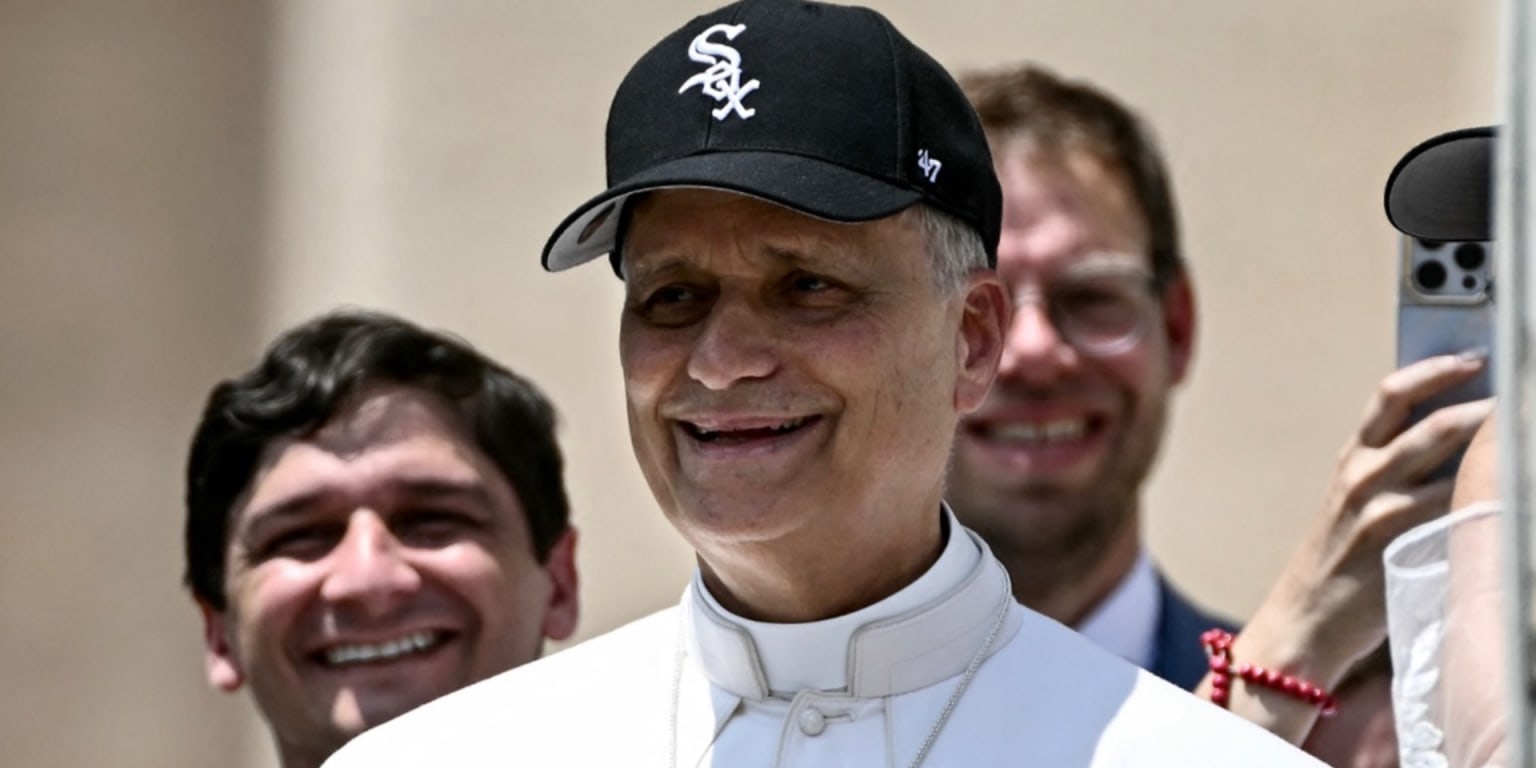
How did you get this through security?" Pope Leo asks CBS News’ Chris Livesay of White Sox baseball bat gift.
The first-ever American pope’s inaugural journey beyond the Vatican City walls commenced with an indelible, quintessentially American moment that resonated deeply with the pontiff’s Chicago roots. Aboard the papal flight, Pope Leo XIV, known for his approachable demeanor and sharp wit, was presented with a cherished piece of baseball history: a Louisville Slugger baseball bat once wielded by the legendary Chicago White Sox second baseman, Nellie Fox. This unique exchange, captured by the surrounding press corps, quickly became a heartwarming highlight of a trip otherwise steeped in high-stakes diplomacy and spiritual mission.
CBS News correspondent Chris Livesay found himself among the privileged group of 81 journalists accompanying the Holy Father on his unannounced stroll through the aircraft cabin. This tradition, where the pontiff personally greets members of the Vatican press corps, often leads to informal interactions and the exchange of small tokens of respect or personal significance. However, Livesay’s offering transcended a mere courtesy. He carried a deeply personal gift for the Chicago native pontiff: a bat that not only connected to the Pope’s beloved White Sox but also symbolized a shared era and passion. Nellie Fox, a Hall of Fame second baseman, was a true icon whose illustrious career coincided precisely with Pope Leo’s formative years in the Windy City, making the bat an artifact imbued with personal nostalgia for the Holy Father.
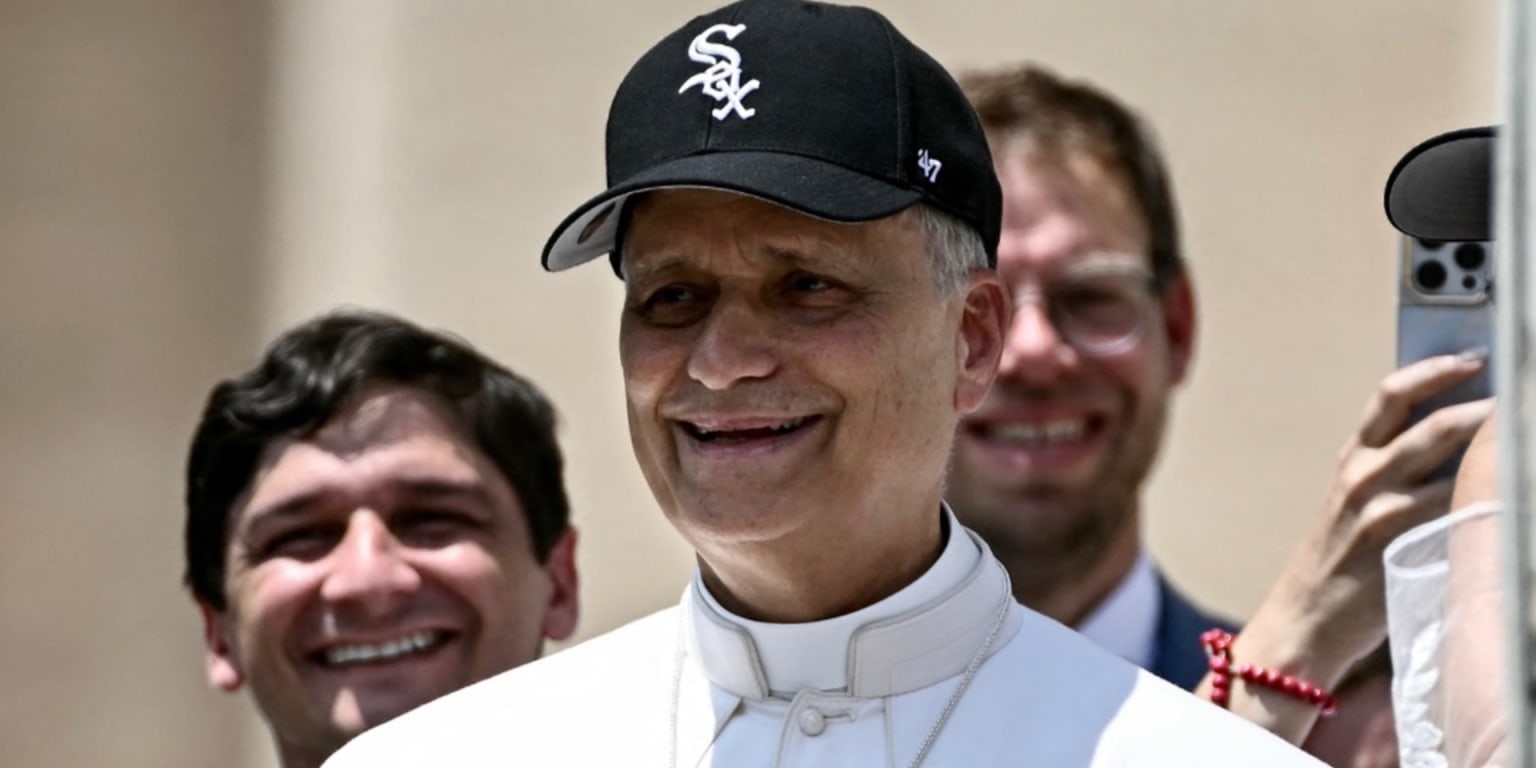
The bat itself was a family heirloom, carefully preserved and passed down through generations, eventually landing in Livesay’s possession via his cousin, Jim Hayes – distinct from the well-known Cardinals announcer. As Livesay carefully presented the bat, its polished wood gleaming under the cabin lights, he drew the Pope’s attention to the distinctive initials and number etched into its end. It was at this precise moment, as the pontiff’s gaze fell upon the familiar markings, that his eyes, usually conveying a mix of solemnity and spiritual insight, visibly lit up with a flash of childlike wonder and recognition. A broad, genuine smile spread across his face, a rare sight amidst the usual gravity of his public appearances.
"How did you get this through security?" Pope Leo XIV quipped, his voice laced with good-natured humor, prompting a ripple of laughter and murmurs of delight from the surrounding journalists. The question, delivered with a twinkle in his eye, perfectly encapsulated the audacious nature of bringing a full-sized baseball bat onto a commercial flight, even a chartered one carrying the leader of the Catholic Church. It was a moment of pure, unscripted humanity, showcasing the Pope’s down-to-earth personality and his enduring connection to his American past and, specifically, his cherished Chicago White Sox. He then warmly thanked Livesay for the thoughtful and exceptionally personal gift, a gesture that clearly moved the correspondent.
The scene underscored the unique blend of formality and personal connection that often characterizes papal interactions. While other American journalists aboard the flight marked the Thanksgiving journey by offering the pontiff more conventional, yet equally appreciated, treats like pumpkin and pecan pies, Livesay’s bat stood out, a testament to the power of shared cultural touchstones.
Earlier in the flight, Pope Leo XIV had addressed the press corps, extending a heartfelt "To the Americans: Happy Thanksgiving!" before delving into more profound topics. He emphasized the critical importance of truthful and ethical journalism, a message particularly resonant in an era of widespread misinformation. He also articulated the overarching purpose of his multi-stop journey to Turkey and Lebanon, stressing themes of "unity" and the imperative of promoting peace and understanding across deep-seated religious divides. This message, delivered hours before landing, served as a poignant backdrop to both the lighthearted bat exchange and the more serious diplomatic engagements that lay ahead.
Upon the papal plane’s arrival in Ankara, the capital of Turkey, the atmosphere swiftly transitioned from the informal camaraderie of the flight to one of solemn diplomacy and ceremonial protocol. Following an official welcome at Esenboga International Airport, the pontiff’s motorcade embarked on a 27-mile journey to the iconic Ataturk Mausoleum. Here, Pope Leo XIV participated in a wreath-laying ceremony, a gesture of profound respect for Mustafa Kemal Ataturk, the revered founder of the modern, secular Turkish Republic. He then proceeded to sign the prestigious Book of Honor inside the Misak-ı Millî Tower, a symbolic act affirming diplomatic relations and mutual respect. The visit concluded with a brief, contemplative tour of the museum dedicated to Ataturk, further underscoring the Pope’s acknowledgment of Turkey’s unique historical and political identity.
The Ankara leg of Pope Leo’s visit was intentionally brief, serving as a formal prelude to the more spiritually charged segment of his journey. By Thursday evening, the pontiff was scheduled to depart for Istanbul, a city steeped in millennia of history, where the true spiritual heart of the papal visit was set to unfold over the ensuing days. Istanbul, once Constantinople, the capital of the Byzantine Empire and a pivotal center of early Christianity, holds immense significance for interfaith dialogue and historical reflection. Key events in Istanbul were planned to coincide with the anniversary of the Council of Nicaea, a monumental gathering of bishops convened by the Roman Emperor Constantine I in 325 A.D. This historic council played a crucial role in shaping fundamental Christian doctrine, including, notably, setting the definitive date for the annual observance of Easter. The Pope’s presence in Istanbul was expected to be a powerful affirmation of Christian heritage and a call for continued dialogue between Christianity and Islam in a region where their histories are inextricably intertwined.
From the historical grandeur of Turkey, Pope Leo XIV’s pilgrimage was slated to continue to Lebanon, a nation currently grappling with profound political instability and a severe economic crisis. The security landscape in Lebanon was particularly fraught, heightened by the recent assassination of a top Hezbollah commander in the capital, Beirut, just a week prior to the Pope’s scheduled arrival. This targeted strike by Israel underscored the precarious security concerns on the ground and added an undeniable layer of tension to the upcoming papal visit.
In Lebanon, Pope Leo was anticipated to pivot his focus towards expressing unwavering solidarity with the nation’s beleaguered Christian communities, who have faced immense challenges amidst the ongoing turmoil. His visit was also expected to serve as a powerful platform to reinforce urgent calls for peace and foster coexistence across the diverse religious lines that define Lebanese society. The Pope’s message would undoubtedly emphasize the vital importance of dialogue, mutual respect, and the shared humanity that transcends sectarian divisions, offering a beacon of hope in a country desperately in need of stability and reconciliation. The journey, which began with a lighthearted joke about a baseball bat, would culminate in a profound spiritual and diplomatic mission aimed at bridging divides and promoting peace in some of the world’s most complex and challenging regions.