International Judo Federation drops ban on Russian athletes competing under their national flag.
The International Judo Federation (IJF) has announced a significant reversal in its policy regarding Russian athletes, deciding to allow them to compete under their national flag, complete with anthems and symbols, in its competitions once again. This decision, communicated on Thursday, November 27, 2025, marks a stark departure from the years-long mandate that forced Russian judokas to participate under a neutral banner, a consequence of the ongoing conflict in Ukraine. The change is set to take effect immediately, with Russian athletes competing under their national colors at the 2025 Abu Dhabi Grand Slam, scheduled from November 28 to 30.
The IJF executive committee, through a vote, chose to "reinstate full national representation" for Russian athletes. In an official statement, the federation justified its decision by asserting that "Athletes have no responsibility for the decisions of governments or other national institutions, and it is our duty to protect the sport and our athletes." This statement underscores a core principle that the IJF claims to uphold: the separation of sport from political conflicts. However, when contacted by CBS News for further clarification on this pivotal policy shift, the IJF declined to offer any additional explanation, leaving many questions unanswered about the motivations behind such a controversial move.
The backdrop to this decision is the full-scale invasion of Ukraine, ordered by Russian President Vladimir Putin on February 24, 2022. This escalation of what Putin refers to as a "special military operation" led to widespread condemnation and a concerted effort by numerous international sports federations to sanction Russia. For nearly three years, Russian athletes across various disciplines faced bans from international competitions or were only permitted to compete as "neutral athletes," stripped of their national flag, anthem, and other state symbols. This measure was intended to isolate Russia on the global stage and pressure its government to cease hostilities in Ukraine. The IJF itself had been among the first to implement such restrictions, reflecting the broad consensus in the sporting world against Russia’s actions.
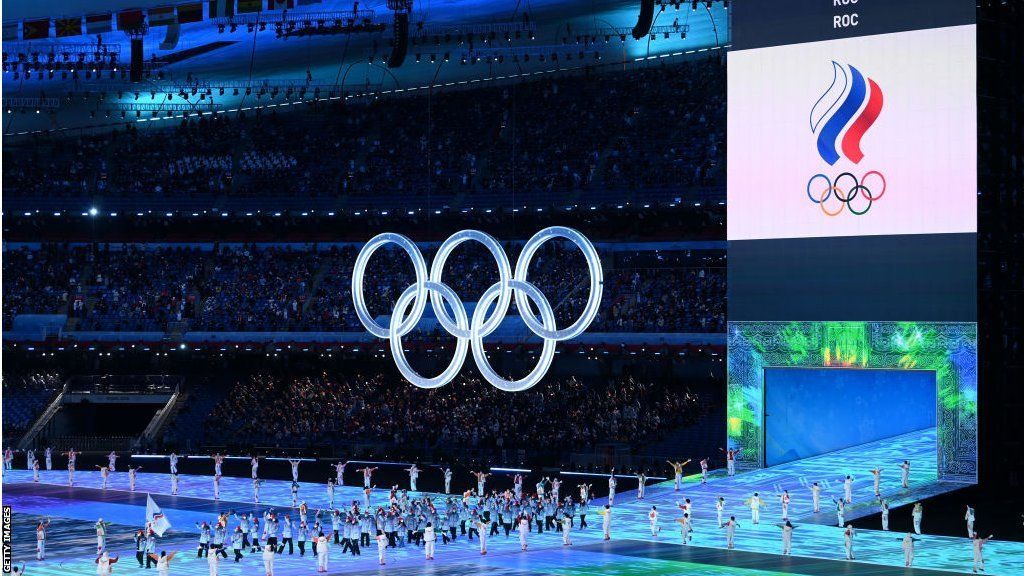
The concept of "neutral athletes" was a contentious compromise, aimed at penalizing the state without entirely punishing individual athletes. Under this status, competitors were typically barred from displaying national symbols, wearing national team kits, or having their national anthems played if they won. At the 2024 Paris Olympic Games, for instance, Russian athletes, including Mirra Andreeva and Diana Shnaider who earned silver medals in women’s doubles tennis, competed as "Individual Neutral Athletes," a testament to the prevailing international sentiment. The International Olympic Committee (IOC) itself has maintained a cautious stance, having suspended the Russian Olympic Committee (ROC) since 2023 for incorporating regional sports bodies in occupied eastern Ukraine, an act deemed a violation of the Olympic Charter. The IOC has indicated that for the upcoming Milan-Cortina 2026 Winter Games, Russians will still be allowed to compete only as individual, neutral athletes, not as Team Russia, highlighting a clear divergence from the IJF’s new policy.
The Russian judo federation, through its president Sergey Soloveychik, wasted no time in lauding the IJF’s decision, calling it "historic," "long-awaited, fair and courageous." This reaction from Russia underscores the significance of the reinstatement, not just for the athletes but also for the national pride and international standing that sports often confer. It provides a measure of legitimacy that Russia has actively sought to regain amidst ongoing international isolation.
Notably, the IJF’s decision to reinstate Russian athletes under their national flag follows a similar move for Belarusian athletes. Belarus, a close ally of Moscow, has played a crucial role in the Ukraine conflict, allowing its territory to be used as a staging ground for the invasion and later permitting the deployment of Russian tactical nuclear missiles on its soil. The prior reinstatement of Belarusian athletes under full national representation perhaps foreshadowed the IJF’s current decision regarding Russia, signaling a broader policy direction within the federation.
In its statement, the IJF further elaborated that it now considers it "appropriate to allow the participation of Russian athletes under equal conditions," reiterating its belief that the sport "cannot allow itself to become a platform for geopolitical agendas." This argument, while appealing in its ideal of separating sport from politics, has often been a point of contention. Critics argue that sports, particularly at the international level, are inherently intertwined with national identity and political narratives, making complete neutrality an elusive and often hypocritical goal, especially in the context of armed conflict. The IJF’s stance suggests a priority on universal participation and the integrity of the competition itself, rather than using sports as a tool for political pressure.
The federation also highlighted Russia’s historical prominence in judo, stating that "Historically, Russia has been a leading nation in world judo, and their full return is expected to enrich competition at all levels while upholding the IJF’s principles of fairness, inclusivity and respect." Russia indeed boasts a strong tradition in judo, with numerous Olympic and world champions. The absence of these athletes, arguably, diminishes the competitive landscape of the sport. By bringing Russia back into the fold under its national banner, the IJF likely hopes to restore a level of competitive intensity and prestige to its events.
The decision carries significant symbolic weight, especially given Russian President Vladimir Putin’s well-known affinity for judo. A black belt himself, Putin has been a keen judoka for decades, even co-authoring a book on the sport. He famously attended judo events at the 2012 London Olympics, highlighting his personal connection to the discipline. Ironically, soon after Russia launched its 2022 invasion of Ukraine, the IJF was among the first international sports bodies to act decisively against Putin, stripping him of his honorary president status and his status as an ambassador for the federation, citing "the ongoing war conflict in Ukraine." At that time, Sergey Soloveychik, then president of the European Judo Union, also resigned from his post. The current reversal, therefore, presents a stark contrast to the initial strong condemnations and sanctions, raising questions about consistency and the evolution of the IJF’s ethical stance.
This move by the IJF is expected to draw considerable criticism from Ukraine and its allies, who will likely view it as a premature legitimization of Russia’s presence on the international stage, potentially undermining broader efforts to isolate Moscow. Human rights organizations and some Western governments may also express concern, arguing that allowing Russian athletes to compete under their national flag sends a message that aggression can be overlooked in the pursuit of sporting "normalcy." It places the IJF in a unique position among major international sports federations, many of whom continue to maintain strict sanctions or neutral athlete policies against Russia.
The IJF’s decision could also set a precedent or at least spark renewed debate within other international sports federations currently grappling with similar dilemmas. While the IOC has firmly held its ground on neutral athletes for the Olympics, the IJF’s move might embolden other federations facing pressure from various stakeholders, including financial considerations or the desire for full competitive rosters. The complexity of balancing political principles with the ideals of universal sporting participation remains a significant challenge, and the IJF’s choice represents a bold, albeit controversial, step in navigating this intricate landscape. As the Abu Dhabi Grand Slam approaches, the world of judo, and indeed international sports, will be watching closely to see the immediate and long-term implications of this historic reversal.