12 young girls kidnapped in Nigeria freed by abductors, local official says.
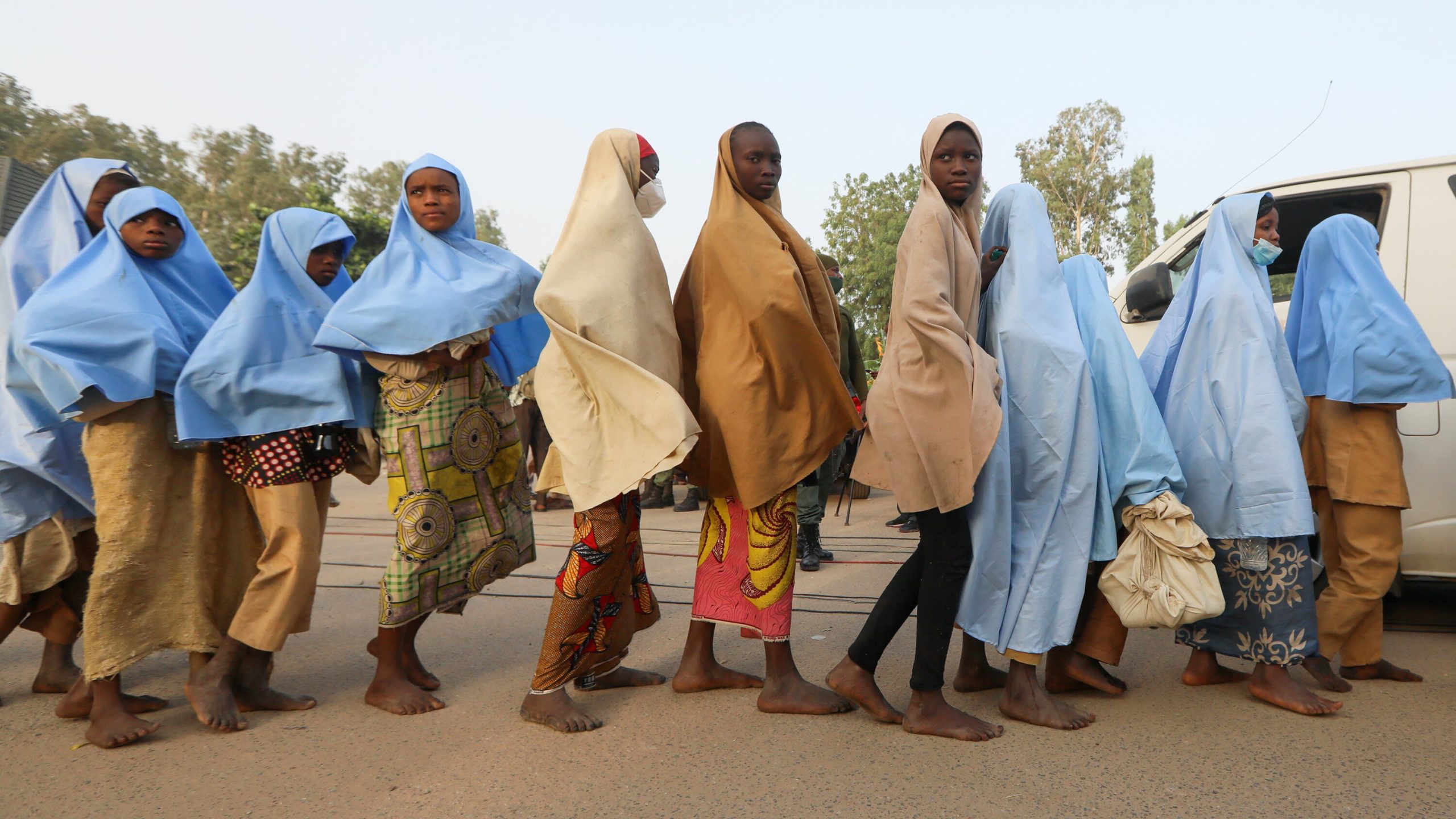
The harrowing ordeal of twelve young women abducted by a militant gang in Nigeria’s volatile northeastern state of Borno concluded on Saturday evening, a week after their capture, as a local official confirmed their release to AFP. This much-anticipated liberation offers a glimmer of hope amidst a recent alarming surge in abductions targeting young people across the West African nation. Abubakar Mazhinyi, president of the local Askira-Uba council, confirmed the development, stating, "All the 12 were released," and added that the traumatized young women had immediately been taken to a hospital for medical evaluation and care. The release, he noted, came after the abductors engaged in direct communication with the parents of the victims, who then ventured into the bush to retrieve their daughters.
The abduction occurred last Saturday, when a group of thirteen Muslim women and girls, aged between 16 and 23, were seized from farmlands adjacent to a nature reserve. This area has notoriously become a clandestine hideout for various jihadist factions operating in the region. The initial group of abductees was thirteen, but one of the women was released earlier by the gang after she informed them she was nursing a baby, highlighting a rare, albeit small, act of leniency in an otherwise ruthless crime. Crucially, Mazhinyi emphasized that no ransom was paid for the release of the remaining twelve. Instead, the jihadists reportedly freed the women because the Nigerian army was actively in pursuit, mounting pressure that made continued captivity untenable for the abductors.
Borno State, where this incident unfolded, remains the epicentre of Nigeria’s brutal conflict with jihadist groups, a conflict that has now spanned 16 years. The state is synonymous with the rise of Boko Haram, an extremist group whose insurgency began in 2009 and gained global notoriety with the mass kidnapping of nearly 300 schoolgirls from Chibok in 2014. That audacious abduction sparked international outrage and the "Bring Back Our Girls" campaign, drawing unprecedented attention to the plight of victims of terrorism in Nigeria. While the immediate threat posed by Boko Haram has seen some tactical shifts and territorial losses, both the original Boko Haram faction and its rival splinter group, the Islamic State West Africa Province (ISWAP), continue to pose significant and deadly dangers to communities across the northeast. These groups frequently conduct raids, ambushes, and abductions, terrorizing local populations and disrupting essential services.
The protracted conflict in Nigeria’s northeast has exacted a devastating toll, claiming the lives of over 40,000 people and forcing more than two million individuals to flee their homes, according to conservative United Nations figures. This massive displacement has created a severe humanitarian crisis, with millions reliant on aid for survival, facing food insecurity, lack of access to education, and inadequate healthcare. The psychological scars on survivors and communities are profound, perpetuated by the constant threat of violence and abduction.
However, the menace of mass kidnappings is far from confined to the northeastern part of the country, where ideological extremism drives much of the violence. In recent weeks, the entire nation has witnessed a disturbing escalation in abductions, with a distinct pattern emerging in other regions. Just last week, in a separate but equally alarming incident, heavily armed gangs seized more than 300 children from a Catholic school in the central-western Niger Delta state. While some of the abducted students managed to escape their captors through sheer bravery and opportune moments, a staggering number of over 265 children and teachers are still being held captive, their fates uncertain and their families plunged into agonizing despair.
These abductions, particularly those outside the northeast, are largely attributed to criminal bandit gangs rather than ideologically driven jihadists. These bandit groups, often comprising heavily armed individuals operating with impunity in poorly policed rural areas, are primarily motivated by financial gain. They see mass kidnappings, especially of students, as a lucrative enterprise, demanding significant ransom payments from desperate families and a government often perceived as struggling to contain the crisis. This phenomenon of "kidnapping-for-ransom" has become a cottage industry in several states, particularly in the northwest and central-western regions, exacerbating insecurity and eroding public trust in state institutions.
Nigeria has a long and tragic history of mass kidnappings, a grim testament to the persistent security challenges facing the nation. These incidents, whether perpetrated by jihadists seeking to impose their extremist ideology or by criminal gangs seeking financial enrichment, consistently target vulnerable populations in remote and underserved rural areas. The impact extends beyond the immediate victims, disrupting education, displacing communities, and stifling economic activity. The repeated occurrence of such events underscores the urgent need for a more robust and comprehensive security strategy from the Nigerian government, one that addresses the root causes of insecurity, strengthens law enforcement capabilities, and ensures the safety and well-being of its citizens across all regions. The release of the twelve young women in Borno is a moment of relief, but it also serves as a stark reminder of the pervasive and multifaceted abduction crisis that continues to plague Nigeria.