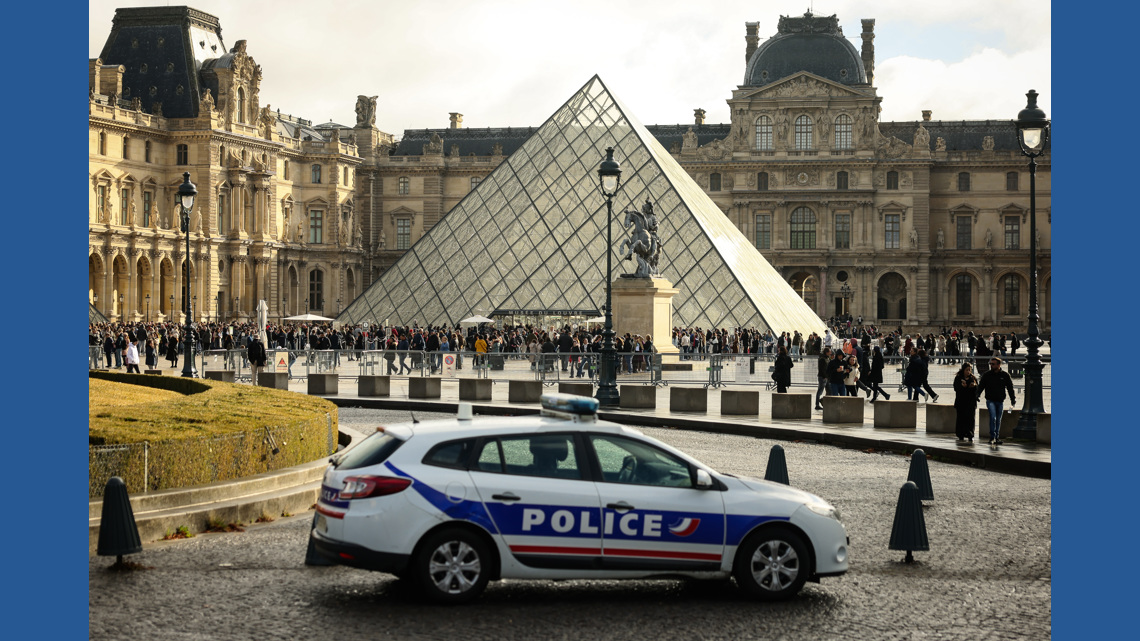
Arrested Man Is Thought To Be 4th Member Of Louvre Heist Crew, Paris Prosecutor Says
Paris, France – A significant breakthrough in one of the most audacious art heists in recent memory has been announced by the Paris prosecutor’s office, as a 39-year-old man arrested earlier this week is now believed to be the fourth and final member of the sophisticated crew that executed the brazen theft of France’s crown jewels from the Louvre Museum. This development marks a crucial step forward in the high-stakes investigation that has captivated France and the global art world since the stunning daylight robbery on October 19, 2025.
Prosecutor Laure Beccuau, whose office has been tirelessly leading the complex inquiry, confirmed the identification of the suspect, revealing that the individual possesses an extensive criminal record, boasting six previous convictions. This history suggests a professional and experienced operative, aligning with the precision and audacity demonstrated during the Louvre operation. Following his apprehension, the man has been handed preliminary charges of robbery by an organized gang, a severe offense punishable by up to 15 years imprisonment, and criminal conspiracy, which carries a potential 10-year sentence. These charges underscore the gravity with which French authorities are pursuing justice for a crime that has deeply wounded the nation’s cultural pride.
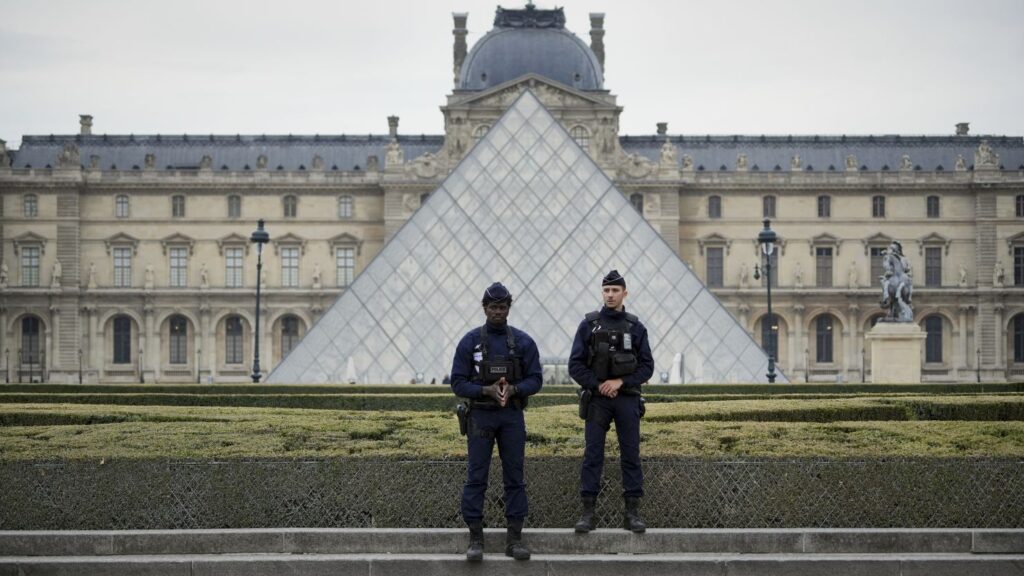
The October 19 heist sent shockwaves far beyond the elegant confines of the Louvre. From the world’s most-visited museum, a collection of priceless artifacts with an estimated monetary value of $102 million – and an immeasurable historical and cultural worth – vanished in a meticulously planned operation. The sheer boldness of the act, carried out in broad daylight, left security experts and the public alike reeling, raising serious questions about the vulnerability of even the most protected institutions.
While the prosecutor’s statement did not specify the exact role the 39-year-old is suspected of playing, the ongoing investigation has painted a clearer picture of the robbery’s execution. It is widely believed that the heist was the work of a highly coordinated four-person team. This involved two individuals who managed to infiltrate the museum itself, breaching the Apollo Gallery where the coveted jewels were displayed, while two accomplices waited outside, ready to whisk them away on motorbikes immediately after the theft. This division of labor speaks to a professional outfit, with each member having a specific task in the intricate plan.
The method employed by the thieves was as audacious as their target. Disguised as workers in high-visibility vests, they leveraged subterfuge to gain access, utilizing a freight lift to reach a strategic window in the sprawling museum. Once inside the ornate Apollo Gallery, which houses some of France’s most treasured historical artifacts, the two perpetrators reportedly deployed industrial-grade angle grinders to cut through the reinforced display cases, a chilling demonstration of their preparedness and determination. The entire operation, from entry to escape, is estimated to have taken less than eight minutes, a testament to their speed and precision.
Among the priceless treasures spirited away were items of unparalleled historical significance. These included a magnificent diamond-and-emerald necklace, a personal gift from Emperor Napoleon I to his second wife, Empress Marie-Louise; jewels historically tied to 19th-century Queens Marie-Amélie and Hortense, each piece a tangible link to France’s monarchical past; and most notably, Empress Eugénie’s exquisite pearl-and-diamond tiara, a breathtaking symbol of the Second French Empire. The loss of these artifacts represents not merely a financial blow, but a profound void in France’s national heritage collection, irreplaceable symbols of its rich and tumultuous history.
In a curious twist that has puzzled investigators and added another layer of intrigue to the case, the emerald-set imperial crown of Napoleon III’s wife, Empress Eugénie – a stunning piece containing over 1,300 diamonds – was later discovered abandoned outside the museum. While this recovery offered a glimmer of hope, it also raised questions: Was it dropped in a hasty escape? Was it too cumbersome to carry? Or was it intentionally left behind as a decoy or a message? Whatever the reason, its recovery only underscored the chaotic yet calculated nature of the thieves’ actions.
The initial aftermath of the heist plunged the Louvre into an unprecedented state of lockdown, with the museum closing its doors for several days as police swarmed the site, collecting forensic evidence and meticulously reviewing countless hours of CCTV footage. Public reaction ranged from shock and outrage to a deep sense of national loss, as the theft touched a nerve in a country immensely proud of its cultural legacy. The pressure on law enforcement to identify and apprehend the perpetrators was immense, echoing the sentiment that such a brazen act against a national icon could not go unpunished.
The Louvre, a former royal palace, stands as a global beacon of art and history, drawing millions of visitors annually to its unparalleled collections, which span millennia and civilizations. The audacity of a theft from such a symbol of French identity and cultural prowess made the crime particularly egregious. It highlighted the ever-present challenge of balancing public access with stringent security measures, especially in an era where organized crime increasingly targets high-value cultural assets.
The investigation has undoubtedly involved a painstaking process, combining traditional police work with advanced forensic techniques and intelligence gathering. Authorities would have meticulously analyzed every frame of surveillance video, traced potential escape routes, interviewed countless witnesses, and likely tapped into their networks of informants within the criminal underworld, particularly those specializing in high-value stolen goods. The focus on identifying the "fourth man" indicates a methodical approach to dismantle the entire network responsible for the heist, piece by agonizing piece.
The arrest of the 39-year-old suspect, with his documented history of criminal activity, suggests that investigators may have tracked him through existing databases or through his connections to known organized crime syndicates. His preliminary charges of organized gang robbery and criminal conspiracy are indicative of the police’s belief that this was no spur-of-the-moment crime but a carefully orchestrated operation by a professional group. While the charges are preliminary, they allow authorities to continue holding the suspect and build their case, potentially uncovering further details about the planning, execution, and potential buyers of the stolen jewels.
However, despite this significant arrest, the vast majority of the stolen jewels remain unrecovered. The fate of such priceless artifacts, once they fall into the hands of thieves, is often grim. They can disappear into the shadowy world of the black market, sold to illicit collectors, or worse, dismantled for their individual components – precious stones and metals – thereby destroying their historical integrity and traceability. Experts in art crime have long warned about the immense difficulty of recovering stolen cultural heritage, particularly when it is as portable and valuable as the Louvre’s crown jewels.
This incident has inevitably prompted a rigorous reevaluation of security protocols at the Louvre and, indeed, at other major museums worldwide. Questions are being asked about the effectiveness of existing surveillance systems, the adequacy of personnel, and the overall resilience of physical barriers against determined and well-equipped criminals. Lessons learned from this audacious breach will undoubtedly lead to significant enhancements in museum security, striving to prevent such a catastrophic loss from ever occurring again.
As the investigation continues, the focus will undoubtedly shift towards extracting further information from the arrested suspect, potentially leading to the identification and apprehension of the remaining members of the gang, if any are still at large beyond the original four. The ultimate goal, however, remains the recovery of France’s stolen crown jewels. Until these irreplaceable treasures are returned to their rightful place, the Louvre heist will stand as a stark reminder of the enduring vulnerability of even the most cherished symbols of human heritage. The arrest of this fourth suspected member provides a vital piece of the puzzle, bringing the authorities closer to a full resolution and, perhaps, to the eventual rediscovery of these lost national treasures.