The Cartel de los Soles is now officially a U.S.-designated a terrorist organization, but is it a cartel?
The U.S. government’s designation of Venezuela’s Cartel de los Soles (Cartel of the Suns) as a foreign terrorist organization (FTO) officially came into effect on Monday, November 24, 2025. This move marks a significant escalation in President Trump’s aggressive and multifaceted campaign aimed at combating drug trafficking into the United States and, implicitly, at increasing pressure on the Venezuelan government led by President Nicolás Maduro. The U.S. explicitly identifies President Maduro as the leader of this group, asserting its involvement in narcoterrorism. However, Maduro and his administration vehemently reject these claims, dismissing them as a "ridiculous fabrication" and a thinly veiled pretext by the Trump administration to force a regime change in Venezuela.
This FTO designation, initially announced the previous week, represents a powerful new tool in Washington’s diplomatic and economic arsenal against Caracas. It coincides with a robust and visible increase in U.S. military presence and activity in the region, including the deployment of warships and over 10,000 American troops for intensified training exercises. The U.S. military has also undertaken a series of deadly strikes on vessels in the Caribbean and eastern Pacific, which it alleges were involved in drug smuggling operations. Many of these boats are purportedly linked to the Tren de Aragua gang, a criminal organization that the U.S. accuses of maintaining close ties to the Maduro regime.
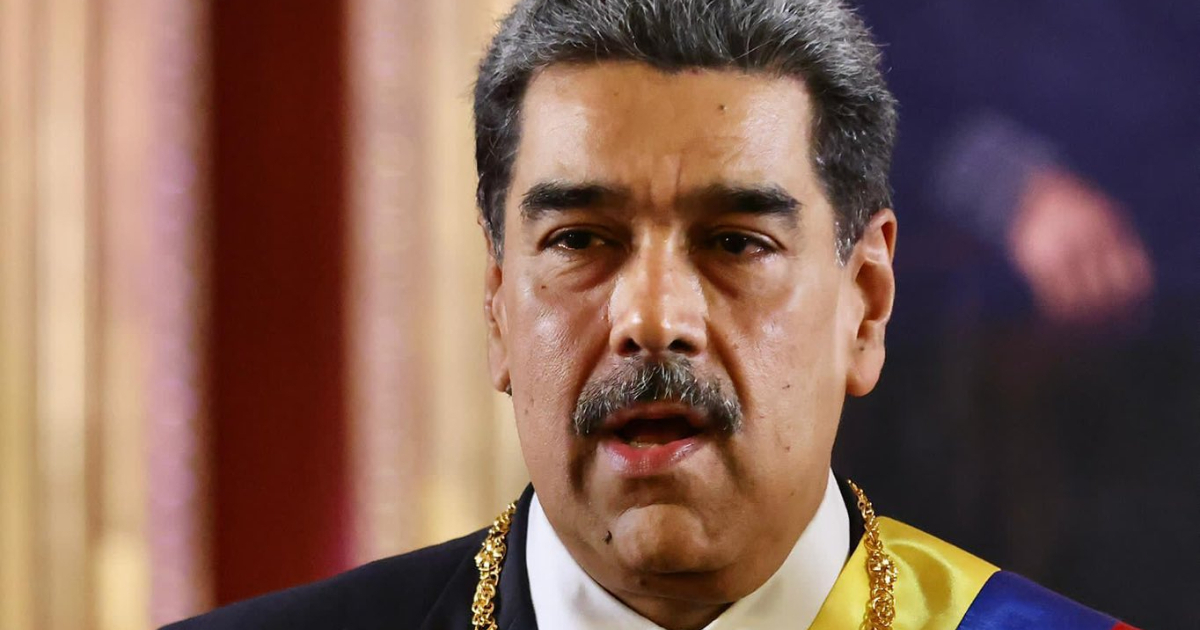
In a sharply worded statement issued Monday, the Venezuelan government "absolutely rejected the new and ridiculous fabrication" of designating "the nonexistent Cartel of the Suns as a terrorist organization." The statement condemned the move as "an infamous and vile lie to justify an illegitimate and illegal intervention against Venezuela, under the classic U.S. format of regime change." This response underscores the deep chasm in perception and political objectives between Washington and Caracas, where the U.S. views Maduro’s government as a criminal enterprise and Maduro views U.S. actions as an imperialist plot.
Prior to the formal designation announcement, Secretary of State Marco Rubio had publicly asserted that the Cartel de los Soles was "responsible for terrorist violence… as well as for trafficking drugs into the United States and Europe." This accusation frames the group’s activities not merely as criminal but as having a terroristic dimension, broadening the scope of potential U.S. responses. The group had already been subjected to U.S. economic sanctions in July, with Treasury Secretary Scott Bessent highlighting "the illegitimate Maduro regime’s facilitation of narco-terrorism through terrorist groups like Cartel de los Soles." These sanctions typically involve freezing assets, prohibiting transactions with designated entities, and imposing severe penalties on anyone providing material support.
What is – and what isn’t – the Cartel de los Soles?
The fundamental question at the heart of this designation is whether the so-called Cartel of the Suns truly fits the traditional definition of a "cartel" or, for that matter, a "terrorist organization." Crucially, it is not a traditional Latin American drug cartel in the mold of notorious, family-run criminal enterprises such as Mexico’s Sinaloa Cartel or the Jalisco New Generation Cartel. These organizations typically possess a defined hierarchical structure, a distinct identity, and often engage in overt territorial control and violent competition.
The name "Cartel de los Soles" itself offers a clue to its origins. The "suns" refer to the distinctive insignia that has, for decades, adorned the uniforms of high-ranking officers within the Venezuelan military. This symbolic connection points to the deeply entrenched nature of the alleged illicit activities within the state apparatus.
Venezuelans, including prosecutors and other officials, began using the term "Cartel de los Soles" colloquially in the 1990s. Initially, it referred to a select cadre of high-ranking military officers who had amassed considerable wealth by facilitating drug-running operations through Venezuelan territory. As corruption became more pervasive across the country, particularly under the late President Hugo Chávez and subsequently under his successor, Nicolás Maduro, analysts contend that the term evolved. It came to encompass a far more loosely defined network of military, police, and government officials who not only facilitated but actively profited from a wide array of illicit activities. These activities extended beyond drug trafficking to include illegal mining, fuel smuggling, and other forms of organized crime, all leveraging their positions within the state.
The term was first formally elevated to define an alleged Maduro-led drug trafficking organization in 2020. During President Trump’s first administration, the U.S. Justice Department announced sweeping indictments against Venezuela’s leader and members of his inner circle on narcoterrorism and other charges. The Justice Department specifically accused Maduro, acting through the Cartel de los Soles, of working directly with the Colombian rebel group FARC (Revolutionary Armed Forces of Colombia) to traffic vast quantities of cocaine through Venezuela en route to the United States. This accusation formed the basis of the "narco-terrorism" label, connecting drug trafficking with actions supporting or benefiting a designated terrorist group (FARC had been designated an FTO by the U.S. for decades, though it has since largely demobilized).
The designation as a Foreign Terrorist Organization has historically been reserved for groups like al-Qaeda and ISIS, known for their ideological motivations, explicit violence against civilians, and intent to destabilize governments. However, the Trump administration significantly expanded its use, applying it to eight Latin American organizations primarily accused of drug trafficking and people smuggling, rebranding them under the banner of "narcoterrorism." This expansion has been a point of contention among legal experts and regional analysts, who question whether these groups genuinely meet the FTO criteria.
Indeed, some analysts contend that it is a significant stretch to even define the Cartel de los Soles as a single, unified organization. Adam Isaacson, director for defense oversight at the Washington Office on Latin America (WOLA) think tank, highlighted this distinction to The Associated Press. "It is not a group," Isaacson stated. "It’s not like a group that people would ever identify themselves as members. They don’t have regular meetings. They don’t have a hierarchy." This perspective suggests that the U.S. designation may be applying a structured organizational label to a more amorphous phenomenon of state-embedded corruption.
This view is echoed by InSight Crime, an outlet run by journalists with decades of experience covering organized crime in Latin America. In their analysis of the purported cartel published in September, InSight Crime concluded: "It is not a hierarchical or ideological group. Its structure consists of a diffuse network of cells embedded within Venezuela’s main military branches: the army, the navy, the air force, and the national guard, from the lowest to the highest ranks." They further clarified, "Although the concept is primarily associated with the military sector, other branches of the [Venezuelan] State embedded within the criminal ecosystem have also been identified, including police forces, the executive branch, and various public officials." This characterization paints a picture not of a unified criminal enterprise, but rather a systemic problem of corruption deeply interwoven into the fabric of the Venezuelan state.
Terrorist Designation Comes Amid U.S. Military Strikes and Build-up
The FTO designation arrives amidst a period of heightened U.S. military activity and a significant buildup of assets in the Caribbean and eastern Pacific. In recent weeks, the U.S. military has conducted at least 21 strikes on alleged drug trafficking boats in these waters. These operations have resulted in dozens of fatalities and have sparked a debate in Washington and internationally regarding the legality and ethical implications of such extrajudicial attacks.
Critics point out that the Trump administration has carried out these strikes without publicly providing concrete evidence to substantiate its assertions that the boats were carrying drugs or were operated by criminal organizations. The administration maintains that these attacks, which commenced in late September off the coast of Venezuela and subsequently expanded into the eastern Pacific, are a necessary measure to interdict narcotics before they reach American soil.
However, President Maduro and a growing chorus of international observers interpret these U.S. military operations and the massive influx of hardware into the region as a thinly veiled effort to precipitate his ouster – or even as the prelude to a more overt military operation designed to topple his government. The strategic implications of deploying such significant assets, including the USS Gerald R. Ford, the world’s most advanced aircraft carrier, have not gone unnoticed in Caracas.
Secretary of Defense Pete Hegseth has indicated that the formal designation of the Cartel de los Soles will provide a "whole bunch of new options to the United States" to address Maduro’s alleged crimes. Yet, in an interview with the conservative news outlet OAN, Hegseth notably declined to elaborate on what these new options might entail or to confirm whether the U.S. military was planning to conduct strikes on targets inside Venezuela. He maintained a posture of strategic ambiguity, stating, "Nothing is off the table, but nothing’s automatically on the table."
The visible and robust presence of American troops and military hardware in the Caribbean, including the state-of-the-art USS Gerald R. Ford, which began pouring into the region earlier this year, has emboldened Venezuela’s U.S.-backed political opposition. They have been more confidently reiterating their perennial promise to see Maduro forced from office, further fueling speculation about the true "endgame" of what the Trump administration publicly frames as a counter-drug operation.
The ambiguity surrounding the U.S.’s ultimate intentions was highlighted just weeks ago when CBS News’ Norah O’Donnell pressed President Trump during an extensive interview for 60 Minutes. When asked directly whether the U.S. operations around Venezuela were primarily "about getting rid of Maduro," President Trump responded that they were "about many things." However, he added a telling remark, suggesting that the Venezuelan leader’s days in office were "likely numbered." This statement, coupled with the FTO designation and military buildup, reinforces the perception in Caracas that the U.S. strategy goes far beyond merely interdicting drugs.
The designation of the Cartel de los Soles as a foreign terrorist organization, therefore, represents not just a legal classification but a potent political statement. It underscores the Trump administration’s resolve to exert maximum pressure on the Maduro regime, utilizing all available tools – diplomatic, economic, and military. Yet, the debate over the true nature of the Cartel de los Soles and the underlying objectives of U.S. actions continues to intensify, casting a long shadow over the future of Venezuela and the stability of the broader Latin American region.