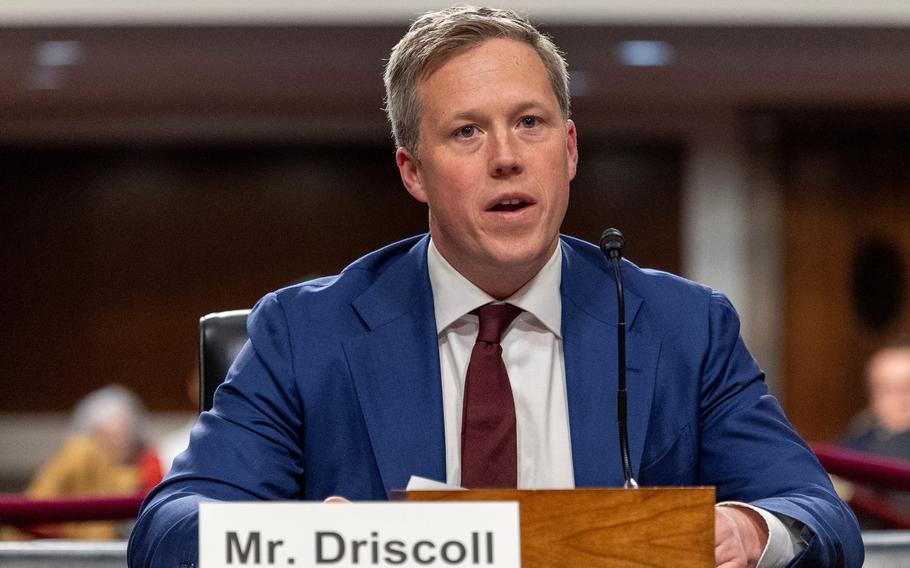
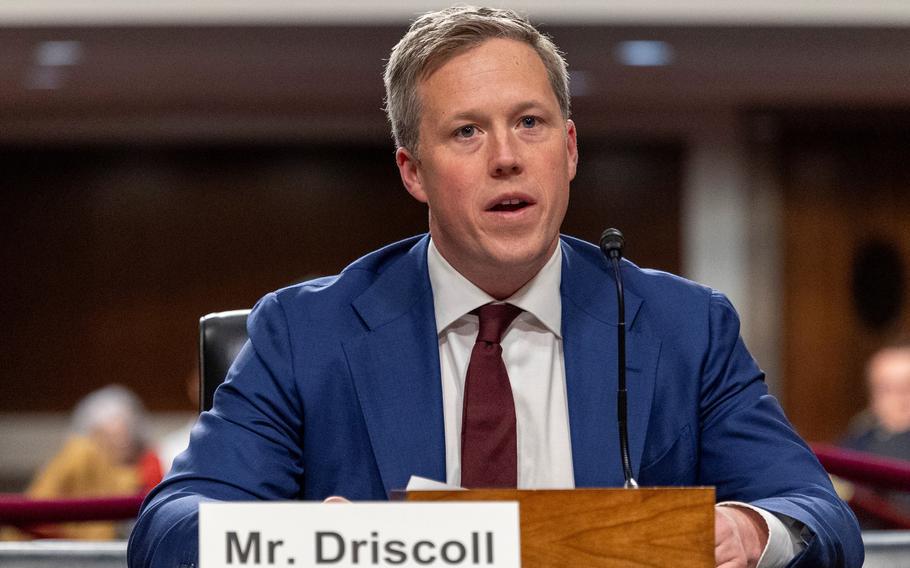
Transcript: Army Secretary Dan Driscoll on "Face the Nation with Margaret Brennan," Nov. 16, 2025
On November 16, 2025, Secretary of the United States Army Dan Driscoll appeared on "Face the Nation with Margaret Brennan" to address a range of pressing issues facing the U.S. military, from geopolitical tensions and domestic policy challenges to the rapidly evolving landscape of modern warfare. His candid discussion provided a rare glimpse into the Pentagon’s strategic thinking, particularly noteworthy given the recent restrictions on reporter access.
The interview began with a discussion of breaking news regarding Venezuela, where President Trump had indicated he was close to making a decision. While acknowledging that operations in that region typically involve the Marines and Navy, Secretary Driscoll underscored the Army’s readiness. He affirmed, "We have a lot of training in that part of the world. We’re reactivating our jungle school in Panama, we would be ready to act on whatever the president and Sec. War needed." This statement highlighted the Army’s proactive measures to maintain proficiency in diverse operational environments, suggesting a broader U.S. strategic posture in Latin America beyond immediate naval deployments. While unable to disclose specific orders, Driscoll’s emphasis on readiness signaled a heightened state of preparedness for potential contingencies in the region, reflecting ongoing strategic assessments of Venezuela’s military capabilities and its potential threat to U.S. interests.
A significant portion of the discussion centered on the debilitating impact of government shutdowns on the military. Brennan cited staggering figures, including over $400 million in emergency loans issued by USAA to military families, illustrating the profound financial strain. Secretary Driscoll framed the shutdown as symptomatic of a deeper, systemic issue that has plagued the nation for decades. He lamented, "The shutdown is indicative of one of the bigger problems that we have a nation have had. And so if you look back for the last 30 or 40 years, one of the reasons we’ve had such bad outcomes, when we spend the American taxpayers hard earned dollars, and we go buy things that our soldiers will need to fight, when we build things where our soldiers and their families will live, we are such a bad customer, because when you’re on the other side of the deal with us and you have to deal with shutdowns."
Driscoll explained that these intermittent funding crises create immense instability, delaying crucial projects for months and eroding trust with private sector partners. This "calcification of our system," as he termed it, directly undermines efforts to modernize the Army and improve living conditions for service members and their families. He expressed optimism that the Trump administration was uniquely positioned to tackle these long-standing inefficiencies, but stressed that shutdowns severely impede progress, preventing the Army from effectively preparing for future conflicts and adequately supporting its personnel. The financial and operational disruptions caused by such political stalemates not only affect immediate readiness but also have long-term consequences for morale, recruitment, and the military’s ability to maintain its technological edge.
The conversation then pivoted to the burgeoning threat of drones, a topic of growing national security concern. Senator Tom Cotton, Chairman of the Senate Intelligence Committee, had recently warned of a "severe and growing" threat to military sites and civilian gatherings, pointing to lapsed law enforcement authorities exacerbated by the shutdown. Secretary Driscoll confirmed that under Secretary of War Hegseth, the U.S. Army had been designated to lead the Pentagon’s counter-drone efforts, working in close collaboration with broader law enforcement agencies.
Driscoll painted a stark picture of the drone threat, describing them as "flying IEDs" – improvised explosive devices that are cheap, easily 3D-printable, and can cross borders with alarming speed. He underscored the unprecedented nature of this challenge, requiring a sophisticated, multi-layered defense strategy. "What you basically need is a digital layer to exchange information and exchange sensing and allow the closest person on the ground, or the closest effector on the ground, to be able to take out a drone," he explained. He echoed Senator Cotton’s sentiment that this represents "the threat of humanity’s lifetime," referencing the devastation seen in Ukraine and Russia.
The Secretary detailed the comprehensive approach being taken, which includes partnering with federal law enforcement, the Sheriff’s Association, and the NYPD. This collaborative effort aims to address vulnerabilities at borders, ports, and major public events like upcoming NFL games, the Olympics, and the World Cup. Driscoll clarified that a single solution, such as radar jamming, is insufficient, given advancements like hardwired drones that are immune to RF jamming. Instead, the strategy involves a "layered set of solutions," including technologies like net guns, tailored to specific scenarios and operating within varying legal authorities in the homeland, especially near sensitive areas like airports. The goal, he stated, is to create a system where the U.S. can "know what is in the sky at every moment across our country, all at once," while still allowing for commercial drone operations, de-conflicting the airspace with the FAA. This vision, which he dubbed a "golden mini dome" for specific sites, highlights the complex balance between national security and technological innovation.
Brennan then pressed Driscoll on his previous assertion that Ukraine is the "only Silicon Valley of warfare" currently. The Secretary elaborated, citing "Operation Spider’s Web" in Russia, where Ukrainian forces used relatively inexpensive drones to destroy billions of dollars worth of Russian equipment. He emphasized that the U.S. military is actively learning from this conflict, recognizing the urgent need to innovate quickly. He highlighted a unique approach, different from past decades, by actively engaging American industry. An "AI war game" recently hosted by the Army brought together 15 top CEOs, representing trillions in enterprise value, to collaborate on solutions for data management in contested environments and logistics over vast distances. This daily collaboration aims to rapidly adapt private sector innovation to military challenges.
Driscoll firmly believed that virtually everyone in the U.S. defense establishment acknowledges the immense value of learning from the Ukrainian conflict. He described the data being generated from Ukrainian drone operations, counter-drone measures, and sensor intelligence as an "incredible treasure trove of information for future warfare." While acknowledging differing views on direct financial involvement in Ukraine among some Republicans, he maintained that the strategic imperative to learn from the battlefield is universally accepted. He connected this learning to President Trump’s broader agenda for "peace in that part of the world," suggesting that by understanding and adapting to modern warfare, the U.S. industrial base can thrive, allowing the nation to focus its resources more effectively.
The discussion concluded with the significant challenge posed by China’s drone capabilities. Secretary Driscoll revealed the Army’s ambitious plan to acquire a million drones over the next two to three years and introduced the "SkyFoundry" initiative, developed with Congress. This initiative represents a strategic shift from the Army’s historical "all in or all out" approach to industrial production. Recognizing that Ukraine produces four million drones annually and China an astounding 12 to 14 million, Driscoll stressed the necessity of private sector involvement.
Under SkyFoundry, the Army will invest in and produce crucial, hard-to-source components like sensors, brushless motors, and circuit boards on military bases. These components will then be made available for purchase by the private sector, fostering a symbiotic relationship. "We will make drones, our private partners will make drones, and we will catch up and surpass the Chinese incredibly quickly," Driscoll asserted. This innovative public-private partnership aims to rapidly scale up U.S. drone production and innovation, ensuring America’s competitive edge in future conflicts, particularly in the Pacific theater, where the Army plays a critical role in defending American bases.
In closing, Margaret Brennan highlighted the unusual nature of Secretary Driscoll’s appearance and his willingness to answer questions, noting the Pentagon’s recent restrictions on access for reporters. She underscored the importance of such transparency for the American public to understand issues concerning their security and the welfare of the military’s more than three million employees. Secretary Driscoll’s interview provided a comprehensive and often stark assessment of the current state and future trajectory of U.S. military preparedness, emphasizing the critical need for innovation, collaboration, and decisive action in a rapidly changing global landscape.